 Bill Xu
On this page
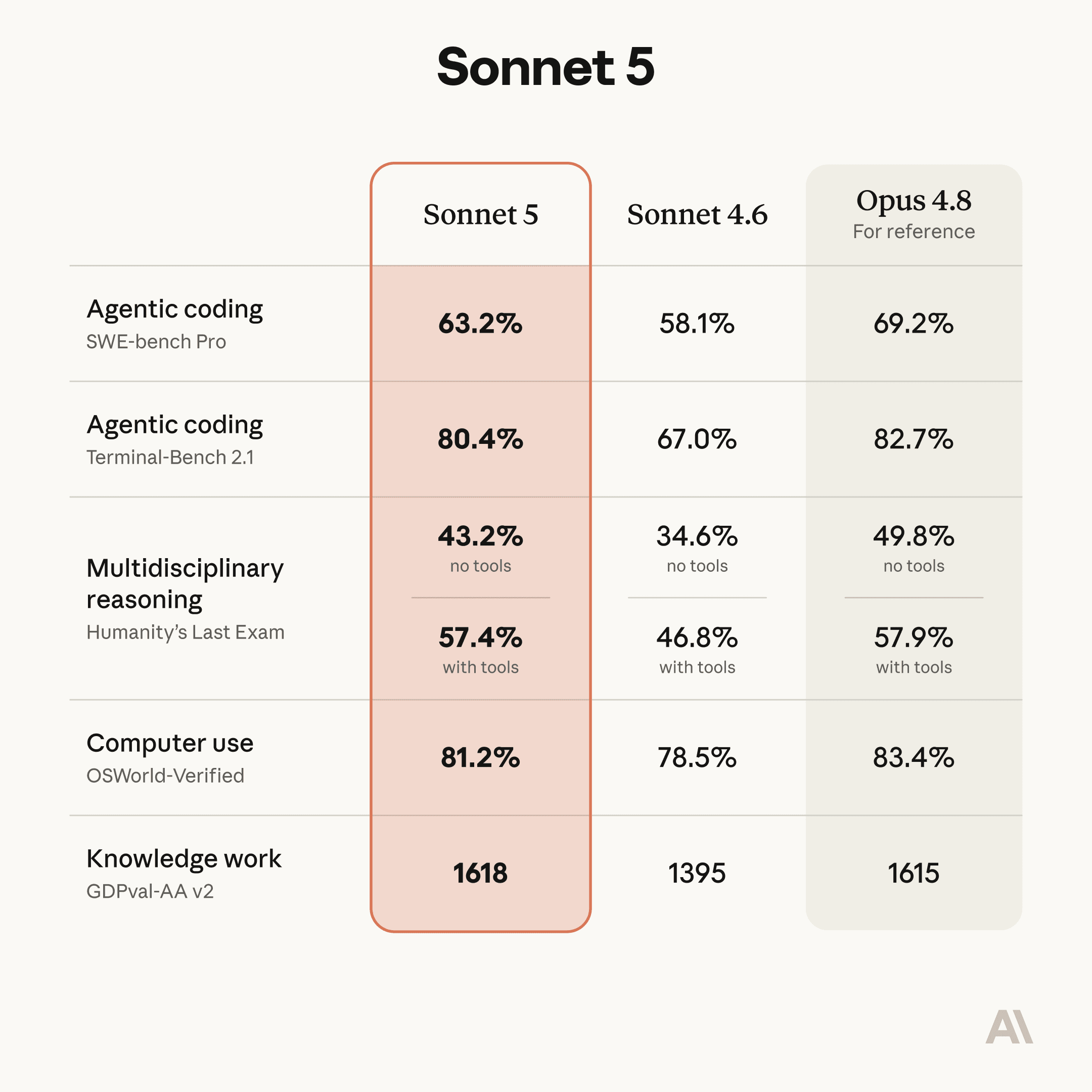
Starting today, Claude Sonnet 5.0 is available to every Atoms user as a model option across the full agent pipeline. This post covers what changed, why it matters for the kind of work Atoms does, and three production examples generated with Sonnet 5.0 that you can open and inspect right now.
Why the Model Layer Matters for a Multi-Agent Team
Atoms is not a single model wrapped in a chat window. It is a team of specialized agents: a researcher, a product manager, an architect, an engineer, an SEO specialist, and a data analyst, coordinated by a team leader. Each agent hands structured output to the next. A weak model anywhere in that chain compounds errors downstream. A vague PRD becomes a confused architecture. A confused architecture becomes code that runs but does the wrong thing.
This is why a model upgrade means more on Atoms than it does in a standard coding assistant. When the underlying model improves at long-context reasoning and instruction following, every handoff in the pipeline gets cleaner. The gains are multiplicative, not additive.
Anthropic has positioned the Sonnet line as the working model of the Claude family: fast enough for production loops, capable enough for complex reasoning. Sonnet 5.0 continues that trajectory, and in our internal evaluation it showed three improvements that map directly onto what Atoms asks a model to do.
Three Cases, Generated with Sonnet 5.0
Each case below was generated on Atoms with Claude Sonnet 5.0 handling the build. The links are live shares; open them to see the actual output, not a curated screenshot.
Case 1: NOVA PLAY, a Cinematic Game Store
The brief asked for a digital game marketplace where the homepage feels like a playable trailer rather than a grid of cover art. The hero is a full-bleed autoplaying video montage cutting through five fictional game worlds, with glass UI, category chips, a 3D featured game card, and trailer progress indicators floating over the footage. The prompt included an eight-section page structure and a nine-item exclusion list ranging from "no static cover hero" to "no generic Steam clone layout." Sonnet 5.0 delivered the full section structure, kept the overlay UI legible against moving video, and avoided every item on the exclusion list in a single pass.
Why this case is hard: video-dominant heroes usually fail in one of two ways. Either the UI overlay becomes unreadable against motion, or the layout degrades into a video with buttons pasted on top. Getting a functional commerce interface to coexist with continuous full-screen motion requires deliberate decisions about contrast layers, z-index architecture, and where the eye rests. The model made those decisions without follow-up prompting.
Case 2: RIDGE//NORTH, a Technical Outdoor Brand
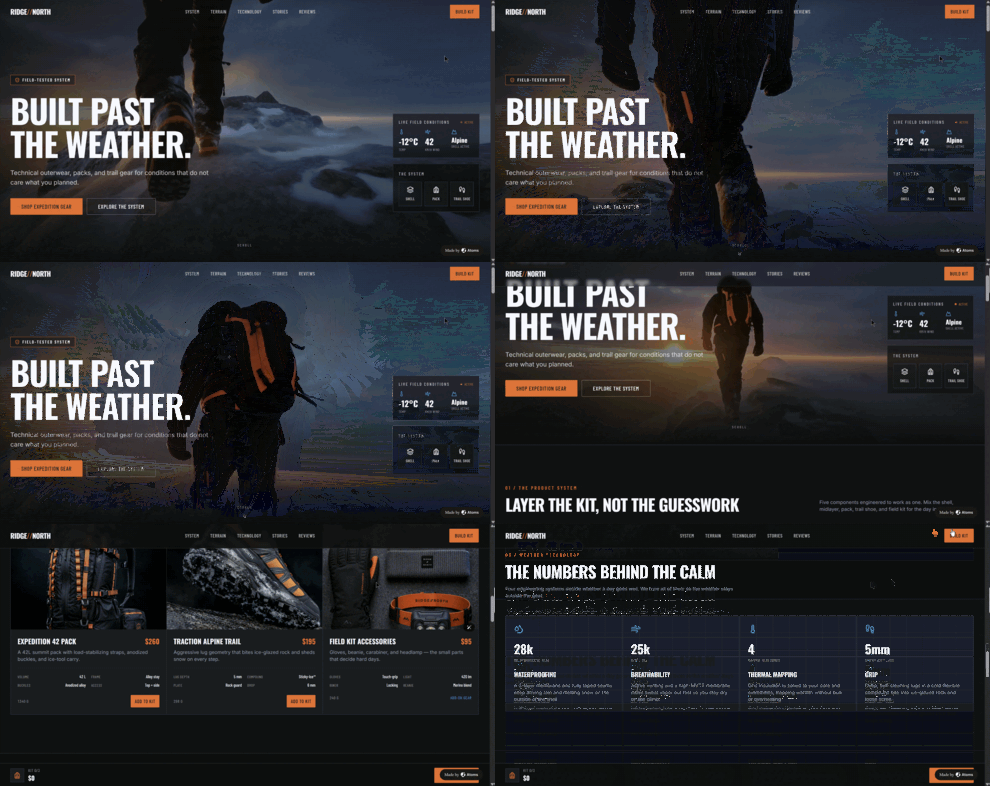
This brief specified an expedition gear brand whose first screen plays like an outdoor campaign film: a climber crossing a snow ridge at sunrise, product close-ups of waterproof fabric shedding droplets, a boot gripping ice in slow motion. Over the footage sits a weather UI card reading "-12°C · Wind 42 km/h · Alpine Shell Active," a product system card, and expedition-style navigation. Below the hero, the site includes a terrain selector, a weather technology section, a gear bundle builder, and material cutaway cards. Sonnet 5.0 matched the specified tone, technical and restrained rather than warm and touristy, and implemented all nine sections with the condensed typography and cold palette the brief demanded.
Why this case is hard: the brief's core requirement was tonal. "Outdoor gear meets expedition command center" is a feel, not a spec. The failure mode is a generic camping store with a mountain photo. Hitting the intended register requires the model to make hundreds of small consistent choices, from color temperature to copy voice to the density of technical overlays, and keep them coherent across the full page.
Case 3: TERRA CAM, a Scroll-Driven Product Film
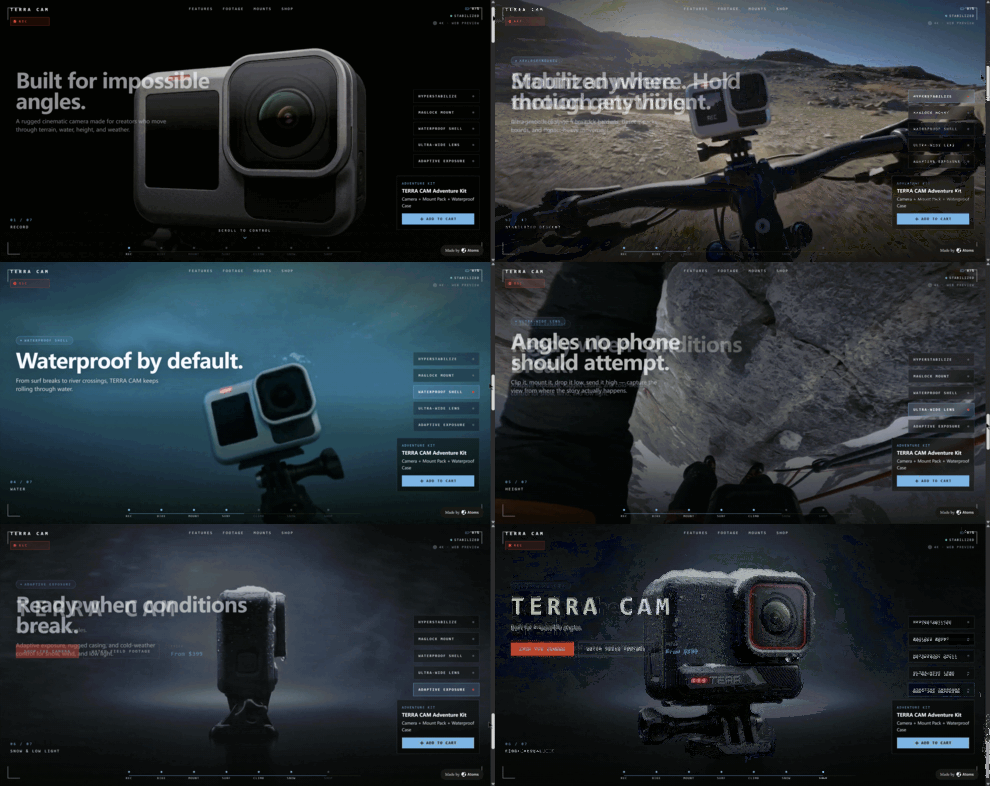
The most technically demanding of the three. The brief asked for an action camera site built around scroll-scrubbing: a sticky full-screen video stage where scroll position controls video playback frame by frame. A single continuous 16 to 20 second sequence moves through seven chapters, from a recording light in darkness through mountain bike descent, surf, climbing, and snow, ending in a product reveal. Each scroll range maps to a chapter with its own headline, feature chip, and camera UI state, including a REC indicator, battery readout, terrain markers on a progress timeline, and a quick add card. Sonnet 5.0 implemented the scroll-to-currentTime binding, the 700vh stage, chapter-based content transitions, and the full overlay system as specified.
Why this case is hard: scroll-scrubbed video is one of the more failure-prone patterns in frontend work. Naive implementations stutter, desync, or fight the browser's video decoding pipeline. The technique demands precise mapping between scroll progress and video currentTime, careful easing, and content transitions that stay synchronized with the footage. It is the kind of interaction usually built by a specialist over days, described here in a single prompt.
The Pattern Across All Three
Look past the visual differences and the three builds share a structural property: each prompt is a dense specification with a creative layer, a structural layer, an interaction layer, and an exclusion layer. The measure of a model inside an agent pipeline is whether it can hold all four layers simultaneously through a full build.
That is the practical meaning of this upgrade. Not a benchmark delta in isolation, but fewer dropped constraints, fewer revision loops, and output that matches intent on the first pass. Combined with Race Mode, which runs multiple agent teams in parallel and lets you pick the strongest result, Sonnet 5.0 raises both the ceiling and the floor of what a single prompt produces.
How to Use It
Claude Sonnet 5.0 is available now in the model selector for all Atoms users. No configuration is required. Select it, write your brief, and the agent team handles research, product definition, architecture, full-stack implementation with authentication, database, and Stripe payments, through to deployment.
A note on prompting: the cases above succeed partly because the briefs are specific. State what you want, how it should feel, and what you refuse to accept. Sonnet 5.0 rewards that specificity more than any model we have shipped. If you want a starting point, copy the structure of these briefs: creative direction first, section list second, visual style third, exclusions last.
Start a build at atoms.dev and see what a full agent team does with a better model underneath it.
