DeepSeek-V4-Flash is DeepSeek’s fast V4 model for coding, text generation, and agent workflows. Its official API model ID is deepseek-v4-flash, and DeepSeek says the existing API calling method remains unchanged.
The practical question is not only whether Flash is cheaper or faster. It is whether the model can complete your work reliably enough that fewer retries, tool errors, and human reviews offset the cost of each run.
Quick answer: Start with V4-Flash for bounded coding changes, extraction, classification, summarization, and high-volume agent tasks. Measure accepted-task rate and total workflow cost before routing difficult, ambiguous work to another model.
DeepSeek-V4-Flash at a glance
| Question | Answer |
|---|---|
| API model ID | deepseek-v4-flash |
| Context window | 1M tokens in DeepSeek’s official V4 materials |
| Architecture | 284B total parameters, 13B active parameters, according to DeepSeek |
| Main fit | Coding, text, tool-assisted agents, and long-context work |
| API status | Public beta information is subject to the current official documentation |
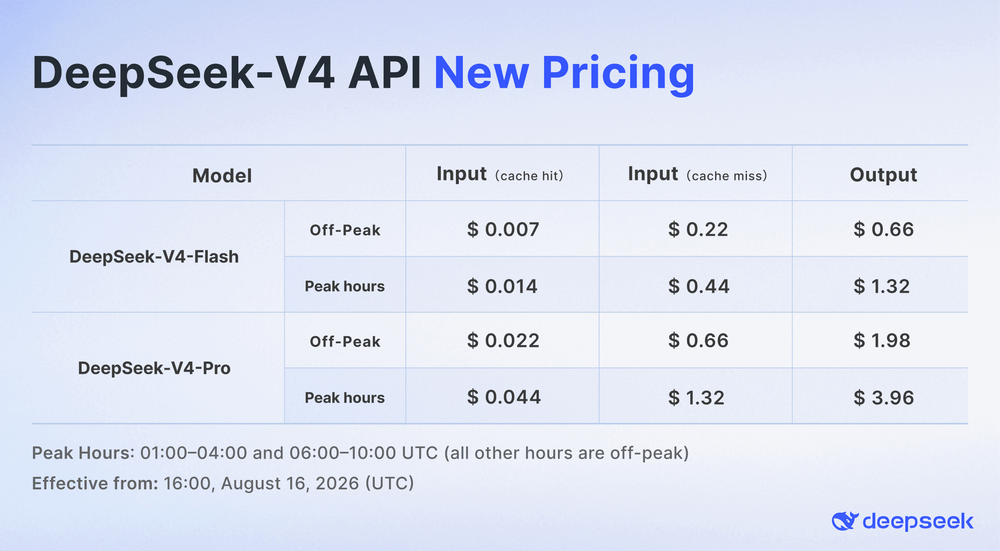
DeepSeek V4 pricing reference — DeepSeek API documentation
What makes Flash useful for agent workflows
A large context window helps an agent keep more repository files, requirements, tool results, and prior decisions in one working context. That does not automatically guarantee a correct patch: the harness still controls permissions, tool schemas, retries, tests, and recovery.
Flash is a sensible starting point when tasks are bounded and acceptance is automated. Examples include:
- extracting structured data from long documents;
- implementing a small, well-specified UI change;
- writing tests or migration drafts;
- classifying support or product feedback;
- summarizing tool output for a human reviewer.
For complex repository changes, compare first-pass success, tool-call validity, latency, retries, and cost per accepted result—not token price alone.
How to call DeepSeek-V4-Flash
DeepSeek’s API documentation lists deepseek-v4-flash as the model name. A minimal OpenAI-compatible request follows the provider’s normal API format:
Keep credentials in environment variables or a secret manager. Check the current provider docs for active pricing, rate limits, beta restrictions, and model behavior.
A practical evaluation protocol
Use the same prompt, tools, context budget, stopping rules, and acceptance tests across models. Record:
- first-pass success;
- total input and output tokens;
- tool-call errors and retries;
- wall-clock latency;
- cost per accepted task;
- human review time.
This produces a routing decision grounded in finished work rather than a single polished demo.
Sources and verification
- DeepSeek API updates — official model ID and API update.
- DeepSeek V4 Preview Release — official context, architecture, and model positioning.
- DeepSeek V4 Preview — DeepSeek’s first-party announcement.
Last verified: August 21, 2026. Provider specifications and availability can change; recheck the official documentation before making procurement or production decisions.
