 Bill Xu
On this page
GPT 5.6 is now available to every Atoms user. Atoms is an AI website and full stack app builder that coordinates specialized agents across research, product planning, architecture, engineering, SEO, and data analysis. Instead of returning a code sample, the system takes a project from the initial brief through implementation and deployment.
Model quality matters more in this setup than it does in a standard chat interface. Each agent builds on decisions made earlier in the process. A clear product specification leads to a cleaner technical plan. A cleaner plan reduces implementation errors. Better code gives later agents less to correct. Weak decisions also travel through the pipeline, which is why Atoms evaluates new models against complete builds rather than isolated prompts.
GPT 5.6 improves three parts of this process. It interprets visual direction with more precision, coordinates generated media with page structure, and completes functional requirements more consistently. The three case studies later in this post show each of these improvements in practice.
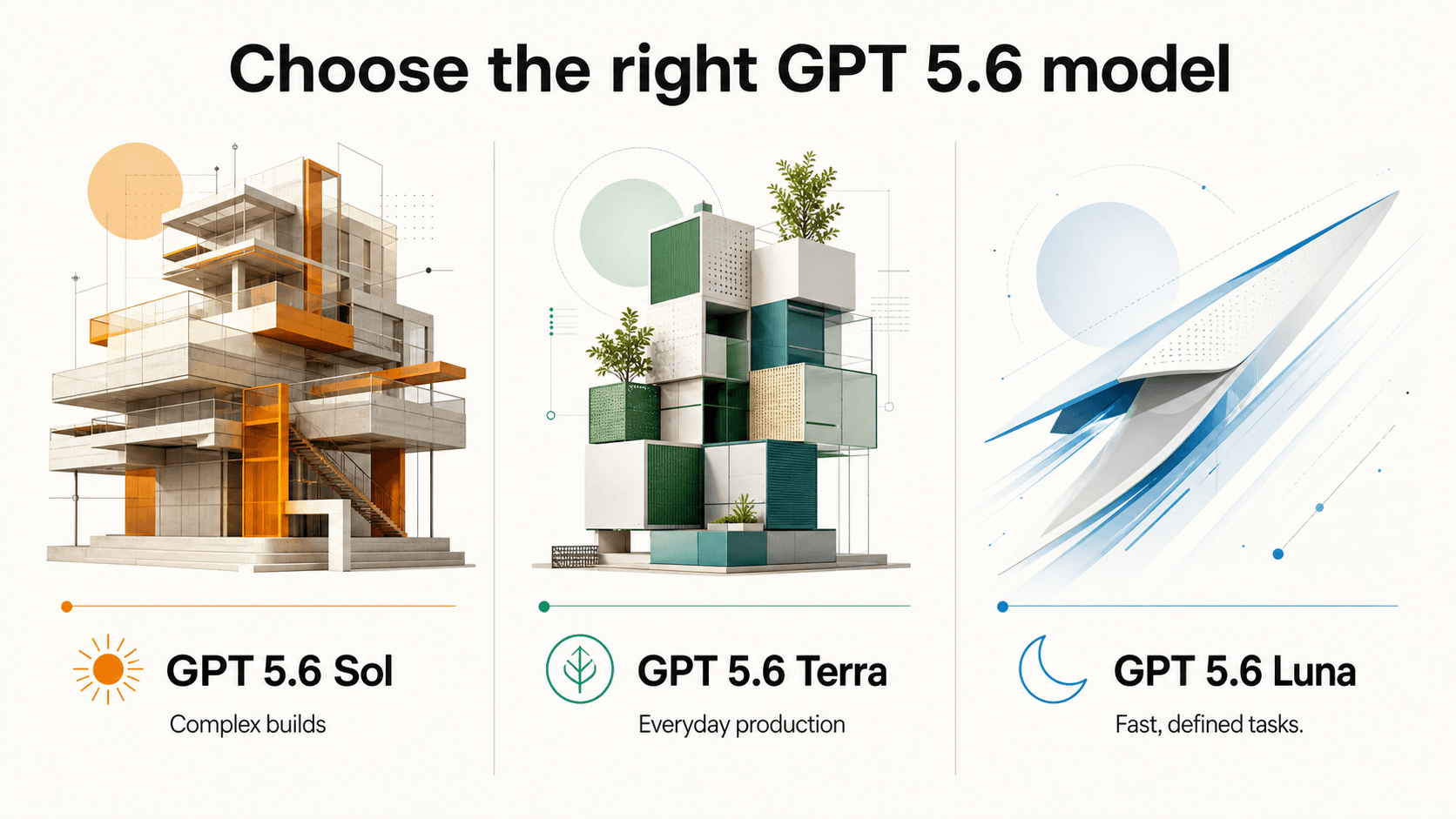
The release also gives teams a practical choice between three models. According to the official GPT 5.6 System Card, the family includes Sol, Terra, and Luna. They share the same generation but are designed for different levels of task complexity, speed, and cost.
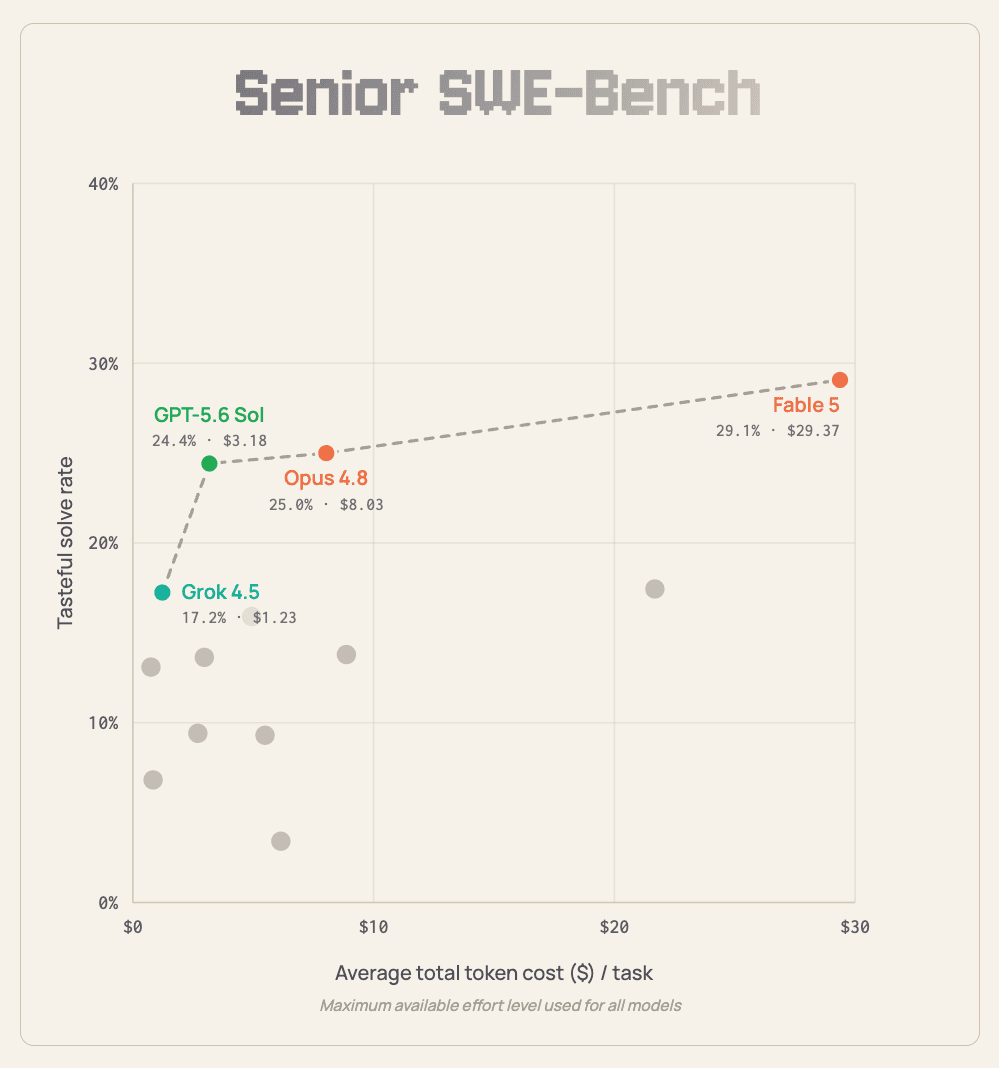
What Changed in GPT 5.6
Three Models for Different Types of Work
GPT 5.6 Sol is the flagship model and the best fit for complex builds. In Atoms, Sol is suited to projects with detailed product requirements, unusual interface systems, several connected features, or decisions that must remain consistent across a long agent workflow. Use it when output quality matters more than response time.
GPT 5.6 Terra is the lower cost option for general production work. It offers a more balanced choice for landing pages, business websites, internal tools, and applications with familiar technical patterns. Terra is useful when a project still requires planning and implementation, but does not need the full reasoning depth of Sol.
GPT 5.6 Luna is the fastest and most cost efficient model in the family. It is better suited to simple sites, routine content updates, structured transformations, and high volume tasks with clear requirements. Luna favors speed, so it is less appropriate for builds with complex architecture or ambiguous creative direction.
The distinction is not simply “good, better, best.” The right model depends on the work. Sol handles the hardest planning and engineering problems. Terra covers common production builds. Luna handles defined tasks where latency and efficiency matter most. Independent coverage from TechCrunch also describes GPT 5.6 as a three model family with separate capability and cost profiles.
Three Cases, Built with GPT 5.6 and Seedance 2.0
Each build below was generated on Atoms with GPT 5.6 driving the agent team and Seedance 2.0 producing the hero footage. All three began as a single prompt.
Case 1: VAGUE, an Editorial Streetwear Site
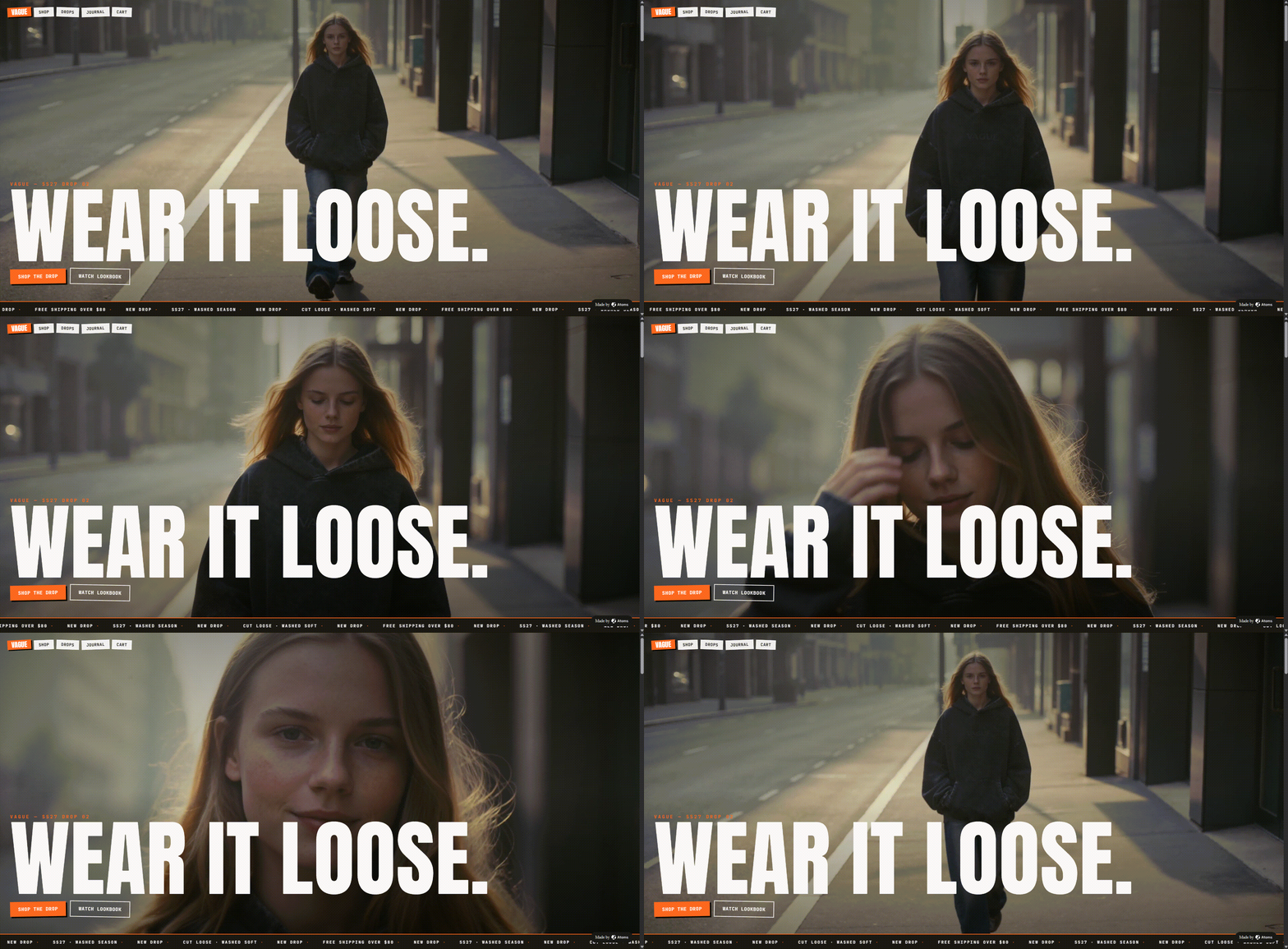
The brief asked for a streetwear drop site that reads as a fashion zine rather than a commerce template. The build opens with a full-screen handheld morning street film, muted and looping, under an oversized "WEAR IT LOOSE." headline and a monospace drop label. Below it: an asymmetric grid of six tilted product cards that straighten on hover, a collage of torn-paper lifestyle shots with handwritten captions and scroll parallax, a full-width ink-black manifesto band, fine-line fit diagrams, a rotated journal section, and a newsletter signup with working email validation. The palette holds to off-white paper, ink black, signal orange, and denim blue throughout.
Case 2: SOLEIL, a Summer Editorial Brand

SOLEIL is a beachwear brand site built around light. It opens with a golden-hour beach film generated by Seedance, a hand-drawn sun mark, and the serif line "Days made of salt and light." The core commerce section breaks from vertical convention: a sideways drag-scrolling postcard reel holds all five products with italic captions. The page continues through an editorial story spread, a materials band with texture cards, a destination journal, and closes with a second full-bleed dusk film and a working newsletter signup. Sun-bleached white, warm sand, sea-glass green, and faded coral carry the palette from the first frame to the footer.
Case 3: SNOOT, a Pet Camera with a Working Backend
SNOOT is a pet-mounted camera brand, and its build goes furthest past the frontend. The hero is a ten-second Seedance 2.0 film mixing pet POV footage with product macro shots, overlaid with pill navigation, floating spec cards, an interactive color selector, and a quick-add price card. The page includes a masonry POV gallery, an interactive color mixer with live product previews across camera and collar combinations, a timeline section following a dog through a day, and a slide-out cart. Cart items and newsletter subscriptions persist to the Atoms Cloud database, so the commerce loop actually functions.
View the live build →
Reading the Pattern
Set the three builds side by side and the pattern is consistent. Each began as a dense prompt covering tone, structure, and function. The old failure mode was partial success: the layout ships, the tone flattens, the backend stubs out. With GPT 5.6, all three held in a single pass across very different briefs, a zine, a postcard, and a product with live commerce.
The Seedance 2.0 pairing matters too. Custom footage used to mean a production crew. Inside Atoms, the same prompt that defines the site defines the film, so the hero video becomes part of the specification rather than a stock asset. Combined with Race Mode, which runs multiple agent teams in parallel and keeps the strongest result, both the floor and the ceiling of output quality rise.
How to Use It
GPT 5.6 is live now in the Atoms model selector. No setup is required. Pick the model, write your brief, and the agent team runs the full path: research, product definition, architecture, full-stack implementation with authentication, database, and Stripe payments, through to deployment. To include generated video, describe the footage you want directly in your prompt; Seedance 2.0 handles generation and the engineer agent handles integration.
One practical note on prompting. All three cases above succeeded because the briefs were specific about feel, structure, and function in the same document. State the mood, list the sections, and name what must actually work. GPT 5.6 rewards that specificity more than previous default models.
Start a build at atoms.dev and see what a full agent team does with a stronger model underneath it.
