A useful AI-generated site or presentation starts with a real user decision—not with a generic request to “make something beautiful.” This guide shows a practical workflow for students, marketers, founders, researchers, sales teams, and educators.
What you can make: a focused result designed to turn a clear brief into a coherent, review-ready slide narrative.
What to prepare: an audience, accurate source material, one primary action, and an approved visual direction.
What the result looks like: start with Series A Pitch Deck, a CMS-verified example built with Atoms.
Start now: open the AI Presentation Maker and adapt the verified prompt below.
1. Start with a finished example
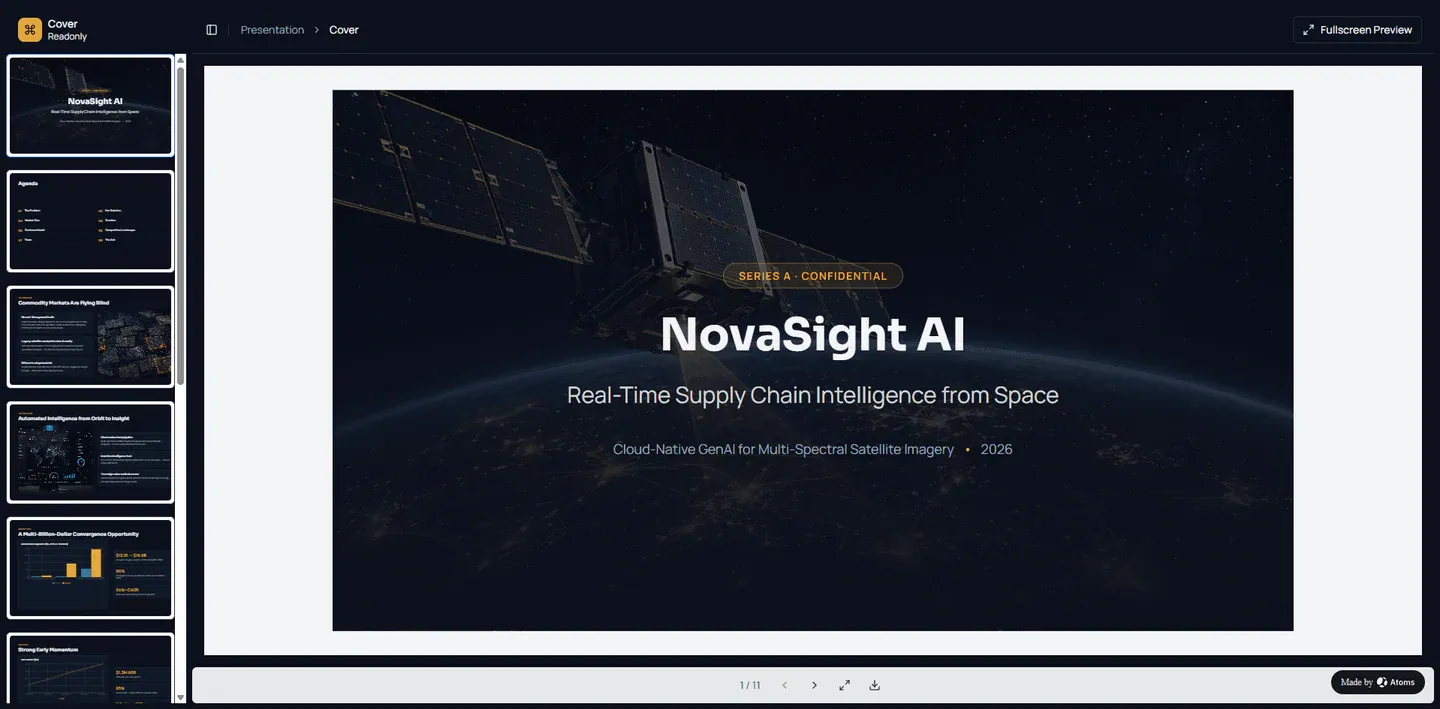
The CMS prompt behind this example was:
The example is a starting point, not proof that every visible fact, integration, payment path, review, outcome, or piece of availability is production-ready. Before using an AI-generated result publicly, replace demonstration details with approved information and test every action.
2. Decide what the visitor or audience should do
The primary goal is to turn a clear brief into a coherent, review-ready slide narrative. Choose one leading action and make secondary actions support it. If every button competes equally, the page or deck may look complete while giving the audience no clear direction.
Write one sentence before generating:
Use that sentence to remove sections that do not support the intended decision.
3. Prepare accurate source material
Gather these inputs before generation:
- audience, speaking context, and time limit
- one decision or takeaway the deck should drive
- approved facts, citations, metrics, and brand assets
- required slide count and delivery format
- visual examples and accessibility requirements
Keep an explicit list of unknowns. AI can propose structure and draft language, but it should not silently fill missing business facts, metrics, legal claims, availability, prices, testimonials, or integrations.
4. Use a prompt that defines the job
A stronger prompt defines the audience, desired action, content modules, constraints, and unknowns. It leaves visual room for the system while preventing important facts from being fabricated.
Use the builder for this scene
5. Generate and review the first version
- Open the relevant Atoms Use Case page.
- Replace every bracketed field in the reusable prompt.
- Generate a first version.
- Review the opening screen or first three slides before polishing details.
- Check whether the audience, subject, and primary action are immediately clear.
- Replace placeholders and generated facts with approved source material.
- Refine one requirement at a time rather than restarting with a vague prompt.
Treat generation as the beginning of editing. A polished visual result can still contain incorrect facts, dead links, inaccessible text, or a confused user journey.
6. Use a structure matched to the task
A practical starting structure is:
The exact number of pages or slides is less important than the sequence. Each section should answer the next question the audience naturally has.
7. Learn from six real examples
GTA 5 Introduction Slides
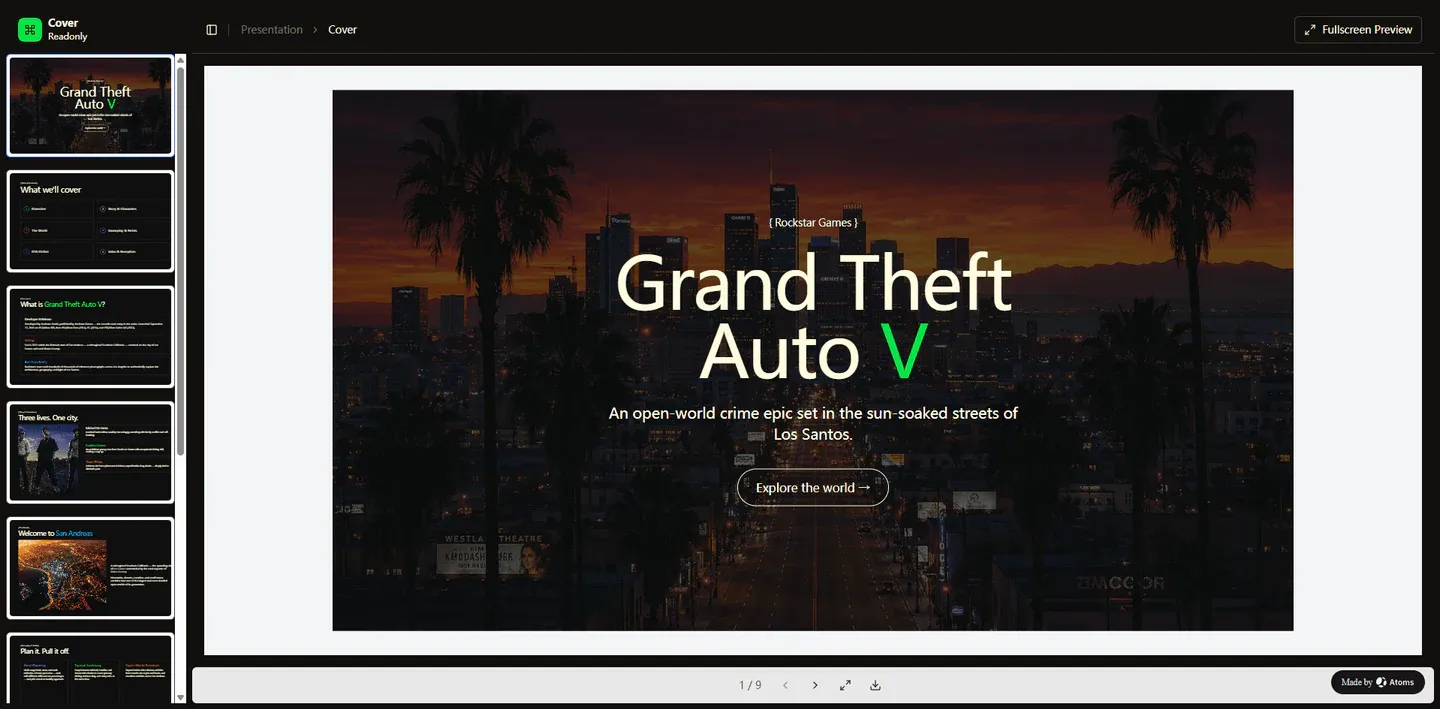
Original prompt
Series A Pitch Deck: organize the deck around problem, solution, market, traction, business model, team, and ask—then verify every company metric.
World Cup 2026 Slides
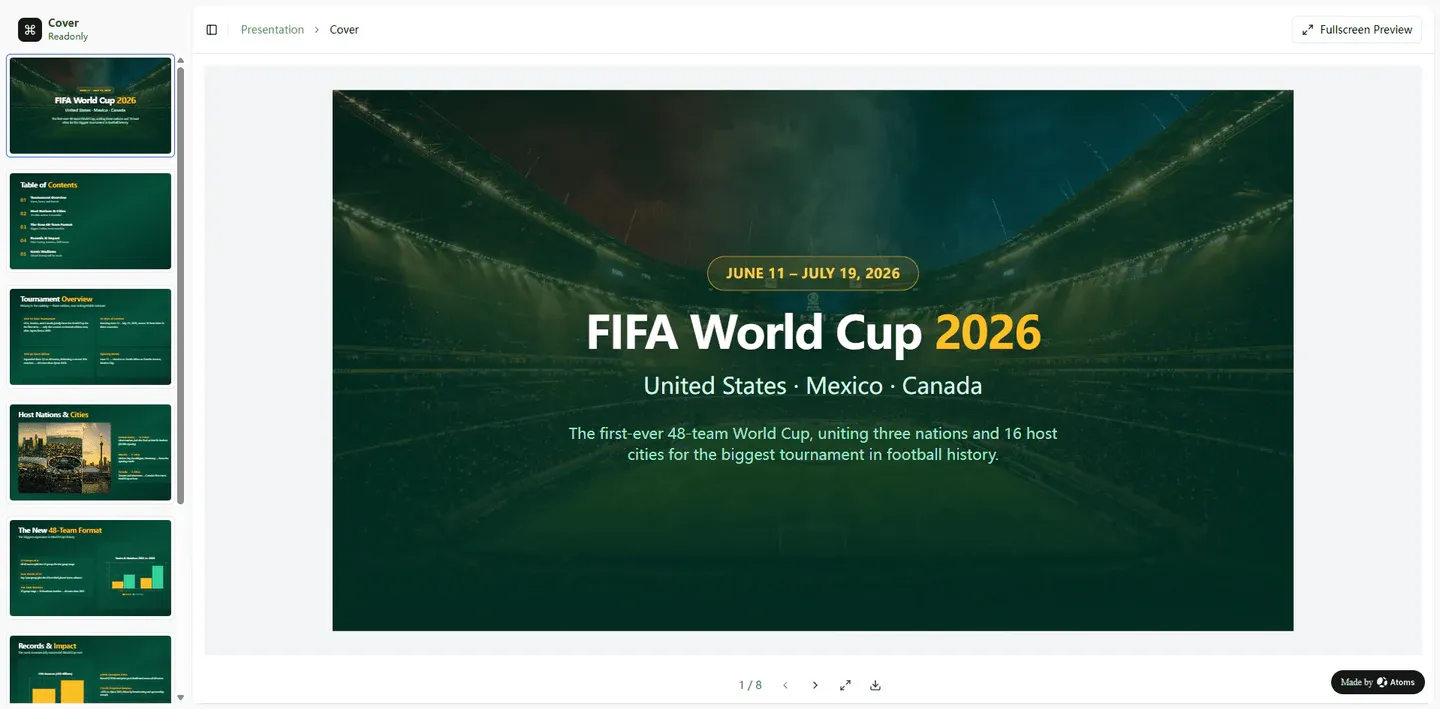
Original prompt
Unitree Robotics Slides: combine product context with sourced media without presenting promotional claims as independent proof.
Unitree Robotics Slides
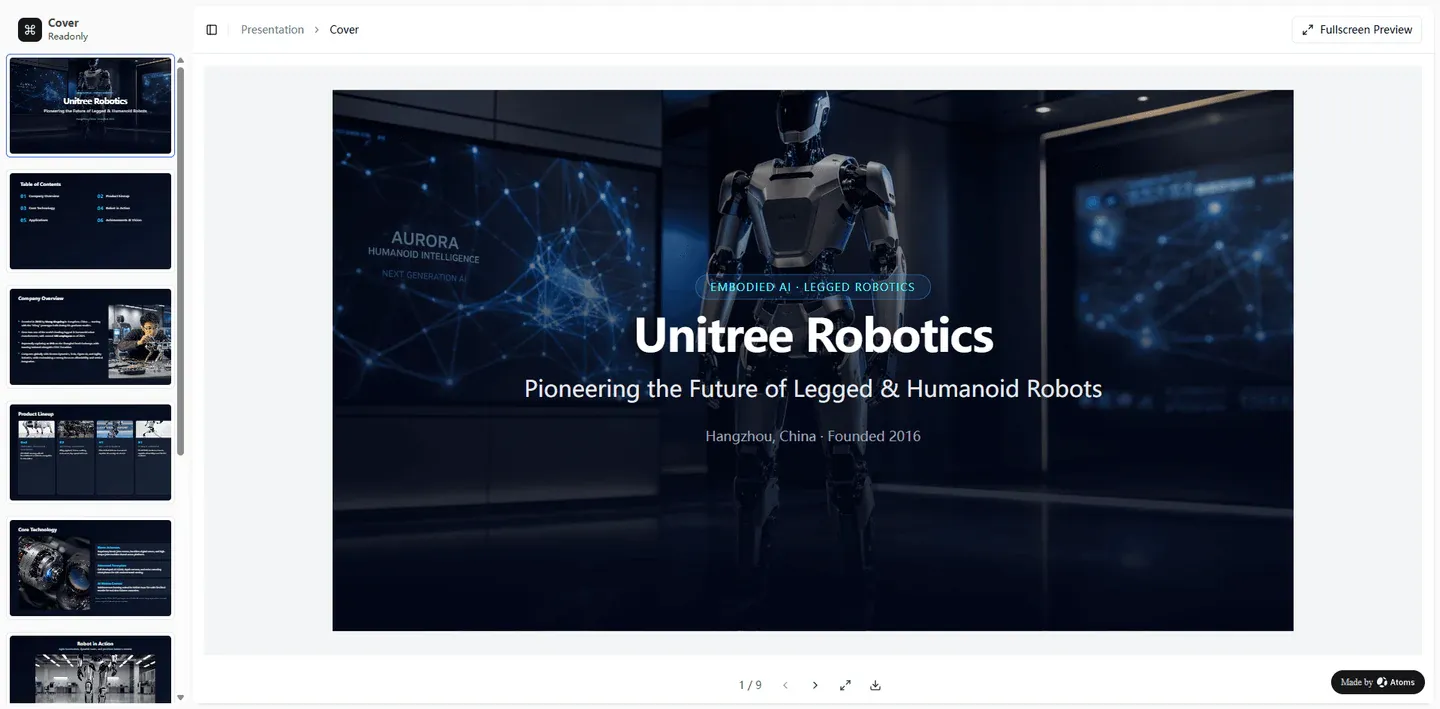
Original prompt
SpaceX Introduction Slides: use a clear chronology and cite current mission or vehicle facts.
SpaceX Introduciton Slides
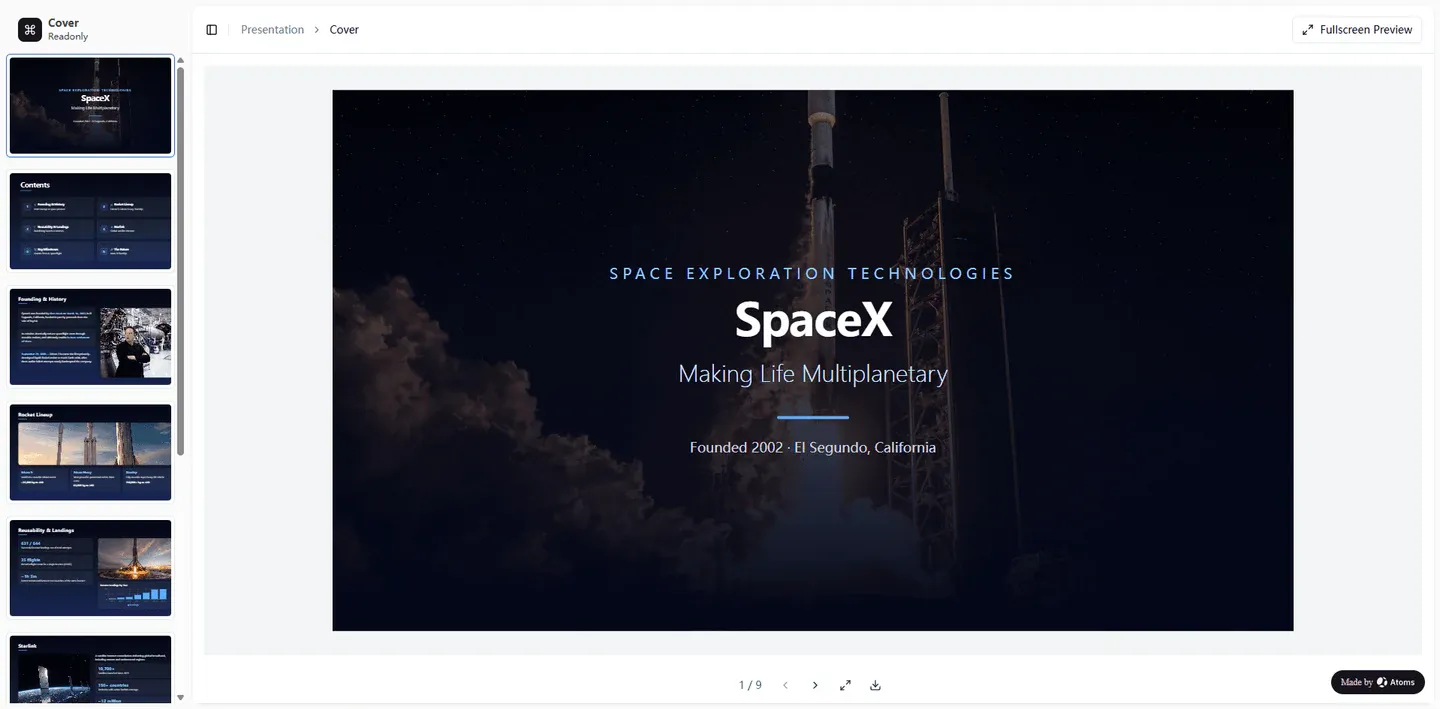
Original prompt
World Cup 2026 Slides: check dates, venues, participating teams, and rights-sensitive marks against current official sources.
Series A Pitch Deck
Original prompt
GTA 5 Introduction Slides: separate descriptive game information from copyrighted media and current platform claims.
(G)I-DLE Introduction Slides
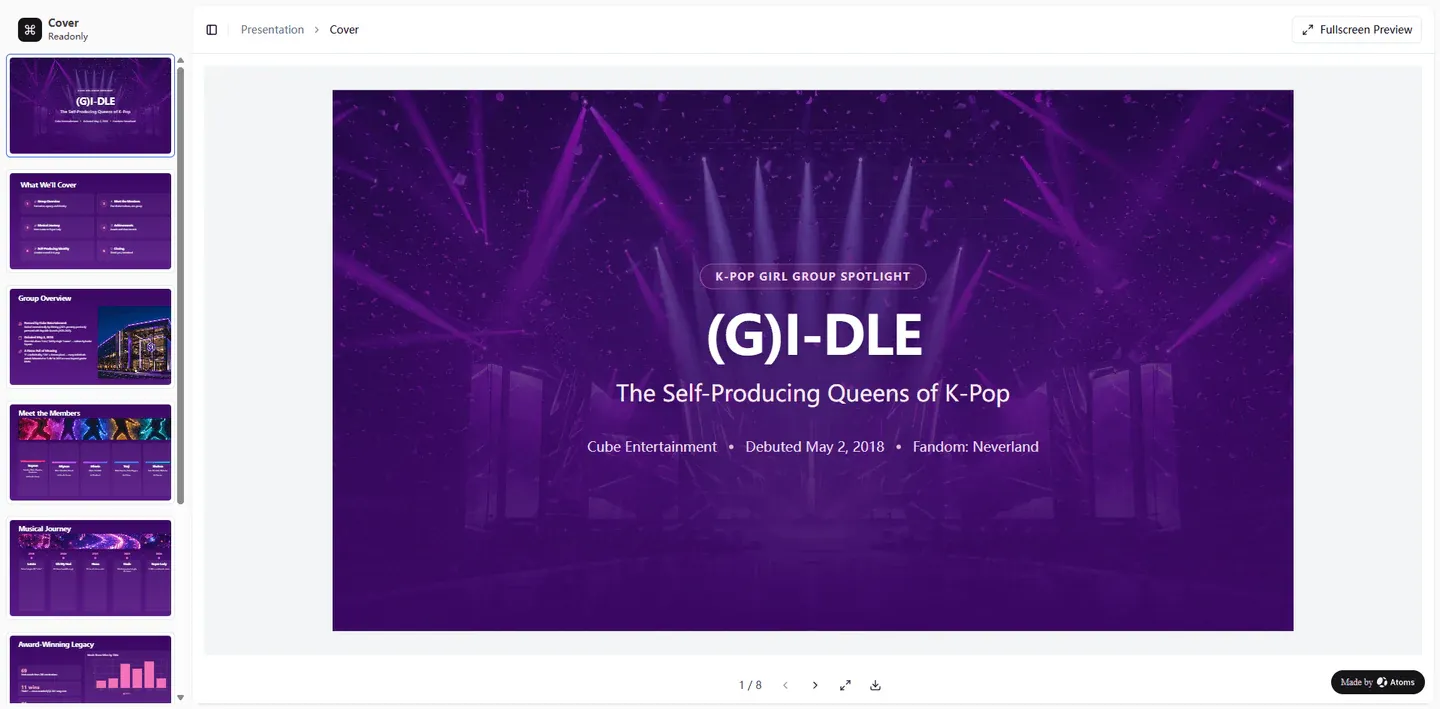
Original prompt
(G)I-DLE Introduction Slides: verify names, releases, imagery permissions, and current status before presenting.
8. Review for trust, accessibility, and conversion
- Every number, quotation, benchmark, and market claim has a source.
- The slide order supports one audience decision rather than a collection of facts.
- Charts match the underlying data and label units and dates.
- Images and logos have appropriate provenance and usage rights.
- Text remains readable at presentation distance.
- Speaker notes, links, video, animation, and export behavior are tested in the final environment.
Also test the result on mobile where relevant, verify keyboard and link behavior, and review visible text for contrast, hierarchy, spelling, and scanning. Do not describe a visual mockup as a connected production workflow.
9. Publish, measure, and improve
After launch, measure behavior tied to the page's real job: qualified clicks, completion of the primary path, engaged reading or viewing, signup, first build, successful generation, and—where measurable—publication. Avoid judging the page only by raw visits.
For the first iteration, record:
- source and medium;
- first landing article or Use Case page;
- which example or CTA was selected;
- signup and first-build continuation;
- successful generation and publication;
- common exit points and failed actions.
Start with the verified example
- View Series A Pitch Deck.
- Copy and customize its original prompt or the reusable prompt above.
- Build your own version with Atoms.
The best first version is not the one with the most content. It is the one that gives the intended audience accurate information and a clear next step.
