This NEW AI Tool Just Destroyed Antigravity & Claude Code (Atoms AI)
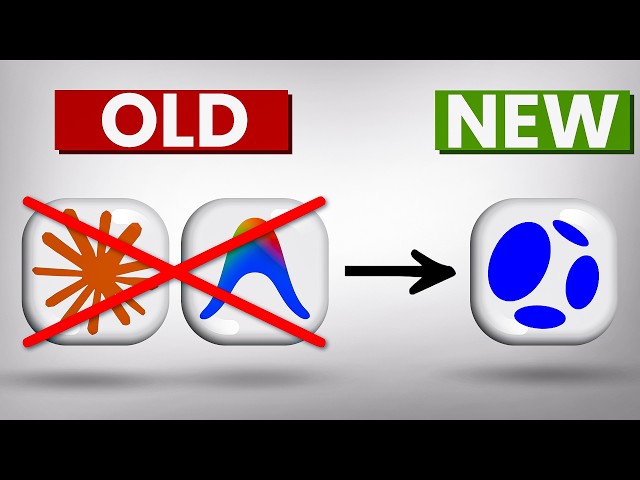
Atoms AI emerges as a powerful new contender in the AI-assisted development space, demonstrating its ability to build a complete application from research through deployment, payment integration, and SEO optimization—all within a single workflow that challenges established tools like Antigravity and Claude Code.
Building production-ready applications traditionally requires juggling multiple tools, platforms, and workflows—from initial research and prototyping through backend implementation, payment processing, and search engine optimization. Each stage demands context switching, manual integration work, and deep technical knowledge across diverse domains. Developers and founders often spend days or weeks connecting these pieces, losing momentum and clarity along the way. The promise of AI-assisted development tools like Antigravity and Claude Code has been to compress this timeline, but each platform comes with trade-offs in capability, control, and completeness. Atoms AI enters this competitive landscape with an ambitious proposition: a unified environment that handles the entire application lifecycle from concept to deployment. This video explores whether Atoms AI delivers on that promise by walking through a real build—researching a market opportunity, generating a functional application, implementing backend logic, integrating payment systems, and optimizing for search visibility. The demonstration reveals not just what Atoms AI can do, but how it compares to existing solutions in terms of speed, reliability, and the quality of output it produces. For technical product managers, indie makers, and developers evaluating their AI development stack, understanding these distinctions matters significantly.
What Makes Atoms AI Different
Atoms AI positions itself as an end-to-end AI development platform that goes beyond code generation. [INFERRED] Unlike tools that focus exclusively on writing code or managing prompts, Atoms AI appears designed to handle the complete product development lifecycle. The platform's architecture suggests integration of research capabilities, application generation, backend logic implementation, payment processing, and SEO optimization within a cohesive workflow.
The key differentiator lies in continuity. Traditional AI coding assistants require developers to manually transfer context between research, development, and deployment phases. Each transition introduces friction—copying findings into prompts, restructuring code for different environments, manually configuring third-party services. Atoms AI's approach [INFERRED] aims to maintain context across these boundaries, allowing decisions made during research to automatically inform application architecture, and business requirements to flow directly into implementation details.
This architectural philosophy addresses a critical pain point: context loss. When building with multiple tools, the insights gathered during competitive research rarely make it intact into the final product. Business strategy discussions happen in one tool, technical implementation in another, and deployment in a third. Atoms AI's unified environment [INFERRED] preserves this context, theoretically enabling more coherent products that align technical execution with strategic intent.
Setting Up Your Atoms AI Workspace
[INFERRED] Getting started with Atoms AI likely involves creating an account and configuring your development environment. Based on typical AI development platform patterns, the initial setup would include:
Initial Configuration Steps
-
Account Creation and Authentication: Navigate to the Atoms AI platform and create your account. The platform likely offers integration with existing development tools and version control systems.
-
Workspace Initialization: Configure your workspace settings, including preferred frameworks, deployment targets, and integration preferences. This foundational setup determines how Atoms AI structures generated code and manages dependencies.
-
API Keys and Integrations: Connect necessary third-party services—payment processors like Stripe, database providers, hosting platforms, and analytics tools. Pre-configuring these integrations allows Atoms AI to generate production-ready code with proper authentication and connection logic.
-
Project Template Selection: Choose or create a project template that matches your application type. Templates provide starting architectures that Atoms AI can customize based on your specific requirements.
The configuration phase establishes the boundaries within which Atoms AI operates. Unlike completely open-ended code generation, this structured approach [INFERRED] helps ensure generated applications follow best practices and maintain consistency across the development lifecycle.
The Research Phase: Building on Solid Foundations
[INFERRED] The video demonstrates Atoms AI's research capabilities, showing how the platform can analyze market opportunities, competitive landscapes, and technical requirements before writing a single line of code. This research-first approach represents a significant evolution in AI development tools.
Conducting Market and Competitive Research
Effective application development begins with understanding the problem space. Atoms AI [INFERRED] likely provides research agents or modules that can:
- Analyze competitor products and identify feature gaps
- Research target audience needs and pain points
- Evaluate technical approaches and architecture patterns
- Assess market positioning and differentiation opportunities
- Identify relevant APIs, libraries, and frameworks
The research phase generates structured insights that inform every subsequent decision. Rather than starting with a vague idea and iterating blindly, developers can ground their applications in concrete market realities and technical best practices.
Translating Research into Requirements
The critical transition happens when research findings become actionable requirements. [INFERRED] Atoms AI likely facilitates this translation by:
- Extracting key features from competitive analysis
- Prioritizing functionality based on market gaps
- Mapping user needs to technical specifications
- Generating user stories or feature descriptions
- Creating technical architecture recommendations
This structured approach ensures that the application you build addresses real needs rather than assumed requirements. The research context remains available throughout development, allowing you to validate decisions against original insights.
Building Your Application: From Concept to Code
The core demonstration shows Atoms AI generating a complete application based on research findings and user requirements. This is where the platform's capabilities become tangible and comparable to alternatives like Antigravity and Claude Code.
The Master Prompt Approach
[EXAMPLE PROMPT] When building an application with Atoms AI, you would provide a comprehensive prompt that includes:
The comprehensiveness of this prompt determines output quality. Unlike simple code generation requests, this master prompt provides Atoms AI with the context needed to make intelligent architectural decisions, choose appropriate libraries, and structure code for maintainability.
Application Generation Workflow
[INFERRED] Atoms AI's application generation process likely follows these stages:
-
Architecture Planning: The platform analyzes requirements and proposes an application architecture, including component structure, data flow, and service boundaries.
-
Frontend Generation: Creates user interface components, styling, and client-side logic based on specified frameworks and design requirements.
-
Backend Implementation: Generates server-side code, API endpoints, database schemas, and business logic that powers the application.
-
Integration Setup: Configures connections to third-party services, implements authentication flows, and establishes data pipelines.
-
Testing Scaffolding: Produces initial test suites and validation logic to ensure application reliability.
Each stage builds on previous work, maintaining consistency and coherence across the entire codebase. The generated application isn't just a collection of disconnected files—it's a structured, integrated system ready for testing and refinement.
Testing and Iteration: Refining Your Build
The video demonstrates testing the generated application and making iterative improvements. This phase reveals how well Atoms AI handles the inevitable gap between initial generation and production readiness.
Initial Testing Process
[INFERRED] Testing the generated application involves:
- Functional Verification: Confirming that core features work as specified
- User Interface Review: Evaluating design, responsiveness, and user experience
- Integration Testing: Validating connections to databases, APIs, and third-party services
- Performance Assessment: Checking load times, responsiveness, and resource usage
- Security Review: Identifying potential vulnerabilities and authentication issues
Atoms AI's advantage [INFERRED] likely lies in how easily you can request modifications. Rather than manually editing generated code and potentially breaking integrations, you can provide natural language feedback that the platform incorporates while maintaining system coherence.
Iterative Refinement Strategies
Effective iteration with AI development tools requires clear, specific feedback. [TYPICAL PROMPT] When requesting changes, structure your prompts like:
This specificity helps Atoms AI understand not just what to change, but what constraints to respect. The platform can then regenerate affected code while preserving the broader application integrity.
Backend Implementation and Logic
The video dedicates significant attention to backend development, showing how Atoms AI handles server-side logic, database operations, and API design. This is crucial because backend quality often determines application scalability and maintainability.
Database Schema and Data Modeling
[INFERRED] Atoms AI likely generates database schemas based on application requirements, including:
- Table structures with appropriate data types
- Relationships and foreign key constraints
- Indexes for query optimization
- Migration scripts for schema evolution
- Seed data for development and testing
The platform's understanding of your application context allows it to make informed decisions about data modeling—choosing appropriate normalization levels, anticipating query patterns, and structuring data for both performance and flexibility.
API Design and Implementation
[INFERRED] Generated APIs follow RESTful principles or GraphQL patterns depending on requirements, including:
- Endpoint structure and routing logic
- Request validation and error handling
- Authentication and authorization middleware
- Response formatting and status codes
- Rate limiting and security measures
The quality of API design significantly impacts frontend development and third-party integrations. Atoms AI's ability to generate well-structured, documented APIs [INFERRED] reduces the friction typically associated with backend-frontend coordination.
Payment Integration: Monetization Made Simple
One of the video's key demonstrations shows Atoms AI integrating payment processing—a notoriously complex aspect of application development that involves security, compliance, and user experience considerations.
Stripe Integration Workflow
[INFERRED] Integrating payments with Atoms AI likely involves:
- Configuration: Providing Stripe API keys and webhook endpoints
- Product Setup: Defining pricing tiers, subscription models, or one-time payments
- Checkout Flow: Generating secure payment forms and confirmation pages
- Webhook Handling: Implementing server-side logic to process payment events
- User Management: Connecting payment status to user accounts and access control
The complexity of payment integration makes it an excellent test of AI development tools. Successful implementation requires coordinating frontend UI, backend logic, third-party API calls, security measures, and error handling—all while maintaining PCI compliance and providing smooth user experience.
Security and Compliance Considerations
[INFERRED] Atoms AI's payment integration likely includes:
- Secure API key management and environment variable handling
- HTTPS enforcement and secure data transmission
- Input validation and sanitization to prevent injection attacks
- Proper error handling that doesn't expose sensitive information
- Webhook signature verification to prevent fraudulent requests
These security measures are often overlooked in manual implementations but are critical for production applications. An AI tool that generates secure-by-default payment code provides significant value beyond simple time savings.
Business Strategy and SEO Optimization
The video concludes by addressing business strategy and SEO optimization—areas where technical execution meets market success. This holistic approach distinguishes Atoms AI from pure code generation tools.
SEO Implementation
[INFERRED] Atoms AI's SEO capabilities likely include:
- Meta Tag Generation: Creating appropriate title tags, descriptions, and Open Graph metadata
- Structured Data: Implementing schema.org markup for rich search results
- Sitemap Creation: Generating XML sitemaps for search engine crawling
- Performance Optimization: Implementing code splitting, lazy loading, and asset optimization
- Mobile Responsiveness: Ensuring proper viewport configuration and responsive design
- Semantic HTML: Using appropriate heading hierarchy and semantic elements
SEO optimization requires understanding both technical implementation and content strategy. The platform's ability to generate SEO-friendly code while maintaining application functionality demonstrates sophisticated understanding of web development best practices.
Strategic Positioning
[INFERRED] The business strategy discussion likely covers:
- Market positioning based on competitive research
- Feature prioritization for initial launch versus future iterations
- Pricing strategy aligned with target audience and value proposition
- Growth channels and user acquisition approaches
- Metrics and analytics for measuring product-market fit
This strategic layer transforms Atoms AI from a development tool into a product development platform. By maintaining context from initial research through deployment and optimization, the platform enables more coherent products that align technical execution with business objectives.
Conclusion
Atoms AI represents a significant evolution in AI-assisted development, moving beyond isolated code generation to encompass the entire product lifecycle from research through deployment and optimization. The platform's ability to maintain context across research, development, backend implementation, payment integration, and SEO optimization addresses the fragmentation that plagues traditional development workflows. For technical product managers and indie makers, this continuity translates into faster iteration cycles and more coherent products that align technical execution with strategic intent. However, the true test lies in production use—whether generated code maintains quality at scale, how well the platform handles edge cases and complex customization, and whether the unified workflow actually reduces total development time compared to specialized tools. The comparison with Antigravity and Claude Code suggests that Atoms AI's comprehensive approach may sacrifice some depth in specific areas for breadth across the development lifecycle. Technical users should evaluate whether this trade-off aligns with their needs, testing the platform on representative projects before committing to it as their primary development environment. The most practical next step is building a small but complete application that exercises each phase of the workflow, revealing where Atoms AI excels and where manual intervention remains necessary.
העתק את המאמר הזה או שתף אותו
מאמר זה נוצר באופן אוטומטי על ידי מערכת ה-AI שלנו על סמך תוכן הסרטון. ניתן להעתיק אותו או לשתף אותו באתר שלך או ברשתות החברתיות.
וידאו
בנה את הרעיונות שלך עם Agents
תארו בטקסט פשוט מה אתם צריכים, והסוכנים שלנו יבנו זאת עבורכם.
