AI-Powered Community: The New Growth Engine for Indie Founders & Startups
Introduction
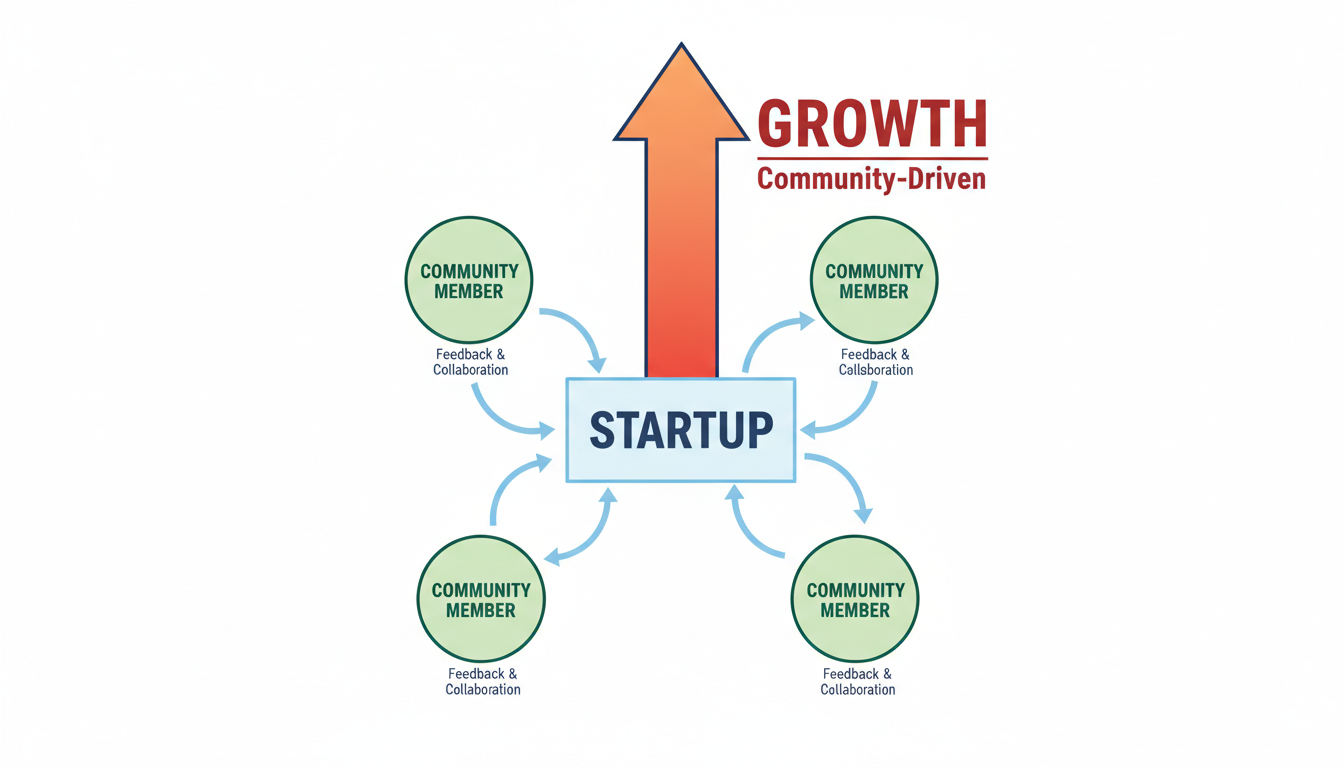
In the rapidly evolving landscape of tech startups, where traditional marketing channels are increasingly saturated and expensive, a new paradigm is taking hold: community-driven growth. Companies like Figma, the collaborative interface design tool, exemplify this shift, demonstrating how treating community as a core engine, rather than just a support function, can drive remarkable success 1. This approach prioritizes deep user engagement and shared purpose, fundamentally altering how products are built and businesses scale.
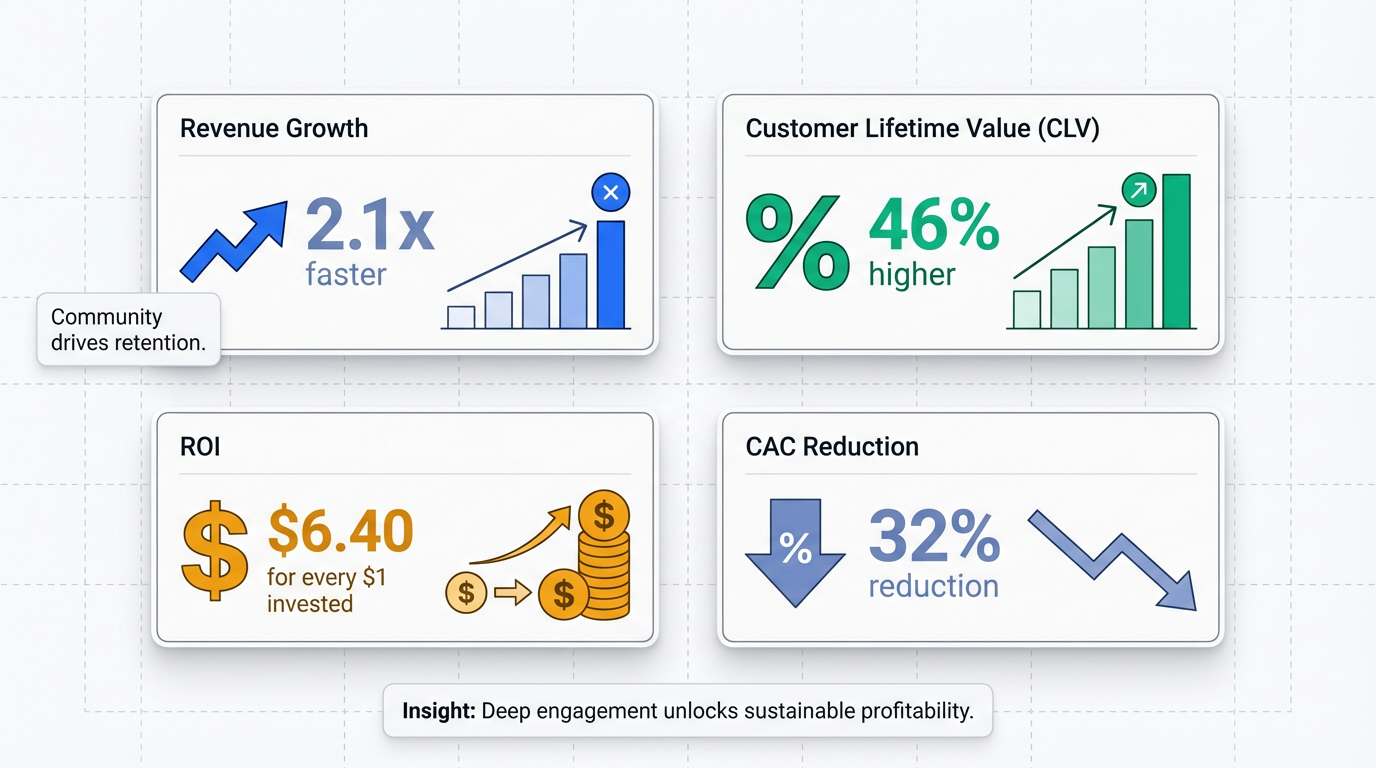
Unlike conventional acquisition strategies that often rely on hefty advertising budgets or extensive sales teams, community-driven growth harnesses the collective power of users to fuel adoption, engagement, and retention. It's a strategic pivot that yields significant returns, with companies leveraging strong communities experiencing revenue growth 2.1 times faster than those without 2. Furthermore, every dollar invested in community can yield an average return of $6.40, showcasing its potent financial upside 2. This model radically transforms customer acquisition costs (CAC), reducing them by an average of 32% for community-sourced customers, who also enjoy 30-45% lower CAC overall 3.
For resource-constrained indie hackers and AI entrepreneurs, this strategy is uniquely powerful right now. It offers a lean, authentic pathway to market by sidestepping prohibitive marketing spend and instead fostering organic word-of-mouth and genuine user advocacy. By actively listening and integrating user feedback, these entrepreneurs can gather crucial insights that directly influence product features, ensuring their offerings resonate deeply with their target audience 4. This report will explore how to effectively build, engage, and leverage communities to unlock unparalleled business success in the dynamic startup ecosystem.
Core Strategy: Engineering Authentic Community Engagement
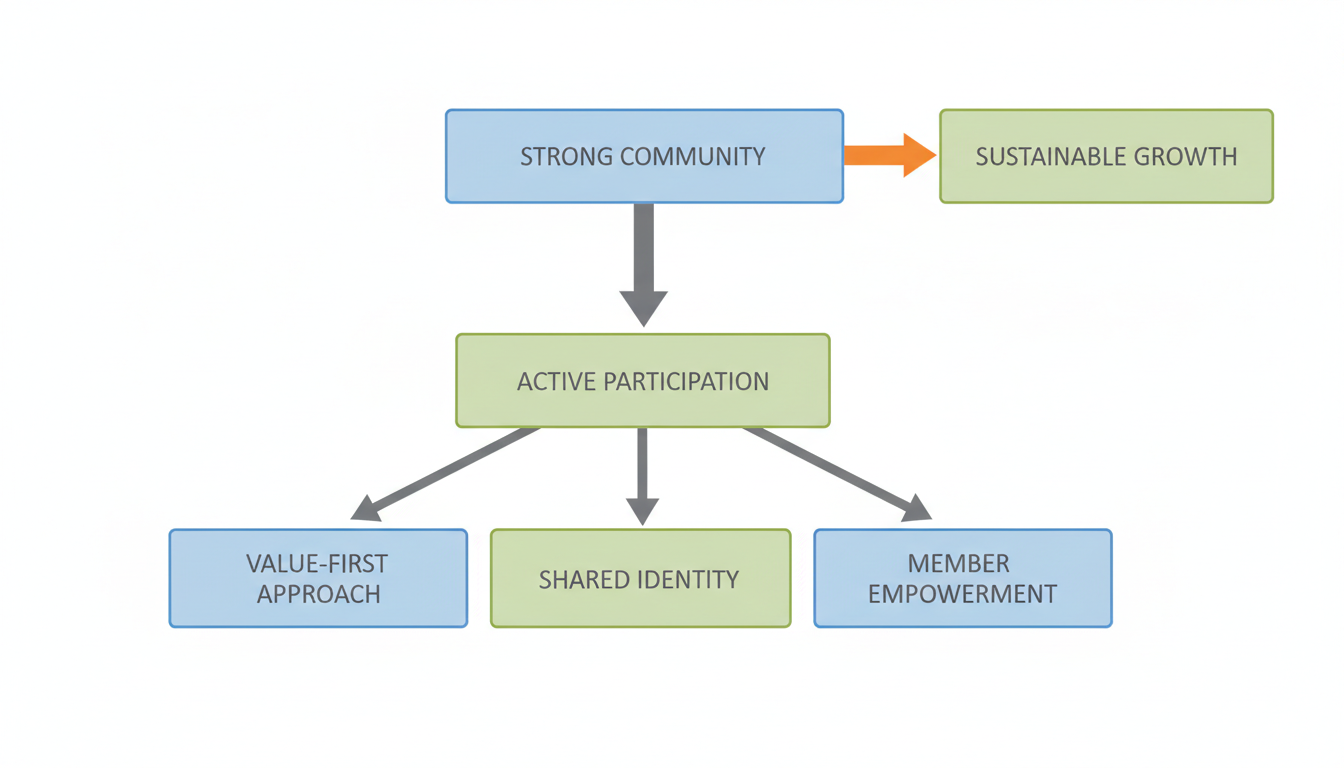
Building a sustainable, vibrant community for any tech startup hinges on three fundamental pillars: a value-first approach, the deliberate fostering of a shared identity, and the genuine empowerment of its members. These aren't just buzzwords, but actionable strategies that transform casual users into passionate advocates and crucial contributors to a startup's growth. By integrating these principles deeply into their operations, founders can cultivate a loyal ecosystem that drives sustained success.
A truly thriving community isn't built on expectations, but on generous contributions to its members. Startups must embrace a "value-first" approach, offering tangible benefits and unique experiences that go beyond mere product usage . This strategy ensures members are intrinsically motivated to join and remain active, drawn by connections, support, exclusive access, or a profound sense of belonging 5. Providing high-quality content, robust peer-to-peer support, educational resources, and unique opportunities creates a powerful sense of investment among members . Consider the Nike Run Club and Training Community, which provides free, high-value tools like guided runs and personalized training plans, embedding the brand directly into users' daily routines 6. This approach fosters motivation and deeply integrates the brand with members' personal goals. Similarly, Growth School cultivates a high-impact learning environment through cohort-based courses, enabling members to collaborate, bridge skill gaps, and connect with like-minded individuals 7. Udemy’s success with its instructor community, where resources make instructors four times more likely to publish courses, directly illustrates how offering value can propel core business objectives 8.
Beyond individual benefits, a strong community coalesces around a shared identity—a collective purpose, common values, or a passionate interest that binds its members, extending far beyond the utility of a product . This shared understanding cultivates a potent sense of belonging, transforming users into an interconnected group 6. Brands that successfully sell a lifestyle or an aspirational identity, rather than just a commodity, forge deeper emotional connections with their audience 6. This is often achieved through compelling storytelling, shared experiences, and aligning with members' deepest aspirations 6. Harley-Davidson's H.O.G. (Harley Owners Group) exemplifies this, creating a global phenomenon centered on a shared passion for the open road and the brand's iconic imagery 6. Empowering local chapters to organize events, the community becomes a self-sustaining ecosystem driven by collective identity 6. Apple's ecosystem similarly unites users around innovation and design, reinforced by its dedicated support community, "Today at Apple" workshops, and the Worldwide Developers Conference (WWDC) 6. These initiatives consistently reinforce the shared identity of belonging to a forward-thinking, design-conscious collective 6. Metalabel also harnesses common identity for a shared cause, producing public releases that manifest members' viewpoints and foster collective world-building 7.
For a community to truly flourish and become a growth engine, startups must empower their members, giving them genuine ownership and a decisive voice in its evolution. This approach makes members feel inherently seen, heard, and valued, thereby transforming them into active stakeholders and powerful advocates 9. Mechanisms such as co-creation, fostering peer-to-peer support, and prominently featuring user-generated content are crucial, as they demonstrate that members' contributions are vital and respected . This recognition fuels active participation and loyalty. Notion’s community, for instance, amplifies existing user passion by providing infrastructure for template creation and hosting meetups . Their Ambassador Program further elevates global advocates with event grants and early access, turning them into extensions of the brand itself . Similarly, Higher Logic recommends identifying and engaging with community champions, recognizing their contributions to provide valuable insights for other members 10. Genesys launched an online community video series with live Q&A sessions, where staff directly addressed user questions, significantly humanizing the brand and deflecting support tickets 11. Such direct engagement reinforces the idea that member input profoundly shapes the product and its support ecosystem.
Real Example
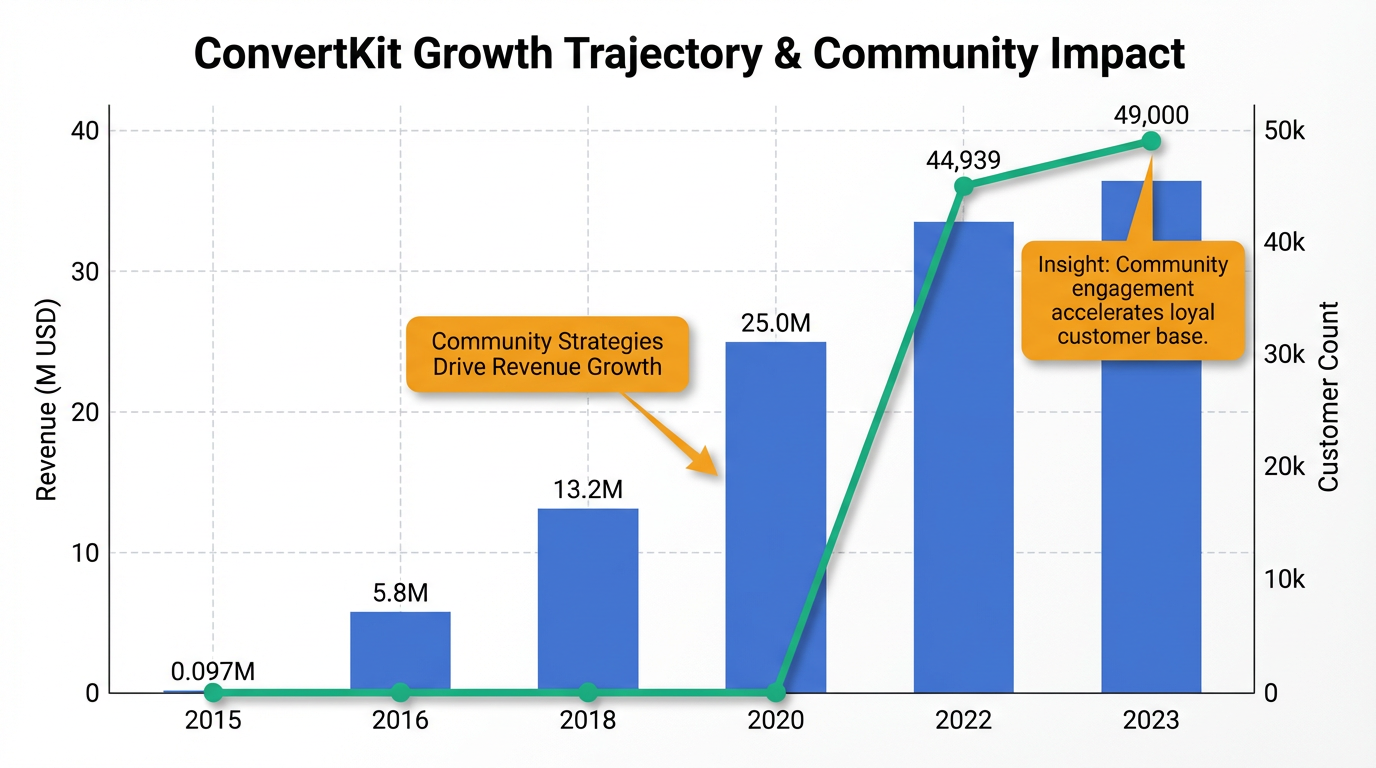
The journey of ConvertKit, rebranded as Kit, offers a compelling illustration of how a tech startup can leverage community-driven growth to achieve remarkable success. This email marketing platform, meticulously designed for content creators such as bloggers, YouTubers, and artists, initially faced a challenging period . In 2014, the company hit a "do-or-die moment" as Monthly Recurring Revenue (MRR) plummeted to $1,330 12. Founder Nathan Barry's investment and a strategic shift toward supporting creators ignited a significant turnaround, demonstrating the profound impact of community focus 12.
From that critical point, ConvertKit's growth trajectory accelerated dramatically. In 2015, MRR soared from $5,020 in March to an impressive $97,000 by December, marking a 19x increase 12. This momentum continued into 2016, with MRR reaching $625,000, signifying a 637% increase and closing the year with $5.8 million in revenue 12. By 2022, revenue climbed to $33.5 million, with customer count expanding by 17.6% to nearly 45,000 users 12. This upward trend persisted, hitting $36.4 million in revenue and 49,000 customers in 2023 12. Currently, over 500,000 creators utilize ConvertKit, collectively reaching more than 250 million subscribers, a testament to its widespread adoption driven by community engagement 13.
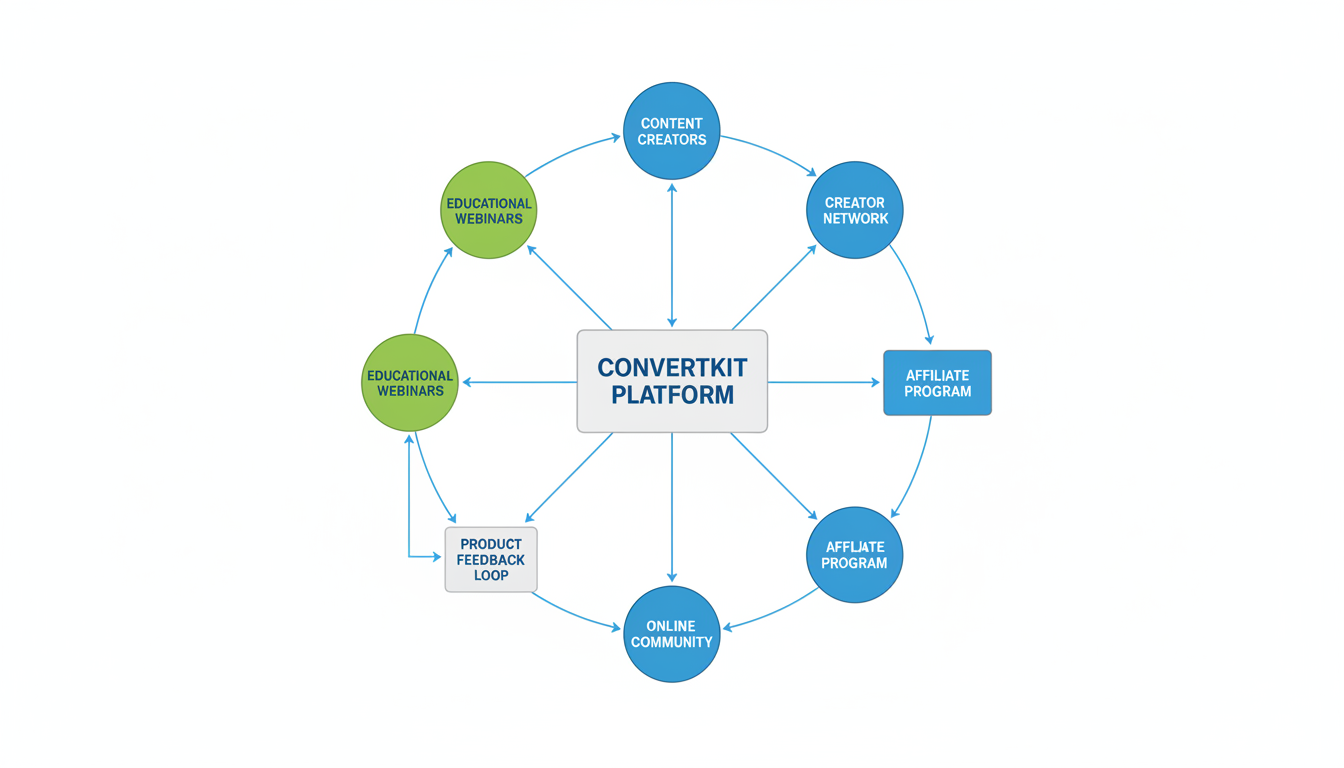
ConvertKit's success is rooted in several core community-building strategies. Initially, a sharp niche focus on content creators allowed the platform to develop tailored tools and achieve strong product-market fit . Concierge migrations in 2015, offering free services to help users switch platforms, effectively removed adoption barriers and built trust 12. From 2016 to 2017, ConvertKit hosted over 150 educational webinars with influencers, prioritizing learning over direct sales, which not only boosted monthly revenue sixfold but also cultivated a loyal community by positioning the brand as a trusted partner 12. The affiliate marketing program, launched in 2016, offered a generous 30% recurring commission, transforming prominent creators into passionate advocates and referral engines 12.
Further cementing its community-led approach, ConvertKit launched an Online Creator Community in 2020 on the Bettermode Platform 14. This free, peer-to-peer space facilitates learning, support, and interaction through categorized content, a help forum for expert answers, and sub-communities for shared passions . Gamification elements, such as a "Reputation app" and leaderboards, further incentivize engagement 14. The Creator Network, introduced later, became a robust referral engine enabling cross-promotion among creators, enhancing discoverability through matching algorithms, and integrating community building directly with a monetization strategy via paid plans .
Community feedback is not just collected but actively integrated into ConvertKit's product development cycle. The online Creator Community includes a dedicated section for gathering product insights, with discussions directly informing new feature ideas and updates . This continuous feedback loop ensures that product offerings, like enhanced content snippet editing and new conditional fields for visual automations, directly address creator needs and help guide the product roadmap . This community-led growth approach treats customer engagement as the beginning of a journey, not the end of a sales funnel, cultivating deeper connections that turn customers into enthusiastic advocates who form a "moat" against competitors and fuel a "growth flywheel" of referrals and support 15. While challenges like early growth struggles and intense competition were present, ConvertKit's unwavering focus on its niche and investment in community-driven marketing strategies proved pivotal 12.
Build It Yourself
Transforming an idea into a thriving community no longer demands a full development team or endless months of coding. Indie hackers and AI entrepreneurs today are equipped with powerful AI tools that act as co-founders, engineers, and designers, enabling rapid iteration and efficient scaling. This section delves into how these modern AI solutions—specifically Lovable, Cursor, and v0, alongside broader AI applications—can be leveraged to build, manage, and grow your digital communities with unparalleled speed and intelligence. Leveraging these tools is about building smarter, not just faster, allowing lean teams to punch above their weight.
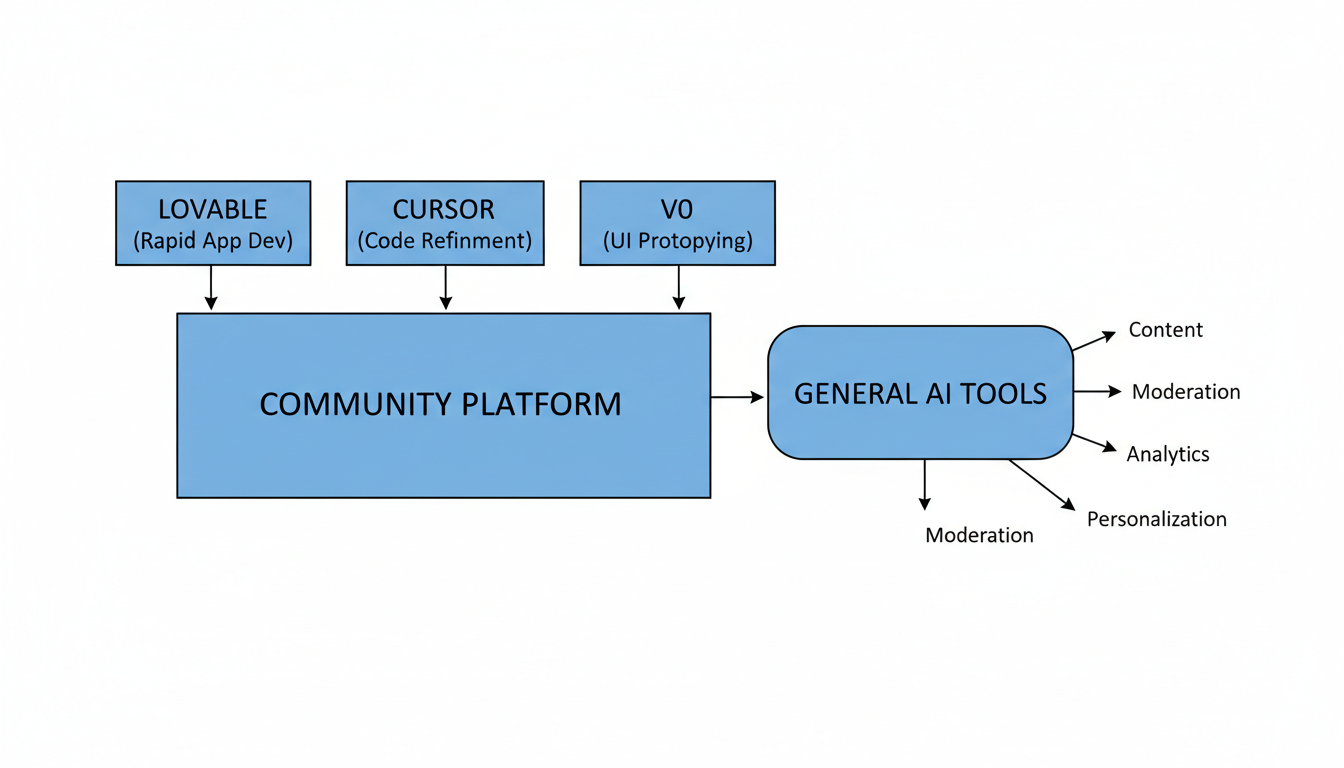
Lovable emerges as an AI co-founder for crafting full-stack community applications from simple natural language prompts . Imagine describing a "member portal where users can track project status and get updates," and Lovable generating a complete, functional app, including databases and authentication, ready for deployment 16. Its integration with Gemini further allows for building sophisticated AI features like chat or content generation directly within your platform, personalizing user experiences without needing separate API keys 17. This rapid feature development capability is invaluable for quickly launching custom forums or event management systems tailored to your community's needs 16.
For those who dive deeper into code, Cursor acts as an AI software engineer, significantly accelerating the development workflow within a Visual Studio Code environment . It provides intelligent code completions, suggestions, and an "Agent Mode" that can autonomously refactor code, fix bugs, or generate new functions across multiple files based on a single instruction 18. This means indie hackers can quickly implement, refine, or debug intricate community features, ensuring a robust and high-quality codebase with integrated error detection and debugging suggestions 18. Cursor integrates seamlessly with existing Git workflows, effectively translating tasks into executed code and freeing founders to focus on user experience 19.
When it comes to the user interface, v0 is an indispensable AI designer, transforming natural language into production-ready React components with Tailwind CSS and ShadCN UI 20. This tool allows for instant UI generation, making it incredibly simple to prototype and visualize community elements such as discussion threads, user profiles, or event pages 20. Developers can iterate rapidly on the visual aspects of their community platform, getting immediate feedback and generating the necessary code for their front-end needs 20. While strong in UI generation, v0 does have an opinionated tech stack and currently offers one-way GitHub export, which are considerations for advanced workflows .
Beyond these specialized development tools, general AI applications provide powerful capabilities across various community management functions. For content generation, LLMs like ChatGPT, Claude, and Gemini can draft announcements, discussion prompts, and engaging marketing copy, while tools like Midjourney and DALL-E 3 create stunning visual assets without requiring design skills . Video creation is streamlined with Pictory AI, which converts text into shareable videos 21. On the moderation front, tools like ModGuard, Community Sift, and Hive utilize machine learning to automatically detect and filter toxicity, hate speech, and spam in real-time, significantly reducing moderator workload by up to 88% and allowing human moderators to focus on positive engagement .
AI also revolutionizes analytics and personalization, offering deep insights into community dynamics. Sentiment analysis capabilities track the overall mood of discussions, helping identify positive or negative trends . Predictive analytics can forecast engagement levels and identify at-risk members, enabling proactive interventions 22. For personalization, AI systems analyze member behaviors to deliver tailored content recommendations, automated support, and personalized onboarding messages, making interactions more relevant and satisfying . Tools like Drippi AI and Expandi even automate personalized outreach for marketing and community building, ensuring targeted communication 21. Furthermore, AI agents can automate a wide range of operational tasks for lean startups, from customer support to email management, drastically increasing efficiency and freeing up valuable time for strategic initiatives 23.
The combined power of these AI tools fosters a highly efficient and adaptable approach to community building. From accelerating the creation of full-stack applications with Lovable to refining custom code with Cursor and designing engaging interfaces with v0, indie hackers have an unprecedented ability to rapidly deploy and iterate on community features. Moreover, integrating general AI for content, moderation, analytics, and personalization ensures that these communities are not only built quickly but are also safe, engaging, and data-driven from the outset, enabling lean teams to scale their efforts effectively.
| AI Tool/Application | Content Generation | Moderation & Safety | Analytics & Sentiment | Personalization | Rapid Feature Development |
|---|---|---|---|---|---|
| Lovable | Describe app ideas & UI with chat mode 16; Gemini integration for chat/image/text features within apps 17 | Built-in security scans for platform safety 16 | Build AI-driven chat/text/image generation features for personalized interactions 17 | Rapidly build full-stack apps (e.g., member portals, custom forums) from natural language ; bi-directional GitHub sync 17 | |
| Cursor | AI-assisted code generation for dynamic content display 18; automatic documentation generation 24 | Error detection, debugging assistance for stable platform code | Code quality metrics via AI analysis 25 | Context-aware suggestions for developers for efficient coding 16 | Accelerate coding, refactor, generate functions for custom community features |
| v0 | Generate UI for community pages, content templates from prompts 20 | Rapidly prototype personalized UI elements 20 | Fast UI prototyping, generate React components for community interfaces 20 | ||
| General AI (LLMs) | ChatGPT, Claude, Gemini for drafting posts, announcements, discussion prompts 22 | Sentiment analysis of discussions 22 | |||
| General AI (Specialized Tools) | Writesonic for marketing copy 21; Midjourney, DALL-E 3 for visual assets 24; Pictory AI for video content 21; AI agents for content creation/distribution 23 | Community Sift, Hive, ModGuard for automated detection of toxicity, spam, hate speech ; Circle AI for flagging sensitive content 26 | AI-powered dashboards for user activity, trends 27; predictive analytics for engagement 22; AI agents for market research & feedback analysis 23 | AI agents for personalized support, onboarding, tailored messaging ; marketing automation for personalized outreach 21 | Cloud Development Environments (e.g., Replit, Bolt) for full-stack app building |
Next Steps: Your Actionable Playbook for Community-Driven Growth
Navigating the landscape of modern tech entrepreneurship demands more than just a great product; it requires a thriving ecosystem of users who feel seen, heard, and valued. As we've explored, community-driven growth isn't merely a supportive function but a core engine for success, capable of significantly boosting revenue, customer lifetime value, and retention while slashing acquisition costs. The path forward for indie hackers and AI entrepreneurs lies in embracing authenticity, consistently delivering value, and strategically integrating powerful AI tools to scale their efforts.
For founders looking to harness this potent force, a clear, actionable strategy is paramount. First, define your community's magnetic north by articulating a purpose that transcends your product's features28. Members join and stay when they gain connection, support, or a sense of shared identity, much like the vibrant ecosystem surrounding Harley-Davidson or Apple. Provide tangible benefits, whether that's exclusive content, educational resources, or peer-to-peer support, before expecting deep engagement.
Second, leverage AI as your force multiplier to build, nurture, and scale your community more efficiently. Tools like Lovable and Cursor enable rapid development and iteration of community-centric features, while v0 accelerates UI/UX prototyping. Beyond core development, general AI applications can automate content generation, provide sophisticated moderation, and offer deep sentiment analysis, freeing up your lean team to focus on strategic initiatives rather than busywork. Embrace a hybrid development workflow, combining no-code AI builders for speed with code-centric AI editors for fine-tuning, ensuring both agility and quality.
Third, empower your members to become co-creators and advocates. Giving users ownership and a voice in shaping the community not only makes them feel valued but also turns them into active stakeholders9. Notion's success in amplifying user passion through Ambassador Programs and user-generated content exemplifies this approach. By fostering environments for peer-to-peer support, you can organically reduce your support burden while strengthening communal bonds6.
Finally, measure what truly matters and adapt continuously. Move beyond vanity metrics to track tangible business impacts such as reduced customer acquisition costs, improved retention rates, and increased revenue generation directly attributable to community efforts29. AI-powered analytics can provide insights into engagement, sentiment, and trends, allowing you to refine your strategies proactively22. The community journey is iterative, requiring continuous feedback and a willingness to evolve your approach as your user base grows and changes.
Ultimately, the future of tech entrepreneurship is intrinsically linked to the strength and vibrancy of its communities. By committing to authenticity, providing unwavering value, empowering your users, and strategically deploying cutting-edge AI tools, you can transform casual users into a powerful, self-sustaining engine for growth, building a durable moat around your venture.