AI-Powered Tools for Startup Growth: What Works and What Doesn’t
Introduction
The landscape of entrepreneurship is being fundamentally reshaped by the rapid integration of Artificial Intelligence, creating an unprecedented wave of both opportunities and challenges for indie hackers and AI entrepreneurs. The question is no longer if AI will impact your venture, but how effectively you leverage it for sustainable growth. This article, AI-Powered Tools for Startup Growth: What Works and What Doesn’t, delves into separating the genuinely transformative AI solutions from the ever-present hype, guiding founders on how to strategically integrate these innovations to drive real value.
The adoption statistics paint a clear picture of this seismic shift. A staggering 70% of startups were already actively paying for at least one AI tool in 2024 alone 1. This trend is set to intensify, with 78% of organizations, including many startups, projected to utilize AI in at least one business function by 2025, marking a significant increase from 55% just a year prior 2. Small businesses globally are also rapidly embracing AI, with approximately 89% employing these tools for routine tasks such as email composition, marketing content creation, and data analysis 3.
Moreover, AI's influence extends deeply into software development, where 92% of developers now utilize AI coding tools. This has led to an impressive 55% reduction in task completion time and a 40% improvement in code quality 4. A 2024 survey further indicated that 64% of developers integrate AI into various work activities, including coding, documentation, and troubleshooting 5. This widespread and growing adoption underscores AI's criticality, urging every founder to critically evaluate which tools offer true value and how to deploy them for meaningful startup growth and operational advantage.
Core Strategy: Leveraging AI for Untapped Growth
In today's rapidly evolving startup landscape, the strategic application of AI is no longer a luxury but a necessity for indie hackers and entrepreneurs aiming for sustainable growth. By embedding AI into core operational strategies—from market intelligence to product validation and competitive positioning—startups can unlock efficiencies, gain deeper insights, and significantly outmaneuver competitors. This deliberate integration enables a data-driven approach that minimizes risk and maximizes potential, setting a new standard for early-stage development.
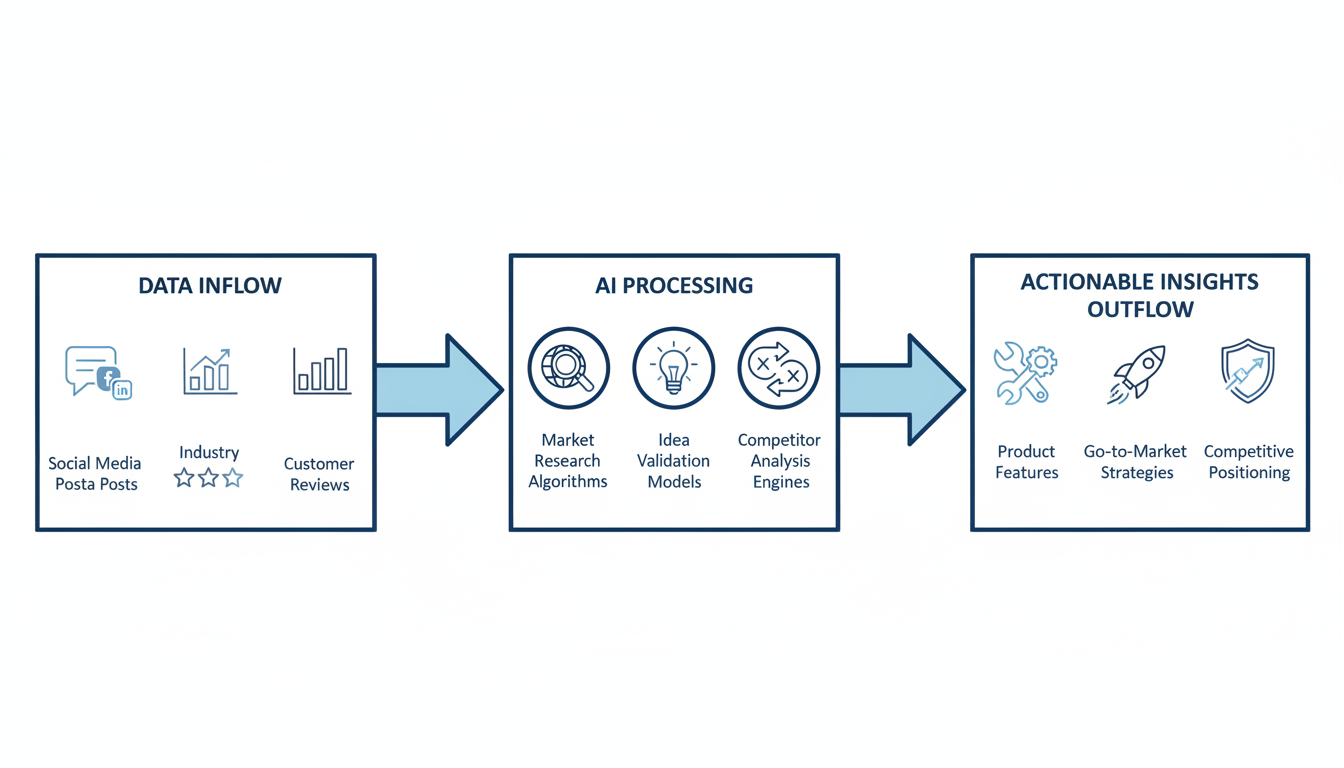
One of the most immediate and impactful applications of AI for startups lies in sophisticated market research. AI tools are redefining how founders understand their audience, track trends, and size potential markets by automating data collection, analysis, and report generation6. Platforms like Ravuze utilize AI to automatically structure and analyze massive volumes of consumer feedback from product reviews, surveys, and social media, detecting trending topics and sentiment shifts in real-time7. Similarly, Glimpse scours high-signal platforms like Reddit and TikTok to spot early-stage trends, using AI for predictive scoring that allows businesses to act before market saturation7. These tools dramatically compress research timelines from weeks to minutes, providing deeper, unbiased insights into market dynamics and consumer preferences, making advanced intelligence accessible and cost-effective for resource-constrained startups6. IdeaProof, for instance, is projected to deliver comprehensive market research, including TAM, SAM, and SOM calculations, in 120 seconds with 89% accuracy, integrating real-time market trends10.
Beyond understanding the market, AI is indispensable for data-driven idea validation. Early-stage startups can significantly accelerate testing assumptions and predicting market fit, thereby reducing reliance on intuition and minimizing costly mistakes11. Tools such as BigIdeasDB offer an "AI Research Assistant" that can validate an idea, analyze pain points, and generate a product roadmap in minutes by gathering insights from diverse sources like Reddit, G2 reviews, and App Store feedback13. ValidatorAI (Val) helps founders refine value propositions, analyze competition, and simulate customer feedback, providing an objective score for business ideas and guidance for launch14. This approach allows founders to systematically test critical assumptions about new product concepts, receiving personalized AI feedback that aids in pivoting or confidently advancing their ideas, accelerating the discovery and testing phases significantly11.
Finally, AI offers unparalleled capabilities for enhanced competitor analysis. Startups can comprehensively scan vast amounts of data related to rival companies, identifying their strengths, weaknesses, and unique market "uniqueness gaps" to inform their own differentiation strategies8. Platforms like IdeaProof automatically include a competitor analysis in their market reports, drawing from over 50 data sources10. BigIdeasDB’s AI Research Assistant can generate a full list of direct and indirect competitors with descriptions and feature comparisons, highlighting specific gaps that a startup could exploit13. Furthermore, social intelligence platforms like Brandwatch allow startups to monitor and analyze competitor conversations, audience sentiment, and brand perception across various digital channels7. By providing real-time insights into competitor moves and market positioning, AI tools empower startups to make informed decisions, mitigate risks, and clearly define their competitive advantages, which in turn significantly enhances credibility with potential investors15.
The integration of AI into these core strategic areas provides a multifaceted advantage. It delivers efficiency and speed, compresses research and validation timelines, and offers deeper, unbiased insights by sifting through vast datasets to uncover hidden opportunities6. This capability not only reduces the need for expensive consultants, making advanced market intelligence accessible for resource-constrained startups, but also fosters strategic differentiation and leads to more informed decision-making10.
| AI Application Area | Example Tools | Primary Benefit for Startups |
|---|---|---|
| Market Research | IdeaProof, Ravuze, Glimpse | Automates data collection and analysis for deeper, unbiased insights, offering cost-effectiveness and rapid decision-making. |
| Idea Validation | BigIdeasDB, ValidatorAI (Val), Siift.ai | Accelerates testing assumptions, measures demand, predicts market fit, reduces risk, and minimizes costly early-stage mistakes. |
| Competitor Analysis | BigIdeasDB, IdeaProof, Brandwatch | Scans competitor data to identify strengths, weaknesses, and market 'uniqueness gaps' for strategic differentiation and informed decision-making. |
Real Example: AI-Driven Efficiency in Health-Tech
In the rapidly evolving health-tech arena, startups are constantly battling to scale operations and elevate service quality without ballooning costs. Fitterfly, an Indian health-tech company, found itself navigating precisely these challenges while supporting its 30,000 users managing chronic diseases. The company faced a dual imperative: efficiently manage high volumes of user data and deftly handle a deluge of customer inquiries, all without proportional cost increases 16.
The core of Fitterfly's operational bottleneck lay in two significant, repetitive tasks. First, accurate and consistent meal logging was crucial for users managing chronic conditions, yet it proved time-consuming for both individuals and monitoring staff alike 16. Second, the sheer volume of customer support queries from a 30,000-strong user base threatened to overwhelm human agents, leading to delayed responses and escalating operational expenses 16.
To circumvent these hurdles, Fitterfly made a calculated move to deploy targeted AI solutions, zeroing in on these specific, high-impact tasks. For streamlining meal logging, they integrated advanced computer vision technology, allowing their platform to automatically recognize and log food items, dramatically cutting down user effort 16. Simultaneously, to tame the flood of customer inquiries, Fitterfly harnessed Natural Language Processing (NLP) to automate support tickets, enabling the AI system to comprehend and resolve a vast majority of user questions without human intervention 16.
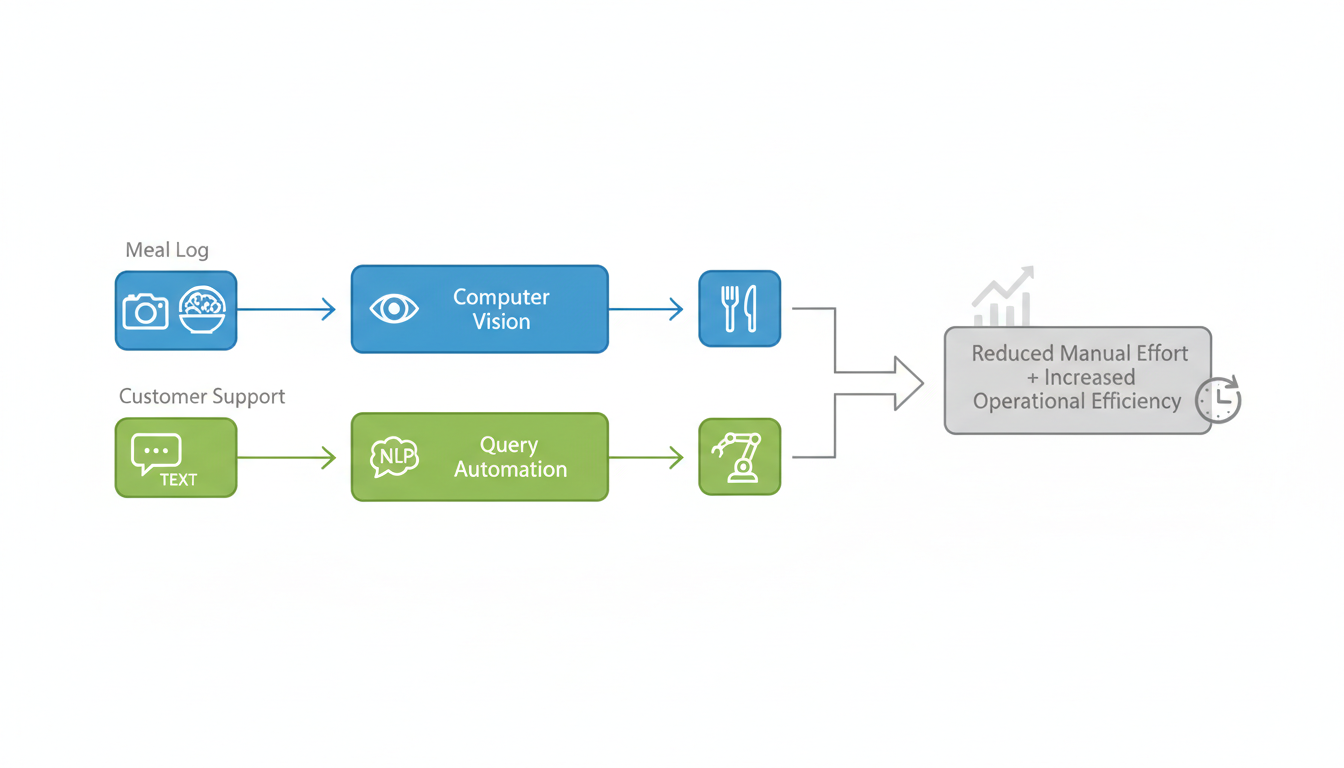
This strategic application of AI paid off handsomely, yielding tangible and measurable improvements in 2024. The computer vision system for meal tracking delivered an impressive 80% reduction in the time users spent logging their meals 16. Concurrently, the NLP-powered system achieved a remarkable 90% automation rate for routine customer support interactions, ensuring immediate responses and liberating human agents for more complex tasks 16.
These efficiency gains directly translated into significant bottom-line benefits for Fitterfly. The company successfully achieved scale without proportional cost increases, expanding its services without a corresponding surge in operational expenditures 16. Moreover, the transparent and reproducible ROI metrics made their platform inherently more attractive to enterprise clients, including major insurers, fostering broader adoption and growth 16.
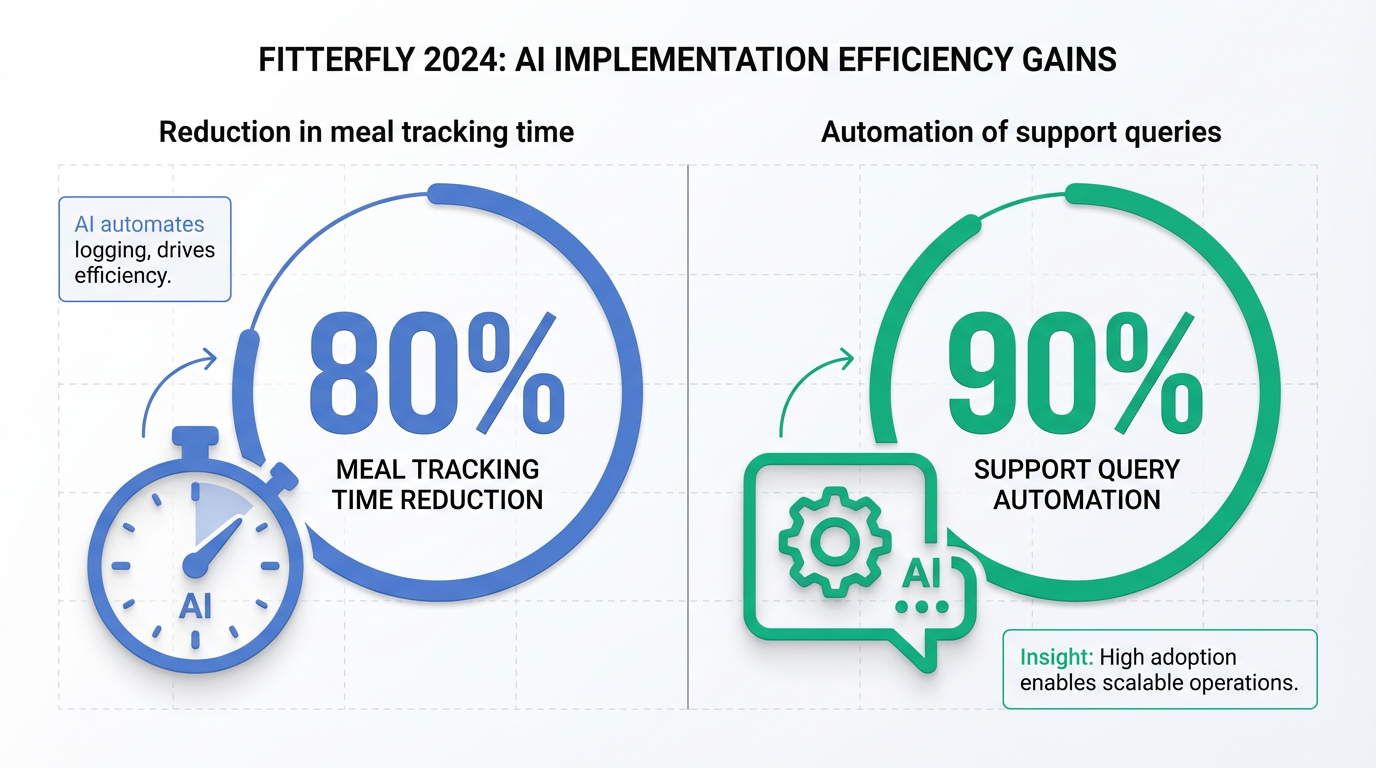
Fitterfly's journey provides a crucial lesson for health-tech startups: success in AI implementation hinges on focusing on specific, quantifiable problems with clear ROI targets, rather than pursuing vague, overarching digital transformations. By effectively integrating AI tools like computer vision and NLP into their core service delivery, Fitterfly not only enhanced customer experience and internal efficiency but also carved a path for sustainable growth 16. Their success underscores the power of executing on high-impact use cases, distinguishing them from the 95% of corporate AI pilot programs that reportedly failed in 2024 16.
Next Steps: Navigating the AI Landscape for Sustainable Growth
As we've explored, AI tools are not merely incremental upgrades; they are foundational elements for early-stage startups seeking to accelerate growth from 2024 to 2026. These tools dramatically enhance efficiency, speed up market research, validate ideas with data, and sharpen competitor analysis, transforming weeks of work into minutes or hours 6. By automating data collection, analysis, and report generation, AI enables a deeper, more unbiased understanding of the market and consumer needs, making advanced intelligence accessible even for resource-constrained ventures 6. The value derived from AI translates directly into reduced risk, targeted development, and accelerated iteration cycles, paving the way for more confident and impactful market entries 11.
However, embracing AI is not without its caveats, reinforcing the critical distinction of "what works and what doesn't." The power of AI is intrinsically tied to data quality; as the adage goes, "garbage in, garbage out," meaning unrepresentative or poor data can lead to biased or unreliable outputs 17. Furthermore, the "black box" nature of many advanced AI models can obscure their decision-making processes, challenging trust and accountability 19. Startups must also contend with the potential for AI "hallucinations," where models confidently generate incorrect information, underscoring the indispensable need for human oversight 20. The true cost of AI, encompassing licensing, integration, and training, can also be substantial, and the lack of genuine human nuance in AI interactions means it should always augment, rather than replace, human judgment and creativity 21.
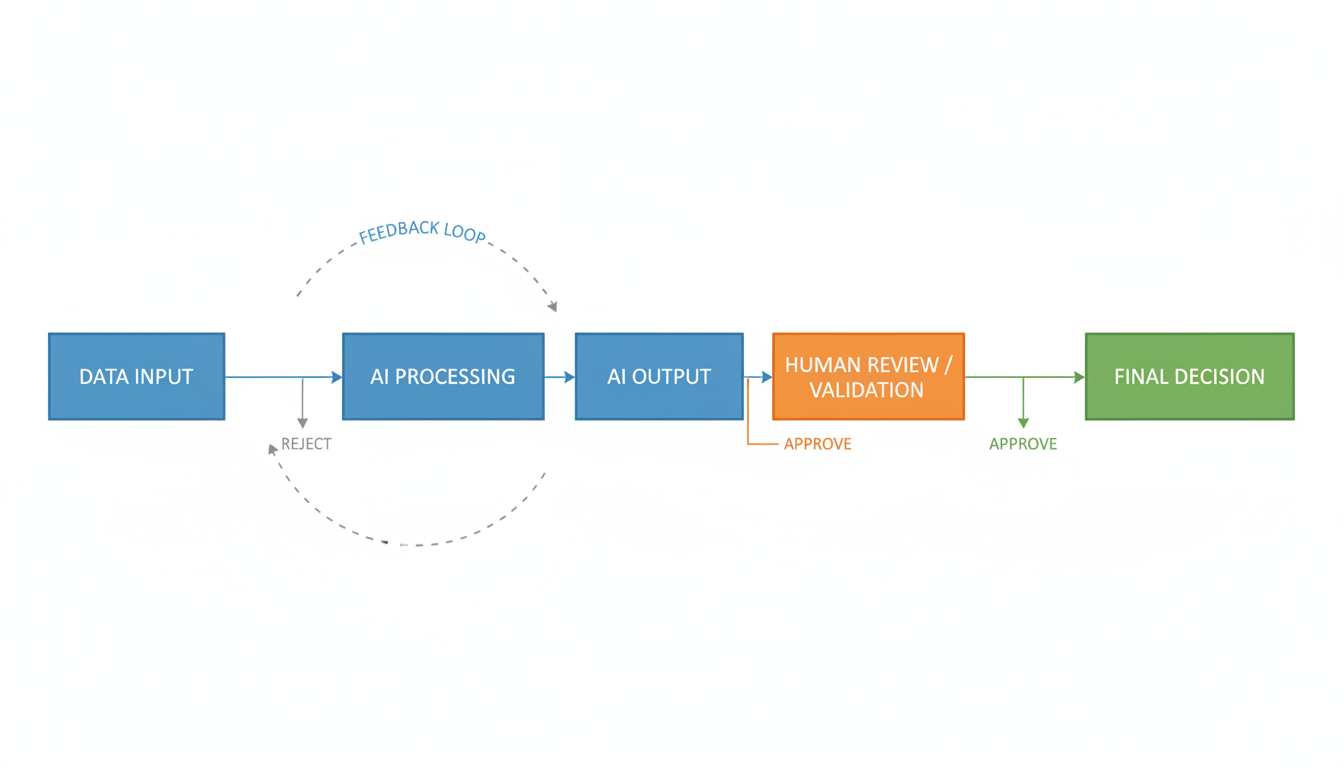
For indie hackers and AI entrepreneurs charting their course, several actionable recommendations emerge. First, start with clearly defined needs and goals, precisely articulating the problem AI needs to solve rather than adopting technology for technology's sake 6. Second, prioritize a robust data strategy, ensuring that the data fueling your AI is high-quality, clean, and representative to mitigate bias and ensure reliable insights 18. Third, implement a "human-in-the-loop" approach, where human experts review and validate AI-generated outputs, especially for critical decisions or customer-facing interactions, thereby guarding against hallucinations and maintaining ethical standards 20. Fourth, evaluate the total cost of ownership (TCO) and speed to value, ensuring the financial investment aligns with a clear, measurable return within a realistic timeframe 24. Finally, choose tools with excellent user experience and vendor support to facilitate smooth integration and rapid adoption within your lean startup environment 23.
Looking ahead, the symbiotic relationship between human ingenuity and artificial intelligence will only deepen. AI is not a magic bullet that solves all problems automatically, but rather a powerful co-pilot that dramatically extends human capabilities, allowing founders to focus on higher-level strategy and innovation. The landscape will evolve rapidly, with more sophisticated, integrated AI solutions emerging, but the core principle remains: success lies in intelligently leveraging AI as a strategic asset while maintaining a keen awareness of its limitations. By adhering to these principles, startups can effectively navigate the AI frontier, transforming potential pitfalls into pathways for sustainable growth and outcompeting larger, slower-moving incumbents.