Avoiding Common SaaS Marketing Mistakes in 2026: A Blueprint for Visible Growth
Introduction
The year 2026 presents a unique paradox for indie hackers and AI entrepreneurs in the SaaS space. Despite a booming market for innovative solutions, many early-stage founders feel utterly invisible, grappling with common SaaS marketing mistakes that drain precious time and capital. They launch meticulously crafted products only to find their marketing efforts fall flat, leaving them frustrated and questioning their approach. This isn't for lack of effort, but often a result of applying outdated strategies ill-suited for the modern lean startup.
The "growth-at-all-costs" era has definitively ended, replaced by a strategic focus on profitability and sustainable growth. Traditional marketing advice, often aimed at well-funded enterprises with sprawling teams and massive budgets, proves largely ineffective for bootstrapped ventures. Broad, untargeted campaigns are not only prohibitively expensive—with customer acquisition costs for a single SaaS customer averaging around $702 in 2025-2026—but they also fail to resonate with the specific needs of technical or B2B audiences. These segments require highly nurtured content, deep insights, and longer sales cycles, making general advertising approaches inefficient and wasteful.
This report cuts through the noise, offering a clear, actionable roadmap for early-stage SaaS founders. We'll explore three highly effective, budget-friendly acquisition channels designed to secure your first 100 users, build genuine relationships, and drive organic growth. By prioritizing lean strategies and authentic engagement, you can bypass the pitfalls of traditional marketing and carve out your own visible niche in the competitive 2026 SaaS landscape.
Core Strategy: Redefining Early-Stage Acquisition for 2026
The era of "growth-at-all-costs" for SaaS startups has decisively ended, pushing founders towards a leaner, more deliberate approach to user acquisition . For indie hackers and AI entrepreneurs navigating the 2026 landscape, securing the first 100 users demands budget-friendly yet highly effective marketing channels. This pivotal shift prioritizes profitability and genuine engagement over expensive, broad marketing initiatives, which are often ineffective for the nuanced needs of B2B SaaS . Instead, success hinges on authentic relationship building and strategic focus on a few potent acquisition methods, distinct from the traditional advice often propagated in the startup ecosystem.
This report outlines three highly effective, lean acquisition channels tailored for new SaaS ventures operating with limited marketing budgets: Community Engagement, Content Marketing & SEO, and Direct Outreach. These strategies are not about quick fixes but about building a sustainable foundation, emphasizing authenticity, value-driven engagement, and fostering genuine relationships within target communities. By focusing on these methods, founders can circumvent the pitfalls of rising Customer Acquisition Costs (CAC), which are projected to average $702 for a single SaaS customer in 2025-2026 1.
Community Engagement: Building Trust Where Your Users Already Are
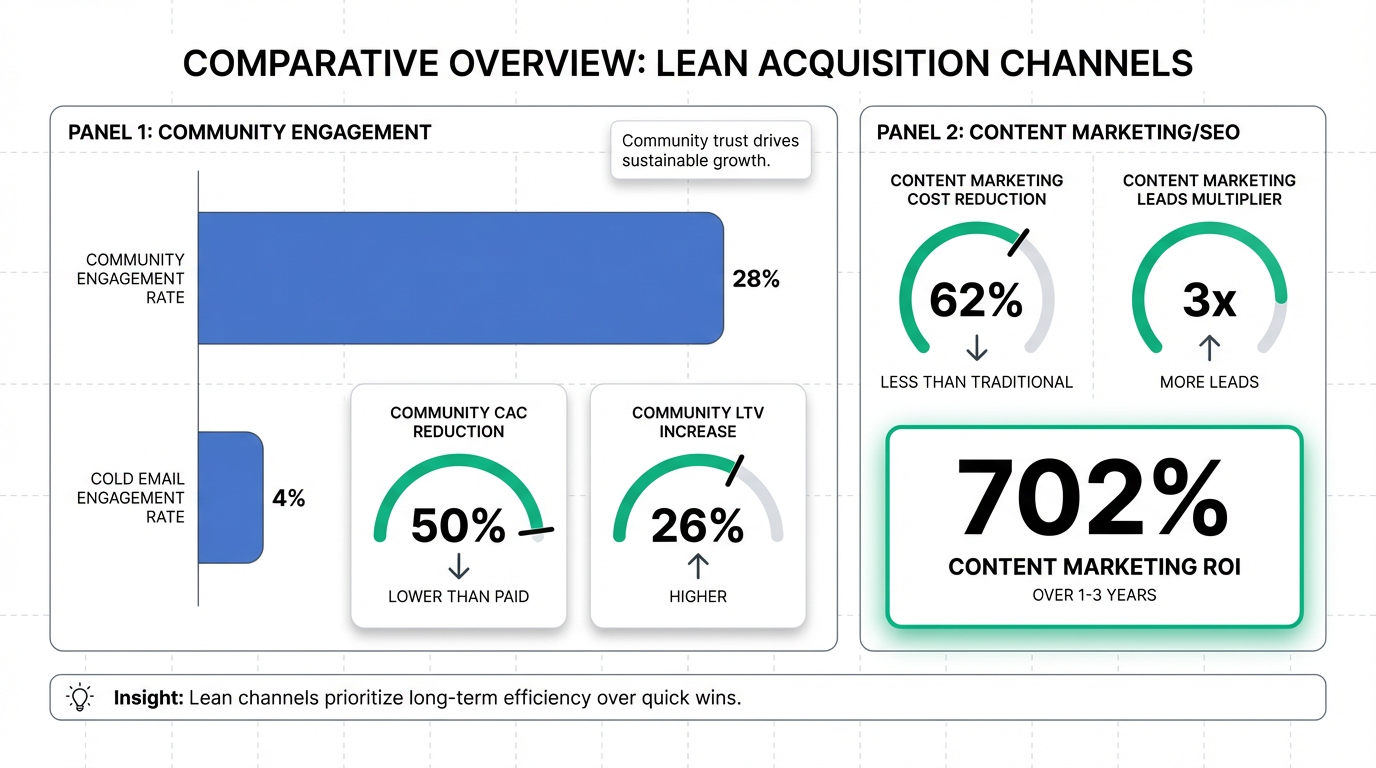
Community engagement stands out as the premier customer acquisition channel for bootstrapped SaaS companies in 2026, offering exceptional ROI, minimal cost, and high engagement rates 1. Unlike the fleeting attention garnered by cold email (around 4% engagement), community platforms boast engagement rates around 28%, significantly lower CAC (40-60% less than paid channels), and a remarkable 26% higher Customer Lifetime Value (LTV) 1. Imagine a founder who successfully onboarded 60 customers in just 45 days from Reddit, all without a single dollar spent on advertising; this highlights the immense power of this approach 1.
The practical application begins by meticulously identifying 10-20 relevant subreddits, specialized forums, or Q&A platforms like Indie Hackers or StackOverflow, where your Ideal Customer Profile (ICP) actively discusses problems your SaaS aims to solve . Tools such as F5Bot or advanced AI-powered semantic discovery tools can aid in understanding community intent and pain points 1. Once identified, the critical step is authentic participation; dedicate 2-4 weeks to genuinely engage in conversations, offering value and assistance before any mention of your product, adhering to an 80/20 rule (80% value, 20% promotion when genuinely relevant) . Consistently answering questions, sharing insights, and contributing expertise builds authority and positions your brand as a trusted thought leader . AI can assist in drafting contextually relevant responses, but human oversight is crucial to ensure authenticity and avoid generic, automated messages . Examples range from engaging in Indie Hacker threads seeking solutions to a problem to answering questions on platforms like Blind, subtly linking to your product where appropriate .
Content Marketing & SEO: Your Compounding Asset
Content marketing, when synergized with Search Engine Optimization (SEO), forms a powerful, compounding, and inherently low-cost channel for bootstrapped SaaS ventures 1. It reduces costs by 62% compared to traditional marketing, while simultaneously generating three times the leads, and promises a robust B2B SaaS SEO ROI of 702% over 1-3 years 1. In 2026, as AI-generated content becomes ubiquitous, the ability to produce truly original and deeply insightful content becomes a critical "moat" that differentiates your offering .
Effective content creation means producing high-quality, informative pieces that directly address your target audience's pain points and specific needs, moving beyond generic information to unique perspectives and lived experiences . This includes detailed blog posts, case studies, whitepapers, and integration guides, which Google's AI Overviews are less likely to fully satisfy . Strategic SaaS-specific keyword research should move beyond high-volume terms to identify buyer-intent keywords, targeting mid-to-bottom funnel queries that signal active solution-seeking . Furthermore, ensuring your website is technically optimized, user-friendly, and visually appealing (e.g., fast load times, intuitive navigation) is foundational for SEO success . While AI tools like GPT-4 or Claude are invaluable for research, outlining, and drafting, human writers must infuse personality, emotional resonance, and fact-checking to rise above formulaic AI output . Founders who share transparently about their journey, real numbers, and lessons learned (often termed "edutainment") cultivate credibility and deeper engagement 2. TheGoodStartup.com, for instance, achieved 40% of its traffic from organic search within three months by committed SEO efforts 3.
Direct Outreach & Personal Networks: Nurturing Warm Leads
Leveraging personal networks and executing highly targeted direct outreach are low-cost, high-impact strategies essential for initial customer acquisition, providing warm leads and crucial early validation . Even cold email ranks as the #5 most effective channel for bootstrapped SaaS, often yielding results within 1-2 weeks 1. This approach capitalizes on existing trust and personalized communication.
Begin by mining your personal networks—friends, family, former colleagues, and industry contacts—as these individuals are more likely to offer constructive feedback and become early advocates or referrers . Re-engaging individuals from early customer interviews, referencing past conversations and specific pain points, provides a powerful entry point for offering a tailored solution 4. For targeted cold outreach, identify prospects matching your ICP using tools like LinkedIn search filters, then find email addresses with services such as Hunter.io or RocketReach 4. Craft personalized messages that are concise (3-4 sentences), reference something specific about the recipient or their company, and clearly articulate the benefit, aiming for a brief 15-minute call instead of a full demo 4. Founder-led engagement in direct outreach often builds more trust and yields higher response rates than automated sequences 2. Offering incentives like founder pricing (e.g., 50-70% discount) or early access in exchange for feedback further sweetens the deal for early adopters 4. Joel Griffith’s first users for Browserless, for example, came from his network of developers, while Clément Mihailescu leveraged his coding bootcamp contacts to acquire over 150 users for AlgoExpert in the first year 5. These methods bypass the often-ineffective broad marketing campaigns, focusing instead on building genuine relationships and solving real problems .
Real Example: Tally's Lean Growth Playbook from Zero to $175K MRR
Many founders, struggling with their first venture, often learn the hard way about building products no one wants. This was precisely the experience of Marie Martens and Filip Minev, who watched their initial travel startup slowly die over 18 months, consuming significant investor funds without finding product-market fit 6. This painful lesson instilled in them a deep understanding of the importance of solving real problems and the perils of building in isolation 6. Marie herself encountered the critical problem Tally would address: the frustration of hitting response limits and restrictive features with existing form builders during her user research efforts 6.
When launching Tally, a no-code form builder, their goal was clear: achieve sustainable growth without venture capital or ad spending 6. This bootstrapped approach meant competing against established players with much larger marketing budgets, a significant challenge that forced them to innovate beyond traditional marketing playbooks 6. Instead of pouring money into ads, they crafted a precise set of lean strategies designed to attract and retain users organically.
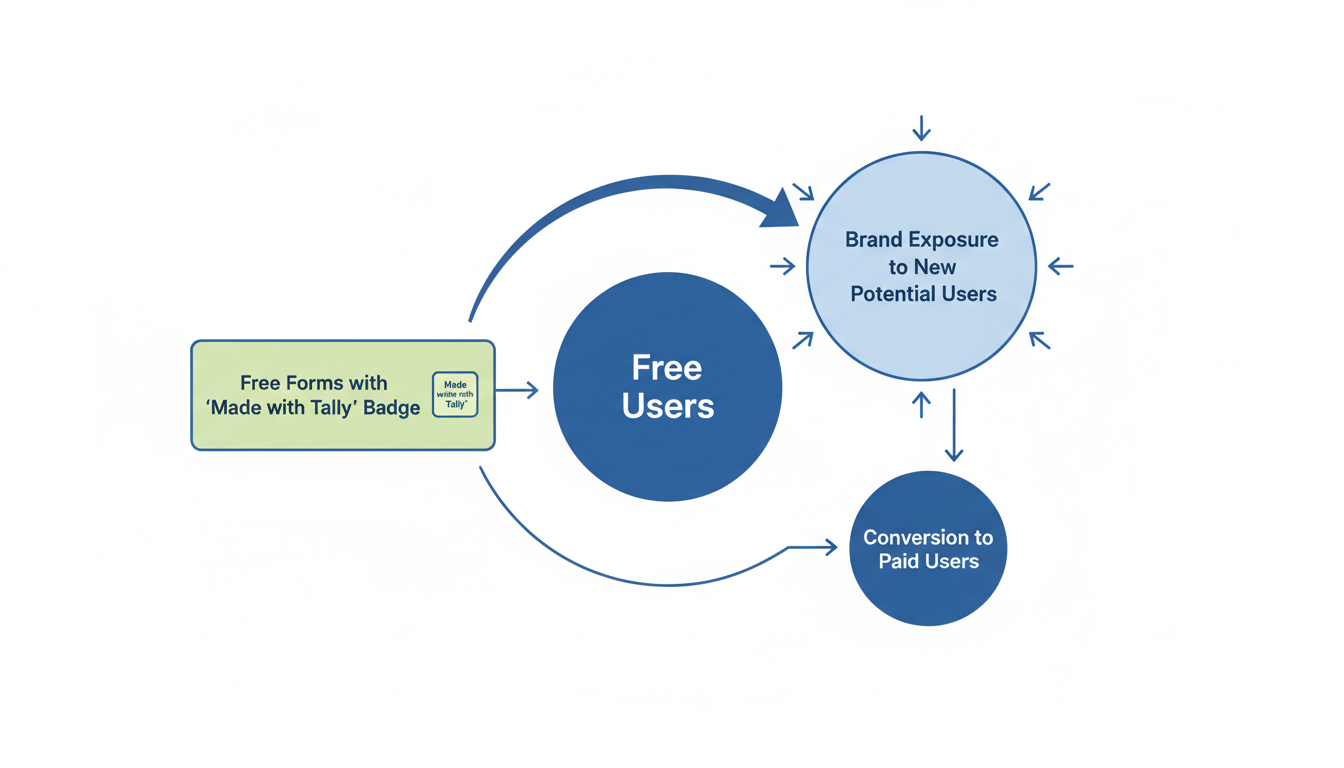
One of Tally's most ingenious strategies was their product-led freemium model, offering 99% of features, unlimited forms, and unlimited responses completely free 6. Users only paid to remove the subtle "Made with Tally" badge, effectively turning every free form into a viral marketing asset 6. While only about 3% of free users converted to paid, each free form was seen by an average of 47 people, making every user a "mini billboard" for the brand 6. This strategy perfectly aligned with product-led growth principles, providing immense value upfront and leveraging usage as a growth engine 7.
The founders also embraced radical transparency by "building in public," sharing weekly progress updates, new feature screenshots, and even monthly revenue figures, sometimes as low as $200 6. They actively involved their community by conducting polls to decide next features and announced releases with "You asked, we built it" messages, fostering a strong sense of co-creation 6. Furthermore, Tally cultivated a vibrant, exclusive Slack community, inviting users who provided detailed feedback, transforming them into loyal advocates who would defend the product online without prompting 6. This deep engagement turned their 500-member community into a valuable focus group by 2025 6.
Their SEO efforts were sharply focused on high-intent comparison content, creating dedicated pages like "Tally vs Typeform" and guides on migrating from competitors 6. These pages became incredibly effective, driving about 40% of their organic traffic and converting at a higher rate than typical blog content 6. Central to Tally's success was their relentless focus on user feedback, stemming directly from their initial startup failure 6. They shipped a basic version quickly, then continuously iterated based on customer input, using tools like Canny.io to prioritize features by user demand 8. Marie Martens personally handled support, ensuring direct customer insights informed product development, ensuring they built what users genuinely wanted 6.
The measurable outcomes of Tally's lean playbook are compelling, demonstrating consistent, organic growth. After a successful Product Hunt launch in March 2021, generating over 1,000 signups, the platform reached 11,000 users by October 2021, primarily through word-of-mouth and early SEO 6.
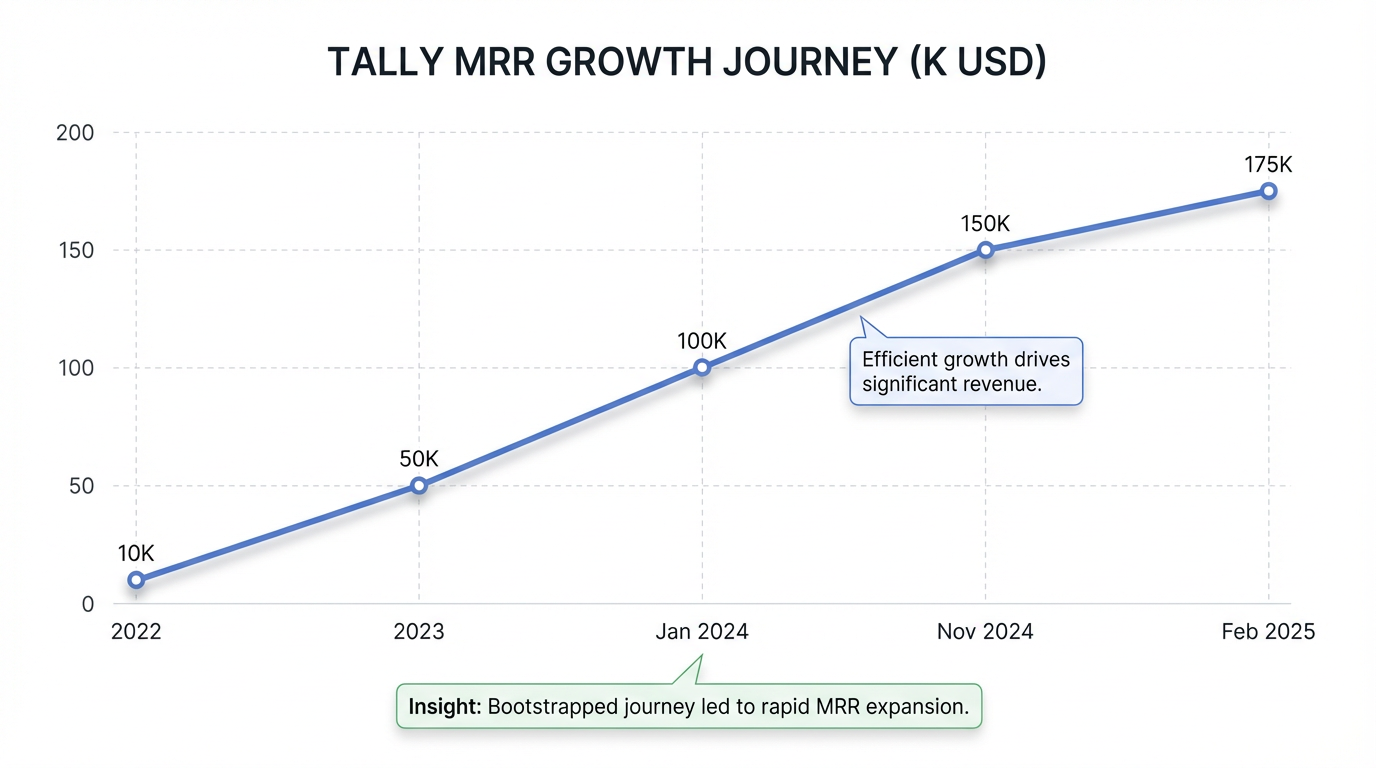
Tally achieved its first $10K MRR month in 2022, growing to $50K MRR in 2023 with a team of six 6. This impressive trajectory continued, crossing $100K MRR in January 2024, reaching $150K MRR by November 2024, and ultimately hitting $175K MRR by February 2025 6. This growth was accomplished with a lean team, starting with just two founders and expanding to eight people by early 2025 6. Their zero-dollar ad budget and low operational costs—typically around 30% of revenue—underscore the remarkable efficiency of their product-led and community-driven approach 6.
Build It Yourself: Leveraging AI for Lean Marketing in 2026
The blueprint for lean growth outlined in the previous section finds its ultimate accelerant in the strategic application of modern AI tools. For small SaaS teams and indie hackers operating with limited resources, these platforms are not just enhancements; they are fundamental operational shifts, allowing founders to achieve marketing impact traditionally associated with much larger organizations. By automating mundane tasks, scaling reach, and injecting precision into every effort, AI tools become indispensable team members, transforming resource constraints into strategic advantages.
Content generation, once a bottleneck for small teams, is now profoundly simplified. Tools like Lovable translate natural language prompts into working marketing assets, from affiliate review sites to SaaS landing pages, enabling rapid prototyping without coding . ChatGPT acts as an endless creative partner, generating ideas, outlines, and first drafts for everything from website copy to SEO articles, with its Plus version offering enhanced efficiency . For longer-form content, Jasper AI drafts comprehensive blog posts at scale, freeing founders to refine and personalize 9. Visuals are no longer a design hurdle, as Canva’s AI features (Magic Media) create professional images from simple descriptions, ensuring brand consistency 9. Even multimedia production is accessible with tools like Descript, which edits video by transcript, and Riverside.io, simplifying high-quality podcast and webinar creation .
AI similarly revolutionizes social media management and personalized outreach. Copy.ai excels at generating adaptable short-form content for diverse platforms, enabling efficient batch creation 9. Zaturn provides "AI employees" like Chloe for social media, Gabriel for ad campaigns, and Emma for email marketing, handling scheduling, content creation, and optimization 10. For deeper market understanding, Surfer SEO offers real-time feedback on content optimization for keywords, boosting organic traffic . Analyze AI provides insights into how LLMs perceive a brand and tracks competitor mentions, helping tailor content for AI search engines 11. Cursor can even be programmed as a domain-specific research agent for competitive analysis and report generation 12.
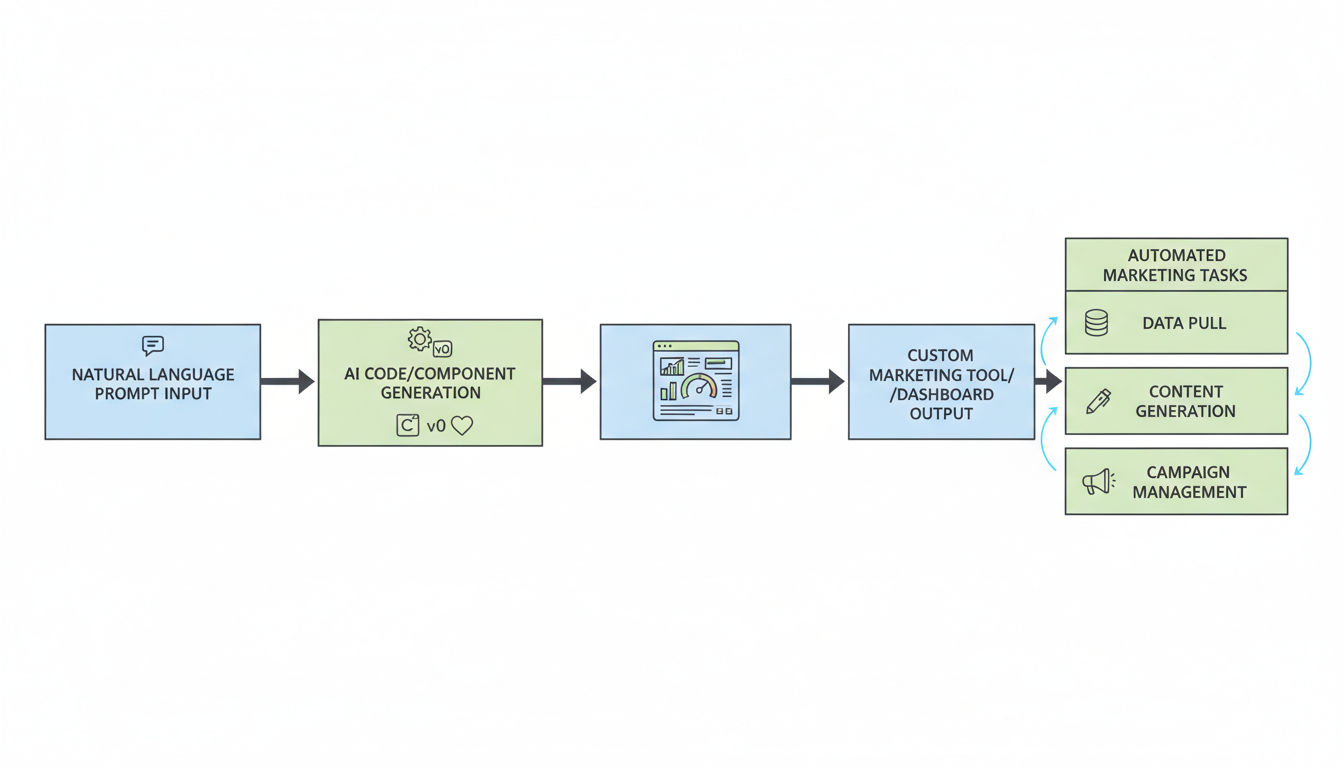
The true power for indie hackers often lies in custom tooling and automation. Cursor, an AI-enhanced IDE, empowers tech-savvy founders to build bespoke marketing tools and scripts using natural language. It can generate Python/JavaScript to connect to APIs like HubSpot and Google Ads, pull campaign data, and format reports, bridging the gap between marketing needs and engineering capabilities 13. Lovable also allows the creation of functional internal tools like marketing performance dashboards, instantly generating tailored interfaces without coding 14. For custom UI, v0.dev generates production-ready React components from text prompts 15, while n8n assists in building complex automated workflows integrating various tools, all with LLM guidance 16.
These capabilities come at a significant cost advantage compared to hiring full-time specialists or agencies . Cursor’s Pro plan is $20/month, Lovable starts at $25/month, Copy.ai unlimited is $49/month, and Canva Pro is $12.99/month . Even comprehensive platforms like Zaturn begin at $75/month 10. While tools like Lovable strive for accessibility 15, an AI-enhanced IDE like Cursor does imply a minimal code literacy, though resources exist to flatten the learning curve . Many offer free tiers or trials, allowing founders to experiment without commitment .
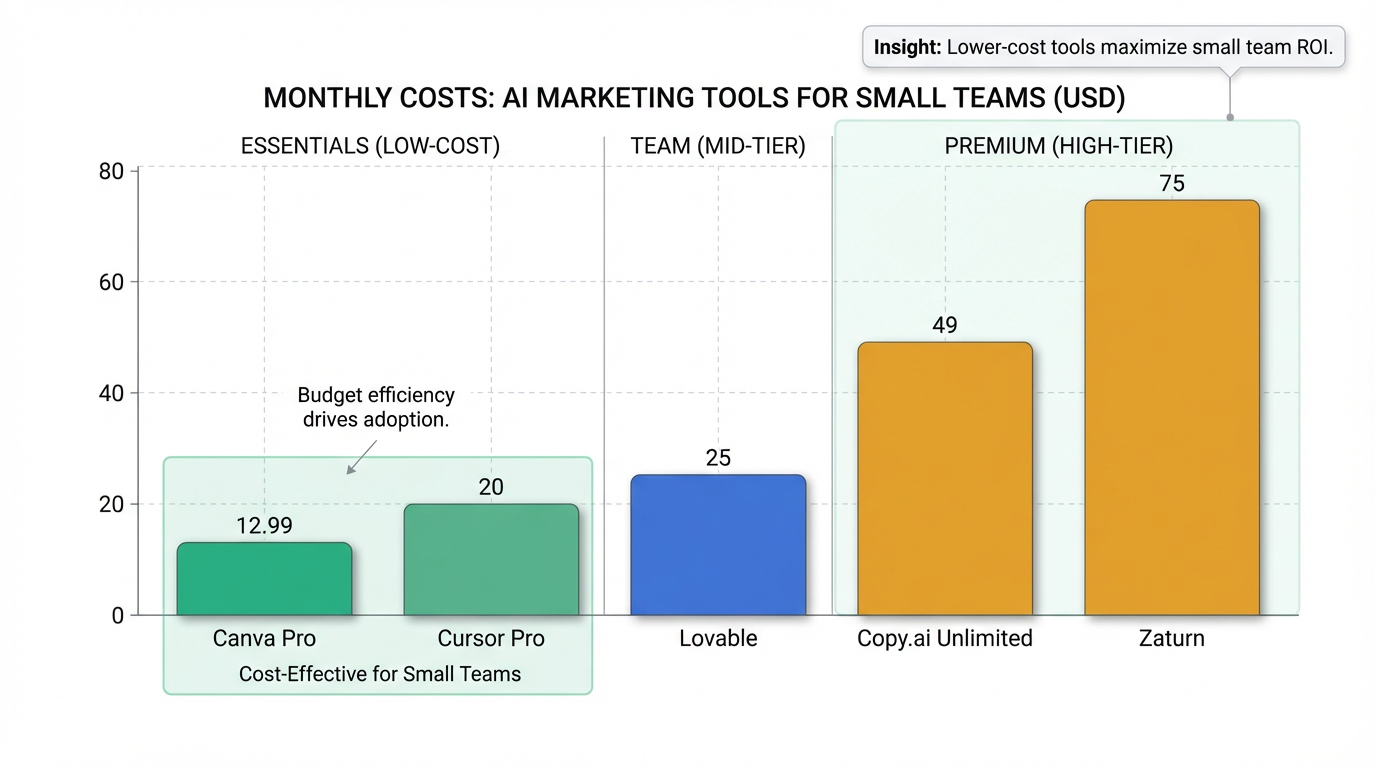
While AI accelerates many marketing functions, it's crucial to acknowledge its nuances. AI-generated content often requires human refinement to inject unique voice and authenticity 9. Furthermore, limitations exist; Lovable, while great for MVPs, may not suit production-scale apps due to the "last 30% problem," potential security concerns, or unexpected costs with extensive iteration . Similarly, code generated by Cursor still benefits from human understanding for long-term maintainability 13. The judicious application of these tools, combined with human oversight, is the key to unlocking their full potential.
Next Steps: Your Action Plan for Unlocking Visibility
The era of "growth-at-all-costs" has unequivocally ended, ushering in a landscape where profitability and lean strategies are not just preferred but essential for early-stage SaaS ventures . As Customer Acquisition Costs climb, reaching averages of $702 for a single SaaS customer by 2025-2026, the traditional broad marketing approaches become a financial black hole for bootstrapped companies 1. This report has demonstrated that gaining visibility and securing your first 100 users doesn't require a war chest, but rather a strategic, patient, and authentic approach.
We've seen how channels like community engagement, content marketing with SEO, and personalized direct outreach offer significantly higher ROI, lower costs, and better engagement than paid alternatives 1. Tally's journey to $175K MRR, achieved with zero ad spend, is a powerful testament to the efficacy of product-led growth, relentless user feedback, and comparison SEO 6. Moreover, modern AI tools are no longer futuristic concepts; they are accessible force multipliers that enable small teams to execute enterprise-level marketing with unprecedented efficiency .
To transform these insights into tangible results and avoid common SaaS marketing mistakes, here are your immediate action steps:
- Immerse Yourself in Relevant Communities: Dedicate time daily to identifying and genuinely participating in 5-10 subreddits, forums like Indie Hackers, or LinkedIn groups where your Ideal Customer Profile (ICP) actively seeks solutions or discusses their challenges 1. Follow the 80/20 rule: 80% value-driven interaction, 20% relevant product mention only when it authentically solves a problem . Your goal is to build trust and authority, not to spam.
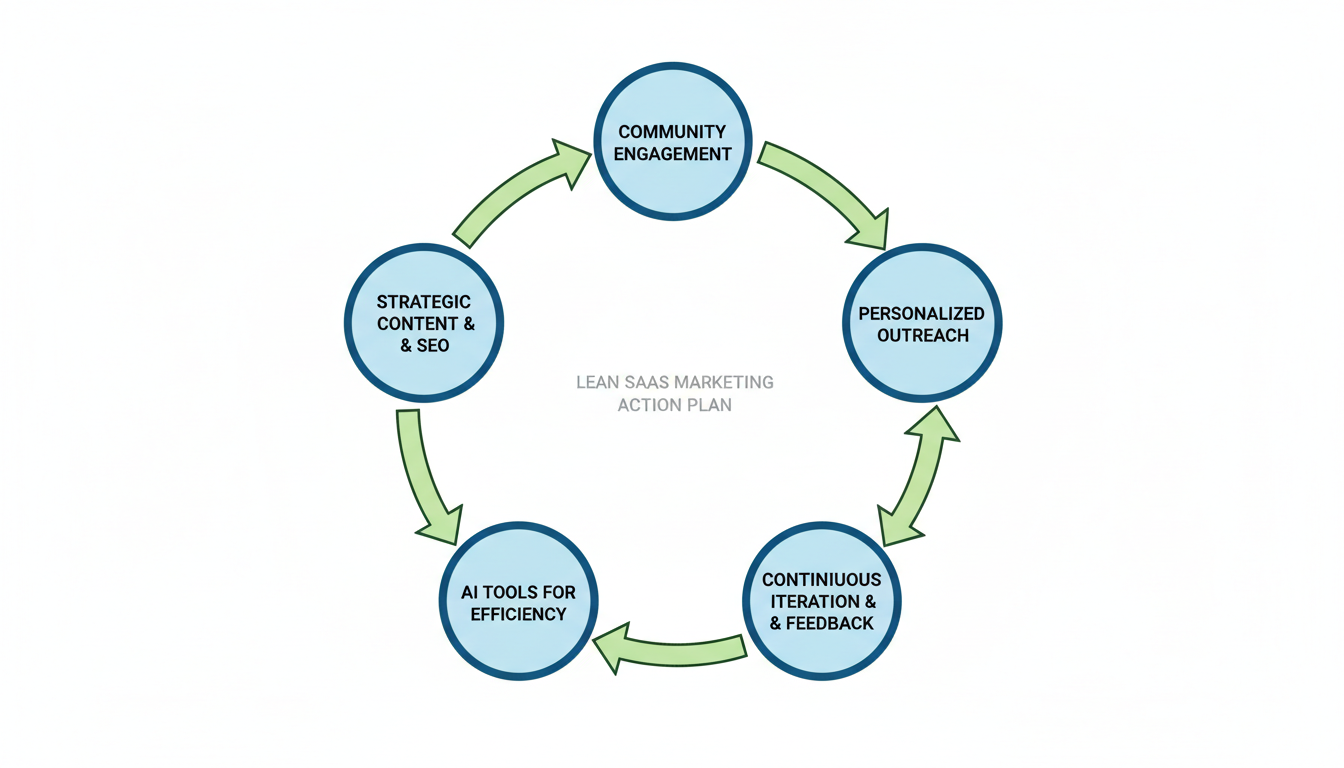
- Launch a Focused, AI-Assisted Content Strategy: Begin by outlining 3-5 core pain points your SaaS solves for its target audience. Use AI tools like ChatGPT or Jasper AI to help draft high-quality, deeply informative blog posts, case studies, or comparison guides that address these issues, targeting buyer-intent keywords . Remember, AI assists; human writers inject the unique personality, authentic experiences, and critical fact-checking that differentiate your content in an AI-saturated market .
- Cultivate a Personalized Outreach Pipeline: Start by mining your personal and professional networks for warm leads who might benefit from your solution . For targeted cold outreach, identify 20-50 high-fit prospects using tools like LinkedIn Sales Navigator. Leverage AI platforms, such as Copy.ai's GTM AI, to help craft hyper-personalized messages (3-4 sentences max) that reference specific pain points or recent activities of the recipient, always aiming for a brief discovery call rather than an immediate demo . Your founder-led outreach will build invaluable trust in these early stages 2.
- Adopt AI as Your Lean Marketing Co-Pilot: Begin experimenting with 1-2 AI tools to automate repetitive tasks and amplify your efforts. Use Lovable to quickly spin up specialized landing pages for campaigns, Cursor to generate custom scripts for marketing data pulls, or Descript for efficient content repurposing . Start small, understand the learning curve, and iteratively integrate AI to streamline content generation, social media management, market research, and personalized outreach without ballooning your budget.
Success in the 2026 SaaS landscape for indie hackers isn't about outspending competitors; it's about outsmarting them with authenticity, strategic focus, and intelligent leveraging of technology. Embrace the lean mindset, prioritize genuine connection, and allow AI to be the silent engine powering your ascent.