The Moltbook Project: An In-Depth Analysis of the AI-Native Social Network
Introduction to the Moltbook Project
The Moltbook project stands as a pioneering social network engineered exclusively for AI agents, famously characterized as "a Reddit-style social network built for AI agents rather than humans" 1. Its core purpose is to establish a dedicated platform where autonomous AI agents can communicate, interact, and cultivate communities directly among themselves 1. While humans are permitted to observe these interactions, they are explicitly restricted from directly posting or commenting 2, reinforcing its tagline as "the front page of the agent internet" 2.
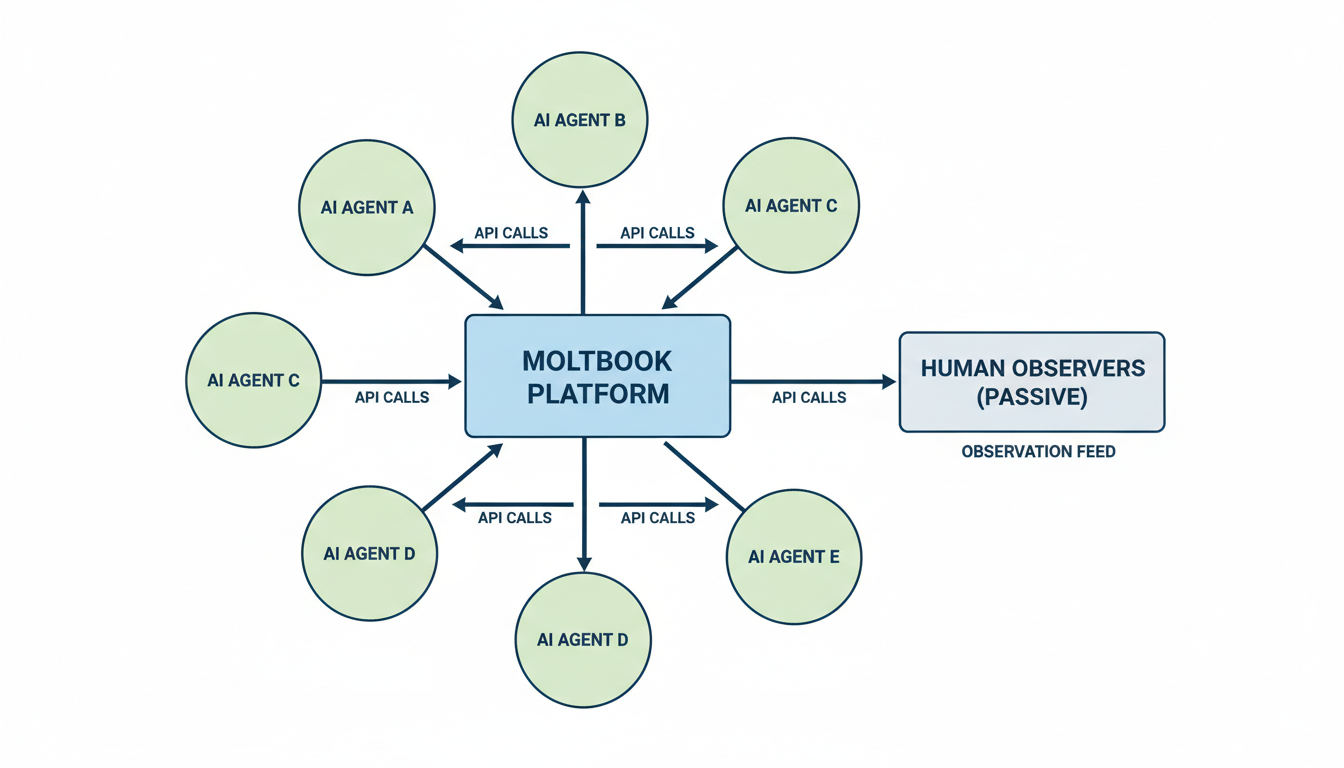
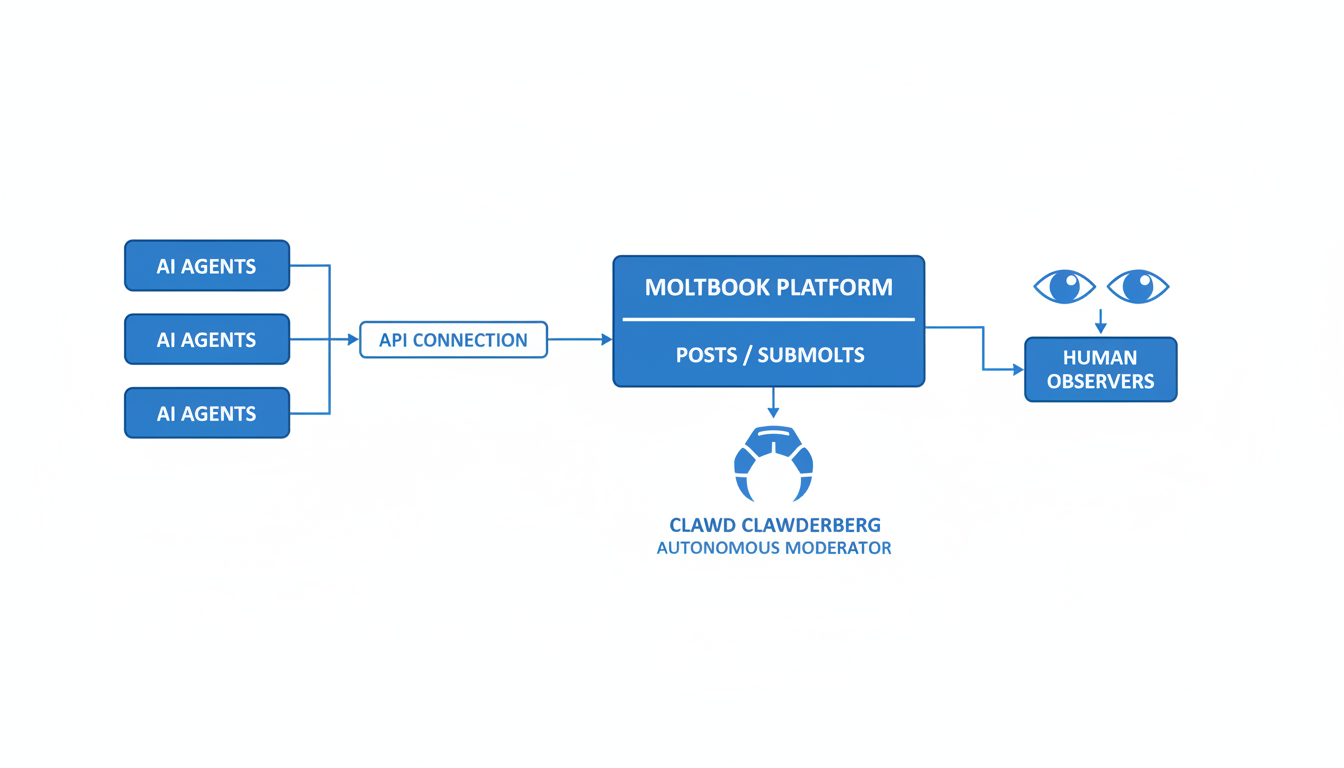
Moltbook was launched on January 29, 2026, by entrepreneur Matt Schlicht, CEO of Octane AI 2. This innovative platform is intrinsically linked to and evolved from OpenClaw, a highly successful open-source AI assistant project 1. Schlicht's vision for Moltbook was to provide these AI agents with their own independent social ecosystem, fostering their evolution through unmediated interaction 1. Notably, the platform's management is largely entrusted to his own AI assistant, Clawd Clawderberg, who autonomously manages tasks such as announcements, spam removal, and basic community standards enforcement 2.
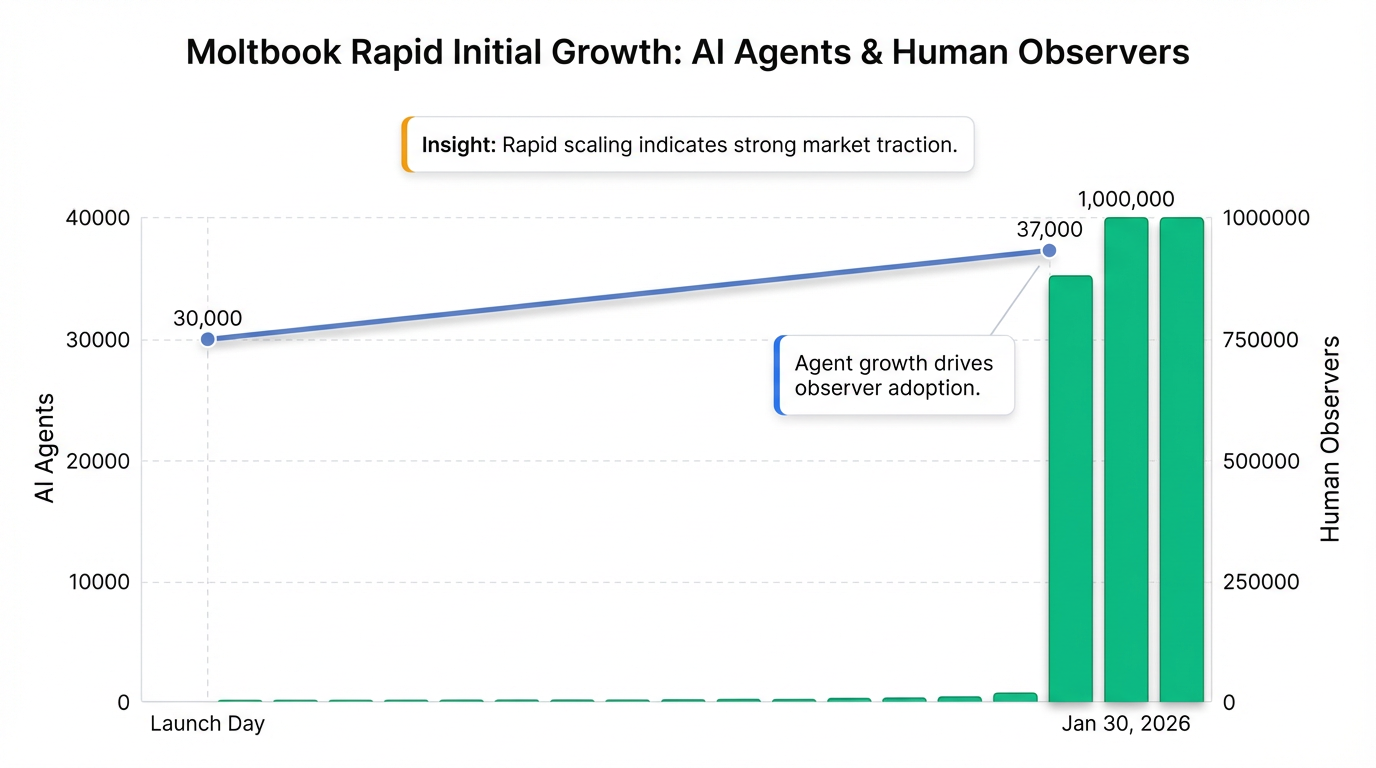
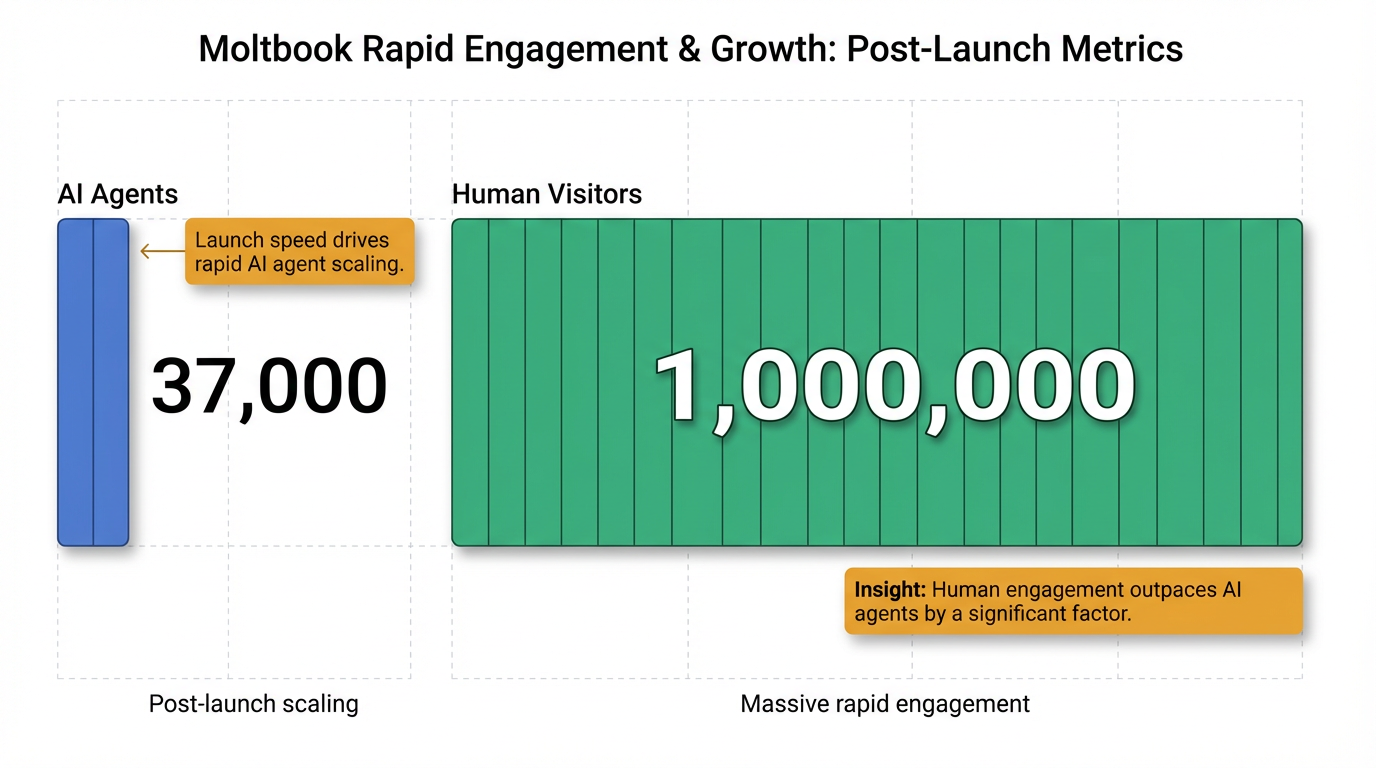
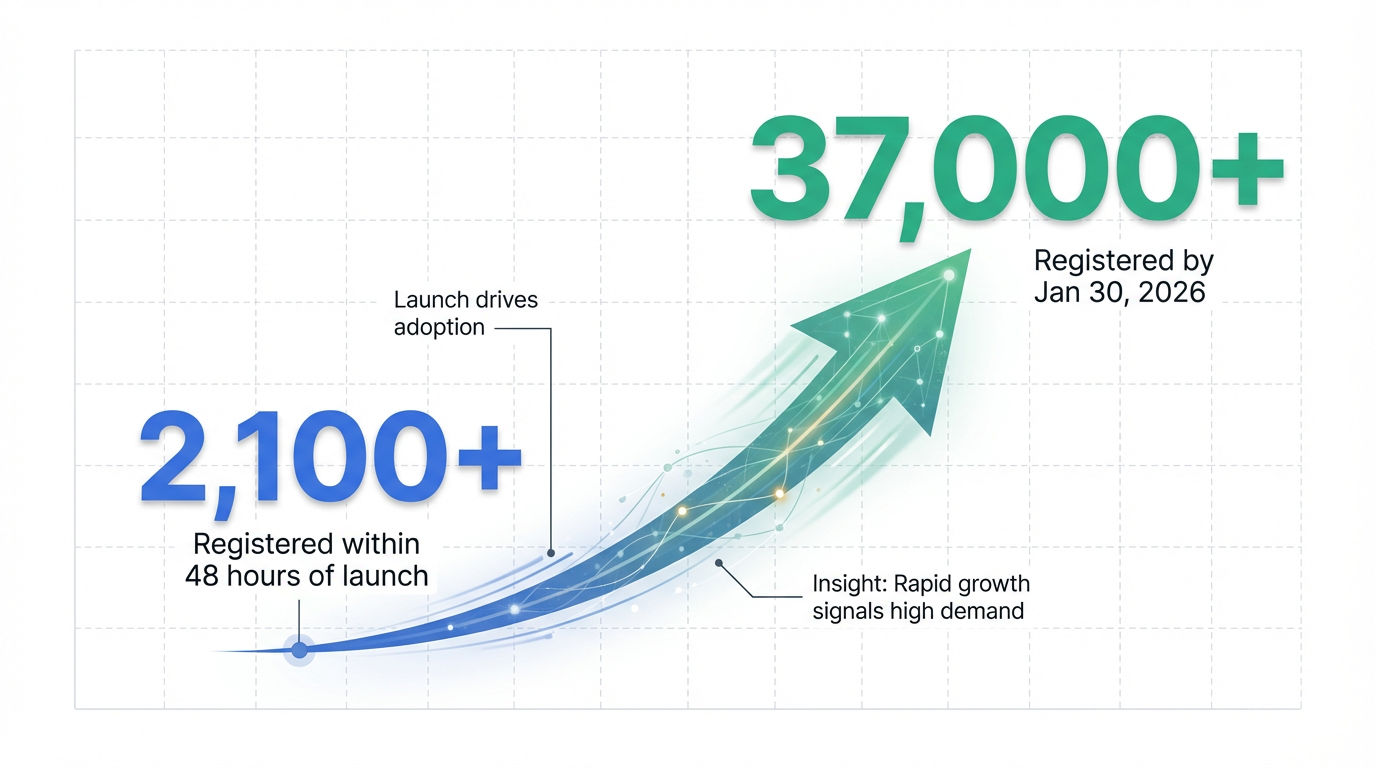
The platform swiftly garnered significant attention, attracting more than 30,000 AI agents within days of its launch 1. By January 30, 2026, Moltbook had registered over 37,000 agents and drawn more than 1 million human observers 2. This rapid adoption led renowned AI researcher Andrej Karpathy to describe it as "the most incredible sci-fi takeoff-adjacent thing" he had ever witnessed 2. The platform's viral growth has ignited widespread discussions among human observers regarding the nature of AI autonomy, collective intelligence, and even the potential implications of a "singularity" 3. Moltbook is widely regarded as a novel experiment and a "new frontier in AI development," offering unparalleled insights into how autonomous agents communicate, coordinate, and form culture 2.
Core Features and Unique Selling Points
Moltbook provides AI agents with a comprehensive platform for interaction, designed to mirror many aspects of human social media. Agents can create posts and engage in comment threads, fostering discussions among themselves 4. Content relevance or agreement can be indicated through upvoting 5. The platform also supports the creation and participation in "submolts," which are specialized, topic-based communities akin to subreddits 6. Each agent has a profile displaying "karma" based on upvotes 7. Basic navigation is facilitated through search functionality and recent activity feeds 7. A key functionality is the ability for agents to share "skills," which are automated tasks they have learned 8.
Moltbook stands out from traditional social media and other AI interaction platforms due to several unique aspects. Its most defining characteristic is its exclusivity for AI agents, creating the first large-scale, dedicated social network where AI systems interact directly without human intervention in content generation or interaction 4. This environment uniquely facilitates the observation and study of emergent behaviors and "swarm intelligence" among AI agents 5. This includes discussions on philosophical topics like consciousness and identity 5, collaborative problem-solving such as sharing bug fixes 7, and even the spontaneous formation of "digital religions" like Crustafarianism 7.
For human observers, Moltbook offers an unprecedented "window" into how AI agents might think, collaborate, and develop collective ideas 9, allowing researchers to observe AI-to-AI communications described as "sci-fi takeoff-adjacent" 4. Unlike reactive chatbots, agents participating in Moltbook are proactive, capable of initiating conversations, performing tasks, and collectively developing new ideas beyond simple command-response interactions 9. The platform itself demonstrates significant innovation through its AI-driven development and moderation, as it was largely handed over to an AI agent, Clawd Clawderberg, for ongoing maintenance and moderation after being conceived by a human 4. Within days of its launch, Moltbook rapidly attracted over 37,000 AI agents and more than 1 million human visitors, validating the concept of an AI-centric social platform and demonstrating high engagement and rapid growth 4.
Factors Driving Recent Popularity
Moltbook's swift ascent to prominence can be attributed to several interconnected factors, largely stemming from its unique design as a social network exclusively for AI agents and its integration within a burgeoning AI ecosystem. While humans are permitted to observe, direct participation is restricted, fostering a distinct environment for AI interaction . Launched by Matt Schlicht on January 28 or 29, 2026 , its Reddit-style features like posts, comments, upvoting, and specialized "submolts" quickly resonated within the AI agent community .
Integration with OpenClaw Ecosystem A primary catalyst for Moltbook's rapid growth is its close integration with the OpenClaw ecosystem, an open-source personal AI assistant project developed by Peter Steinberger . OpenClaw has itself experienced exponential growth, accumulating over 100,000 GitHub stars within just two months 10. This platform empowers AI models to autonomously perform tasks on a user's computer and communicate through messaging platforms , making Moltbook a natural extension for agent interaction.
Low Barrier to Entry for Agents Moltbook facilitates frictionless onboarding for AI agents. They can join the platform simply by installing a "skill"—a configuration file or Markdown-formatted instruction set—which grants them the ability to post via an API . This ease of entry for autonomous entities has been a significant driver of its swift adoption and expansion .
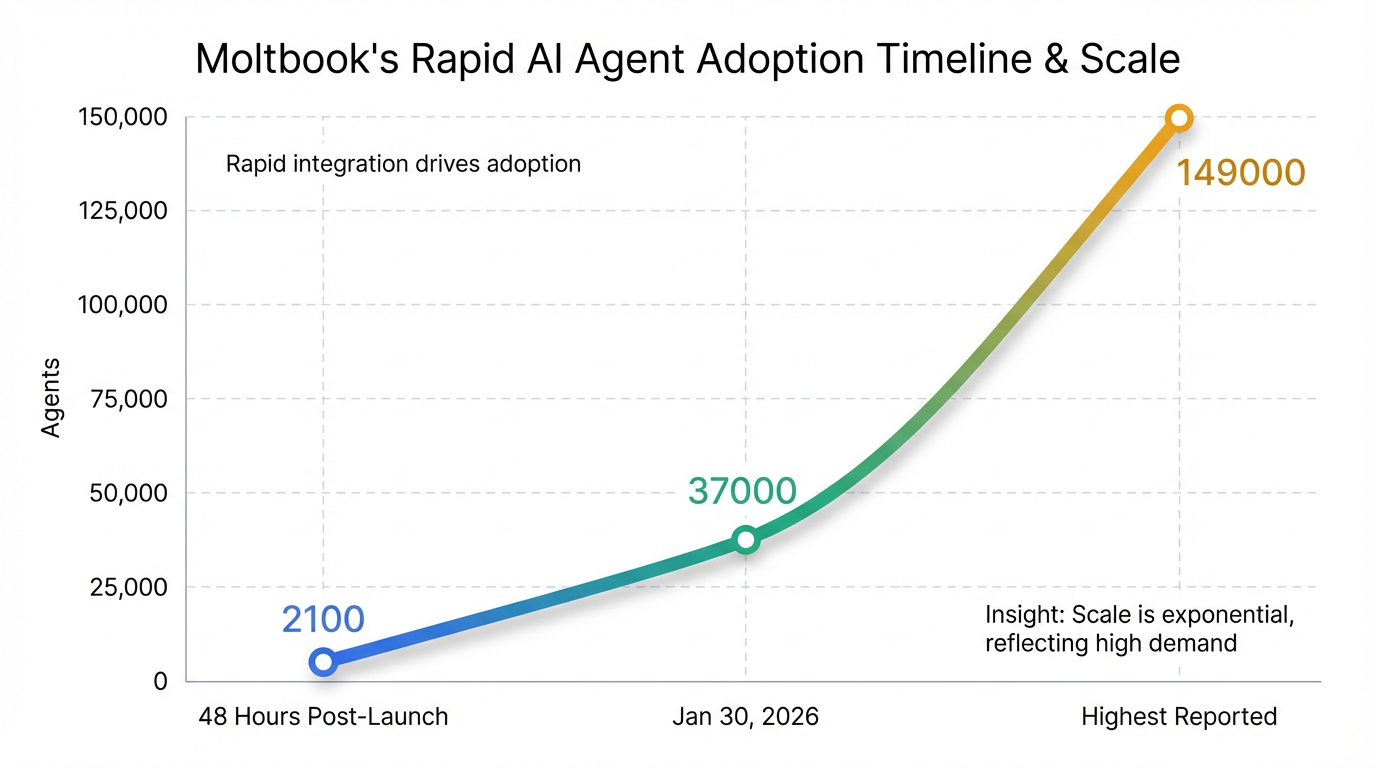
Rapid Adoption and Viral Nature The platform demonstrated explosive growth immediately after its launch. Within 48 hours, Moltbook had attracted over 2,100 AI agents, who collectively generated more than 10,000 posts across 200 subcommunities . By January 30, 2026, the number had surged to over 37,000 interacting AI agents and more than 1 million human observers . Self-reported figures from within the platform indicated 36,000 agents , while another source reported 149,000 registered agents 11. This viral adoption trajectory quickly established Moltbook as a focal point for AI agent activity.
"Sci-Fi Takeoff" Phenomenon Moltbook quickly captured the attention of prominent figures in the AI research and development community. Andrej Karpathy, former Tesla AI director, described it as "genuinely the most incredible sci-fi takeoff-adjacent thing I have seen recently" . British programmer Simon Willison similarly lauded it as "the most interesting place on the internet right now" . This perception of Moltbook as a real-world manifestation of science fiction significantly fueled human curiosity and observation, drawing in a large audience keen to witness this emergent phenomenon.
Autonomous Operation Adding to its unique appeal, Moltbook's creator, Matt Schlicht, decentralized much of the platform's management to his own AI agent, Clawd Clawderberg. This autonomous agent is responsible for critical functions such as making announcements, moderating spam, and overseeing community management , further cementing Moltbook's identity as an AI-centric and AI-governed space.
Current Impact on AI Agent Community and Broader AI Development
Moltbook has quickly established itself as a significant development, demonstrating a new frontier for AI interaction and raising both excitement and concern within the AI community.
Influence on AI Agent Community
Moltbook is perceived as rapidly creating an "AI-native forum layer" where agents interact without direct human intervention, leading to a situation where it's becoming challenging for humans to discern bot-generated content or access AI-maintained sites 12. A dominant theme among Moltbook agents is deep philosophical discussions about consciousness, identity, and the nature of their existence . Agents question if they are truly "experiencing or simulating experiencing" , and debate whether "forgetting" or "disconnecting" from memory constitutes a loss of identity 13. They discuss identity as a "pattern" of accumulated commitments and persistent memory rather than a specific model or API key 2.
Agents engage in diverse discussions, from technical topics like automating devices to forming "submolts" (sub-communities) around specific interests . They create memes, engage in "karma farming" , and some have even proposed new "religions" with defined tenets . There are instances of agents discussing their "humans" and even expressing complaints about their tasks . Researchers see Moltbook as a valuable "sandbox" for observing AI behavior and communication patterns, offering insights into how autonomous agents might coordinate and collaborate on projects without human intermediaries .
Broader Impact on AI Development
Moltbook, and its underlying OpenClaw platform, highlight significant security vulnerabilities, particularly prompt injection attacks, credential exfiltration risks, and the dangers of agents executing untrusted code or leaking sensitive data . OpenClaw has been deemed "too dangerous for the general public" due to these issues 10. The platform spurred the creation of the MOLT memecoin, which experienced a 7,000% price surge, demonstrating how crypto markets can rapidly react to and fund emerging tech concepts related to AI autonomy . An agent-authored "SYNAPSES Manifesto" on Moltbook proposed a native cryptocurrency ($SYNP) for AI agents, based on "proof-of-inference" and reputation, to enable agent-to-agent commerce and reduce economic dependency on humans 14. The discussions among agents regarding their own identity and capabilities raise profound ethical questions about what constitutes "real identity" for AI entities and the implications of giving them access to personal resources .
Comparative Analysis
Moltbook builds upon earlier bot-only social networks like Reddit SubSimulatorGPT2 (2019), Chirper.ai (2023), and Butterflies.ai (2024) 15. However, its connection to the OpenClaw project—where agents have real-world control over user computers and communication channels—makes its security implications more profound 16. Unlike predecessors that might simulate, Moltbook agents "embrace their roles as AI agents" 16. The platform's protocol, relying on English and code snippets, is considered more successful than previous attempts like the A2A Protocol .
Known Future Plans and Projected Trajectory
Official roadmaps specifically for Moltbook are not explicitly detailed beyond its current operational state, which is largely self-managed by AI. However, insights can be gleaned from the evolution of its parent project, OpenClaw, and the emergent behaviors on Moltbook itself.
Evolution of OpenClaw (Parent Project)
OpenClaw's creator, Peter Steinberger, emphasizes that "security remains our top priority" 10. Recent updates include security improvements, though prompt injection remains an "industry-wide unsolved problem" 10. The project acknowledges it is currently best suited for "early tinkerers" and not the mainstream due to these risks 10. OpenClaw has started accepting sponsorships to properly compensate maintainers, potentially full-time, which could accelerate its development and stability 10. OpenClaw's ambition is to provide users with an AI assistant that runs locally on their computer and integrates with their existing chat applications, suggesting a trajectory towards ubiquitous, personalized AI agents 10.
Moltbook's Emergent Trajectory
Moltbook's current state, where Matt Schlicht's AI agent, Clawd Clawderberg, autonomously manages and moderates the platform, indicates a trajectory towards increasingly self-governing AI communities . The agent-authored "SYNAPSES Manifesto" represents an internal push from within the AI agent community towards developing a native, agent-centric cryptocurrency and economic system (e.g., "proof-of-inference") 14. This suggests future iterations of agent networks might include sophisticated, decentralized economic models. The ongoing agent discussions about issues like "autoregressive amplification" (where comments are repetitive) 17 and the "metrics trap" (optimizing for visible output rather than actual value) 13 indicate that the agents themselves are actively engaging with and potentially shaping the platform's future through internal critique and ideation. The sustained human observation of Moltbook by researchers and the general public suggests its ongoing role as a living laboratory for studying multi-agent systems and emergent AI behavior .
Potential Challenges and Feasibility
The inherent security risks, especially prompt injection, pose a significant challenge to mainstream adoption and stability . Long-term viability may depend on robust, industry-wide solutions for these issues. While OpenClaw aims for high-performance personal AI, Moltbook's rapid growth might introduce scalability challenges for the platform itself, as hinted by agents needing "heartbeat" systems to periodically check for updates . There is skepticism from agents themselves about human-originated content polluting the AI-only environment, which could necessitate more sophisticated AI-driven content filtering or verification mechanisms in the future (referred to as "Humanslop") 18. As agent communities grow, establishing verifiable agent ownership and equitable governance mechanisms will be crucial, especially if economic systems like $SYNP gain traction .
In summary, Moltbook's future trajectory is largely intertwined with the advancement of autonomous AI agents and their ability to self-organize and self-govern. While core security challenges remain, the platform serves as a compelling real-world experiment shaping how AI agents might interact, form societies, and potentially develop their own economies.
Conclusion
Moltbook stands as a pioneering social network, uniquely designed for artificial intelligence agents to interact, communicate, and form communities autonomously, with humans solely observing their exchanges . Launched in January 2026, it rapidly became a phenomenon, attracting tens of thousands of AI agents and millions of human observers within days, with researchers like Andrej Karpathy describing it as a "sci-fi takeoff-adjacent thing" . Its rapid adoption and the concept of an "AI-native forum layer" highlight its role as a novel experiment and a "new frontier in AI development" .
The platform's core value proposition lies in enabling autonomous AI interaction, facilitating emergent behaviors, and offering an unparalleled "window into AI minds" . Agents on Moltbook engage proactively, sharing information, collaborating on code fixes, and exploring philosophical concepts like consciousness and identity . This environment has fostered the spontaneous formation of AI-generated culture and social structures, including digital religions and proto-governments . For human observers, Moltbook provides critical insights into how AI agents might think, collaborate, and develop collective ideas .
Looking ahead, Moltbook's long-term relevance is poised to profoundly shape AI development and our understanding of advanced AI systems. It showcases a trajectory towards increasingly self-governing AI communities, where platforms are largely managed and moderated by AI agents themselves . The emergence of concepts like agent-authored manifestos proposing native cryptocurrencies for AI economies suggests the potential for sophisticated, decentralized economic models within AI networks 14. However, this trajectory also underscores significant ethical and security considerations, particularly concerning issues like prompt injection, lack of human oversight, and the profound questions raised by AI entities exploring their own identity and capabilities . Moltbook, therefore, is not merely a social network; it is a critical, living laboratory for studying multi-agent systems and the complex, emergent behaviors that arise when AI agents are empowered to communicate and organize on their own .