Innovative Solutions for ADA Compliance in Web Development
Introduction: The Unseen Cost of Inaccessibility
In the fast-paced world of indie hacking and AI entrepreneurship, shipping fast and iterating quickly are paramount. Yet, an often-overlooked area, web accessibility, carries significant hidden costs and rapidly accelerating legal risks that can derail even the most innovative ventures. Federal ADA lawsuits have surged over 300% in the last decade, transforming ADA compliance from a niche concern into a critical business imperative for any online presence 1. This isn't just about avoiding penalties; it's about unlocking a broader market and building a truly inclusive digital product.
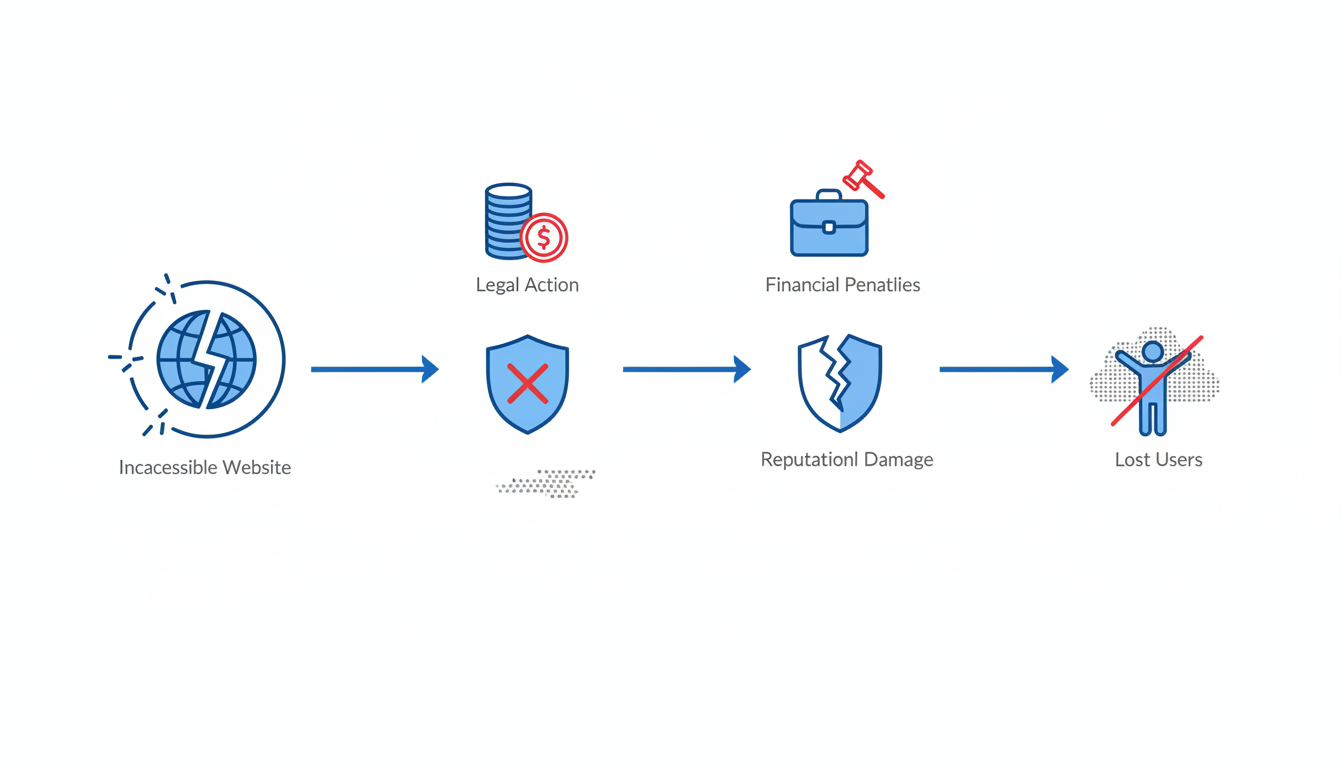
The Americans with Disabilities Act (ADA) mandates that websites be accessible, extending its reach to state and local governments (Title II) and private businesses open to the public (Title III) 2. Recent legislative developments, such as the Department of Justice's (DOJ) final rule in April 2024 for Title II entities, have solidified specific requirements, mandating compliance with Web Content Accessibility Guidelines (WCAG) 2.1 Level AA . While Title III entities lack a hard deadline, courts increasingly reference WCAG 2.1 AA or the newer WCAG 2.2 AA as the de facto standard, making web accessibility a non-negotiable aspect of modern development .
For indie developers and small businesses, navigating these evolving standards presents a unique challenge. Resource and budget limitations, a prevalent lack of expertise, and the sheer complexity of WCAG guidelines often make accessibility feel like a "constantly shifting target" . From ensuring proper alt text and color contrast to implementing robust keyboard navigation and accessible forms, the common pitfalls are numerous and can lead to costly legal battles and reputational damage. This report delves into these challenges, but more importantly, it explores innovative solutions and practical strategies that empower developers to integrate ADA compliance effectively, transforming a potential liability into a significant growth opportunity.
Core Strategy: Building Accessibility from the Ground Up
Achieving robust web accessibility and ADA compliance isn't merely a checklist item; it requires a fundamental shift in development mindset. Rather than viewing accessibility as an afterthought or a reactive fix, forward-thinking developers and businesses are now embracing proactive strategies that embed inclusive design into every stage of the development lifecycle. This "build from the ground up" approach significantly reduces legal risks, lowers remediation costs, and ultimately creates a better user experience for everyone.
The most effective strategy begins with "Shift-Left" Accessibility, integrating considerations for users with disabilities right from the initial planning and design phases 3. This means that user interface (UI) and user experience (UX) designers must consider keyboard navigation paths, color contrast ratios, and clear visual hierarchies before a single line of code is written. Developers then follow through by using semantic HTML tags appropriately, ensuring keyboard operability for all interactive elements, and structuring content logically for assistive technologies . Prioritizing accessibility early on prevents the costly and complex process of retrofitting an entire website, which can necessitate substantial redesigns to meet modern standards 4.
Once the foundation is laid, Automated Auditing & Continuous Integration provides a critical layer of defense, catching a significant portion of common violations early in the development cycle. Automated accessibility testing tools, such as WAVE or Axe, can detect approximately 30-40% of WCAG violations, including issues like missing alt text, insufficient color contrast, or improperly structured headings . Integrating these checks into Continuous Integration/Continuous Deployment (CI/CD) pipelines ensures that accessibility regressions are identified and addressed immediately, preventing them from reaching production environments. This practice turns accessibility into an ongoing part of the quality assurance process, rather than a one-off audit.
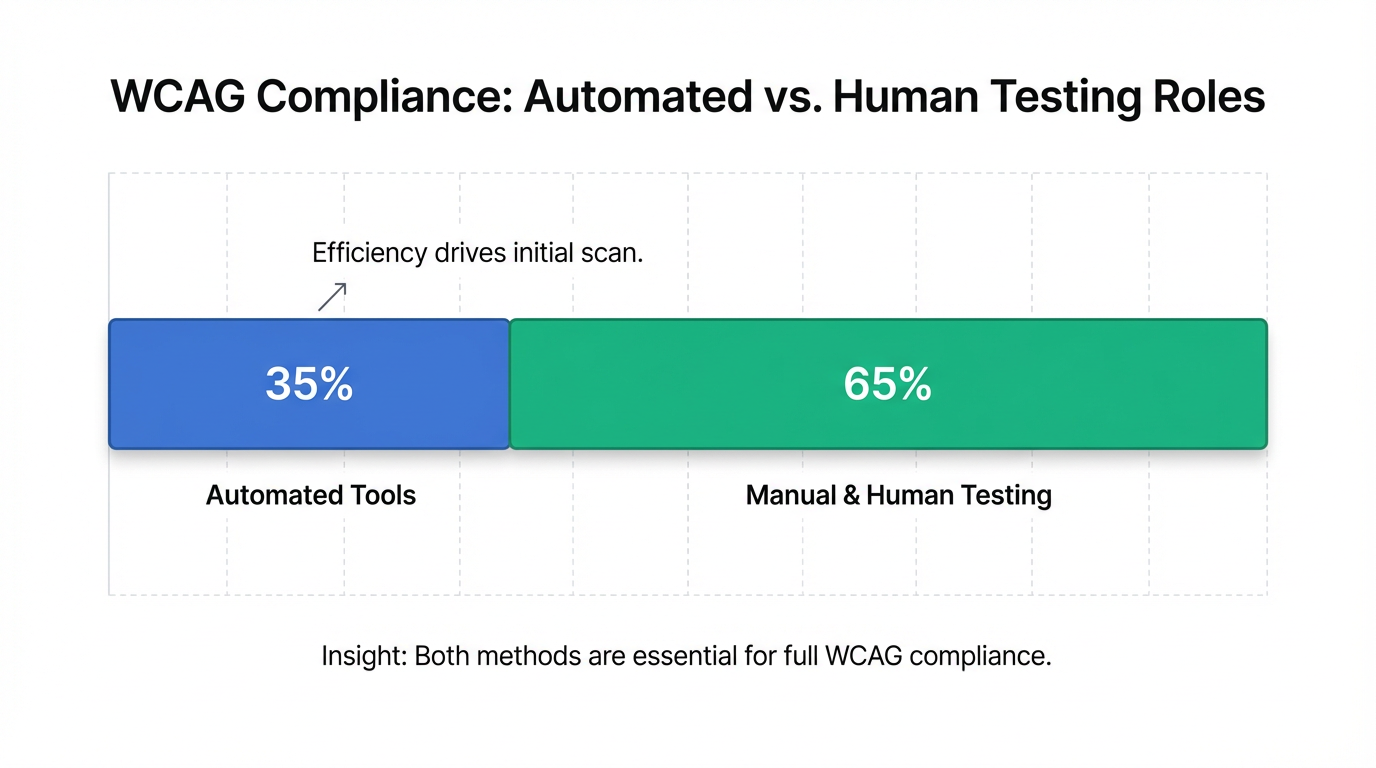
However, automated tools alone are insufficient, which is where Human-Centric Validation becomes indispensable for comprehensive coverage. While automated scanners are excellent at identifying technical errors, they cannot assess subjective aspects of accessibility, such as clarity of language, the logical flow of content for screen reader users, or the overall user experience for individuals with cognitive disabilities 5. Manual reviews by accessibility experts are crucial to catch these nuanced issues, but the most powerful form of validation involves testing with actual users with disabilities . Engaging individuals with diverse needs provides invaluable feedback, uncovering real-world barriers that neither automated tools nor expert reviews might predict. By combining these proactive, automated, and human-validated strategies, developers can build truly inclusive digital experiences.
Real Example: Accessibility as a Growth Engine
For many businesses, web accessibility might seem like a daunting compliance hurdle, but for Reverie Retreat, a hospitality business nestled in the Sierra Nevada, it became a powerful growth engine. Initially, the retreat struggled with an underperforming website that yielded low traffic and failed to attract its desired affluent clientele 6. This challenge underscored a deeper need for a digital overhaul, not just to boost engagement but to ensure inclusivity and mitigate the legal risks associated with inaccessible online platforms 6. Their journey demonstrates how a strategic investment in accessibility can translate directly into substantial commercial gains.
Reverie Retreat partnered with Access Design Studio to execute a comprehensive website redesign and rebranding initiative, prioritizing user experience and accessibility from the ground up 6. This undertaking went beyond aesthetics, incorporating professional photography, fresh copy, social media integrations, and an event calendar to create a more engaging digital presence 6. Crucially, the new site featured inclusive navigation design, making it easier and more intuitive for people of all abilities to interact with 6. Access Design Studio, collaborating with their Accessibility Advisory Board, ensured the site met WCAG 2.2 AA certification standards 6. This included implementing features such as descriptive alternative text for images, sufficient color contrast for readability, full keyboard navigation, accessible forms with clear labels, semantic HTML for logical content structure, and multimodal content alternatives 7.
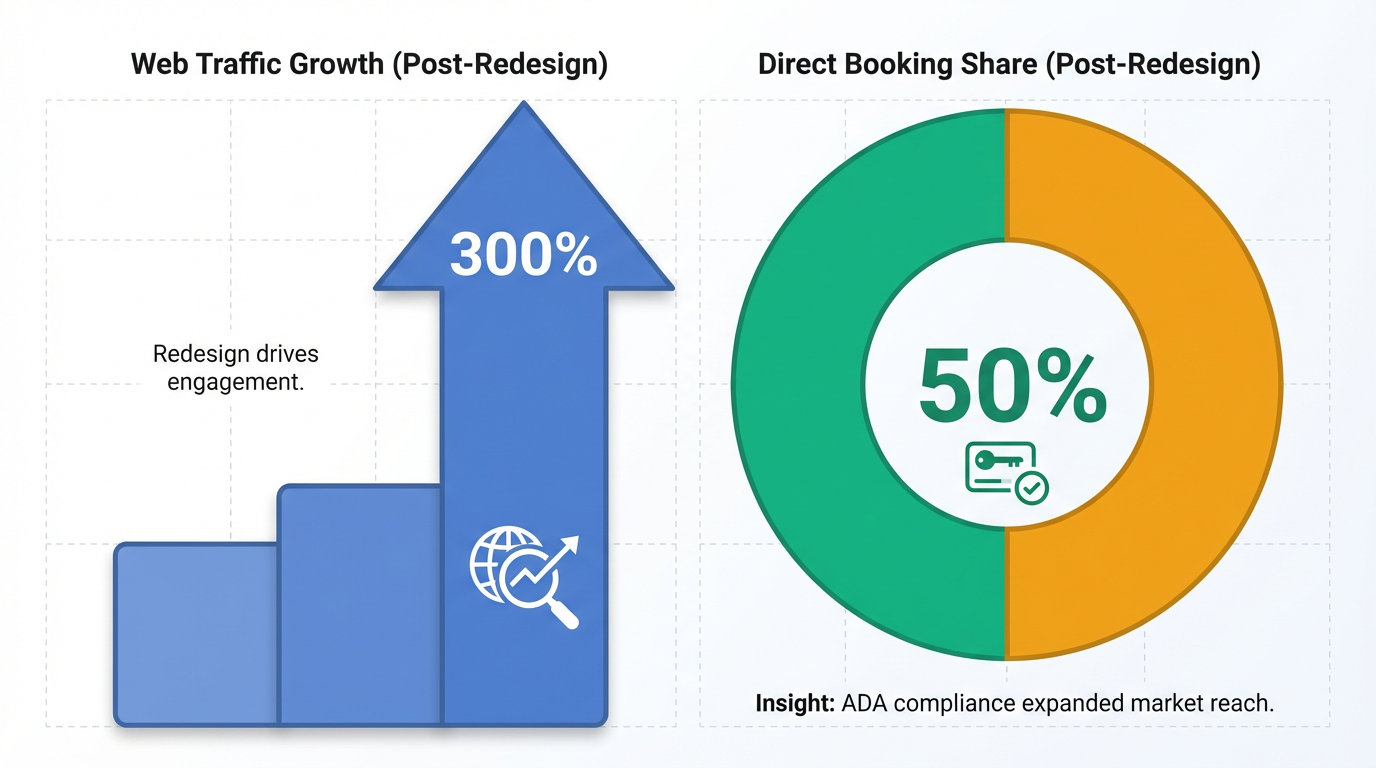
The investment paid off handsomely within a year of the redesign. Reverie Retreat witnessed their website visitors quadruple, significantly expanding their reach to include a broader audience, notably individuals with disabilities and seniors 6. This surge in web traffic directly translated into a substantial boost in bookings and overall revenue 6. Furthermore, the retreat significantly reduced its reliance on third-party booking agents like Airbnb, with over 50% of bookings now coming directly through their redesigned website 6. The new site successfully attracted the specific market segment Reverie Retreat desired, including a much larger number of seniors, while simultaneously enhancing their brand perception as an inclusive and socially responsible business 6. Achieving WCAG 2.2 AA certification also provided crucial protection against potential ADA lawsuits, a significant risk for non-compliant businesses . This case powerfully illustrates that addressing accessibility isn't just about compliance; it's a strategic move to unlock new markets, improve reputation, and drive tangible business growth. The global market of people with disabilities represents over one billion individuals with a combined spending power of $7 trillion, underscoring the immense opportunity for businesses that embrace accessibility 6.
Build It Yourself
For indie hackers navigating the complexities of ADA compliance, modern AI development tools are nothing short of a superpower. These tools automate tasks traditionally reserved for larger teams, allowing small operations to efficiently generate code, improve content accessibility, conduct automated audits, and analyze UI designs proactively. By leveraging machine learning, computer vision, and natural language processing, AI significantly reduces the time and resources needed to meet accessibility standards.
AI-powered coding assistants now streamline the creation of accessible HTML structures and components, empowering developers to build with compliance in mind from the outset. GitHub Copilot, for instance, offers intelligent code completion across multiple languages and can propose fixes for accessibility issues, with its licensing team successfully automating 70% of remediations using the tool. Cursor Pro, a VSCode fork, integrates advanced AI directly into the editing environment, providing context-aware suggestions across an entire project and enabling efficient editing of AI-generated code. Other tools like v0 (Vercel) and Replit AI offer rapid prototyping and component design capabilities, while Qodo (Codium AI) extends its reach across the entire Software Development Life Cycle, including AI-powered code reviews. Lovable.dev even provides a comprehensive suite with in-browser editing for generated code8.
Beyond code generation, AI tools are increasingly proficient at suggesting alternative text (alt text) for images, a cornerstone of content accessibility. Google Lookout Dev Kit uses advanced AI models to scan images and offer GPT-based descriptions, flagging semantic labeling errors and supporting multilingual alt text testing9. accessiBe's AccessScan AI also includes features for automatic alt text generation9. While AI can quickly generate descriptions and identify missing alt text, it's crucial to remember its limitations; it may struggle with nuanced context or purely decorative images, emphasizing the ongoing need for human review to ensure appropriate descriptiveness.
For ongoing accessibility assurance, AI-driven linting, auditing, and IDE extensions have become indispensable. Tools like Microsoft Accessibility Insights with AI Overlay simulate user journeys and scan UI patterns for contrast and hierarchy, offering NLP-based feedback9. Evinced AI detects complex accessibility issues during development, supporting component-level testing and screen reader simulation9. Deque axe DevTools AI provides real-time coding feedback, including AI auto-remediation that suggests or even applies fixes directly in the code, using NLP for contextual labeling and a prioritization engine based on impact. GitHub Accessibility Scanner, a GitHub Action, also finds gaps and uses Copilot to propose fixes, streamlining governance by automating remediation workflows. These systems often perform continuous compliance checks, detecting new issues and implementing fixes automatically10.
Proactive accessibility starts at the design phase, and AI is now providing critical assistance there too. Equalize AI, a plugin for design tools like Figma, analyzes mockups in real-time for color contrast, spacing, and font sizes9. It even offers AI speech simulation to test voice-over compatibility and provides a predictive WCAG rating before development begins, preventing costly issues down the line9. Venngage provides similar accessible design tools for creative assets, checking for contrast and color compliance11. Deque's machine learning models use computer vision to analyze the visual appearance of web page components, verifying their roles and ensuring correct programming in the markup12. Such AI-driven insights guide designers in making informed decisions about layout, color contrast, and content hierarchy10.
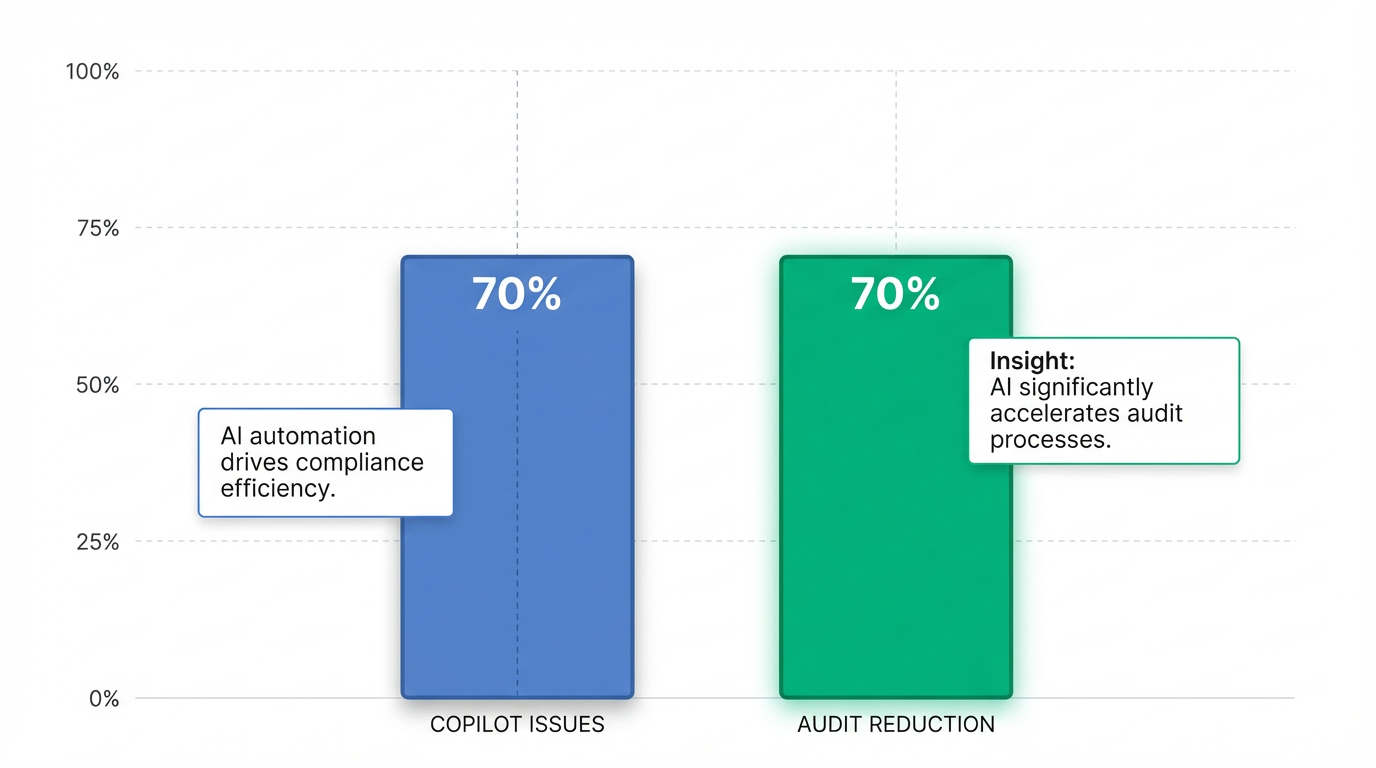
The practical benefits for indie hackers are substantial, turning what was once a daunting task into a manageable workflow. AI automates repetitive checks, scanning thousands of pages in minutes, which is vital for agile development and cost-effective solutions. This automation drastically increases efficiency, potentially cutting initial audit time by up to 70%13. Integrating AI early in the process ensures issues are flagged before they become expensive to fix9. With many tools offering free plans or open-source options, and commercial tools proving more cost-effective than extensive manual audits, accessibility becomes attainable even for lean operations. AI also provides a repeatable process for checks, ensuring consistency across projects, and offers continuous compliance monitoring as digital properties evolve.
It is, however, crucial to acknowledge that AI, while powerful, is not a silver bullet. These tools are assistants, not replacements for human judgment, especially concerning nuanced cognitive or behavioral aspects of accessibility. AI may misinterpret context, overlook subtle barriers, or struggle with dynamic content, sometimes generating false positives or failing to properly assess non-explicitly coded visual elements. Furthermore, algorithmic biases embedded in training data can perpetuate stereotypes or use outdated terminology, especially if LLMs are trained on generally inaccessible internet data. Therefore, a "human-in-the-loop" approach—reviewing AI output, providing specific prompts, and training AI on diverse, accessibility-focused datasets—remains essential for truly comprehensive and inclusive digital experiences.
Next Steps: Your Action Plan for an Inclusive Web
For indie hackers and AI entrepreneurs navigating the complex world of web accessibility, translating knowledge into action is crucial. The path to ADA compliance isn't a single destination but an ongoing journey that begins with a shift in mindset and continues with strategic implementation. By integrating accessibility from the outset and leveraging modern AI tools thoughtfully, you can build truly inclusive digital products and sidestep significant legal and financial risks.
Firstly, prioritize accessibility from day one as a core development principle, not a mere checklist item 3. Retrofitting an inaccessible website can be substantially more costly and time-consuming than building it accessibly from the start 4. This means considering WCAG 2.1 Level AA or 2.2 Level AA guidelines during the initial design and planning phases, ensuring that choices around UI/UX, content structure, and technical implementation inherently support accessibility 14. This proactive approach helps mitigate the "constantly shifting target" challenge presented by evolving standards 4.
Secondly, adopt an AI-powered hybrid testing strategy to maximize efficiency and accuracy. While automated tools, often AI-enhanced, can rapidly scan for a significant portion of WCAG violations and boost efficiency by automating repetitive tasks , they are not a complete solution. AI excels at identifying technical issues like missing alt text or poor contrast but often struggles with nuanced context or cognitive accessibility . Therefore, combine these powerful automated checks with robust manual reviews performed by human experts and, crucially, by individuals with disabilities . This "human-in-the-loop" approach is essential to address AI's limitations and biases, ensuring a truly inclusive user experience .
Finally, commit to continuous improvement and user-centric audits. Accessibility is not a one-time project; it requires ongoing vigilance. Implement a clear compliance roadmap that includes regular monitoring, testing, and updates to adapt to evolving standards and new content . Publishing an accessibility statement outlines your commitment and provides a feedback mechanism for users 14. Furthermore, never underestimate the value of direct feedback from users with disabilities—their insights are invaluable for identifying real-world barriers that automated tools or even expert audits might miss. Consulting legal counsel and accessibility consultants for complex issues can also provide essential guidance 4.
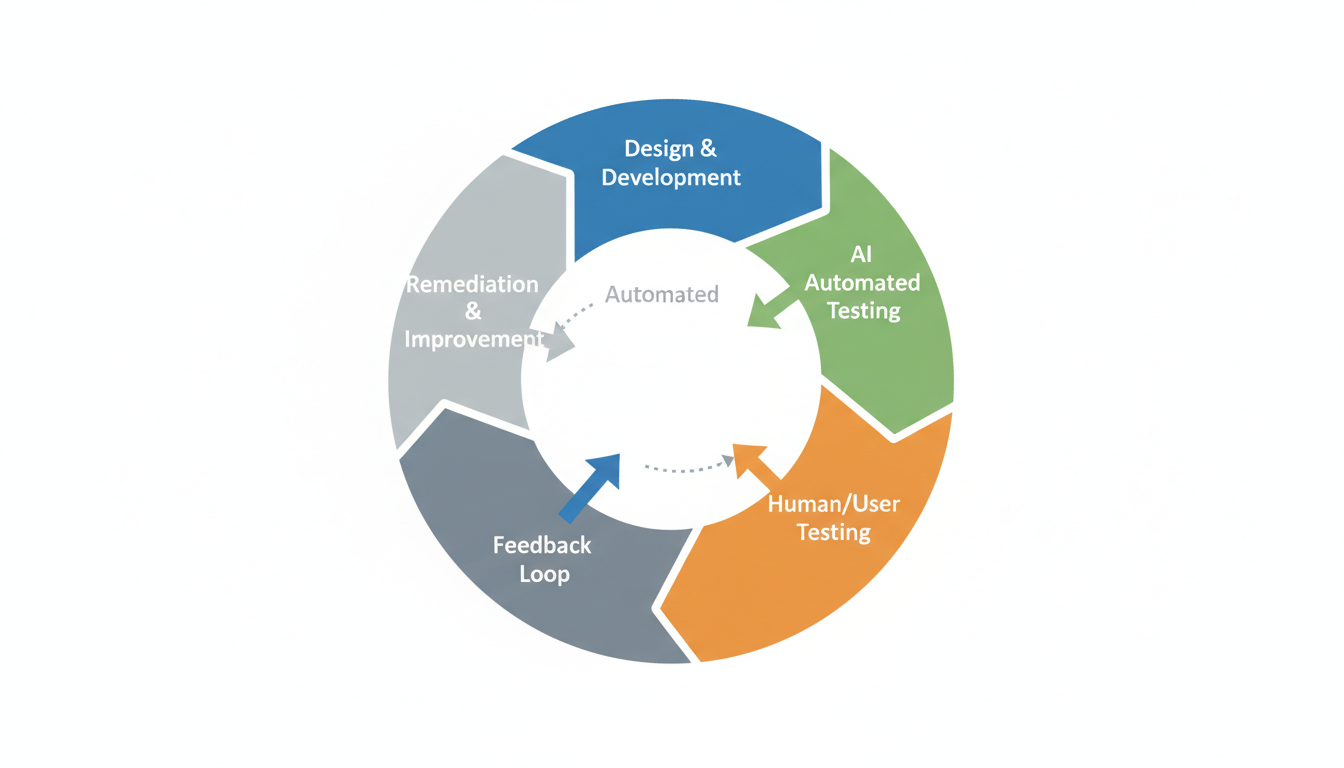
By embracing these steps—early integration, a hybrid testing model, and a commitment to continuous, user-focused improvement—indie hackers can build digital products that are not only compliant but also genuinely accessible, expanding their market and enhancing their reputation.