Leveraging AI for Operational Efficiency in Startups
Introduction
Just last year, a bootstrapped founder launched a fully functional SaaS product in a mere weekend, primarily by leveraging AI-powered development tools for rote coding tasks. This isn't an isolated incident or a Silicon Valley fairy tale; it's rapidly becoming the new standard for agile entrepreneurs who recognize the power of Leveraging AI for Operational Efficiency in Startups. For too long, the entrepreneurial journey has been plagued by the insidious drain of manual, repetitive tasks—everything from customer support inquiries to data entry and basic content creation—that stifle innovation and consume precious time that could be dedicated to strategic growth. This constant battle against operational overhead prevents founders and their lean teams from focusing on the high-value activities that truly move the needle.
In today's fast-paced startup ecosystem, operational bottlenecks are no longer just an inconvenience; they are a critical impediment to scaling and a significant contributor to burnout. Many companies find themselves drowning in manual processes, often struggling to keep up with the demands of their growing customer base without disproportionately increasing headcount . The sheer volume of repetitive tasks can quickly overwhelm small businesses, making the search for automation solutions a pressing priority . This report aims to guide startup founders and operations managers through the actionable strategies and powerful AI tools available to transform their operations, reduce costs, and ultimately free up invaluable resources for innovation and expansion.
Artificial intelligence presents a transformative solution, offering unparalleled capabilities to automate workflows, optimize processes, and dramatically improve overall operational efficiency. By offloading mundane, predictable tasks to intelligent systems, startups can dramatically enhance productivity, reduce human error, and achieve significant cost savings. This article delves into how AI can be strategically integrated into various operational areas, providing concrete examples and practical guidance to help you navigate the landscape of AI implementation, improve customer interactions, and build a more resilient and efficient business.
Core Strategy: Blueprint for AI-Driven Efficiency
For startups navigating competitive markets, leveraging AI isn't just about innovation; it's a fundamental blueprint for sustainable growth and operational superiority. By strategically deploying AI across core functions, founders can unlock significant efficiencies, moving beyond manual bottlenecks to scale intelligently. This involves a three-pronged approach: automating repetitive tasks, optimizing workflows with predictive analytics, and enhancing decision-making through AI-powered insights.
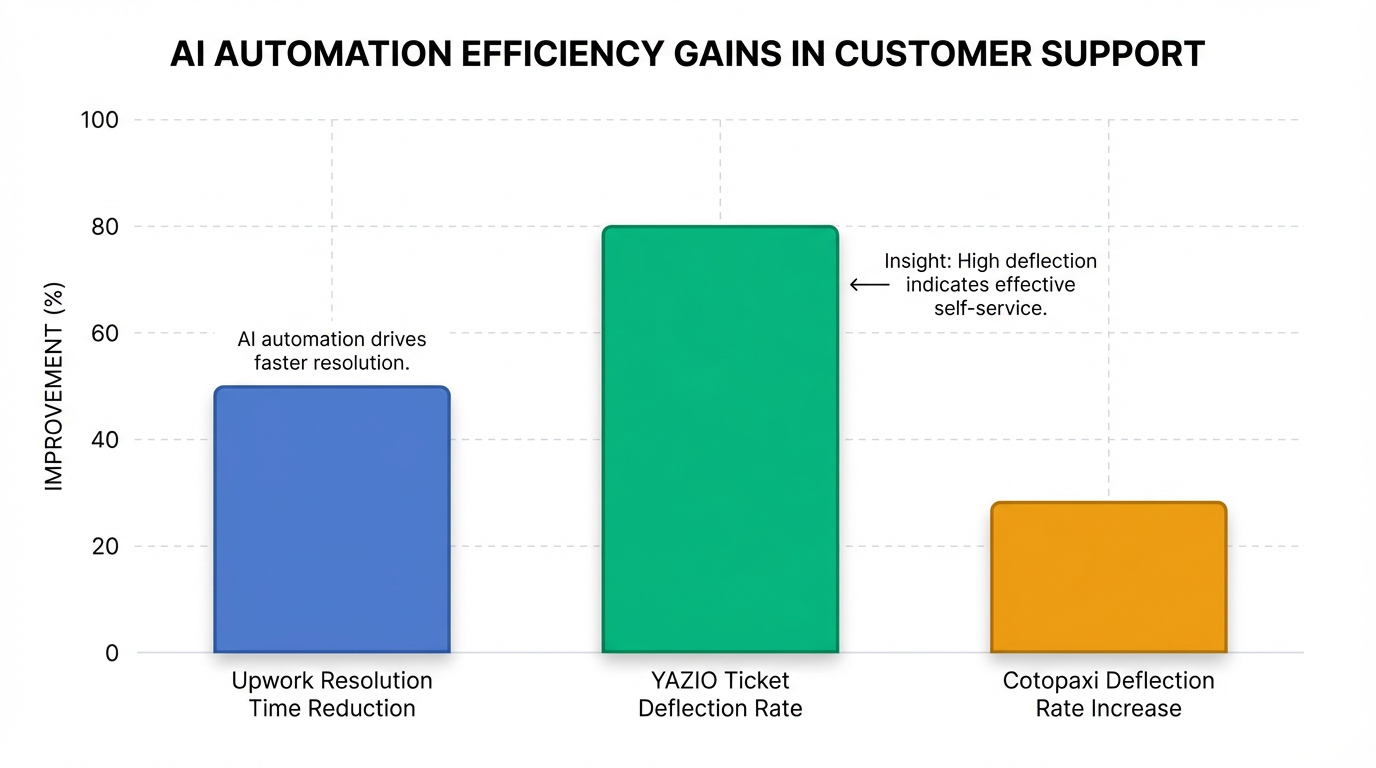
Automating repetitive tasks is often the lowest-hanging fruit for startups seeking immediate impact. Consider customer support, a notoriously labor-intensive area that directly impacts customer satisfaction. Companies like Upwork successfully reduced the time to resolve customer inquiries by 50% and achieved a 65% average self-serve rate by implementing AI agents that learn from historical data and provide real-time insights to human agents1. Similarly, outdoor gear company Cotopaxi saw a 28% increase in deflection rate and a 168% ROI within six months by using an AI chatbot for intelligent routing of customer queries1. This means a higher percentage of customer issues were resolved without needing human intervention, freeing up valuable agent time. The health and fitness app YAZIO, for instance, deflected 80% of customer support tickets using Forethought Solve AI, effectively avoiding the need to hire three additional full-time agents1. Tools like Latenode can build autonomous AI agents to categorize tickets, draft personalized replies, and perform sentiment analysis, potentially reducing agent time spent on such tasks by 50-70%2. Freshdesk, with its Freddy AI, offers automated ticket categorization and agent assistance, providing an affordable solution for growing companies to offer 24/7 support3. Beyond customer support, general workflow automation platforms like Zapier allow startups to connect over 5,000 applications, simplifying routine data movement and even building AI-enhanced form builders for lead capture2. This kind of no-code automation can significantly reduce the time needed for coding tasks and documentation, boosting overall productivity5. Airtable AI further enables non-technical users to organize and clean unstructured data and build conversational AI apps for tasks like customer feedback collection4.
Optimizing workflows through predictive analytics allows startups to move from reactive to proactive operations. Imagine anticipating customer needs before they arise or identifying potential bottlenecks in your supply chain ahead of time. Tools such as Akkio empower sales and marketing teams to train AI models for customer data analysis and predict campaign performance without writing a single line of code5. This capability reduces the time spent on complex data analysis, ensuring optimal model performance with minimal user intervention5. By leveraging these insights, startups can fine-tune resource allocation, improve inventory management, or personalize customer journeys more effectively, directly impacting profitability and efficiency.
Finally, enhancing decision-making with AI-powered insights transforms raw data into strategic intelligence. This means moving beyond basic reports to deeply understand market trends, competitive landscapes, and internal operational health. AI models can analyze vast datasets to uncover patterns and correlations that would be invisible to human analysts, providing a competitive edge. Whether it's guiding product development, refining marketing strategies, or making smarter hiring choices, AI provides a data-driven foundation for critical decisions. The proactive insights generated by predictive tools, like those offered by Akkio, also feed directly into better decision-making processes, ensuring that strategic choices are informed by the most relevant and forward-looking data available5. This integrated approach ensures that AI isn't just a tool for automation but a strategic partner in guiding the startup's growth trajectory.
Real Example: A Startup's Journey to AI-Powered Operations
Successfully integrating AI into core operations can feel like a daunting task, but for companies like Upwork, the results speak for themselves. This global freelancing platform faced a common challenge among rapidly scaling businesses: customer support inefficiency. Their goal was clear – enhance customer support efficiency and accelerate ticket resolution, a critical factor for maintaining user satisfaction in a competitive market 1.
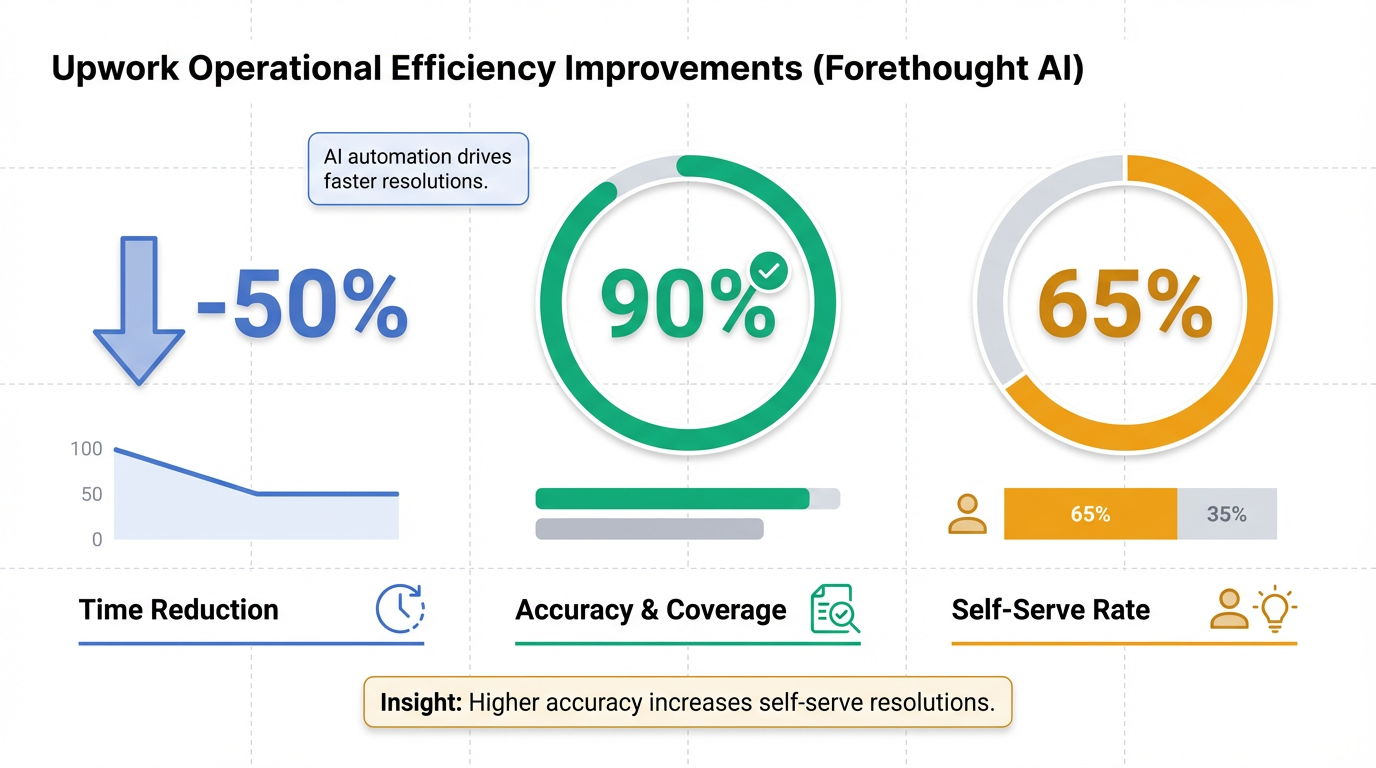
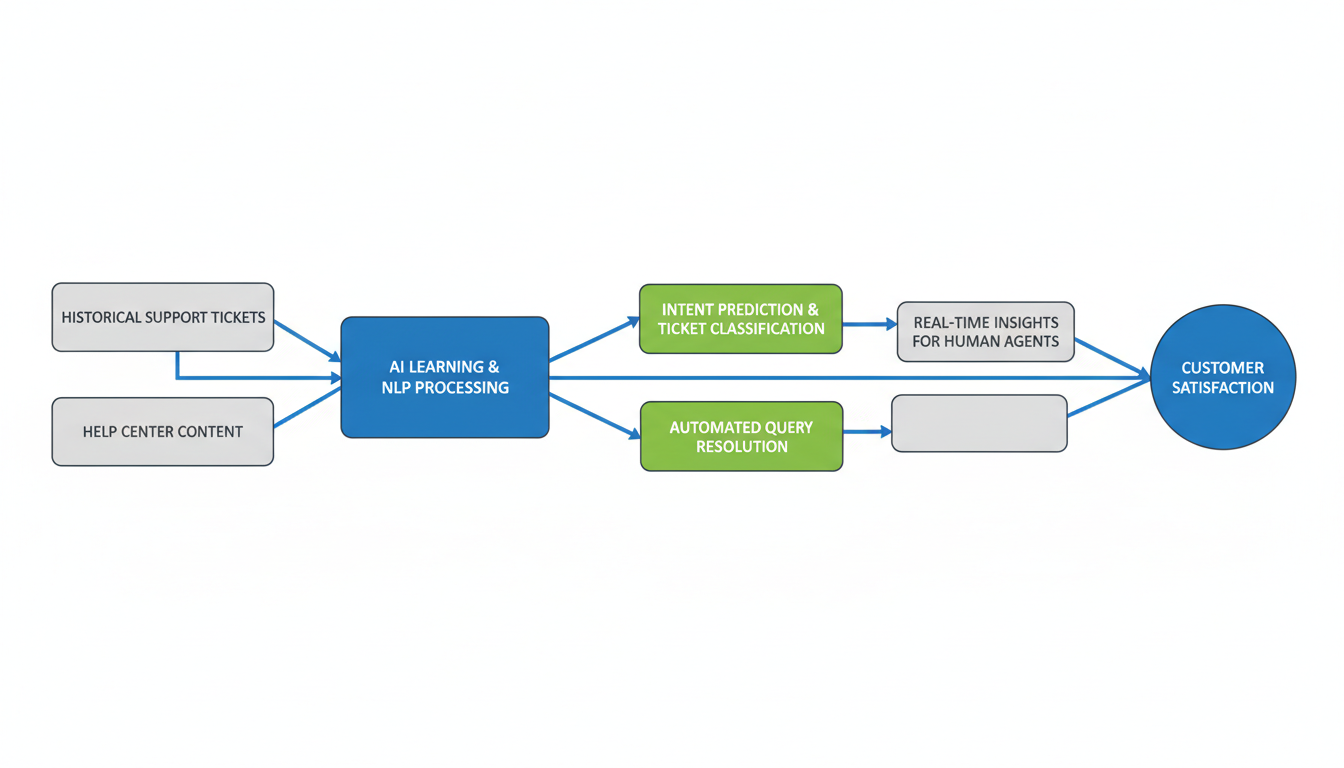
To tackle this, Upwork implemented Forethought's AI Agents, a sophisticated system designed to learn directly from their vast repository of historical support tickets and help center content 7. These AI agents, powered by machine learning and natural language processing, were able to predict the intent of customer inquiries, accurately classify new incoming tickets with an impressive 90% accuracy and coverage, and provide real-time insights to human agents . This integrated approach allowed AI to handle initial queries and significantly assist agents in more complex cases, thereby streamlining the entire support workflow 7.
The measurable outcomes of this AI adoption were transformative. Upwork saw a remarkable 50% reduction in the time it took to resolve customer inquiries 1. Furthermore, the system achieved an impressive 65% average self-serve rate, meaning a substantial portion of customer issues were resolved without needing human intervention 1. This not only freed up human agents to focus on more complex, nuanced problems but also provided customers with faster, more efficient resolutions.
The journey wasn't without its initial hurdles. Prior to Forethought, Upwork's customer support system was burdened by a solution that demanded extensive manual training for thousands of workflows 7. This laborious process often led to duplicated efforts and inaccurate answers, creating an overly complex and difficult-to-manage system 7. Forethought's AI agents overcame this critical challenge by automatically learning from existing data, effectively eliminating the need for tedious and error-prone manual workflow configuration and training, proving that the right AI can simplify rather than complicate operations 7. This demonstrates how targeted AI implementation can resolve long-standing operational bottlenecks and significantly improve service delivery.
Build It Yourself: Implementing AI Tools for Ops
The notion of leveraging AI for operational efficiency in startups no longer requires a team of data scientists or a venture-backed budget. Today, accessible no-code and low-code AI tools empower founders and operations managers to "build it yourself," rapidly automating repetitive tasks and streamlining critical operational workflows. These platforms significantly lower the barrier to entry, allowing non-technical personnel to deploy sophisticated AI applications without extensive coding knowledge, fostering a new era of agile business optimization.
For customer support, which often consumes considerable time for growing startups, tools like Latenode and Freshdesk with Freddy AI offer immediate relief. Latenode allows for the creation of autonomous AI agents capable of categorizing incoming support tickets, drafting personalized replies based on FAQs, and even performing sentiment analysis before routing to a human agent 2. Its visual no-code environment provides unified access to powerful models like GPT-4o and Claude 3.5 Sonnet, drastically reducing the time agents spend on tasks such as ticket analysis and response drafting by 50-70% 2. Similarly, Freshdesk, equipped with its Freddy AI, automates ticket categorization and assists human agents with recommended responses, ensuring faster and more consistent customer service for small to medium-sized businesses 3.
When it comes to general workflow automation and data entry, tools like Zapier and Airtable AI are invaluable. Zapier stands out with its industry-leading library of over 5,000 app integrations, enabling seamless data movement and process automation across disparate systems 2. Its newer AI Interfaces can help build AI-enhanced form builders for lead capture or simplify chatbot development, proving that robust automation doesn't have to be complex 4. Airtable AI transforms raw data into custom applications, allowing non-technical users to build conversational AI apps for tasks like customer feedback or expense approvals 4. Its visual development environment, complete with drag-and-drop editors and templates, makes rapid prototyping of AI app ideas incredibly user-friendly and cost-effective 4.
For more advanced needs such as data analysis and predictive analytics, Akkio offers a no-code solution for training AI models. Startups can leverage Akkio to analyze customer data, predict campaign performance, and generate AI-powered insights for sales and marketing without writing a single line of code 5. This capability reduces the time spent on complex data analysis through intuitive visualization and ensures optimal model performance with minimal user intervention 5. These examples underscore how no-code AI platforms are democratizing access to artificial intelligence, facilitating faster deployment and significant cost reductions compared to traditional development methods 5.
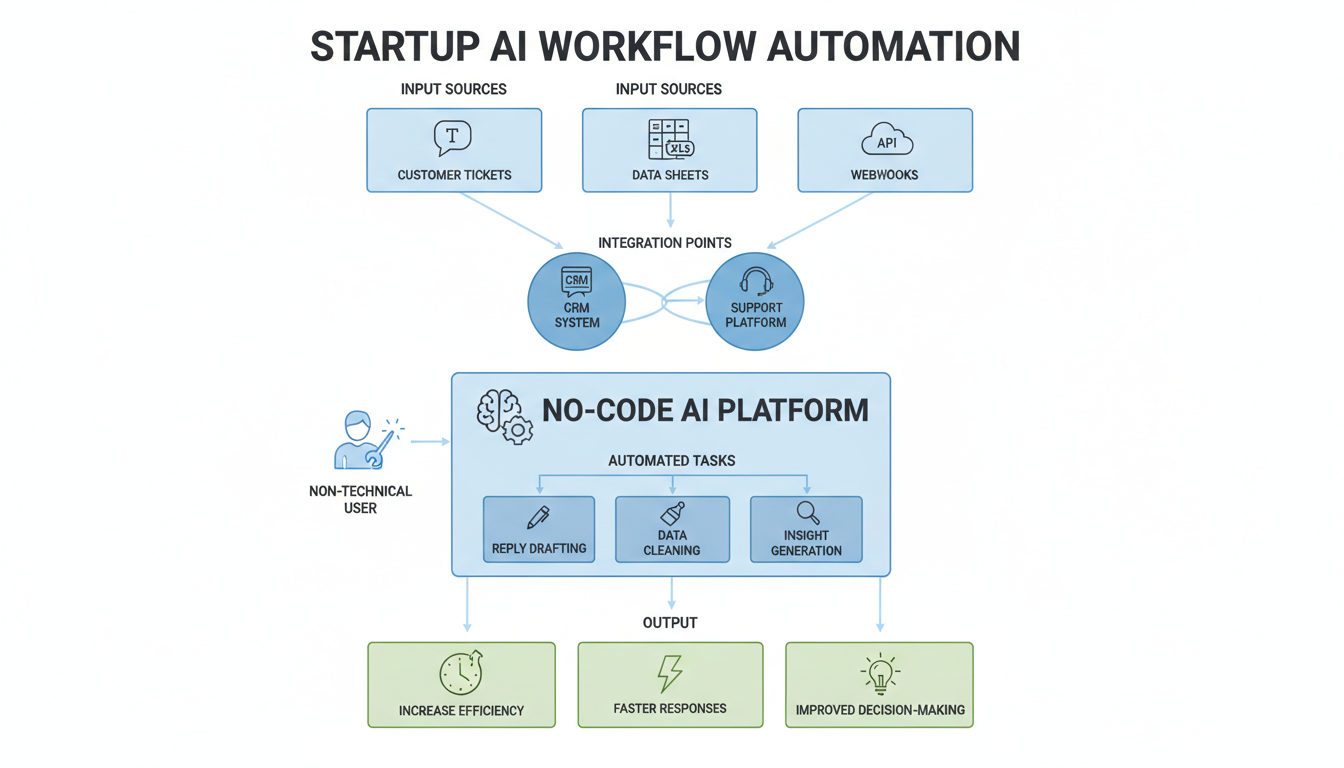
The accessibility of these AI tools empowers non-technical staff—from project managers to marketers—to craft custom solutions for specific challenges, bypassing the need for specialized developers and freeing technical teams for strategic work 4. By embracing these platforms, startups can not only automate workflows but also iterate on AI solutions with unprecedented speed, ensuring continuous improvement in their operational efficiency.
Next Steps: Your AI Efficiency Action Plan
AI isn't just a buzzword; for startups, it's a powerful lever for operational efficiency, sharpening decision-making, and delivering hyper-personalized customer experiences. By automating repetitive tasks and optimizing workflows, AI frees up invaluable time and resources, allowing nimble teams to focus on innovation and growth rather than getting bogged down in manual processes. This strategic integration is how indie hackers and AI entrepreneurs can truly transform their ventures.
To truly leverage AI for continuous operational improvement, consider these actionable steps:
- Start with the Problem, Not the Tech: Before chasing the latest AI fad, pinpoint specific business challenges that AI can genuinely solve. Quantify the potential return on investment (ROI) and ensure AI is the most effective solution for that particular bottleneck, seeking those narrow, high-impact use cases that can deliver quick wins within 30-90 days 10. This problem-first approach ensures your efforts are always aligned with core business value.
- Build a Solid Data Foundation: AI thrives on high-quality data, so prioritize cleaning, standardizing, and governing your datasets. Invest in quality over quantity, establish "data moats" for competitive advantage, and centralize access to create a single source of truth within your organization 10. Upgrading your data management capabilities is foundational for effective AI deployment and scaling 11.
- Cultivate AI Literacy and Expertise: AI isn't just for data scientists; foster organization-wide AI literacy, especially among leadership, to understand its capabilities and limitations 10. Strategically hire specialized talent or partner with consultants and AI development services. Crucially, invest in training and reskilling your existing team to integrate AI effectively, framing it as a collaborative tool to augment human capabilities .
- Embrace Ethical AI from Day One: With increasing regulatory scrutiny and growing concerns about bias, proactively embed ethical considerations into your AI design. This includes continuous monitoring for production bias, ensuring transparency, and adopting a "human-in-the-loop" approach where AI assists, rather than entirely replaces, human judgment . Prioritizing ethical frameworks builds trust and ensures compliance.
Looking ahead, the AI landscape promises even more sophisticated tools for startups. Agentic AI, with its capacity for autonomous perception, planning, and action, will redefine workflows across functions like procurement and quality control, transforming AI from a tool into an intelligent collaborator . For startups with lean resources, the rise of Small Language Models (SLMs) offers a compelling alternative to larger models, providing cost-effective, specialized AI for tailored workflow automation and data analysis without immense computational demands 12.
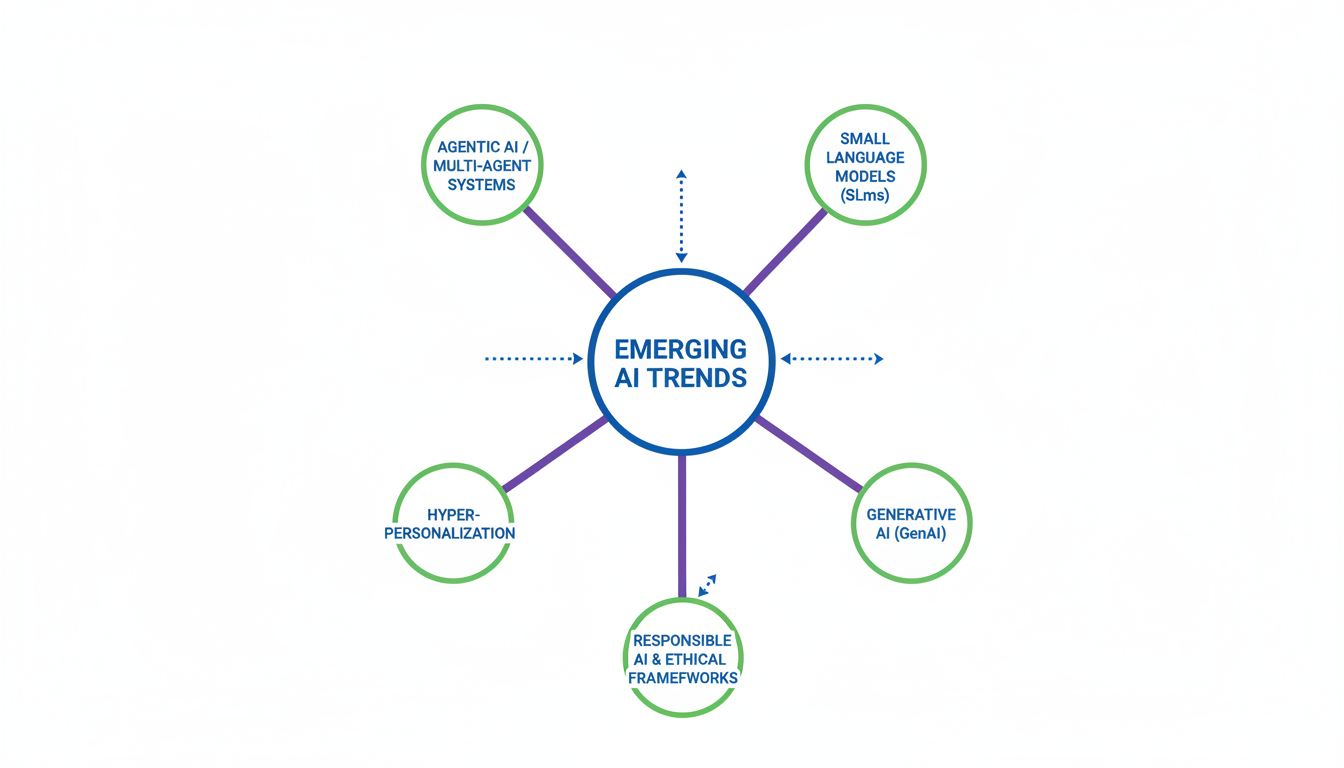
Furthermore, AI will supercharge hyper-personalization, enabling startups to deliver uniquely tailored customer experiences, from dynamic pricing to targeted marketing, fostering unparalleled loyalty and engagement . Generative AI (GenAI) will continue its explosive growth, becoming indispensable for rapid content creation, code generation, and even product design, accelerating critical development cycles . All these advancements underscore the growing imperative for Responsible AI practices, as transparency, bias auditing, and privacy-first design become non-negotiable for building trust and ensuring compliance in an evolving regulatory environment .
This isn't about simply adopting a new technology; it's about fundamentally rethinking how your startup operates. By strategically embracing AI, continuously refining your approach, and staying attuned to these emerging trends, you're not just improving efficiency—you're building a more resilient, innovative, and ultimately, a more successful venture ready to thrive in the AI-powered economy.