Nano Banana 2 (Gemini 3.1 Flash Image): An In-Depth Analysis of Its Advanced Capabilities and Market Impact
Introduction: The Arrival of Nano Banana 2
Nano Banana 2, officially designated as Gemini 3.1 Flash Image and internally codenamed GEMPIX2, has been officially released and is currently rolling out across various Google products . The launch, conducted by Google DeepMind, occurred on February 26, 2026 . Further details were shared by Michael Gerstenhaber, VP of Product Management for Vertex AI 1.
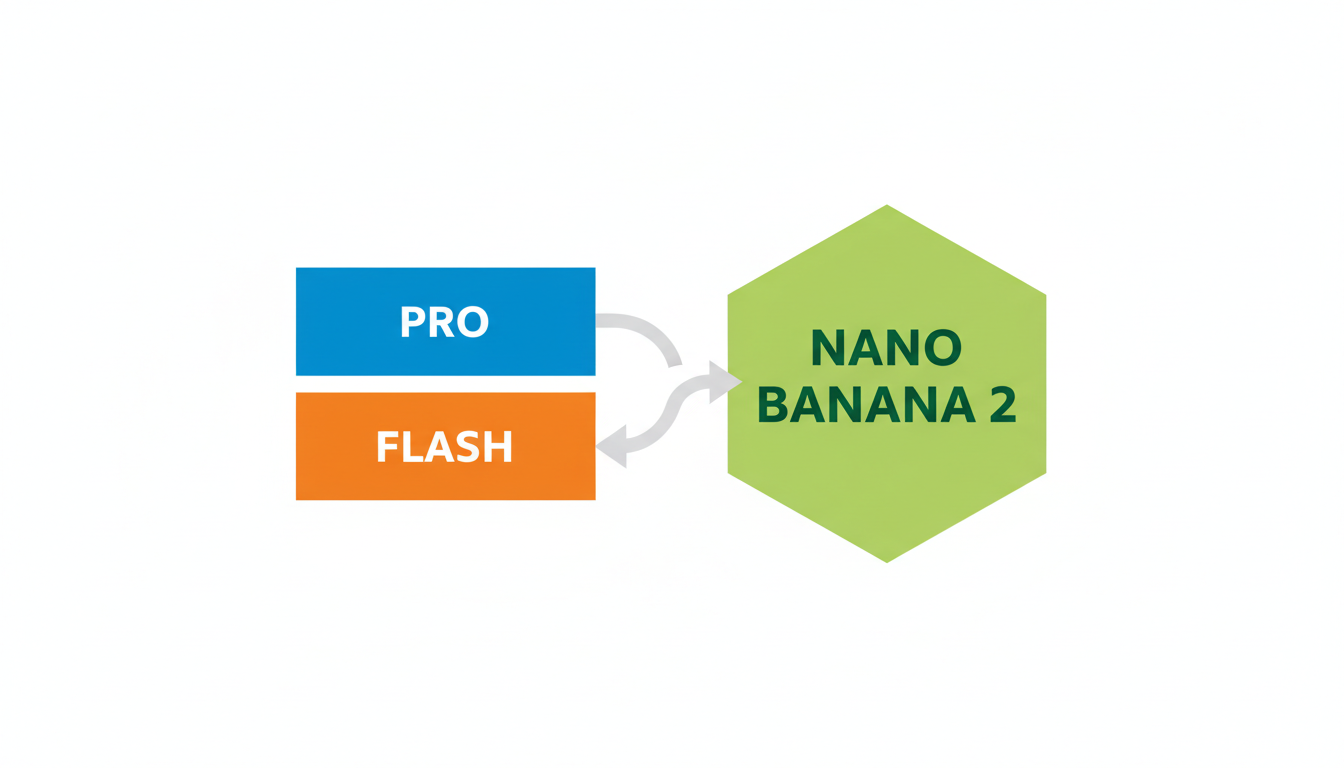
Built on the Gemini 3.1 Flash architecture, the rollout was executed as a silent model update, integrating Nano Banana 2 as a feature rather than a standalone product . This new model's core purpose is to combine the advanced features of its predecessor, Nano Banana Pro, with the lightning-fast speed characteristic of Google's Flash architecture, aiming for high-fidelity image generation and editing at an impressive price-performance ratio . Touted as Google's "best image model yet", Nano Banana 2 makes "once-exclusive Pro features accessible to a wider audience" .
Unveiling Nano Banana 2's Core Strengths: Model Capabilities
Google's "Nano Banana 2," officially known as "Gemini 3.1 Flash Image" (gemini-3.1-flash-image-preview), launched on February 26, 2026, represents a significant advancement as a state-of-the-art image generation and editing model. It is specifically optimized for image understanding and generation tasks, skillfully balancing rapid speed with Pro-level visual quality . This section delves into the core model capabilities, detailing its architectural innovations, presenting key performance benchmarks, and highlighting the specific features that define its exceptionally strong capabilities.
Architectural Innovations and Advancements
Gemini 3.1 Flash Image builds upon its predecessor, Nano Banana Pro, integrating advanced features while maintaining the characteristic speed associated with Google's "Flash" models 2. Key architectural developments that underpin its sophisticated capabilities include:
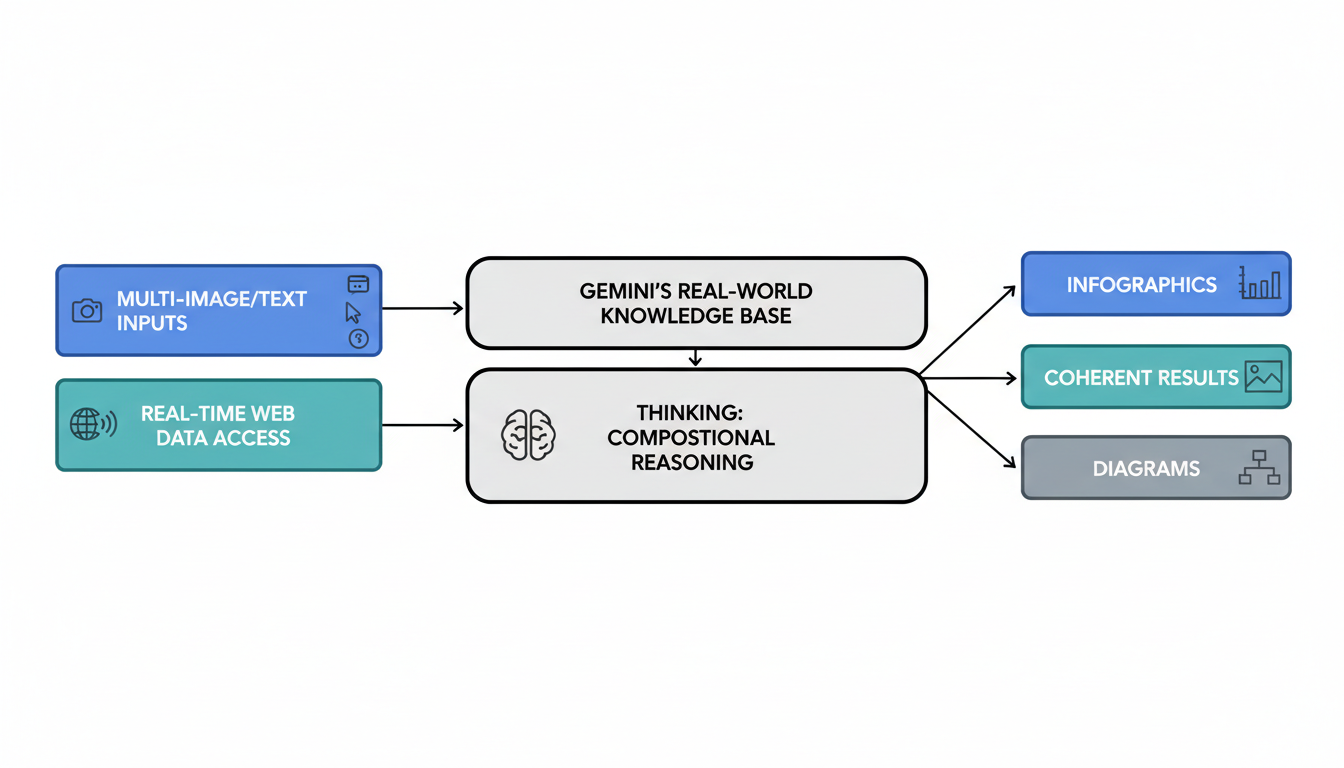
- Enhanced Understanding and Cohesion: The model draws from Gemini's extensive real-world knowledge base and possesses the ability to access real-time data and images directly from the web 2. This deep comprehension empowers it to create detailed infographics, transform notes into diagrams, and generate various data visualizations 2.
- Superior Subject Consistency: It exhibits a remarkable ability to consistently track and render up to five characters and 14 distinct objects within a single workflow, matching the capabilities Nano Banana Pro offered at its initial release 2. This feature greatly simplifies tasks such as storyboarding and sequential visual development 2.
- Advanced Text Rendering: A notable improvement is its enhanced proficiency in rendering text accurately within images. It supports both translation and localization on command, directly addressing a common challenge in earlier image generation models 2.
- Realistic Visual Fidelity: Generated images benefit from more realistic lighting, refined textures, and intricate details, contributing to a higher degree of visual authenticity 2.
- Multi-Image Input Processing: Gemini 3.1 Flash Image can process multiple images as input, intelligently combining them to produce a single, coherent output 2.
- Intelligent Compositional Reasoning (Thinking): The model incorporates a "Thinking" capability that allows it to reason about the composition of an image prior to its generation. This results in superior accuracy, particularly in complex scenes, and improved adherence to given instructions .
- Dynamic Instruction Following: It demonstrates exceptional skill in following complex instructions and can effectively correct mistakes when re-prompted, showcasing its adaptability .
- Output Flexibility: Users can generate multiple versions of an image, offering a variety of aspect ratios and resolutions to suit different needs 2.
- Invisible Watermarking: All images generated by Gemini 3.1 Flash Image are discreetly marked with an invisible SynthID watermark, serving as an identifier for AI-generated content 3.
Performance Benchmarks
Gemini 3.1 Flash Image delivers robust performance across critical metrics, successfully balancing high visual quality with impressive generation speeds. The "Flash" designation specifically underscores its commitment to rapid inference .
- Speed: User reports confirm a significant increase in generation speed, making it notably faster than its predecessors 2.
- Multimodal Input/Output: The model natively accepts both text and images as input, and it can produce outputs in both text and image formats 4.
Key operational specifications and pricing details are summarized below:
| Metric | Value |
|---|---|
| Token Consumption (Image Generation) | Up to 2520 tokens per image |
| Max Input Tokens | 131,072 |
| Max Output Tokens | 32,768 |
| Document Context Window | Up to 128,000 tokens |
| Individual File Context Window | Up to 65,536 tokens |
| Pricing (Input Tokens per Million) | $0.25 |
| Pricing (Output Tokens per Million) | $1.50 |
| Maximum Images per Prompt | 14 |
| Supported Aspect Ratios | 1:1, 3:2, 2:3, 3:4, 4:3, 4:5, 5:4, 9:16, 16:9, 21:9 |
| Supported MIME Types | image/png, image/jpeg, image/webp, image/heic, image/heif |
Table 1: Gemini 3.1 Flash Image Performance and Usage Specifications
Exceptionally Strong Capabilities
The "exceptionally strong" capabilities of Gemini 3.1 Flash Image are a direct result of its strategic blend of speed, advanced visual reasoning, and sophisticated multimodal understanding:
- High-Quality Image Generation: It consistently delivers "Pro-level visual quality" 5, characterized by realistic details, enhanced textures, and superior lighting 2.
- Precise Instruction Following: The model exhibits a "marked improvement in following complex, multi-step instructions" 3. For instance, it can precisely modify specific elements within an image, such as removing a hat and altering garment color, all while meticulously preserving the subject's identity 3.
- Effective Subject Consistency: Its capacity to consistently track and render multiple characters and objects across sequential generations is a pivotal strength, particularly valuable for narrative-driven and sequential image tasks 2.
- Robust Multimodal Interpretation: By comprehending text, images, and abstract concepts, it can accurately translate intricate textual descriptions into precise visual outputs. This capability is instrumental in generating diverse visual aids like infographics and diagrams 2.
- Efficiency for Production: The model's "Flash" speed and cost-effectiveness make it an ideal choice for rapid prototyping, high-volume content generation, and seamless integration into real-time applications 5. Google's objective with this model is to "close the gap between speed and visual fidelity" 2.
- Developer Accessibility: To facilitate broad adoption and integration, Gemini 3.1 Flash Image is available in preview via AI Studio, the Gemini API, and Google's Antigravity IDE, empowering developers to leverage its capabilities within their own applications 2.
Beyond Model Prowess: Other Impressive Features and Market Outlook
The official launch of "Nano Banana 2," formally known as Gemini 3.1 Flash Image, on February 26, 2026, has significantly advanced AI-powered image generation, integrating the speed of the Gemini Flash architecture with the high-quality reasoning and world knowledge previously exclusive to Nano Banana Pro . This section delves into its impressive features, market reception, expert analyses, and future implications, consolidating these aspects to provide a holistic view of its impact and competitive positioning.
Initial Industry and User Reception
The release of Nano Banana 2 generated considerable excitement within the AI developer community, quickly becoming a viral topic, with discussions on platforms like X (formerly Twitter) circulating 4K generated images and technical speculations 6. Its early appearance on Vertex AI and mentions on LMArena as "anon-bob-2" underscored strong developer anticipation even before widespread availability 7. The industry perceived Nano Banana 2 as a "heavy-hitting payload" and a "definitive pivot toward the edge" for on-device, high-fidelity generative AI 8. Discussions on platforms like Hacker News reflected broad interest in the implications of AI image generation on art, originality, and the role of artists, directly spurred by Nano Banana 2's announcement 9. Google's strategic approach emphasizes a developer-focused, enterprise-grade toolset, integrating advanced capabilities into the broader Gemini ecosystem 10.
Early Reviews and Expert Analysis: Performance, Features, and Capabilities
Nano Banana 2 is engineered as a highly capable, natively multimodal reasoning model, accepting text, images, audio, and video as input to generate image and text outputs 11. It utilizes a 1.8 billion parameter backbone, achieving efficiency comparable to models three times its size 8.
Key Performance & Architectural Innovations: The model heavily prioritizes speed without compromising image quality, significantly narrowing the gap between rapid generation and visual fidelity 12. It achieves sub-500 millisecond latencies on mid-range mobile hardware, enabling real-time synthesis at approximately 30 frames per second at 512px 8. This remarkable speed is facilitated by Dynamic Quantization-Aware Training (DQAT), which maintains high output quality with a minimal memory footprint, and Latent Consistency Distillation (LCD), which allows for the prediction of the final image in as few as 2-4 steps, compared to 20-50 steps for traditional diffusion models 8. Predicted generation speed for 4K images is 4-6 seconds 6. For mobile applications, Nano Banana 2 incorporates Grouped-Query Attention (GQA) to optimize the attention mechanism, reduce data movement, and prevent performance dips due to overheating on mobile NPUs 8. Benchmarks on GenAI-Bench demonstrate strong performance in "Overall Preference," "Visual Quality," and "Infographics (Factuality)" for text-to-image tasks, surpassing previous versions like Gemini 2.5 Flash Image ("Nano Banana") and competing effectively with other advanced models 11. For editing, it excels in general, character, creative, object/environment, multi-input, and stylization tasks 11.
Unique Features & Capabilities:
- High-Resolution Output: Nano Banana 2 supports native 4K (4096x4096) image generation and upscaling, expanding beyond its predecessors' 1K/2K limits .
- Subject Consistency: A significant breakthrough, it can maintain the resemblance of up to five consistent characters and the fidelity of up to 14 objects within a single workflow or across different scenes, effectively addressing "flicker" and identity-drift issues common in generative AI .
- Advanced Text Rendering and Translation: The model can generate legible and accurate text directly within images, supporting translation and localization for global content workflows . Predicted text rendering accuracy is around 90% 6.
- Enhanced Instruction Following: Nano Banana 2 adheres more strictly to complex prompts, leading to more nuanced and precise outputs .
- Creative Control: It offers full control over aspect ratios and resolutions, ranging from 512 pixels to 4K, alongside vibrant lighting, richer textures, and sharper details .
- Real-world Knowledge Integration: The model draws on Gemini's real-world knowledge base and can incorporate real-time information and images from web search to render subjects accurately .
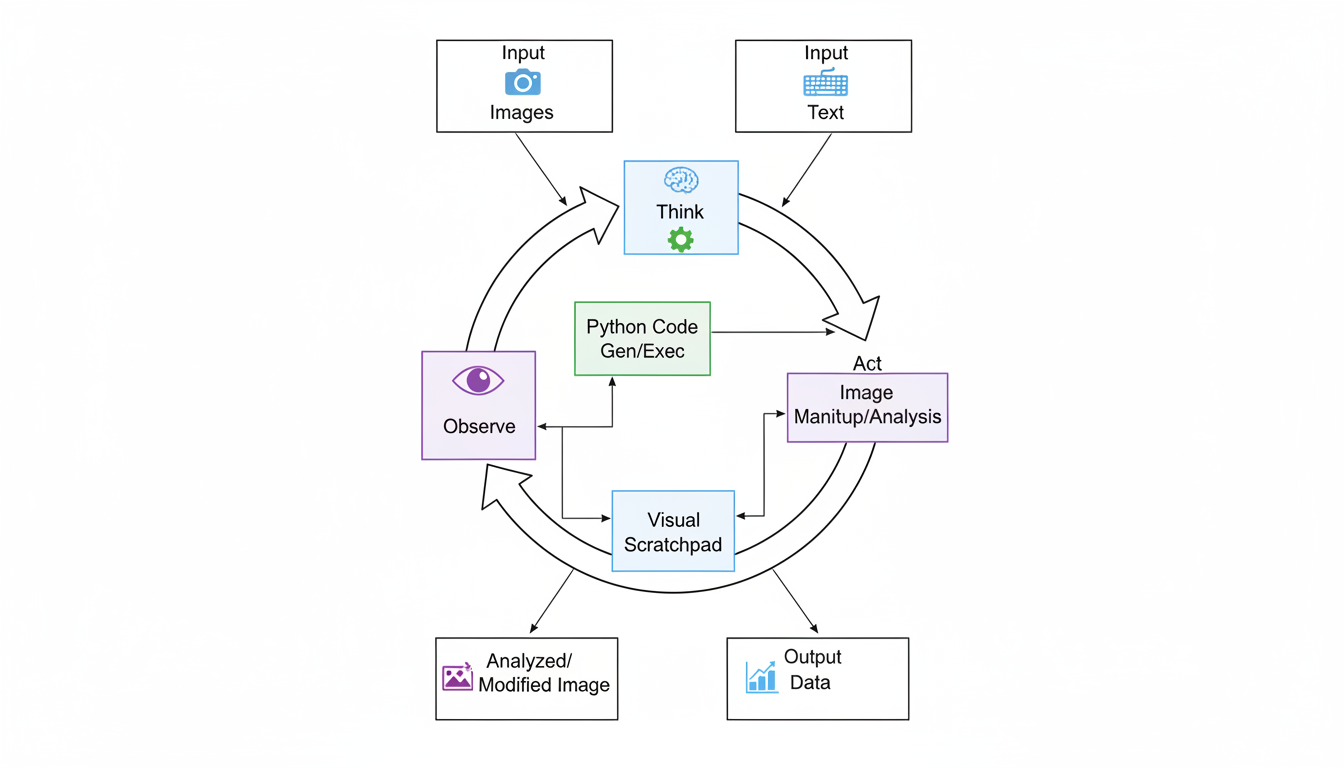
- Agentic Vision: Inherited from Gemini 3 Flash, this capability enables the model to conduct an "active investigation" of images using a "Think, Act, Observe" loop. It can generate and execute Python code to manipulate (e.g., crop, rotate, annotate) or analyze images (e.g., count objects, visualize data from tables), leveraging a "visual scratchpad" for pixel-perfect understanding and deterministic Python environments for reliable visual arithmetic, resulting in a consistent 5-10% quality boost across most vision benchmarks 13.
- Responsible AI: Google continues its commitment to responsible AI by integrating SynthID watermarking technology with C2PA Content Credentials to clarify how AI-generated content is created and modified. SynthID has already been utilized over 20 million times in the Gemini app to identify Google AI-generated content .
Real-World Applications, Use Cases, and Potential Impact
Nano Banana 2 is being rolled out across numerous Google platforms, making its advanced features broadly accessible .
Widespread Integration and Accessibility: It replaces Nano Banana Pro within the Gemini app's Fast, Thinking, and Pro modes, and is integrated into Search (AI Mode, Lens), AI Studio, the Gemini API, Vertex AI on Google Cloud, Flow (as the default image generation model at no credit cost), Google Ads, and Google Antigravity . This extensive expansion makes features previously exclusive to paid subscriptions now available to free Gemini users, democratizing access to high-speed, intelligent visual generation 14.
Specific Applications and Business Impact:
- Creative and Design: Nano Banana 2 is ideal for generating studio-level visuals, marketing mockups, greeting cards, design prototypes, storyboarding, and multi-scene narratives without visual drift .
- Information Visualization: Its ability to use real-world knowledge and real-time information makes it well-suited for generating complex infographics, converting notes into diagrams, and creating reliable data visualizations . This capability enhances educational tools, localized marketing, and travel applications 15.
- Developer Ecosystem: Integration into Android AICore with a new Banana-SDK facilitates the use of "Banana-Peels" (specialized LoRA modules). This allows developers to fine-tune the model for niche tasks such as architectural rendering, medical imaging, or stylized character art without retraining the base model, fostering a more versatile ecosystem 8.
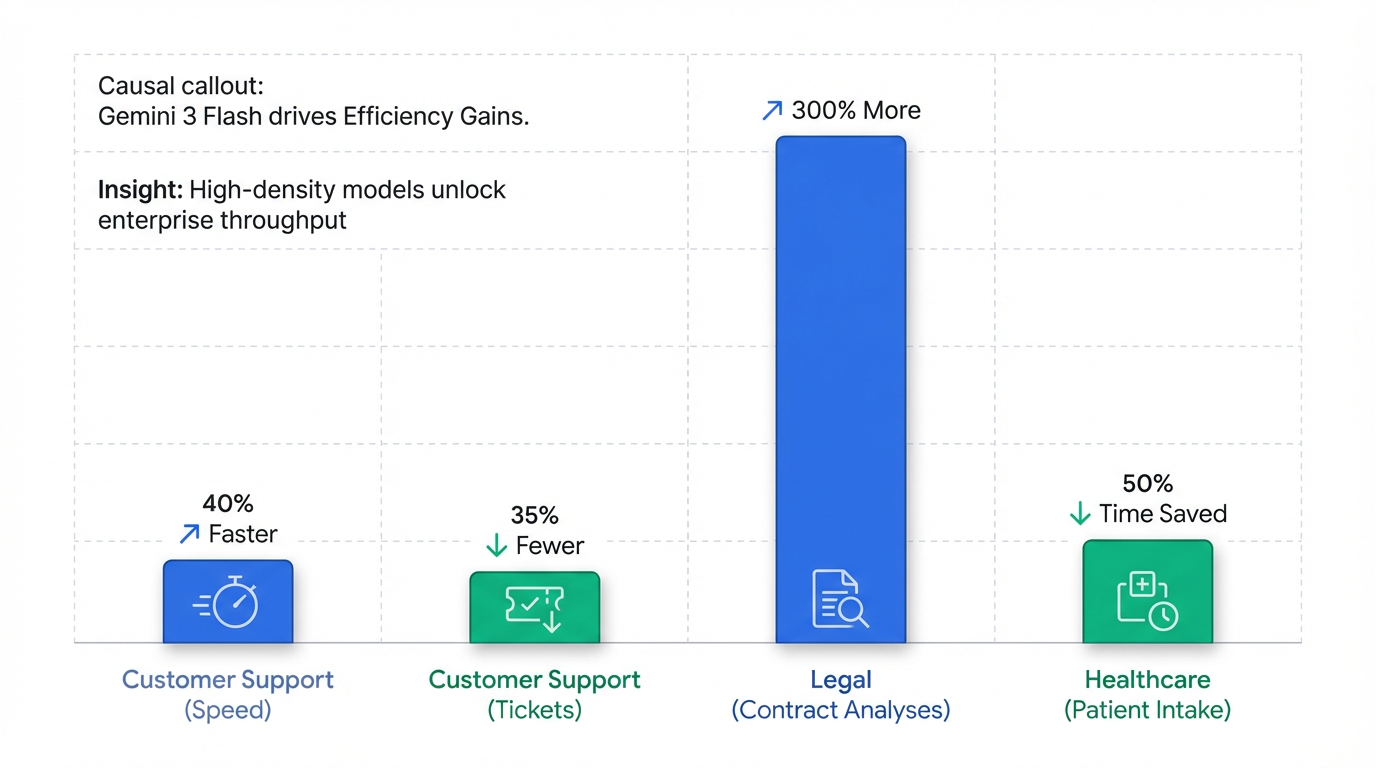
- Enterprise Workflows: The underlying Gemini 3 Flash technology, which Nano Banana 2 builds upon, has demonstrated significant benefits in enterprise settings. Customers using Gemini 3 Flash have seen improved accuracy in document extraction, enhanced capabilities for autonomous agents, better coding task performance, and accelerated prototyping .
- For customer support, Gemini Flash has led to 40% faster support and 35% fewer tickets in e-commerce 16.
- In legal applications, Gemini 3.1 Pro (another 3.1 variant) has enabled 300% more contract analyses by leveraging the family's reasoning capabilities 16.
- In healthcare, it has contributed to 50% time saved on patient intake 16.
Outlook, Competitive Positioning, and Future Development
Nano Banana 2 is strategically positioned to intensify competition in the high-speed AI creativity tool market by making fast, grounded image generation a standard feature .
Competitive Advantage: By combining Pro-level intelligence with Flash speed and efficiency, Nano Banana 2 offers a compelling price-to-performance ratio . It is predicted to be the most cost-effective 4K image generation solution, potentially 30-50% cheaper than Nano Banana Pro while nearly doubling its speed 6. This positions it to undercut competitors by offering the power of a "Pro" model at a "Lite" model's price 17. This release consolidates Google's AI portfolio under the Gemini umbrella 10. Google aims to leverage its massive infrastructure and Tensor Processing Units (TPUs) to potentially offer more aggressive pricing than competitors, establishing Gemini as the default platform for AI-powered applications . The broader Gemini 3.1 family, including Flash, is seen as transitioning AI from chat assistants to autonomous software engineers .
Implications for AI/ML Development: Nano Banana 2's launch signifies a shift in the AI industry's focus from merely "bigger is better" to a more sophisticated understanding of value delivery, prioritizing efficiency and "intelligence per dollar" . Organizations that adopt efficient models like Gemini 3.1 Flash Image will gain competitive advantages in speed to market, operational margins, and customer experience 18. The "AI wars" are moving towards a battle of "who is smartest and most affordable," making models like Gemini 3.1 Flash Image critical for creating real-time value through autonomous agents 17.
Known Limitations and Future Directions: Despite its advancements, Gemini 3.1 Flash Image may still exhibit general limitations of foundation models, such as hallucinations, occasional slowness, and timeout issues, with room for further quality improvements 11. The model's knowledge cutoff date is January 2025, which means real-time information requires web search grounding . Certain capabilities like image segmentation (pixel-level masks) and Maps grounding are not yet supported in the Gemini 3 Flash family . Future developments for the underlying Gemini 3 Flash architecture include improved ability for Agentic Vision to rotate images or perform visual math without explicit prompt nudges, and the integration of web and reverse image search for further grounding 13. There is also speculation about the eventual release of a "Nano Banana 2 Pro" variant 19.
Conclusion
Nano Banana 2 (Gemini 3.1 Flash Image) represents a strategic move by Google to deliver high-quality, high-speed image generation capabilities across its ecosystem, making advanced AI tools more accessible and cost-effective. Its technical innovations, strong performance, and broad integration are poised to significantly impact various sectors, from creative industries and marketing to software development and enterprise automation, by establishing a new standard for efficient and versatile visual AI.