Navigating Growth Challenges for Solo Founders
Introduction: The Solo Founder's Ascent
Solo founders are redefining the entrepreneurial landscape, rapidly emerging as a dominant force. This shift is significantly accelerated by technological advancements like artificial intelligence, which empower individuals to launch and scale ventures with unprecedented efficiency . This report delves into the unique growth challenges faced by these independent innovators, including indie hackers and AI entrepreneurs, who are often stretched thin across multiple roles.
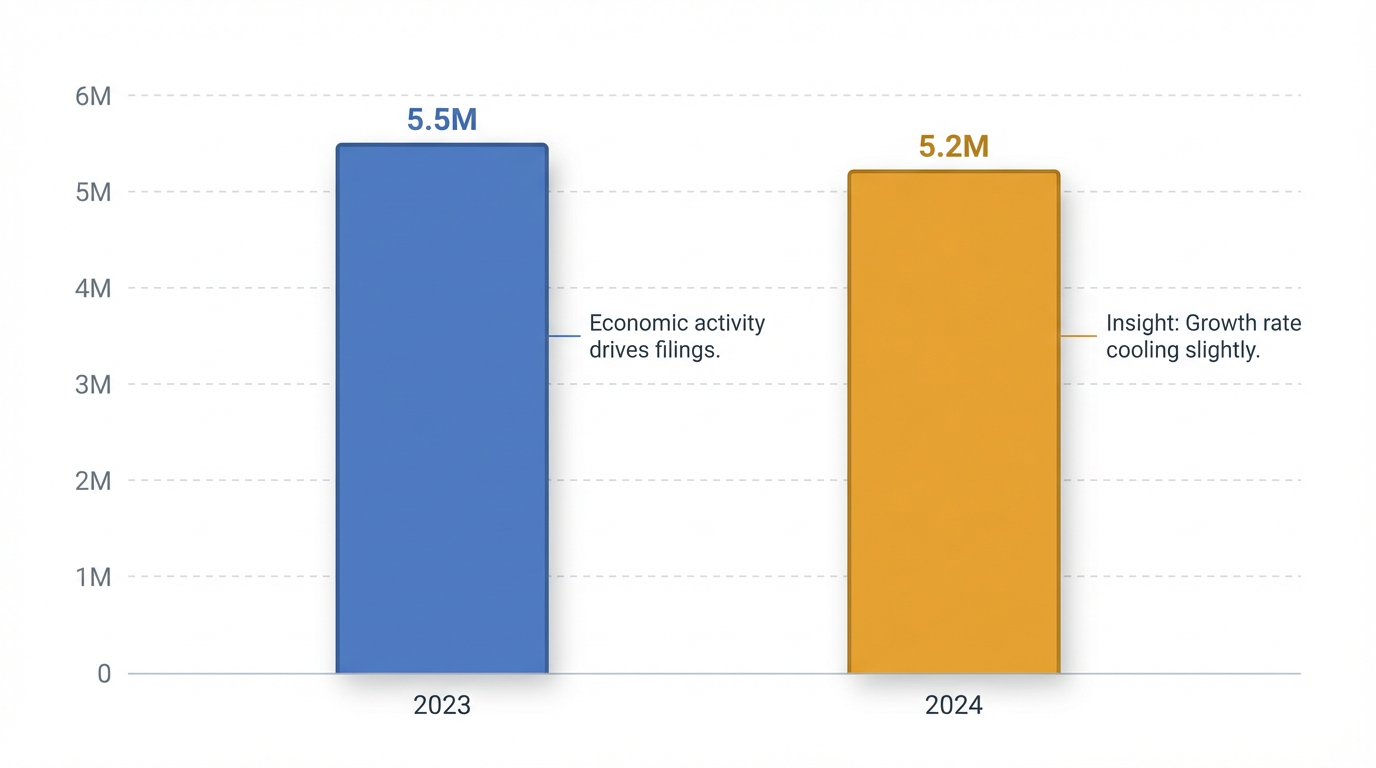
The numbers underscore this profound transformation. More than four out of five small businesses in the U.S. currently operate without employees, a figure projected to rise to 84% by 2025 from 76% in 1997 . New business formation is booming, with 5.2 million applications filed in the U.S. in 2024 alone, following nearly 5.5 million new businesses started in 2023, predominantly solo ventures . This surge translates into substantial economic impact, as 29.8 million solopreneurs collectively contribute $1.7 trillion to the U.S. economy, accounting for 6.8% of total economic activity .
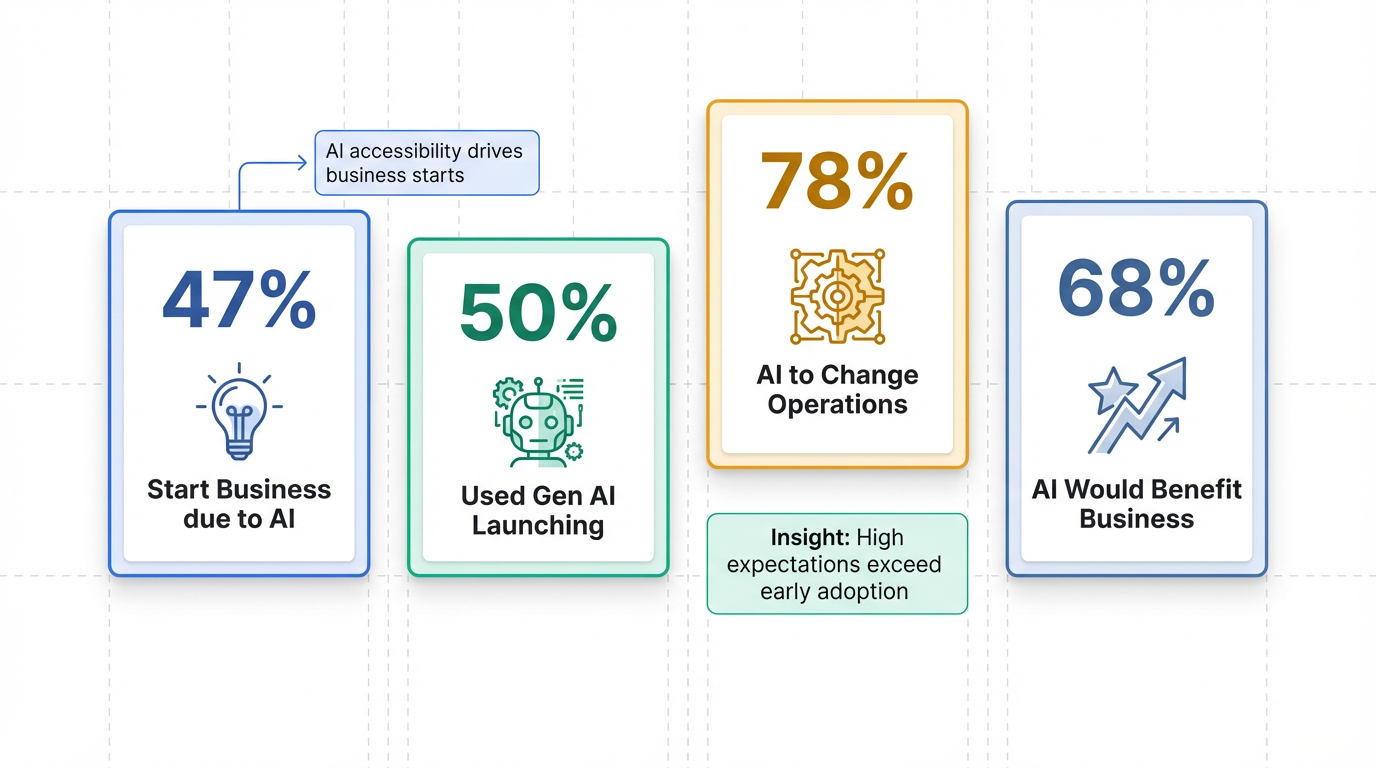
Artificial intelligence is a distinct catalyst, with almost half of individuals feeling more inclined to start a business due to its capabilities 1. A notable 77% of solopreneurs reported profitability in their inaugural year in 2024, a significantly higher rate than employer businesses, indicating the viability and effectiveness of this model, often bolstered by AI tools for time saving 2. The ability to achieve such rapid profitability highlights the lean and agile nature of solo ventures.
Despite this impressive growth and profitability, solo founders contend with an amplified set of challenges due to their limited resources and the necessity of wearing many hats. Critical hurdles often include navigating intricate time management issues, developing effective marketing and customer acquisition strategies without large budgets, and establishing scalable processes that don't rely solely on increasing headcount . This report aims to explore these common obstacles and provide actionable strategies for sustainable growth.
Core Strategy: Engineering Scalable Solopreneurship
Navigating the entrepreneurial landscape as a solo founder requires more than just resilience; it demands an intelligent, strategic approach to growth. Sustainable scaling isn't achieved by simply piling on more work, but by implementing frameworks that foster hyper-focused specialization and streamlined operations 3. These deliberate strategies empower individual entrepreneurs to transform resource limitations into competitive advantages, ensuring continuous progress without necessarily expanding their human team from the outset 3. Effective strategies mitigate the acute challenges of time management, resource scarcity, and decision fatigue that often plague solo ventures.
A foundational strategy for solo founders is to drastically simplify and standardize their service offerings to achieve undeniable product-market fit and clarity. Rather than attempting to cater to every potential client, successful solopreneurs meticulously focus on one to three core, highly profitable services that resonate deeply with a specific audience 3. This concentrated effort allows for the creation of tiered offerings—such as an Intro, Core, and Premium package—which not only provides clients with a clear value ladder but also helps manage workload and set appropriate expectations 3. This focused approach extends to defining a "Lighthouse Client," an archetypal ideal customer profile that serves as a compass for all business decisions and empowers the founder to strategically decline projects that do not align with their specialized expertise or long-term vision 3.
With a clear market focus in place, the next critical step involves aggressively leveraging technology, especially artificial intelligence, to automate repetitive tasks and significantly amplify productivity. Solo founders are increasingly embracing AI tools to reclaim valuable time and dramatically boost overall operational efficiency, transforming manual processes into autonomous workflows . This strategic deployment of AI allows individual entrepreneurs to achieve the operational leverage typically enjoyed by larger organizations, effectively repositioning themselves as managers of sophisticated AI systems rather than pure manual laborers . This "digital co-founder" capability of AI is instrumental in lowering the barriers to entry, enabling the rapid development of Minimum Viable Products (MVPs) in a fraction of the time traditionally required, sometimes in days or weeks instead of months .
For indie hackers operating without the luxury of extensive marketing budgets, strategic organic customer acquisition methods become absolutely indispensable. Building a robust SEO foundation is paramount, involving targeted directory submissions to enhance domain authority and a consistent content strategy focused on long-tail keywords to attract qualified traffic . Simultaneously, relentless conversion optimization ensures that every visitor is efficiently guided toward becoming a customer . Engaging in "building in public" on platforms like Indie Hackers and Twitter also provides a powerful, cost-effective avenue to boost visibility, gather invaluable real-time feedback, and cultivate a devoted community around the product or service 4.
Finally, sustained growth hinges on the ability to systematically identify and resolve critical bottlenecks within the business workflow. Instead of chasing a multitude of new tactics, solo founders gain significant traction by pinpointing and tackling the single most profitable bottleneck, whether it's a leaky email sequence or an inefficient onboarding process 5. Addressing these structural inefficiencies, which can lead to "idle leads draining cash flow," yields far greater returns than merely experimenting with superficial growth hacks 5. This process is intrinsically linked to a lean and iterative development mindset, where ideas are validated early through direct engagement with potential users, ensuring solutions meet genuine market needs and minimizing wasted resources 4. Implementing structured workflows, such as weekly sprints with clear, achievable goals, further combats decision fatigue and maintains focused progress 4.
Real Example: A Solo Founder's Growth Playbook
The journey of a solo founder often begins with ambitious product vision colliding with harsh market realities. Consider an anonymous B2B SaaS founder who initially struggled to gain traction despite a significant investment in advertising6. This founder spent six months and $8,000 on paid ads, only to find them ineffective—a common pitfall for many bootstrapping entrepreneurs trying to outspend larger competitors6. Operating with zero employees and no marketing budget, alongside low-paying customers demanding excessive support, the path to growth seemed arduous6. This initial phase underscores the critical need for unconventional thinking when resources are scarce.
Faced with these challenges, the founder pivoted dramatically, implementing several innovative strategies. One highly effective approach was cultivating the "One Person, Everywhere" illusion, where they diligently responded to niche-related inquiries across various platforms within minutes, creating the perception of a highly responsive, larger team6. This built a vibrant community and boosted visibility without direct ad spend. Demonstrating extreme agility, the founder eschewed rigid 12-month roadmaps, instead building features users requested that very week, even coding live during customer calls6. This rapid, customer-led development fostered immediate satisfaction, with one impressed customer referring six new clients in a single month6.
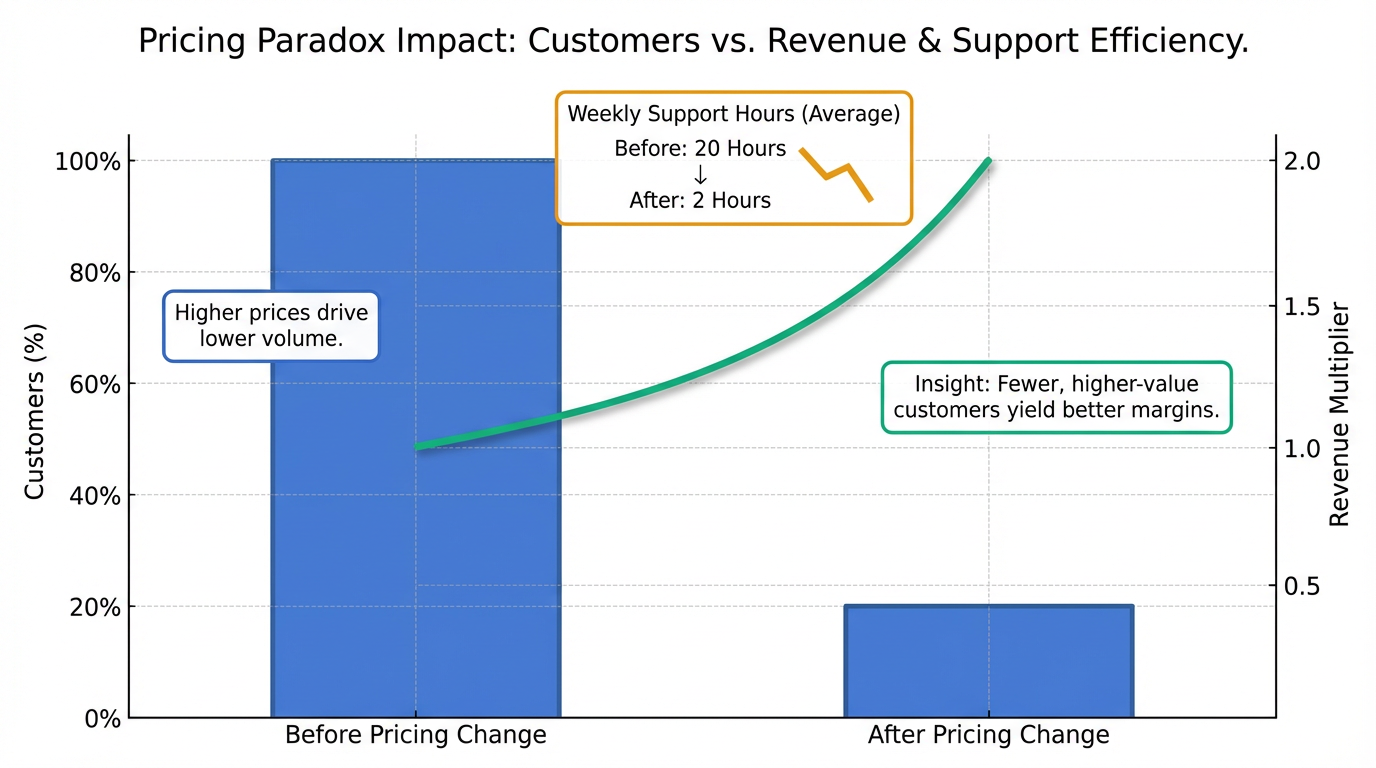
A critical turning point arrived with the "Pricing Paradox" strategy: prices were increased fivefold overnight6. Although 80% of existing customers were lost, revenue doubled, and weekly support time plummeted from 20 hours to just 2 hours, dramatically improving both profitability and lifestyle6. Complementing this, "Boring Marketing" in the form of over 200 SEO-optimized blog posts generated approximately 50 sign-ups monthly on autopilot, illustrating the compounding power of organic content6. The founder also masterfully exploited competitors, creating detailed comparison pages and assisting users in competitor forums, leading to 40% of MRR coming from "competitor refugees"6. Throughout, personalized customer care, involving direct Loom videos and feedback loops, solidified loyalty and provided invaluable product insights6.
These audacious strategies culminated in a remarkable achievement: a $20,000 Monthly Recurring Revenue (MRR) business operating with zero employees, zero advertising, and zero marketing budget6. Beyond financial success, the founder reclaimed substantial time, enjoying a healthy work-life balance with regular surfing and full weekends off6. This journey offers several critical lessons. Pivoting from paid ads, which were deemed a "solo founder trap," was crucial, enabling a focus on organic growth6. Embracing value-based pricing fundamentally reshaped the business's profitability and sustainability, despite initial customer churn6. The founder recognized that out-caring rivals through agility and personal connection was a stronger competitive advantage than trying to outspend or out-hire them6. Prioritizing compounding assets like SEO content over transient advertising efforts proved to be a superior long-term play, reinforcing the principle that "sustainable > scalable" leads to quality of life alongside sustained growth6.
AI as Your Force Multiplier: Tools for Solo Scaling
The landscape of solo entrepreneurship has been irrevocably reshaped by the advent of AI, transforming it from a mere tool into a genuine "digital co-founder" for individual builders . This dramatically lowers barriers to entry, enabling solo founders to develop Minimum Viable Products (MVPs) in a fraction of the time, often in days or weeks instead of months . This newfound leverage allows a single person to operate with the output of a small team, effectively turning individuals into managers of sophisticated AI systems .
AI's utility spans across the entire business lifecycle. For product development, specialized AI tools can significantly accelerate development cycles, handling tasks from code generation and debugging (like what Cursor might offer) to design automation and UI prototyping (similar to v0 or Lovable). AI also assists with content generation and data analysis 7. In marketing and customer operations, it powers intelligent chatbots and automates outreach, freeing up crucial time. Indeed, roughly half of new solopreneurs in 2024 utilized generative AI when launching, primarily to save precious time 2.
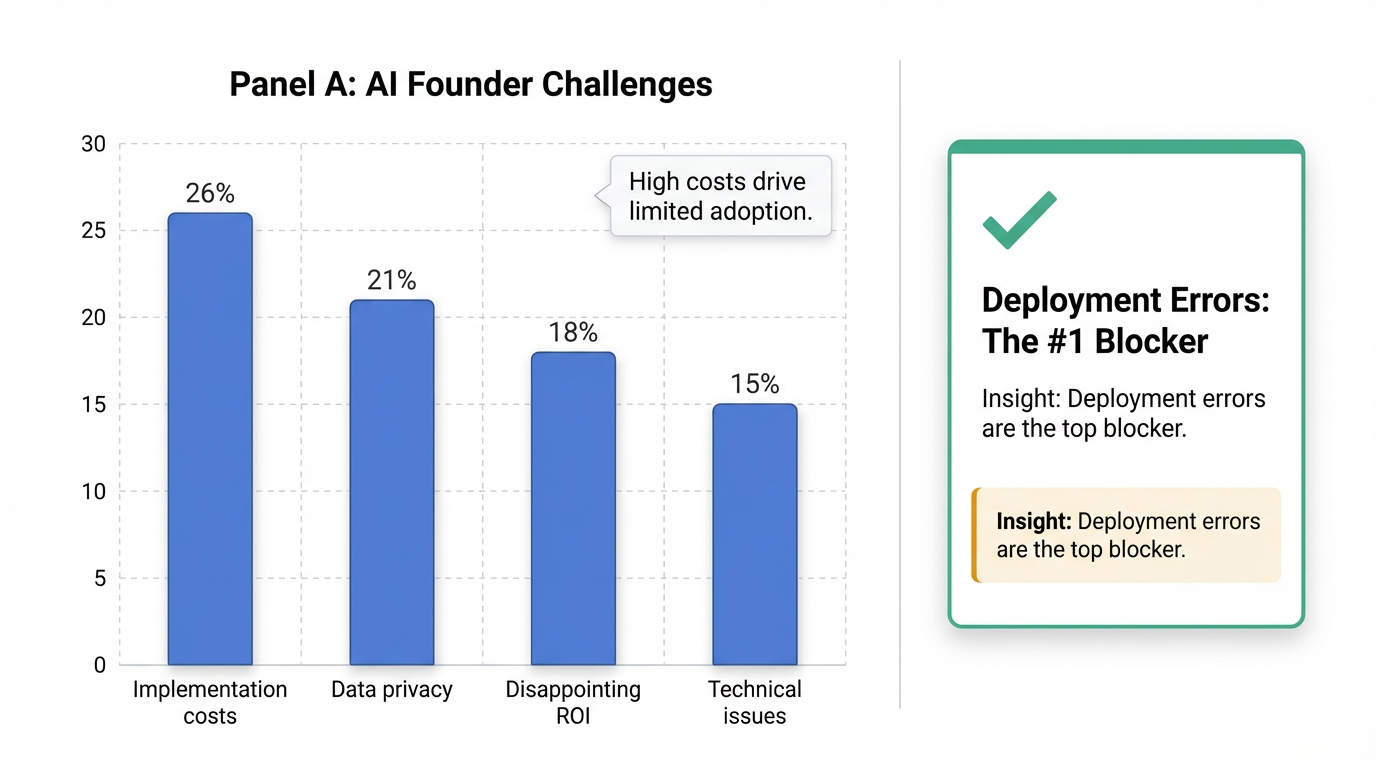
However, embracing AI is not without its unique set of challenges. Solo AI founders frequently encounter deployment errors, with code that functions locally often failing in production due to security protocols or infrastructure constraints 8. Other significant hurdles include database issues, high implementation costs, data privacy concerns, and the notorious "hallucinations" of large language models, which can undermine reliability 9. These issues highlight the critical need for human judgment and strategic oversight, as AI, while powerful, cannot replace human creativity or ethical decision-making 10. Founders must adapt to new demands like prompt engineering and diligent system monitoring, balancing efficiency with the risk of dependence or perceived loss of authenticity 11.
To harness AI effectively, solo founders must prioritize use cases that deliver measurable Return on Investment (ROI) and unlock new capabilities 12. The goal isn't just to use AI, but to strategically deploy it to amplify individual productivity and achieve sustainable growth, allowing for focus on higher-level strategic tasks. As Maor Shlomo demonstrated with Base44, where 90 percent of the frontend and 50 percent of the backend were AI-generated, relentless iteration powered by AI can lead to rapid market fit and significant outcomes 13. This shift redefines what's possible for solo builders, prioritizing engaged users and continuous feedback over initial perfection 13.
Next Steps: Your Personalized Solo Scale-Up Action Plan
Navigating the solo founder journey, especially for indie hackers and AI entrepreneurs, demands a blend of strategic foresight, relentless execution, and adaptive thinking. The stories of successful solo builders like our anonymous B2B SaaS founder and Maor Shlomo of Base44 underscore that growth isn't about brute force or endless capital, but about intelligent leverage and focusing on what truly matters. As you move forward, consider these actionable steps to scale your solo venture sustainably and effectively.
First, embrace strategic simplification and client identification. Just as our anonymous founder found clarity by drastically increasing prices and streamlining his customer base, you too should refine your offerings. Focus on 1-3 core, profitable services and create tiered options that cater to different client needs. Critically, define your "Lighthouse Client" – the ideal customer whose problems you are uniquely equipped to solve. This clarity empowers you to say "no" to misaligned opportunities, conserving precious time and energy while attracting clients who genuinely value your solution.
Second, prioritize organic growth and community engagement strategies. The myth of needing a massive ad budget is often a "solo founder trap," as seen with the founder who wasted $8,000 on ineffective ads. Instead, build compounding assets like an SEO-optimized content library that answers specific customer questions. Engage actively in relevant online communities and build in public, much like Maor Shlomo did with Base44. These methods foster genuine connections, generate authentic leads, and establish you as an authority without draining your limited marketing budget.
Third, systematically leverage AI and automation for efficiency. AI isn't just a tool; it's a "digital co-founder" that can handle mundane tasks, accelerate development, and amplify your output significantly. Identify areas in your workflow—content generation, customer support, data analysis, or even coding—where AI tools can serve as your "army of admins and interns." By turning yourself into a manager of AI systems rather than a doer of every task, you free up mental bandwidth for strategic oversight, creative problem-solving, and critical decision-making.
Finally, cultivate a resilient support system and an adaptable mindset. The entrepreneurial path is an emotional rollercoaster, and isolation is a significant challenge for solo founders. Actively seek out a network of peer founders, mentors, or even a business coach for accountability, feedback, and emotional reinforcement. Be prepared for continuous evolution, regularly iterating on your product and strategies. The world moves fast, especially in tech; remaining adaptable to market shifts and new technological advancements will ensure your venture stays relevant and continues to thrive. These principles, when consistently applied, transform the daunting challenges of solo entrepreneurship into stepping stones for sustained success.