Navigating the Challenges of Scaling a SaaS Business
Introduction
The allure of scaling a SaaS business, particularly for indie hackers and AI entrepreneurs, has never been stronger, promising not only recurring revenue but also significant impact with lean operations . However, beneath this undeniable promise lies an inherent complexity, as rapid technological advancements and evolving market dynamics continually reshape the landscape . While the current environment fosters unprecedented opportunities for solo founders to build profitable ventures without traditional venture capital funding, it simultaneously presents unique and often daunting scaling challenges .
Today's market is profoundly characterized by the rise of AI-native platforms, where artificial intelligence is no longer merely an add-on feature but the core foundation of modern SaaS . This profound shift, coupled with the flourishing micro-SaaS model focusing on lean, highly specialized solutions for niche audiences, empowers unprecedented bootstrapped growth . Furthermore, accessible technology, ranging from robust cloud infrastructure to advanced AI coding assistants, has dramatically lowered barriers to entry, enabling solo founders to develop and ship products that once required substantial teams and resources .
This new paradigm also witnesses a crucial shift where the traditional "growth at all costs" mentality is being replaced by a sharp emphasis on profitability and sustainable growth from day one, fundamentally redefining success metrics . Moreover, the very definition of product-market fit in this AI era is evolving; it's no longer just about solving a problem, but solving it faster, deeper, and in ways AI itself cannot easily replicate, demanding durable, "AI-resistant" value propositions 1. This report delves into these significant transformations, aiming to equip indie hackers and AI entrepreneurs with actionable strategies to effectively navigate the intricate challenges of SaaS business scaling and achieve sustainable success in this dynamic environment.
Core Strategy for Sustainable SaaS Business Scaling
SaaS business scaling, especially for indie hackers and micro-SaaS entrepreneurs, demands a strategic shift from traditional venture-backed growth models. The current landscape favors lean operations, deep market understanding, and leveraging accessible technology to build profitable ventures without the need for extensive capital . Micro-SaaS businesses are uniquely positioned to achieve high-profit margins, often between 80-90%, by focusing on niche markets and specialization . This section outlines three high-impact strategies crucial for sustained growth in this dynamic environment.
1. Niche-Focused, Problem-Driven Product Development & Validation
Successful micro-SaaS ventures begin by meticulously defining and solving a single, acute problem for a hyper-specific audience . This specialization ensures a more efficient solution and fosters stronger customer loyalty, setting it apart from broader, all-in-one platforms 2. Before committing significant resources to development, founders must rigorously validate their ideas to confirm genuine market demand and customer willingness to pay . This often involves market research using tools like Google Trends and Product Hunt, running small ad campaigns to test interest with "Minimal Viable Offer" landing pages, and directly engaging potential users through surveys and interviews .
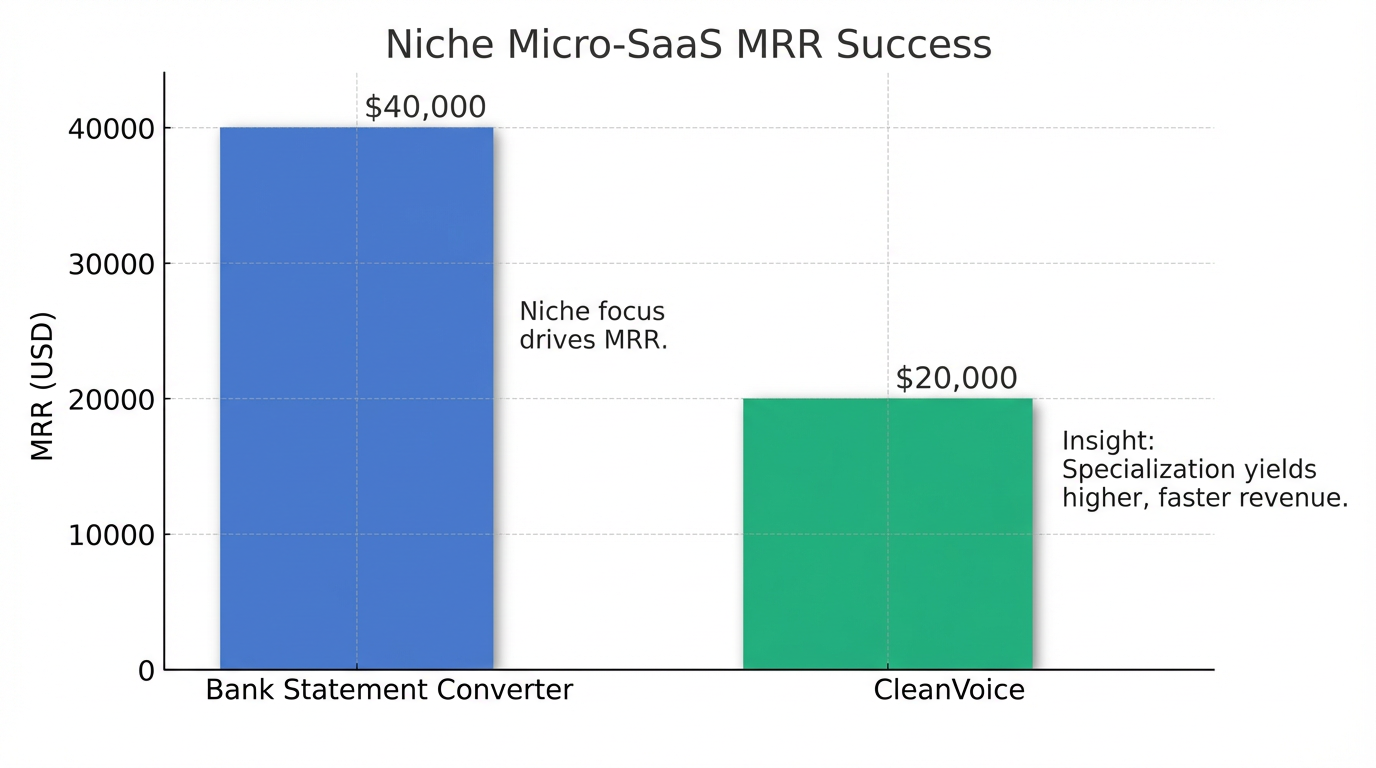
Once validated, the focus shifts to rapid Minimum Viable Product (MVP) development, prioritizing the smallest feature set that delivers core value 3. The "Weekend MVP Approach" advocates for time-constraining development to 48 hours, often leveraging no-code tools or freelancers, to automate processes and avoid feature creep 4. Such an approach helps deliver a usable, sellable product quickly, bypassing the pitfalls of perfectionism 3. Furthermore, targeting individual contributors (ICs) with solutions that address their daily workflows and pain points simplifies the sales process, as these users are often able to make purchasing decisions without extensive corporate hurdles 5. Examples like a solo founder generating $40,000 MRR from a bank statement converter or CleanVoice reaching $20,000 MRR by solving specific podcast editing challenges showcase the power of this niche-focused approach .
2. Automation-Led Operational Efficiency & Sustainable Growth
Leveraging automation and AI is foundational for micro-SaaS businesses aiming to maintain lean operations and scale efficiently with minimal teams 2. This strategy allows small teams to achieve the output of larger organizations by significantly reducing operational costs and the need for extensive manual labor 2. Key business functions such as customer support can be streamlined using AI chatbots, reducing the demand for large support staff, while AI can analyze and segment customer data for intelligent decision-making 2. Internal operations like billing, subscription management, and marketing processes also benefit from automation, cutting down on administrative overhead and human error 2.
Moreover, specializing in vertical-specific workflow automation can address compliance-heavy or repetitive tasks within niche industries where general tools often fall short 6. Utilizing no-code and low-code platforms further accelerates MVP development and process automation, curbing both time and financial investments . This commitment to keeping operational costs low is paramount, enabling businesses to navigate slower periods and retain capital for reinvestment into growth opportunities 7. Practical applications include AI-driven compliance monitoring for specific industries (e.g., GDPR, HIPAA), workflow automation for logistics invoicing or dental scheduling, and AI-driven sales proposal personalization 6.
3. Customer-Centric Marketing & Value-Driven Monetization
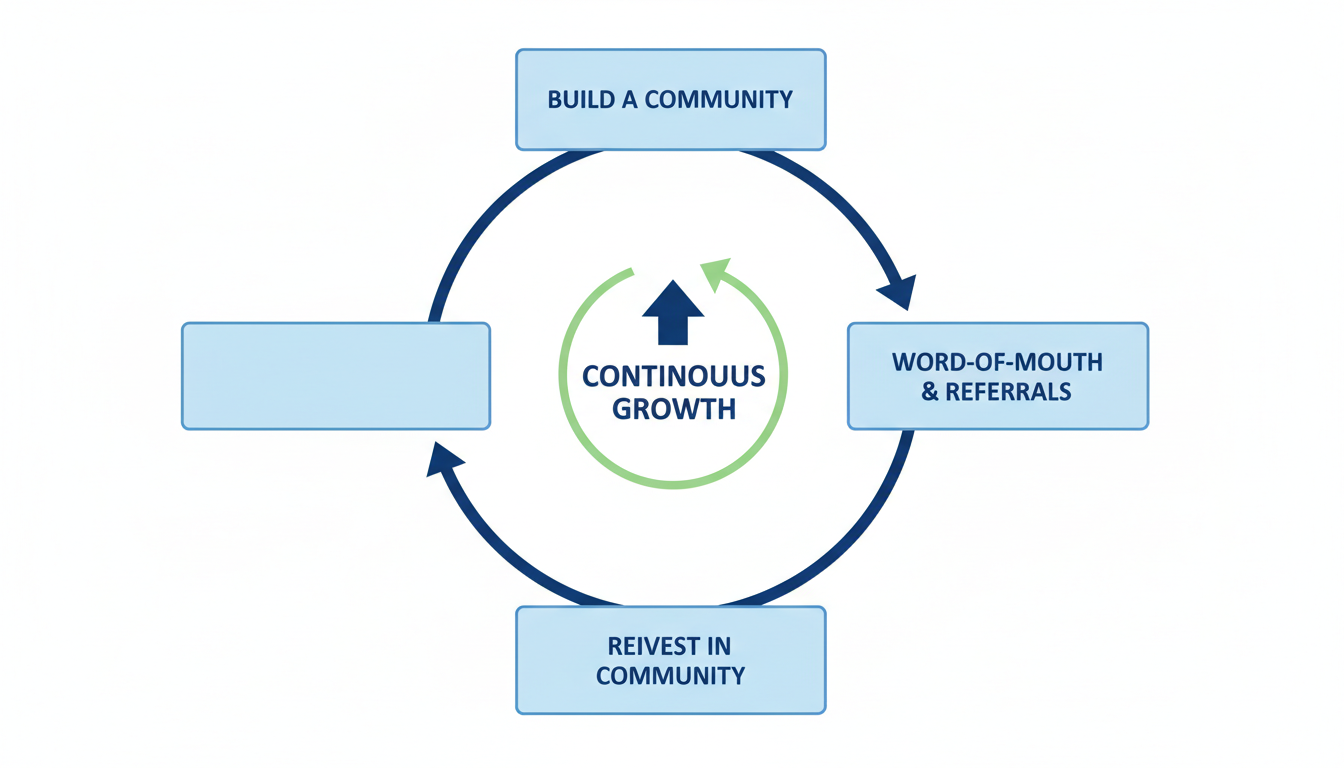
Building and scaling a successful SaaS business hinges on cultivating a strong relationship with customers and implementing intelligent monetization strategies. An "Audience-First Growth Flywheel" begins by fostering a community around the problem space, where acute pain points are shared and inform product development . Once a solution is established, generating word-of-mouth and incentivizing referrals become crucial drivers for attracting new customers . Reinvesting revenue back into nurturing this community creates a self-sustaining growth loop, reinforcing customer loyalty and expansion .
Continuous customer feedback, gathered through tools like Intercom or Drift, is vital for ongoing product improvement and addressing user pain points effectively 8. Regularly delivering "weekly value" significantly contributes to reducing customer churn and building stickiness 9. From a monetization perspective, it is critical to charge for the product from day one to validate willingness to pay, employing strategic, value-based pricing that demonstrates at least ten times its cost in value to the customer . While aiming for a minimum of $30/month per customer for sustainability, keeping pricing generally below $99/month helps avoid complex sales cycles that necessitate dedicated sales teams 5. Targeting individual contributors with disposable income or expense accounts simplifies purchasing decisions and increases conversion rates 5. Furthermore, optimizing discoverability through SEO, valuable content marketing, and encouraging positive online reviews on platforms like Google or TrustPilot is essential for organic customer acquisition 8.
Real-World Scaling Journey: The Plausible Analytics Story
While theoretical frameworks are valuable, the true test of scaling principles lies in real-world application. Plausible Analytics, an open-source, privacy-first alternative to Google Analytics, offers a compelling case study of how a bootstrapped SaaS company can achieve significant growth without external venture capital 10. Founded by Uku, with Marko Saric later joining to spearhead marketing, their journey demonstrates a resourceful approach to navigating the complexities of scaling 10. Their story is a masterclass in focusing on fundamentals, even when constrained by limited resources.
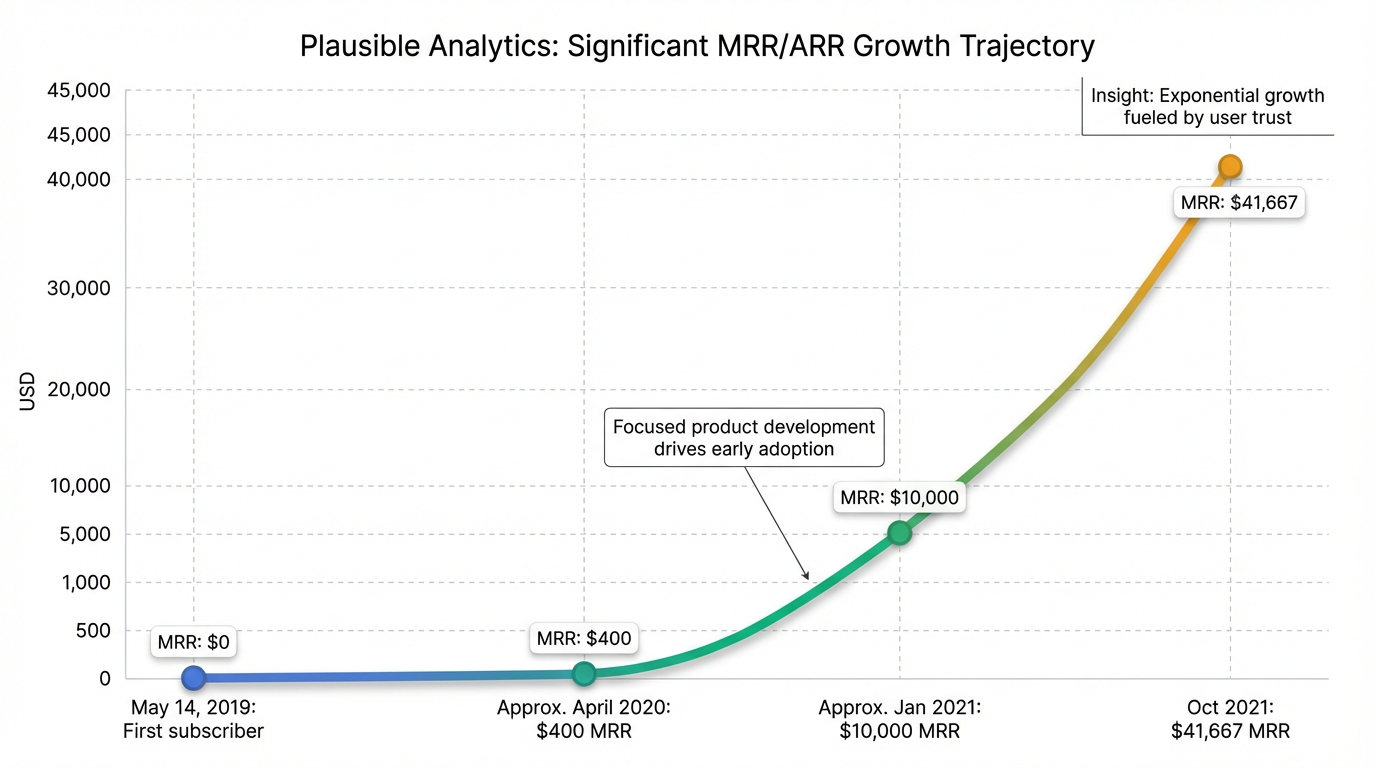
Plausible Analytics exhibited a remarkable growth trajectory that defied conventional expectations for a bootstrapped startup. After its first paying subscriber on May 14, 2019, it took 324 days to reach a modest $400 in Monthly Recurring Revenue (MRR) 10. However, an acceleration phase followed, seeing MRR surge from $400 to $10,000 over the next nine months 10. This momentum continued, as just ten months after hitting the $10,000 MRR milestone, Plausible Analytics successfully achieved $500,000 in Annual Recurring Revenue (ARR) by October 2021, equating to approximately $41,667 MRR 10. This rapid growth highlights the potential for exponential scaling once product-market fit is established.
The expansion of Plausible Analytics' user base was predominantly fueled by strategic organic initiatives. Early adopters and customers were often drawn directly from Indie Hackers, a platform where the co-founder consistently posted updates and celebrated key milestones, fostering a sense of community around the product 10. A significant turning point arrived with a blog post published on April 8, 2020, titled "Why you should stop using Google Analytics on your website," which resonated deeply with their target audience 10. This impactful piece garnered over 50,000 readers and generated 166 new trials within its first week, a stark contrast to the 27,300 total unique visitors accumulated over the prior 15 months 10. By October 2021, this strategy had helped them amass nearly 5,000 paying subscribers 10.
As a bootstrapped entity, Plausible Analytics faced a unique set of operational hurdles, each demanding inventive solutions. Initially, financial constraints were severe, with co-founders enduring months without salaries, relying on personal savings, and even incurring over $50,000 in personal debt 10. They tackled this by embracing extreme resourcefulness, managing their own server infrastructure and handling all marketing and customer inquiries internally, avoiding expensive external experts 10. Revenue eventually grew to cover operational costs and salaries, solidifying their sustainability.
Another challenge involved gaining visibility and initial traction in a market heavily dominated by a "free" competitor like Google Analytics 10. Their solution was proactive engagement, particularly on platforms like Indie Hackers, where they committed to "build in public" and transparently share their product development journey 10. This content marketing approach, exemplified by their viral blog post, proved far more effective than traditional advertising in changing their growth trajectory 10. Furthermore, maintaining focus and autonomy was crucial, as they deliberately avoided the common startup distraction of "obsessing over investors" and their demands 10. By remaining entirely self-funded, the founders retained complete control over strategic decisions, prioritizing customer needs and their product vision above all else 10. This choice meant forgoing some tech media coverage often enjoyed by VC-backed companies, a trade-off they consciously accepted 10.
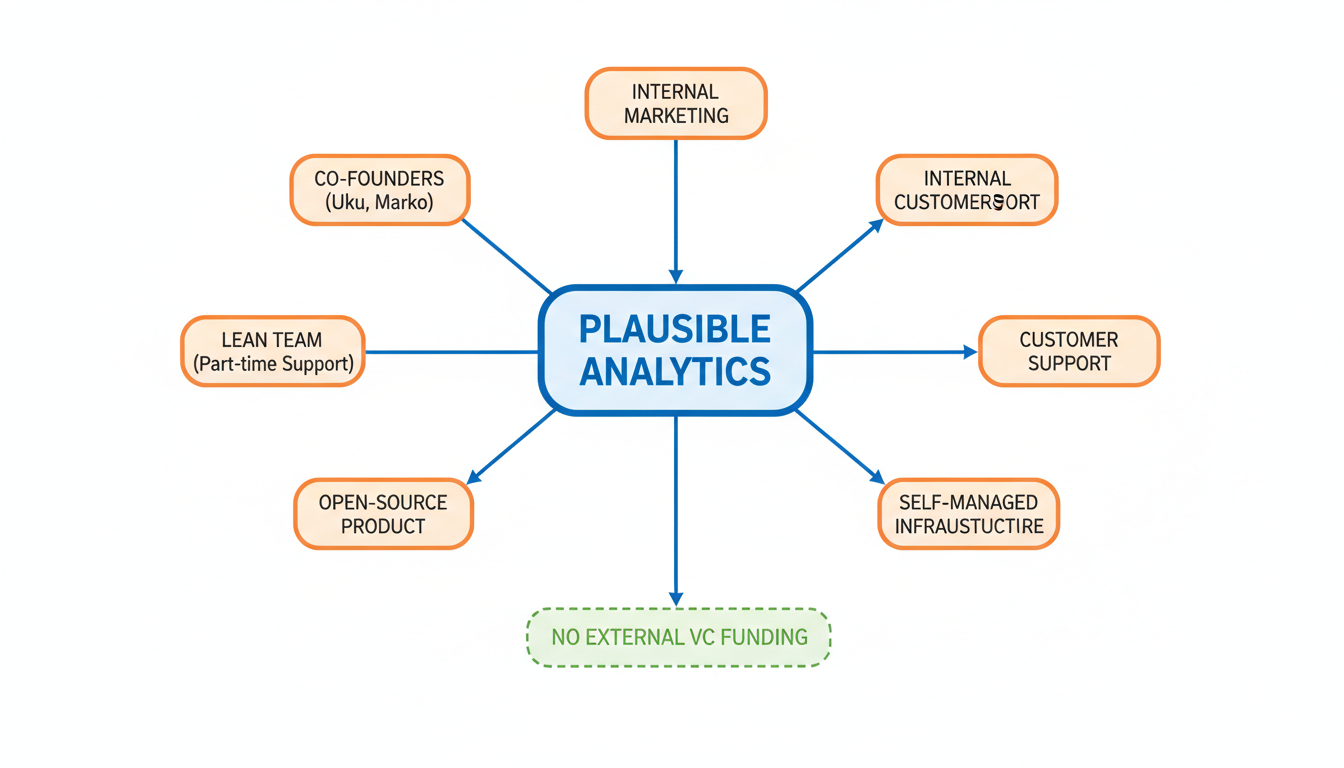
Finally, scaling with a lean team presented its own set of difficulties, particularly when managing a rapidly expanding customer base with minimal personnel. Plausible Analytics operated with just two full-time co-founders and one part-time employee, primarily dedicated to customer support 10. This "do more with less" philosophy was a direct consequence of their bootstrapped nature, forcing them to optimize every process and tool 10. Through these deliberate choices, they proved that a small, focused team can achieve significant impact.
Maintaining product quality and ensuring customer satisfaction remained paramount throughout Plausible's growth. Their open-source nature allows users to inspect the code and verify its privacy-first claims, fostering trust in a privacy-conscious market 10. The founders explicitly stated their dedication to "only obsess about our customers, their needs," which directly informed product improvements and feature development 10. Founders personally handling customer inquiries ensured direct feedback and responsiveness, critical for building strong customer relationships 10. This customer-centric approach led to organic advocacy, as the company operates with a $0 paid advertising budget and lacks an affiliate program, relying instead on loyal customers to spread the word 10.
Build It Yourself: Scaling with AI Tools
The narrative of "scaling" for a SaaS business once conjured images of venture rounds, massive hiring sprees, and relentless growth at all costs. But for today's indie hackers and micro-SaaS entrepreneurs, AI has rewritten the playbook. The new paradigm focuses on building and scaling robust businesses with minimal teams, leveraging intelligent tools to multiply output and streamline operations. This isn't just about efficiency; it's about making previously impossible feats accessible to solo founders .
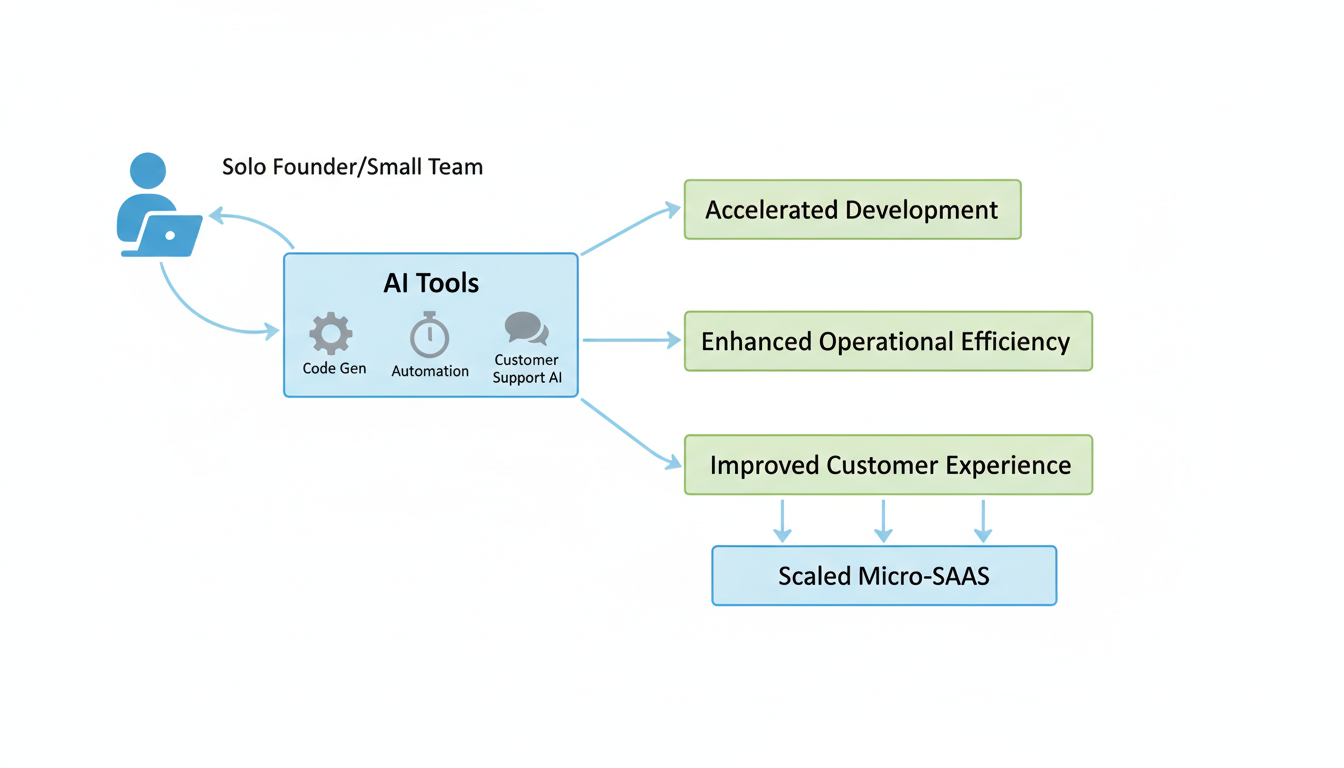
AI tools are fundamentally accelerating the product development lifecycle. Tools designed for code generation, refactoring, and debugging, such as Cursor, empower developers to write cleaner code faster and achieve product-market fit more rapidly than traditional methods . This means that the time-to-market for Minimum Viable Products (MVPs) can shrink from months to mere weeks, allowing for rapid iteration and validation . Furthermore, advancements in generative UI, exemplified by tools like v0, allow founders to quickly prototype and even generate production-ready user interfaces, vastly speeding up front-end development without needing extensive design teams.
Beyond development, AI is revolutionizing operational efficiency, a critical factor for lean teams looking to avoid founder burnout and operational overhead . AI-driven smart automation can handle a multitude of tasks, from generating marketing content and documentation to automating customer support responses . This frees founders from repetitive administrative burdens, allowing them to focus on core product strategy and growth . Tools that offer predictive user assistance and intelligent data synthesis help streamline workflows, ensuring that every decision is data-driven and every task contributes to scaling efficiently .
Moreover, AI is not just about internal operations; it’s about enhancing the product itself and improving the customer experience. AI can power innovative features within the SaaS product, such as smart search capabilities, automated content generation, or personalized recommendations 11. For customer relations, AI chatbots and virtual assistants can handle routine inquiries, providing instant support and reserving human interaction for more complex issues . Tools like Lovable can leverage AI to analyze customer feedback at scale, helping founders gain deeper insights into user needs and pain points without extensive manual review, ensuring continuous product improvement and strong retention 8. This holistic application of AI transforms what small teams can achieve, democratizing advanced capabilities and enabling them to compete effectively in dynamic markets .
Charting Your Next Steps
The journey of scaling a SaaS business as an indie hacker or micro-SaaS entrepreneur is undoubtedly challenging, yet it is also ripe with unprecedented opportunities for sustainable growth and profitability. The insights gleaned from current market trends, effective scaling strategies, and real-world success stories like Plausible Analytics offer a clear roadmap for those committed to building without traditional venture capital 10. By embracing resourcefulness and a sharp focus on niche problems, founders can navigate the complex landscape and build resilient businesses.
A crucial first step involves a relentless focus on niche-focused, problem-driven product development, always validating ideas before committing to extensive building . This proactive approach ensures you address an acute pain point for a specific audience, leading to stronger product-market fit and customer loyalty from the outset 2. As AI increasingly commoditizes features, prioritize building "AI-resistant" solutions by leveraging proprietary data, fostering deep integrations, and guaranteeing concrete outcomes, rather than relying solely on easily replicable features 1.
Leveraging AI and automation is no longer a luxury but a necessity for maintaining lean operations and accelerating development. Small teams can achieve the output of much larger ones by intelligently automating customer support, data analysis, and internal workflows . Tools that assist with code generation, content creation, and data analysis empower solo founders to ship products faster and operate more efficiently, drastically reducing time-to-market and operational overhead .
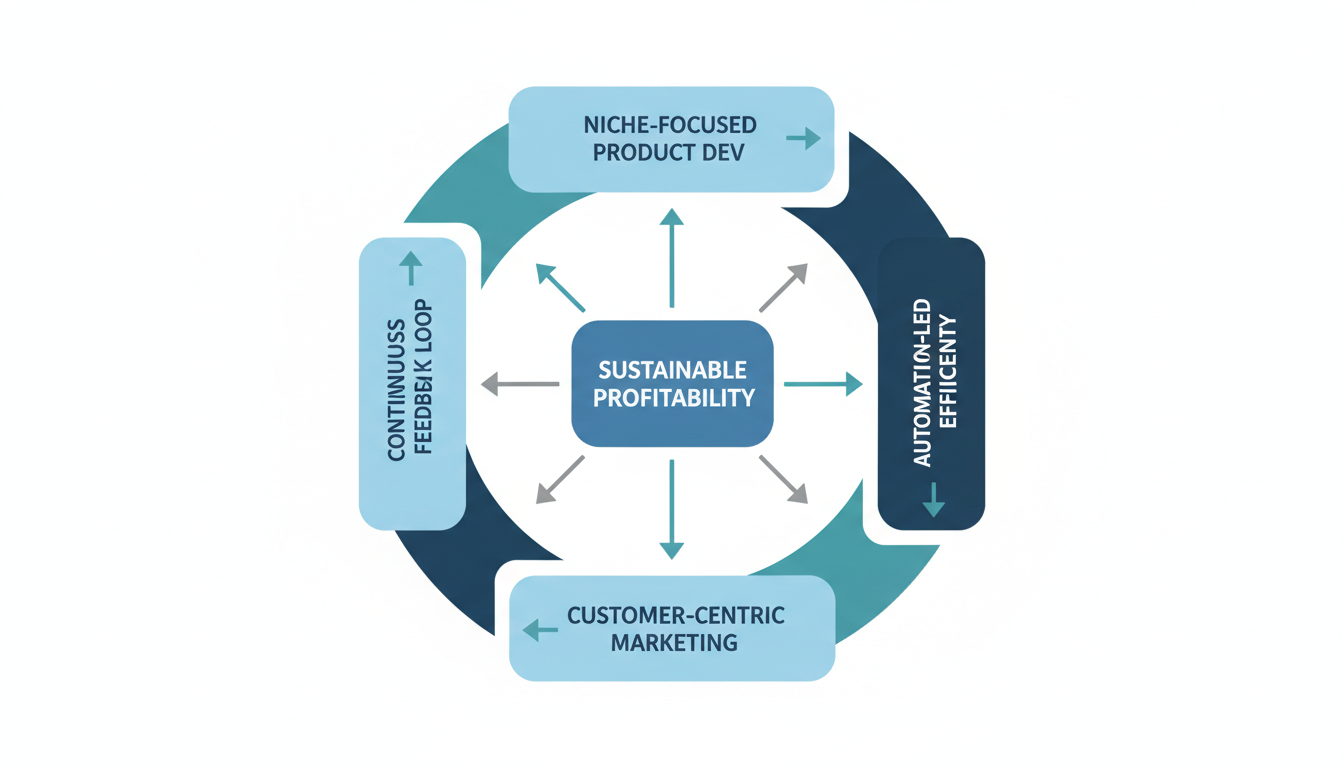
Deep customer engagement and value-based monetization form the bedrock of sustainable growth. Cultivate an audience-first growth flywheel by building a community around the problem your product solves, then continuously gather feedback to refine your offering and reduce churn . Implement strategic, value-based pricing, aiming to demonstrate at least ten times the product's cost in value to the customer, ensuring strong willingness to pay without the need for complex sales cycles 5.
As you scale, be mindful of common pitfalls like founder burnout and maintaining a lean team, drawing inspiration from Plausible's success in managing growth with minimal personnel . The power of content marketing, as demonstrated by Plausible's viral blog post, highlights that effective customer acquisition doesn't always require large budgets but rather a deep understanding of your audience's needs and effective communication 10.
In summary, for indie hackers and AI entrepreneurs, the path to successful scaling involves a commitment to several core principles. First, continually validate your ideas to ensure an "AI-resistant" product-market fit. Second, strategically embrace AI and automation to enhance operational efficiency and development speed. Third, cultivate strong customer relationships through continuous feedback and implement value-based pricing. By adhering to these actionable strategies, you can not only navigate the challenges of scaling but also build a profitable, sustainable, and impactful SaaS business in the evolving digital economy.