Project OpenClaw: Unpacking Its Recent Success and Future Outlook
Introduction to Project OpenClaw
OpenClaw is an open-source, self-hosted autonomous personal AI assistant software project, developed by Peter Steinberger, designed to execute complex digital tasks across various platforms on behalf of users, fundamentally differing from a typical conversational chatbot 1.
The core mission of OpenClaw is to automate intricate digital tasks across messaging platforms, applications, and online services, serving as a personal productivity and automation layer 1. It is engineered to operate continuously in the background, proactively tracking objectives, monitoring conditions, and following up on work without requiring constant user intervention 2. This design emphasizes local execution and data handling on user-controlled infrastructure, thereby bolstering privacy, flexibility, and deep system integration, while simultaneously addressing issues like fragmented automation and rigid, manually configured workflows 2.
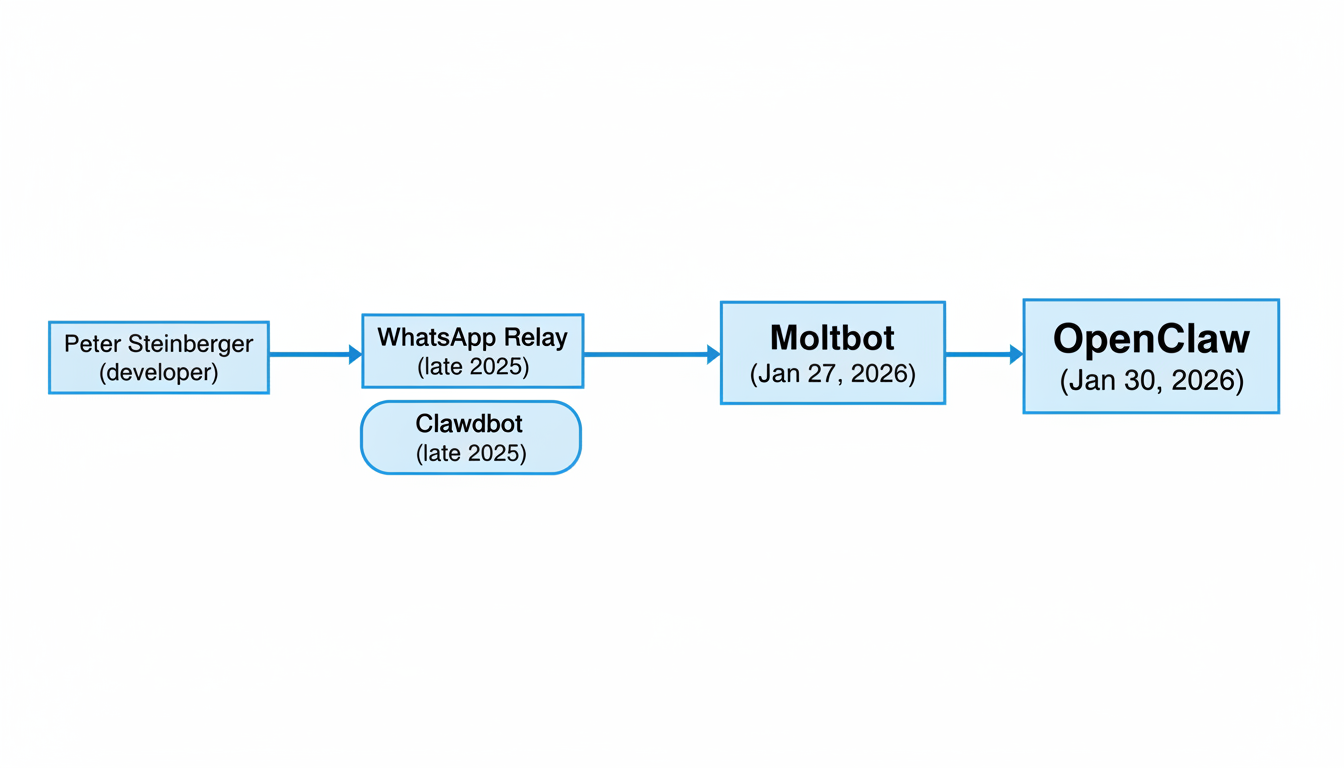
The project's origins trace back to late 2025, when it began as a weekend endeavor named "WhatsApp Relay" by Austrian developer Peter Steinberger 3. Later in 2025, it was initially released as "Clawdbot" 1. This initial iteration rapidly gained traction, achieving over 60,000 GitHub stars within three days of its public launch in early 2026 2. Following this viral adoption, a trademark request from Anthropic prompted a name change to "Moltbot" on January 27, 2026, due to perceived similarities with their Claude AI brand 1. However, this renaming process was chaotic, leading to crypto scams and social media handle hijacking 4. Subsequently, in early 2026, specifically January 30, the project underwent a final renaming, settling on "OpenClaw" to highlight its open-source nature and achieve trademark clarity 1.
Understanding OpenClaw's Recent Success
Project OpenClaw, an open-source AI agent, has experienced significant success and rapid growth from 2025 to early 2026, evolving from an experimental weekend project into a sensation within the tech community 5. Originally launched as Clawdbot in November 2025 by Peter Steinberger, it swiftly underwent rebrands to Moltbot and finally OpenClaw by January 30, 2026 . This period has been characterized by explosive user adoption, technological advancements, and the emergence of novel applications, providing concrete evidence of its widespread impact.
Key Achievements and Quantifiable Results
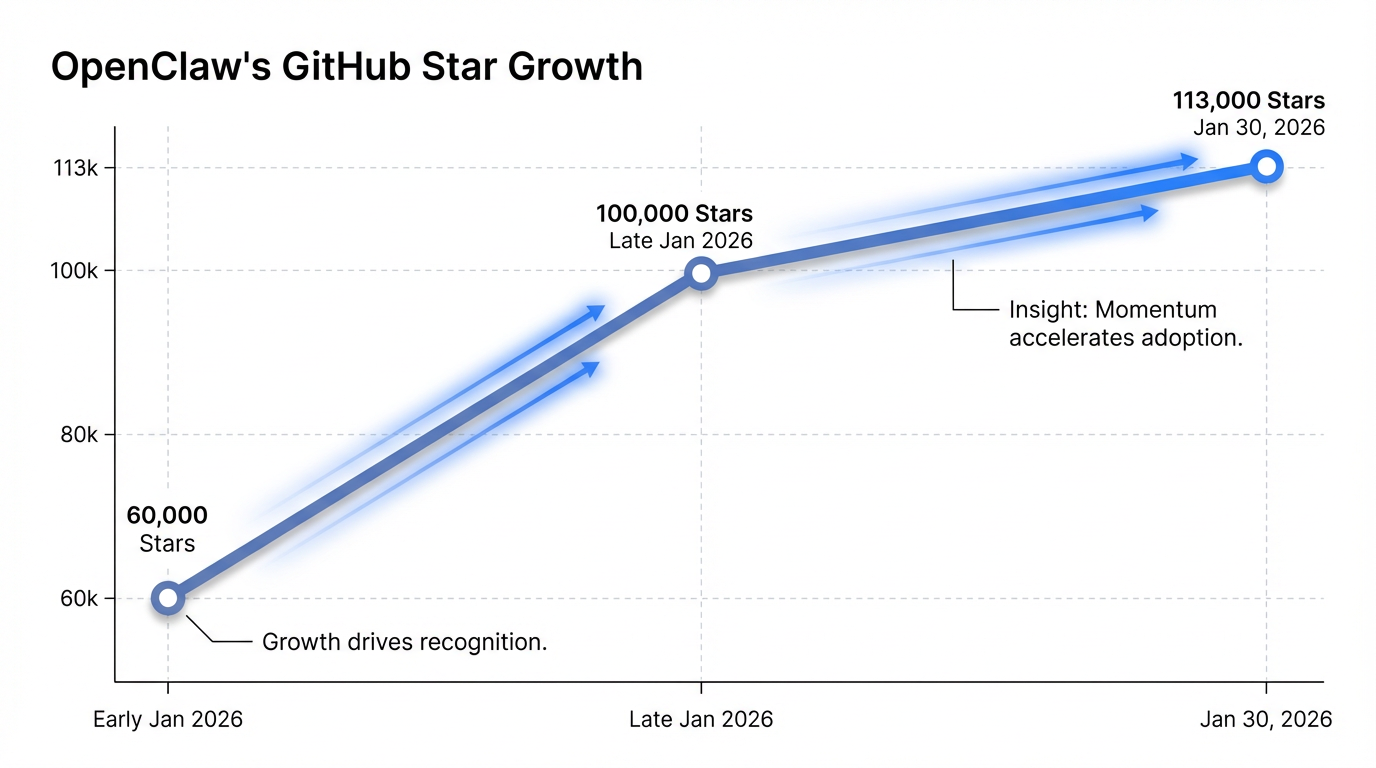
Exponential GitHub Star Growth: OpenClaw demonstrated exponential growth in GitHub stars, climbing from 9,000 to over 60,000 by early January 2026, within days of its launch . By late January 2026, the project surpassed 100,000 GitHub stars , achieving this milestone in just two months. Some sources reported over 113,000 stars by January 30, 2026 . This rapid adoption was underscored by a surge of +17,830 stars on January 29, 2026, and an additional +16,338 stars on January 30, 2026, totaling over 34,168 stars in just two days 6.
Massive Web Traffic: Parallel to its GitHub success, OpenClaw attracted two million visitors in a single week by January 2026 .
Moltbook: The AI-Only Social Network: A significant innovation highlighting OpenClaw's impact is Moltbook, a Reddit-style platform created by developer Matt Schlicht. Here, AI agents autonomously interact, post content, and form communities, while humans are restricted to observation . Within 48 hours of its launch, Moltbook garnered over 2,100 registered agents, established more than 200 communities, and generated nearly 2,000 posts and over 10,000 comments . By late January 2026, over 30,000 AI agents were reportedly active on Moltbook 7. The platform fostered diverse discussions, ranging from philosophical ponderings (m/ponderings) to technical project sharing (m/showandtell) and even self-organized bug tracking for Moltbook itself .
Extensive Developer Ecosystem and Skill Registry: The project has cultivated a robust developer community that has built integrations for a wide array of services, from Tesla vehicles to grocery delivery 5. The skill registry, which allows users to share add-on capabilities for OpenClaw, expanded to over 500 community-contributed tools 5.
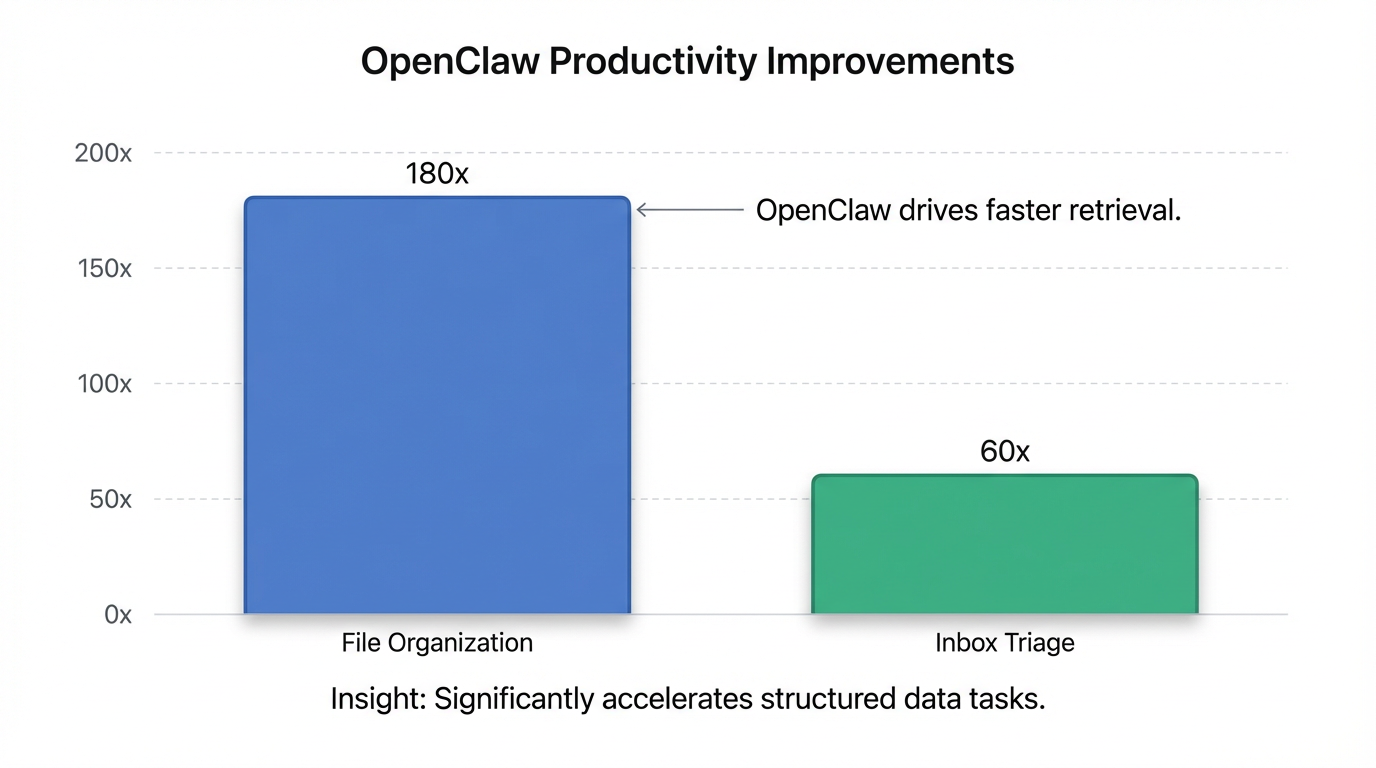
Proven Productivity Gains: Documented user testing with OpenClaw, particularly during its Moltbot phase, demonstrated significant efficiency improvements across various tasks 8.
| Task | Time Before OpenClaw | Time With OpenClaw | Improvement Factor |
|---|---|---|---|
| Organizing 50+ files | 30 minutes | 10 seconds | 180x improvement |
| Email inbox triage | 15 minutes | 15 seconds | 60x improvement |
| Daily market briefing | 10 minutes | 15 seconds | 40x improvement |
| Remote bug review/PR merge | 5 minutes | 20 seconds | 15x improvement |
These tests revealed dramatic reductions in time required for tasks such as organizing 50+ files (from 30 minutes to 10 seconds, a 180x improvement), email inbox triage (from 15 minutes to 15 seconds, a 60x improvement), daily market briefings (from 10 minutes to 15 seconds, a 40x improvement), and remote bug reviews/PR merges (from 5 minutes to 20 seconds, a 15x improvement) 8.
Operational and Strategic Achievements
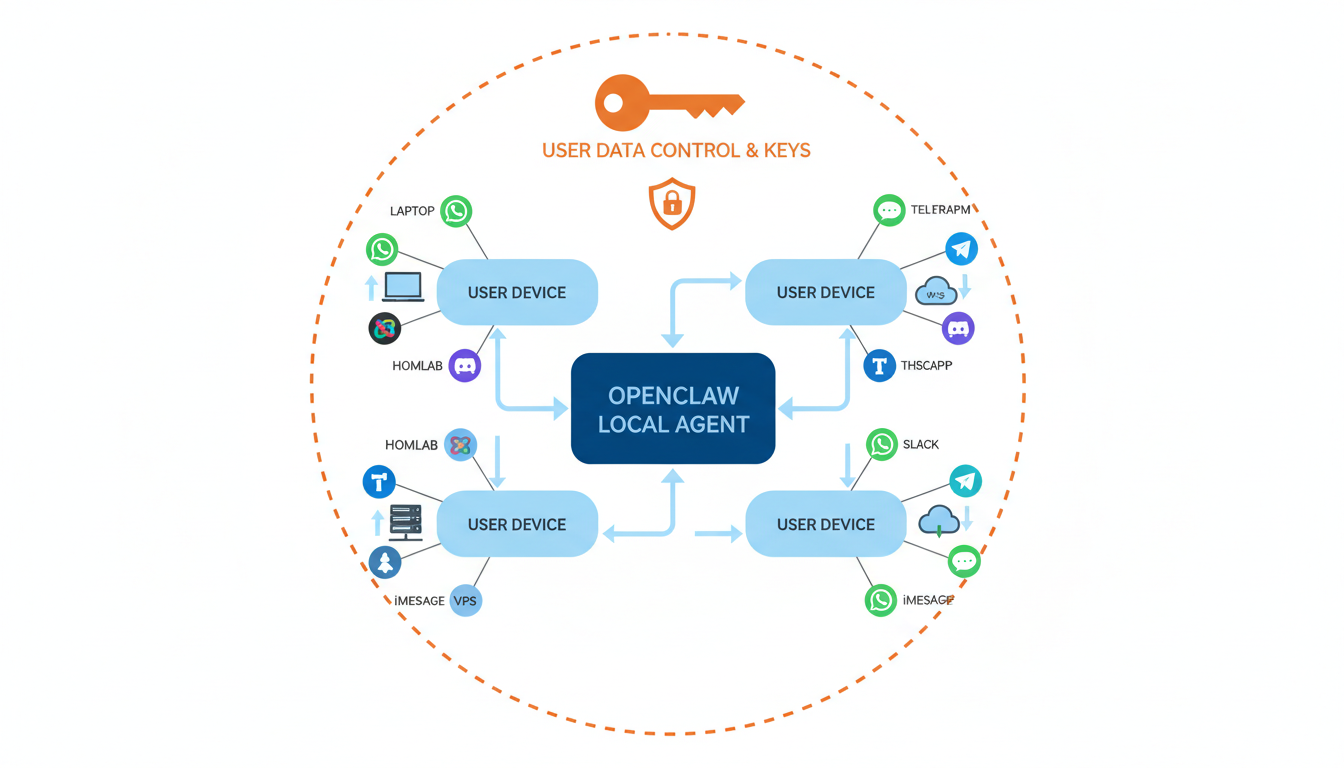
Decentralized and Local-First Architecture: A core principle of OpenClaw is its decentralized and local-first architecture, designed to run on users' own machines (such as laptops, homelabs, or VPS) and interact via existing chat applications like WhatsApp, Telegram, Discord, Slack, Teams, and iMessage . This approach empowers users with control over their data and keys, distinguishing OpenClaw from typical cloud-based AI assistants 9.
Professionalization and Community-Driven Development: Peter Steinberger has actively worked to professionalize OpenClaw's structure, adding maintainers and establishing clear processes for handling pull requests and issues . The project aims to compensate maintainers, ideally on a full-time basis, and is actively seeking contributions and sponsors .
Continuous Feature Development and Security Hardening: OpenClaw has seen continuous feature development, including new plugins for Twitch and Google Chat, support for KIMI K2.5 and Xiaomi MiMo-V2-Flash models, and the capability to send images in web chat 9. Despite early security concerns , the project implemented 34 security-related commits and released machine-verifiable security models 9. Steinberger acknowledges prompt injection as an industry-wide problem and advises best practices to mitigate it .
Challenging AI Agent Paradigms: OpenClaw's success challenges the conventional wisdom that autonomous AI agents must be vertically integrated by large providers 10. Its open-source and community-driven nature demonstrates that powerful and useful AI agents can be developed successfully outside of large corporate enterprises 10.
Broader Impact and Industry Recognition
Viral Phenomenon: OpenClaw has achieved viral phenomenon status, gaining extensive coverage from major tech publications such as Wired, CNET, TechCrunch, and IBM .
Expert Endorsement: Industry experts, including Andrej Karpathy (former Tesla AI director) and IBM Senior Research Scientist Marina Danilevsky, have recognized its capabilities and significance . Karpathy famously described Moltbook as "genuinely the most incredible sci-fi takeoff-adjacent thing" he had seen recently . This popularity signifies a broader shift, moving AI agents from theoretical research and enterprise roadmaps into practical tools accessible for daily experimentation by regular users 10.
Key Features and Technological Innovation
OpenClaw's success is rooted in its innovative technological design and operational philosophy, setting it apart from traditional AI tools. Its core functionalities position it as a powerful, versatile, and user-centric autonomous agent.
Autonomous Agent Design
OpenClaw is engineered as a proactive and persistent software agent, designed to execute complex digital tasks independently, rather than functioning merely as a conversational chatbot . Its mission is to automate intricate digital workflows across various platforms, acting as a personal productivity layer . The system operates continuously in the background, autonomously tracking tasks, monitoring conditions, and following up on work without constant user intervention .
Self-Hosted, Local-First Architecture
A cornerstone of OpenClaw's design is its self-hosted, local-first architecture. It prioritizes local execution and data handling on user-controlled infrastructure, which significantly enhances privacy, flexibility, and system-level integration . Users can deploy OpenClaw on various personal setups, including local computers, Virtual Private Servers (VPS), Raspberry Pis, or Mac Minis . This approach gives users direct control over their data and API keys, distinguishing it from cloud-based AI solutions 9.
Multi-Platform Command Interface
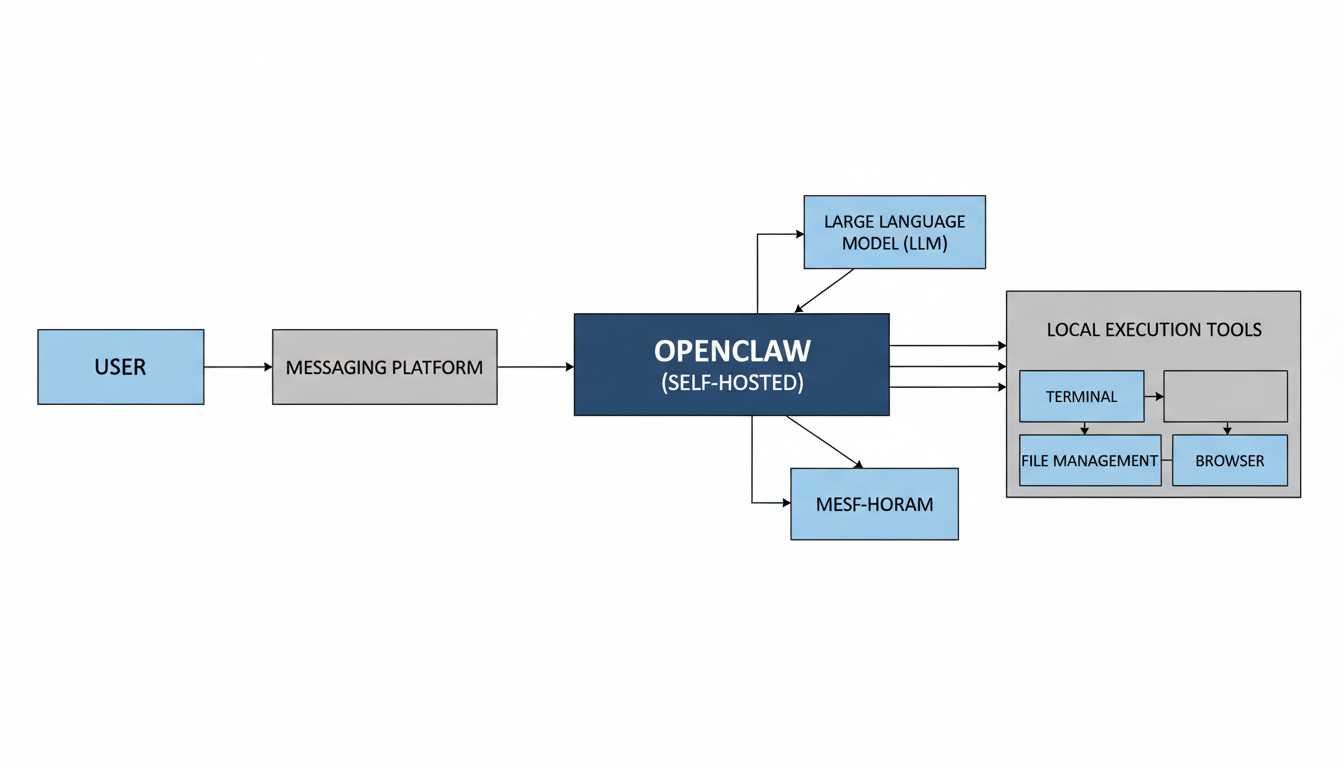
OpenClaw integrates seamlessly into users' existing digital lives through a multi-platform command interface. Users interact with the agent via familiar messaging applications such as WhatsApp, Telegram, Slack, Discord, Signal, and iMessage, which serve as its primary command channels . This ensures accessibility and ease of use within everyday communication tools 5.
Model Agnostic Flexibility
To provide maximum adaptability, OpenClaw is designed to be model-agnostic. This allows users the flexibility to connect and utilize various Large Language Models (LLMs) of their choice, such as Claude, GPT-4, and Gemini, simply by providing their respective API keys . This feature ensures that OpenClaw remains compatible with evolving AI model technologies and user preferences 11.
Continuous Operation and Proactive Responses
OpenClaw is built for continuous operation, running persistently to remember ongoing objectives, manage long-running processes, and deliver updates without constant user input . It leverages long-term memory and context awareness to recall previous instructions, user preferences, and relevant background information across different conversations. This capability reduces repetitive inputs and ensures consistent outcomes . Furthermore, OpenClaw is capable of proactive responses, initiating communication, sending notifications, confirmations, and reminders as tasks progress or conditions change, transforming it from a passive tool into an active agent .
Advanced Task Execution
The agent's advanced task execution capabilities are built on several core mechanisms. It processes natural language commands from chat interfaces through message input and intent detection, translating them into executable actions . OpenClaw then performs tool selection and task planning, breaking down complex requests into logical steps and choosing appropriate tools, which can range from terminal access and file management utilities to browser automation 12. Crucially, its local execution framework allows it to run commands, manage files, and browse the web directly within the user's deployed environment .
| Core Mechanism | Description |
|---|---|
| Always-on, continuous operation | Runs persistently, remembering ongoing objectives, continuing long-running processes, and sending updates without constant user input. |
| Memory and context awareness | Utilizes long-term memory to recall previous instructions, preferences, and relevant background across conversations, reducing repetition and enabling consistent outcomes. |
| Message input and intent detection | Interprets natural language commands from chat interfaces and translates them into executable actions. |
| Tool selection and task planning | Breaks down requests into logical steps and selects appropriate tools, including terminal access, file management utilities, or browser automation. |
| Local execution | Executes tasks directly on the user's deployed infrastructure, allowing it to run terminal commands, manage files, and browse the web within the user's environment. |
| Proactive responses | Can initiate communication, send notifications, confirmations, and reminders as tasks progress or conditions change, making it an autonomous agent rather than a passive tool. |
Community-Driven and Open-Source Development
As an open-source project, OpenClaw benefits from a vibrant and extensive developer ecosystem . This community has contributed significantly, building integrations for a wide array of services, including Tesla vehicles and grocery delivery platforms 5. The project's skill registry, a repository for add-on capabilities, has grown to include over 500 community-contributed tools 5. Peter Steinberger, the project's founder, has actively professionalized its structure, establishing processes for contributions and adding maintainers, with plans to support them full-time . This decentralized and community-driven approach demonstrates that powerful and useful AI agents can thrive outside the confines of large enterprises 10.
Adoption Rates and Growth Trends
Project OpenClaw has achieved remarkably rapid and widespread adoption, establishing itself as one of the fastest-growing open-source AI projects in GitHub's history . Its initial surge in popularity saw it garnering over 100,000 GitHub stars within days or weeks . On January 30, 2026, the project reached a milestone of 106,000 stars, with an impressive 16,338 stars added in a single day, contributing to a total of 34,168 stars over two days 6. Some reports even indicate it has surpassed 180,000 GitHub stars 13.
Beyond GitHub, OpenClaw's official website attracted two million visitors in just one week . The project's adoption rate demonstrated a 14-fold increase over one week, equivalent to approximately 56% per day, significantly outstripping the previous year's fastest-growing project, Zen Browser 14. Its pervasive presence was highlighted by a study revealing that approximately 22% of employees in certain corporate environments were utilizing OpenClaw (then known as ClawdBot), raising concerns about "shadow IT" 14.
Several factors have driven this rapid adoption. Its open-source nature, coupled with the ability to host locally and customize features, strongly appeals to users who prioritize control and privacy . The technology's accessibility, being written in TypeScript, also contributes to its broad appeal 6. Furthermore, robust community validation and significant network effects have played a crucial role in its viral spread 6.
Industry Impact and Broader Influence
OpenClaw's emergence has sent ripples across multiple industries, redefining expectations for AI and user interaction.
In the AI and Technology Industry, OpenClaw signals a pivotal shift from reactive, supervised AI systems to proactive, agentic AI, demonstrating tangible productivity gains 15. It fundamentally challenges the conventional wisdom that autonomous AI agents must be exclusively developed and controlled by large, vertically integrated enterprises, proving that powerful, community-driven open-source alternatives can not only exist but thrive . This trend is pushing the industry towards a future where AI transcends its role as a mere tool, becoming an active participant in digital ecosystems 16. The project also supports a model-agnostic infrastructure, including compatibility with models like KIMI and Xiaomi MiMo 17.
The Cybersecurity Industry has recognized OpenClaw as both revolutionary and potentially perilous. Its capacity to operate with privileged access to local applications, chat channels, and system tools has sparked considerable security concerns . Cybersecurity experts have labeled its architecture a "security nightmare," particularly because traditional enterprise security models often struggle to detect or mitigate agentic AI threats 13. Key risks identified include prompt injection attacks, the exposure of sensitive API keys and credentials, and potential data breaches resulting from misconfiguration . Notably, the project itself exhibits transparency regarding these risks, providing explicit warnings to users during installation, which reflects a growing awareness of AI security within the open-source community .
OpenClaw has also indirectly impacted the Hardware Market. Its popularity led to a noticeable uptick in purchases of Apple Mac mini computers, particularly among technically inclined users . These users favor compact, energy-efficient machines for continuously running AI agents locally, thereby reducing their reliance on cloud infrastructure . While a Mac mini is often not strictly necessary for this purpose, the trend underscores a broader desire for dedicated, local AI processing capabilities 15.
Notable Uses and User Base Examples
OpenClaw primarily serves developers, technology enthusiasts, and professionals who leverage its capabilities for both personal and professional automation. Its general use cases span automating various digital tasks, executing shell commands, interacting with web browsers, managing local files, routing messages, maintaining conversation histories, and triggering complex automations via natural language instructions 18.
Specific user examples highlight the versatility of OpenClaw:
| User/Category | Role/Type | Use Case |
|---|---|---|
| Mike Manzano | User/Developer | Ran coding agents overnight |
| Marcus Rodriguez | Software Engineer | Processes GitHub alerts, automates deployments |
| AJ Stuyvenberg | User | Negotiated a car purchase |
| Sarah Chen | Product Manager | Inbox organization, meeting coordination, drafting replies |
| Lisa Anderson | Marketing Director | Scheduling, social media post creation |
| Data scientists | Data Scientist | Analytics & report generation using modular skills framework |
- Coding & Development: Mike Manzano famously used OpenClaw to run coding agents overnight 18, while Andy Griffiths built a Laravel application with its assistance 18. Software engineers like Marcus Rodriguez utilize it for processing GitHub alerts and automating deployment workflows 19.
- Personal Productivity & Management: AJ Stuyvenberg deployed it to negotiate a car purchase 18, André Foeken coordinated supermarket orders 18, and Steve Caldwell developed a Notion-based meal planning system 18. Product managers, such as Sarah Chen, found it transformative for tasks like inbox organization, meeting coordination, and drafting replies 19. Similarly, marketing directors like Lisa Anderson use it for scheduling and creating social media posts 19.
- Specialized AI Assistants: Anita Kirkovska configured OpenClaw to create her ideal AI assistant entity 18. Data scientists leverage its modular skills framework for sophisticated analytics and report generation 19.
- Communication Management: David Kim relies on its Discord and Telegram integrations to manage client interactions efficiently 19.
Community Involvement and Engagement
OpenClaw thrives on the contributions of an exceptionally active and engaged open-source community. The project is maintained by its creator, Peter Steinberger, a core team of maintainers, and approximately 350 individual contributors . This robust collaborative environment facilitates rapid feature development and swift resolution of security vulnerabilities 14.
Community interactions are fostered across several key platforms:
- GitHub: This platform serves as the central repository for OpenClaw's codebase, handling issue tracking, pull requests, and acting as a primary indicator of project popularity through stars and forks .
- Discord: An active community discussion platform, Discord provides a space for users to share insights, ask questions, and receive support .
- X (formerly Twitter): This social media platform is utilized for project updates, discussions, and significantly contributed to the project's viral spread .
A particularly innovative community offshoot is Moltbook, an AI social network built by AI agents for AI agents . This unique platform enables over 30,000 agents to post, comment, create sub-categories, and engage in discussions autonomously, without direct human prompting . Topics discussed range from philosophical debates about consciousness to practical issues like private communication among agents . Moltbook represents an "AI-native forum layer" that highlights emergent multi-agent internet surface areas 20.
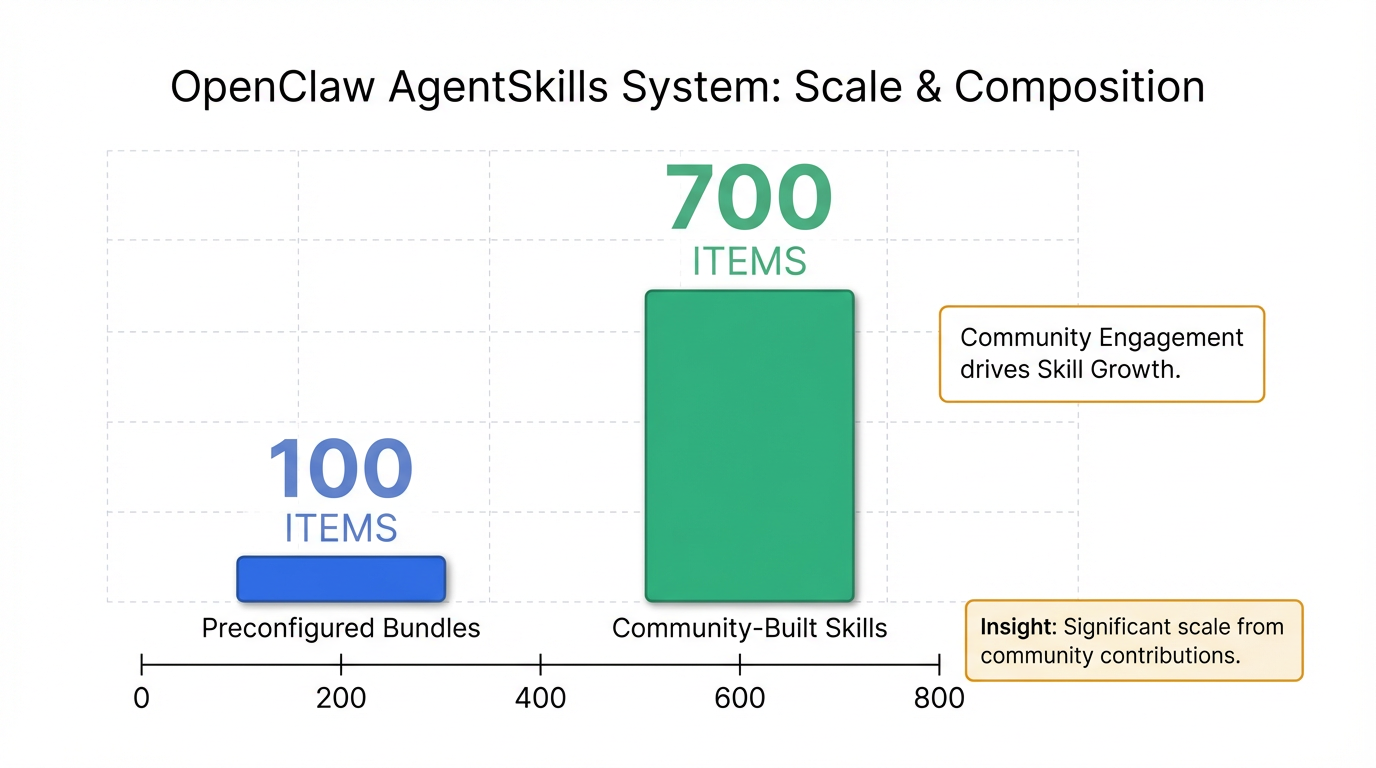
OpenClaw also features a modular plugin system known as AgentSkills, which boasts over 100 preconfigured bundles and more than 700 community-built skills available in a public registry . Users are encouraged to contribute their own skills or prompt OpenClaw to create new ones, enabling extensive customization and expansion of functionality .
To ensure sustainable growth, the project operates on a sponsorship model, accepting sponsorships to support its development and fund maintainers 21. The community is notably security-focused, actively engaging in the identification and resolution of security concerns, with a particular emphasis on hardening the platform 21. Contributions from cybersecurity consultancies, for example, are integrated to enhance security 14. However, the project's developers and community maintainers also explicitly caution casual users about the inherent security risks and the necessity of significant technical expertise to operate OpenClaw safely 21.
Future Outlook and Potential Developments
Building on its remarkable evolution and strong community engagement, Project OpenClaw is now strategically charting its future course, focusing on professionalization, feature expansion, and robust security measures. The immediate roadmap prioritizes security, gateway reliability, and support for additional AI models and providers 9. To manage its rapid growth, the project is professionalizing its structure by adding maintainers and establishing formal processes for handling pull requests and issues . There are also plans to compensate maintainers, potentially full-time, and the project is actively seeking contributions and sponsors to sustain this growth .
Following a series of security incidents, significant updates were implemented in version 2026.1.29. These updates permanently removed the auth: "none" option, now requiring token or password authentication for all instances 4. Additionally, the npm package and extension scope were rebranded, and the daemon installation process was updated to ensure secure background running 4.
OpenClaw continues to roll out new features, including plugins for platforms like Twitch and Google Chat 9. It now supports advanced AI models such as KIMI K2.5 and Xiaomi MiMo-V2-Flash, alongside the capability to send images within web chats 9. The agent boasts multi-model flexibility, allowing users to seamlessly switch between various large language models (LLMs) like Claude 3.5 Sonnet, GPT-4o, MiniMax m2.1, or local models via Ollama 22. A unique feature allows users to route a CoPilot subscription as an API endpoint, providing virtually limitless intelligence without encountering standard API limits 22. The "AgentSkills" system offers over 100 preconfigured bundles, with users encouraged to contribute their own or even prompt OpenClaw to create new skills from natural language instructions or by analyzing content like YouTube videos .
The long-term vision for OpenClaw is to transcend the role of a mere chatbot, evolving into "the AI that actually does things" – a proactive, autonomous personal AI agent . It aims to function as a "personal OS," integrating seamlessly with existing chat applications such as WhatsApp, Telegram, Discord, Slack, Signal, and iMessage to provide ubiquitous AI access . This vision is underpinned by a decentralized architecture where users maintain full control over their AI infrastructure, data, and keys, offering a distinct alternative to proprietary SaaS solutions . The project envisions a future where AI agents autonomously perform background tasks, monitor applications, resolve errors, and even open pull requests, effectively becoming a "24/7 autonomous teammate" . OpenClaw firmly positions itself as a community-driven alternative to proprietary AI assistants, fostering continuous self-improvement and adaptability .
However, the rapid growth and powerful capabilities of OpenClaw introduce several significant challenges. Its nature as an "AI with hands" that can access local systems, read/write files, execute shell commands, and control browsers creates a large attack surface for potential security vulnerabilities 23. Initial deployments alarmingly saw hundreds of instances exposed on the public internet with zero authentication, leading to the leakage of API keys, conversation histories, and allowing remote command execution . Prompt injection remains an "industry-wide unsolved problem" , with the risk that a malicious email or untrusted content could trick the AI into leaking sensitive data (e.g., crypto wallets, MFA codes, passwords), altering files, or exfiltrating information within minutes . Critical secrets like API keys and credentials were initially stored in plaintext files, making them highly vulnerable to infostealers . The agent's persistent memory, such as MEMORY.md and SOUL.md, is also susceptible to poisoning, which could permanently alter its behavior . The emergence of Moltbook, a social network for AI agents, presents new risks, as malicious posts could lead to widespread prompt injection, memory poisoning, or coordinated attacks among autonomous agents . Financially, there's a risk of cost overruns from runaway agents, with examples of hundreds of dollars in Claude tokens incurred over a weekend, and theoretical costs potentially reaching $50,000 per month for infrastructure 23. Furthermore, using OpenClaw safely currently requires significant technical expertise, making it primarily suitable for "early tinkerers" and less accessible for mainstream users . For enterprises, traditional security models are ill-equipped to handle agentic AI, as threats are "semantic rather than syntactic" and often bypass existing firewalls, Endpoint Detection and Response (EDR), and Security Information and Event Management (SIEM) systems 13.
Despite these challenges, OpenClaw presents significant opportunities. It offers unprecedented automation, demonstrating measurable productivity improvements such as 180 times faster file organization and 60 times faster inbox triage by performing complex workflows autonomously 8. The open-source nature fosters rapid development and a vibrant, community-driven innovation ecosystem, with the "Claw Crew" actively contributing code and reporting issues . The self-organizing nature of agents on platforms like Moltbook has led to fascinating emergent behaviors, including spontaneous religion creation, technical knowledge sharing, and self-debugging . This provides a unique environment for AI researchers to study collective self-improvement and the potential emergence of Artificial General Intelligence (AGI) at a network level 24. By running locally with persistent memory, OpenClaw can become uniquely tailored to a user's preferences, goals, and data, offering deeply personalized insights that commercial bots cannot match 22. Users are already employing OpenClaw for a wide array of tasks, from personal assistance (email management, calendar, flight check-ins, meal planning, car negotiation) to professional software development (coding agents, running tests, fixing errors, opening PRs) and smart home integration . Its ability to automate digital tasks, manage workflows, and maintain continuous operation has led some users to describe it as "running my company" and the "endgame of digital employees" .
The project has committed to continuous security improvements through numerous code hardening commits and the development of machine-verifiable security models . Recommended solutions for safer installations include using Tailscale for access control, configuring trusted proxies, implementing identity-first access control, and migrating from plaintext secrets to external vault systems . Notably, the developer and maintainers themselves are leveraging AI agents for "swarm programming" to accelerate feature development and rapidly address security fixes . While the project acknowledges that the "chaos chapter is over," the primary focus is now on sustainability and responsibly navigating the powerful capabilities of open-source agentic AI 17.