Scaling Freelance Income Without Burning Out
Introduction
Many indie hackers and AI entrepreneurs dream of the financial freedom that comes with a substantial freelance income, often achieving five-figure monthly revenues. Yet, for many, the journey to Scaling Freelance Income Without Burning Out paradoxically leads to an insidious trade-off: increased success often brings with it the specter of burnout and a creeping loss of the very freedom that attracted them to independent work. This isn't just anecdotal; it’s a critical challenge faced by a growing number of high-achievers in the independent economy.
Recent data paints a stark picture of this dilemma, underscoring the urgency of finding sustainable growth models. In 2025, a global survey revealed that a staggering 71% of freelancers reported experiencing moderate to severe burnout symptoms across 50 countries1. Separately, a 2025 study found that 66% of American employees, including a significant portion of the independent workforce, reported job burnout2. This alarming prevalence highlights a critical problem: current growth models often lead to mental health decline and frustrating operational bottlenecks rather than true liberation.
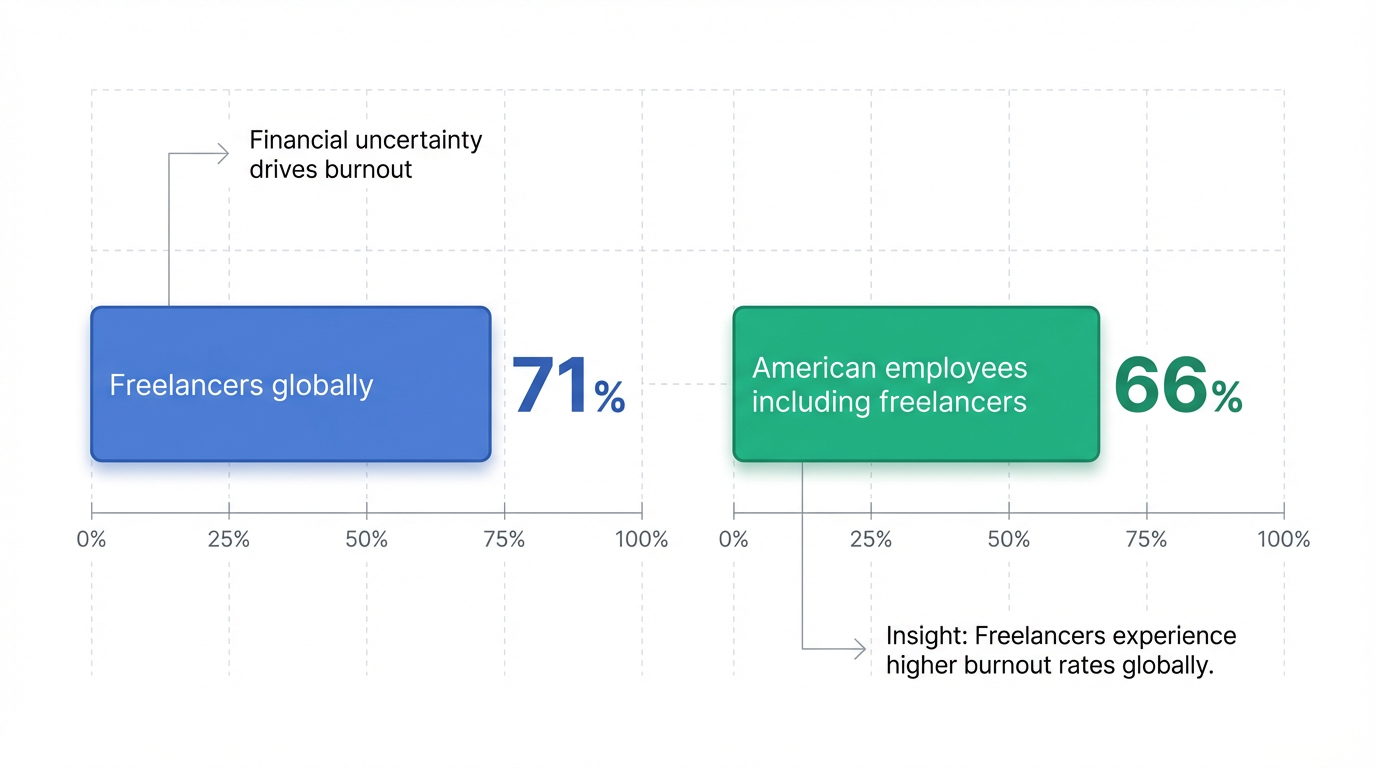
For indie hackers and AI entrepreneurs who have successfully built a thriving client base or product, the next frontier isn't just about earning more, but about scaling smarter. They are grappling with the complex question of how to expand their operations, serve more clients, or develop new offerings without succumbing to endless workweeks or the mental drain that often accompanies rapid growth. The challenge lies in transitioning from being the sole operator to an effective strategist, a shift that many find difficult to execute sustainably3.
This article will explore actionable strategies designed to help high-earning freelancers navigate these complexities, offering a roadmap for sustainable growth. We will delve into frameworks for delegation, automation, strategic financial planning, and robust self-care, demonstrating how it’s possible to achieve robust business expansion while meticulously safeguarding mental well-being and preserving the coveted freedom that independent work promises. By understanding common pitfalls and implementing proven strategies, freelancers can transform their high-earning ventures into truly sustainable and enjoyable enterprises.
Core Strategy: The Pillars of Sustainable Scaling
To break free from the constraints of time-for-money exchanges and truly scale a business without sacrificing personal freedom, solo operators must embrace strategic delegation, AI-powered automation, and scalable pricing models. Many founders initially resist delegation, often believing it's quicker to complete tasks themselves or fearing a loss of control over their operations 4. However, this reluctance carries a significant opportunity cost; one entrepreneur effectively lost over $66,000 annually by spending 52 workdays on tasks others could handle, based on a $100/hour rate 5. Effective delegation ultimately provides more control by freeing up a founder's valuable time for high-impact activities that drive growth and innovation .
Foundational delegation frameworks help identify what tasks to offload. An Importance vs. Skill Needed matrix suggests immediately delegating tasks that are Low Importance/Low Skill, or outsourcing/automating those that are Low Importance/High Skill 4. Similarly, the Eisenhower Matrix guides decisions by categorizing tasks by urgency and importance, while the 80/20 Rule advocates focusing on your 20% highest-impact work—such as strategic planning or key client relationships—and delegating the remaining 80%, including the preparation for your core activities 5. To uncover overlooked time sinks, the "Last 100 Exercise" involves reviewing past tasks and meetings to sort them into categories for delegation, minimization, or retention within one's "zone of genius" 6. Best practices ensure successful delegation, starting with a 3-Part Delegation Brief that clearly outlines the desired outcome, necessary context, and available resources for every task 4. Recording processes with tools like Loom or creating Standard Operating Procedures (SOPs)—even with AI assistance from ChatGPT—allows you to "document once, delegate forever" 4. Maintaining visibility through dashboards or Notion status boards without micromanaging, and starting with incremental delegation of just 5-10 hours weekly, builds delegation muscle and alleviates immediate pressure 7. Common pitfalls to avoid include delegating outcomes without granting authority, holding teams accountable for unclear expectations, or prematurely reclaiming tasks at the first sign of difficulty 4.
Beyond human delegation, AI-powered automation serves as a powerful "secret weapon" for indie hackers, dramatically boosting productivity . A striking 92% of developers now utilize AI coding tools, with some reporting a twofold increase in efficiency . The global AI market's projected 37% annual growth from 2023-2030 underscores its transformative potential across industries 8. For general productivity, AI tools like ChatGPT and Claude excel in content generation, coding, and even serving as a "brutal startup critic" for business idea analysis . Advanced coding tools such as GitHub Copilot and Cursor significantly accelerate development, while platforms like OttoKit enable no-code AI workflow automation, connecting to over 1,250 applications with features like AI agents and "Human in the Loop" controls for critical approvals . These capabilities extend to AI agents that go beyond mere summarization, taking direct action as "smart teammates" working around the clock . Examples include email triage agents that automatically sort and respond to messages, customer support agents handling common inquiries, and feedback analyzer agents organizing customer input into actionable patterns 9. AI agents can also personalize cold outreach, provide landing page insights, qualify leads, and even guide user onboarding, automating vast swathes of repetitive business operations . It's crucial, however, to recognize that nuanced tasks like product design decisions, early user interviews, and initial MVP coding still require human oversight and creativity 9.
The final pillar for sustainable scaling involves shifting away from limiting hourly billing towards scalable pricing models that focus on transformation and outcomes, rather than time or deliverables 10. Productized services, for instance, are standardized offerings sold at a fixed price, much like a tangible product 11. This model brings benefits such as faster growth, predictable recurring revenue, and streamlined processes, while eliminating common pain points like time tracking and scope creep 11. Although they require niching down and initial setup time, successful examples include PodReacher converting podcasts to blogs, WP Buffs offering monthly website maintenance, and ManyPixels or DesignJoy providing unlimited graphic design on subscription 11. Retainer pricing also offers a fixed, recurring monthly fee for ongoing access to services, which transforms unpredictable project income into stable revenue and fosters long-term client relationships . While scope creep can be a challenge if not managed, various retainer types exist, from pre-purchased hourly credits to output-based, results-based, tiered packages, and value-based models 12. Ultimately, value-based pricing sets fees based on the direct value a service provides to the client, rather than internal costs . This approach de-commoditizes your work, justifies premium pricing, and enables scalable growth by aligning your services with quantifiable client outcomes like revenue growth, efficiency gains, or risk reduction 10. Value-based pricing is particularly effective for expertise-driven services where the return on investment is visible and measurable 13.
Real Example: From Solo to Scaled
Pieter Levels stands out as a prime example of a solo founder who has mastered the art of scaling without sacrificing personal freedom. Known for launching over 40 products, his latest venture, Photo AI, is an AI photoshoot generator designed to create photorealistic images of users in various settings, effectively positioning itself to "fire your photographer" 14. Levels notably built and scaled this product while traveling, showcasing a model of location independence and efficient operation from its inception on February 10, 2023 14.
For many solo founders, scaling often introduces significant challenges, such as becoming a personal "bottleneck" 15 or falling into the "time for money" trap, which limits income to hours worked 16. Levels, however, intrinsically sought to overcome these common pitfalls by deeply embedding technology and automation into his business model. Photo AI is a productized service offering clearly defined, high-value AI-generated photoshoots, which allows for repeatable delivery without direct manual intervention for each customer 14. This strategy replaces a traditionally time- and resource-intensive service, enabling scale.
His lean operational approach is a cornerstone of this success. Levels built Photo AI largely as a solo founder, only temporarily hiring one AI developer for the initial model setup 14. This minimal human resource dependency, coupled with core product delivery automation, ensures high-profit margins and avoids the management overhead typical of larger teams. Crucially, Photo AI operates on a scalable, subscription-based pricing model, characteristic of SaaS businesses 14. This generates recurring revenue that grows with user base or generations, rather than with increased manual effort, directly addressing the "time for money" bottleneck and ensuring sustained growth 16.
The quantifiable outcomes of this approach are striking. Photo AI rapidly achieved $10,000 in Monthly Recurring Revenue (MRR) in approximately three weeks post-launch 14. By July 2023, MRR reached $61,800, and by February 2024, it was $77,000. Looking ahead, projections for November 2025 estimate MRR between $132,000 and $138,000 14. The business boasts an impressive annual run rate of $1.6-$1.65 Million, with total revenue to date exceeding $2 Million 14. All this is achieved with an extraordinary profit margin of over 87%, with GPU costs averaging only around $13,000 per month 14. The entire venture remains 100% bootstrapped, without any external investors 14.
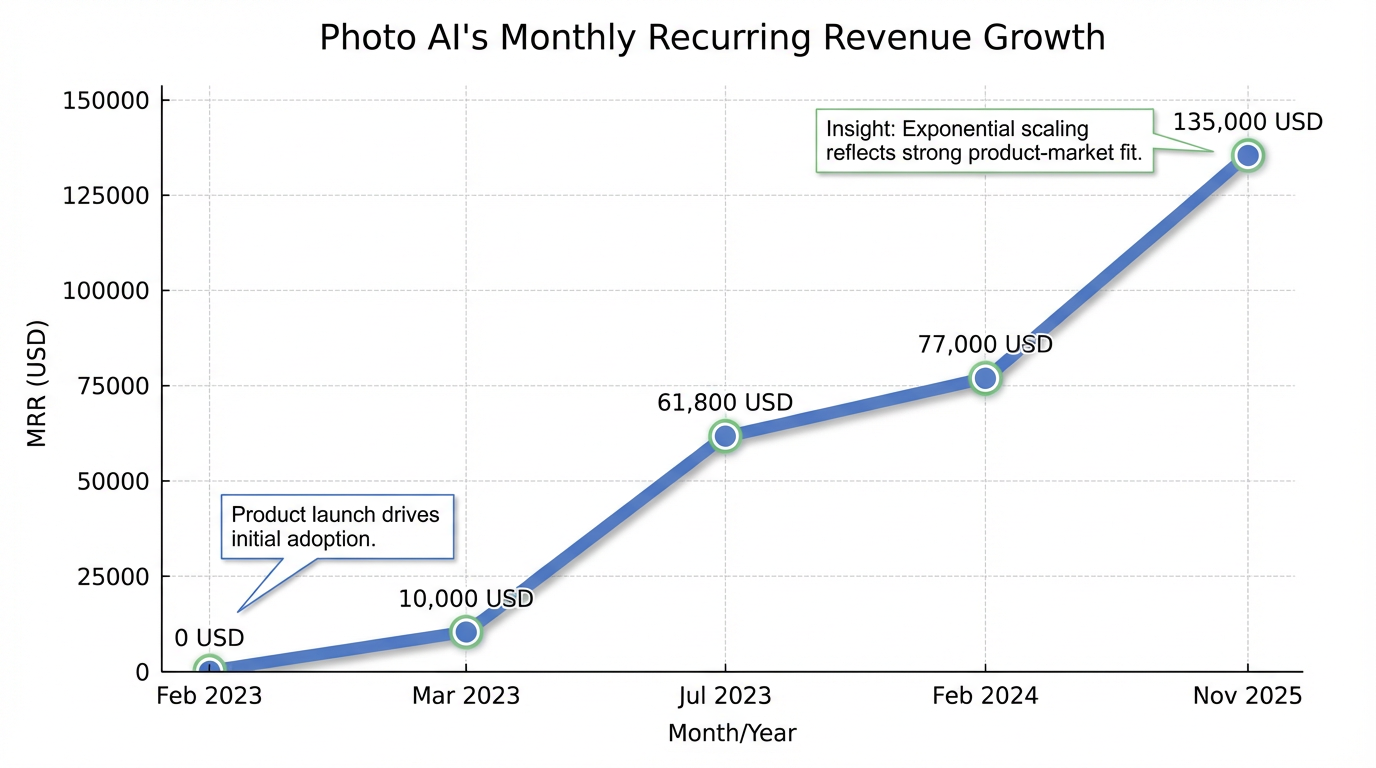
Levels' ability to achieve such rapid and significant growth as a solo founder, all while actively traveling, highlights a high degree of sustainability and burnout avoidance. This is primarily attributed to the pervasive automation within Photo AI, which drastically reduces manual work and frees up the founder's time 14. The high-profit margins of 87% further alleviate financial stress, removing the pressure to constantly "do more" 14. His location independence underscores the flexible nature of his operations, which is a key component of work-life balance for many indie hackers striving for sustainable growth.
Build It Yourself
AI tools are fast becoming the indispensable "secret weapon" for indie hackers, dramatically boosting productivity and enabling rapid iteration without requiring large teams. Many developers using AI coding tools now report a twofold increase in efficiency, fundamentally reshaping what’s possible for solo operators . This widespread adoption underscores AI's pivotal role in allowing individuals to achieve outcomes typically reserved for much larger organizations, facilitating more sustainable growth.
For content generation and general business operations, AI offers powerful capabilities, simplifying tasks that once demanded significant manual effort. Tools like ChatGPT, Claude, and Google AI Studio can craft compelling text, generate images, or even assist with coding, proving invaluable for marketing and product documentation . Claude, for instance, also excels as a "brutal startup critic," providing thorough analysis of market size, competition, and potential flaws for new business ideas 17. This allows founders to quickly validate concepts and refine strategies efficiently.
AI has profoundly shifted software development for indie hackers, enabling unparalleled speed and flexibility. Platforms like Cursor integrate multiple AI models directly into your IDE, providing contextual code suggestions and even generating multi-file edits based on your entire codebase . Similarly, Lovable/Vercel v0 allows users to build impressive software UIs through a simple chat interface, transforming natural language descriptions into functional front-end components or entire applications . This low-code approach drastically reduces development time, facilitating rapid prototyping and deployment. Niche tools like CodeWP for WordPress or AI2sql for database queries further streamline specialized coding tasks, significantly enhancing overall efficiency 18.
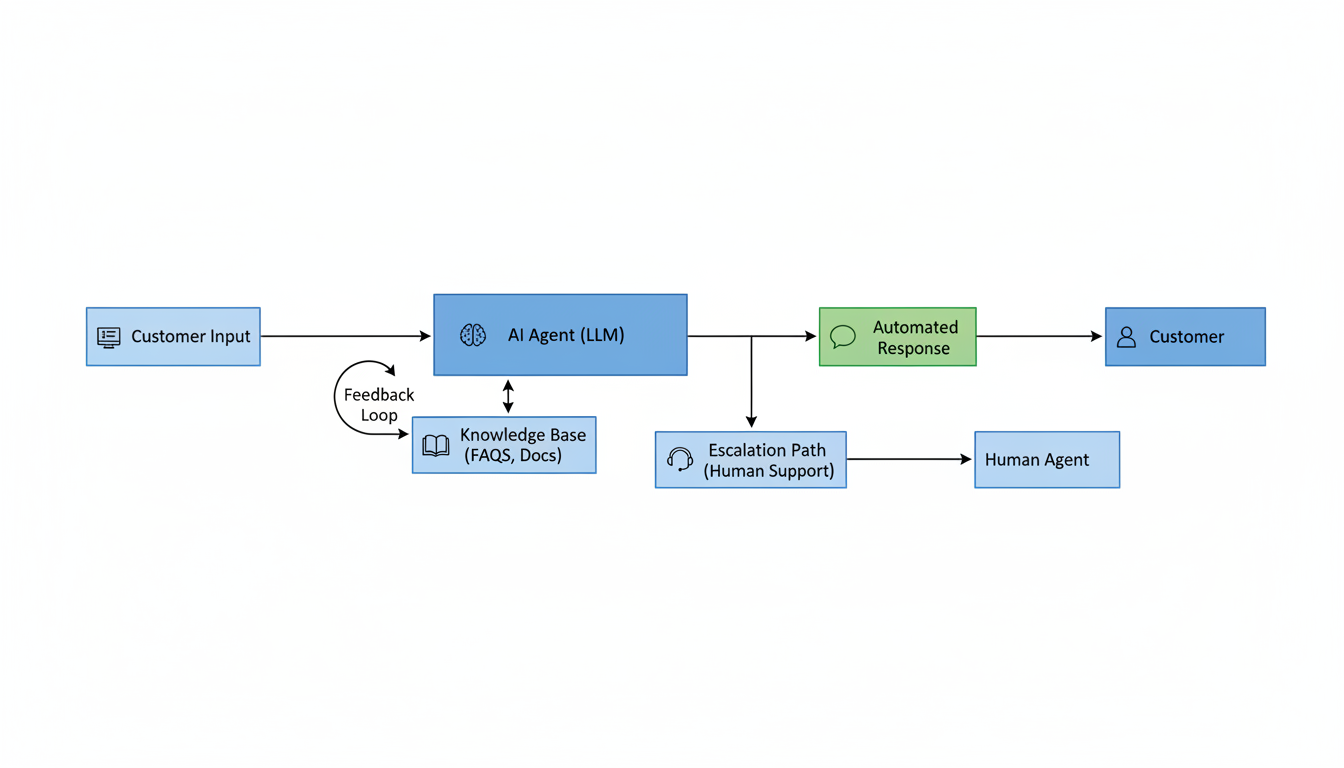
Beyond specific tools, AI agents are emerging as "smart teammates" capable of taking direct action and operating 24/7, pushing the boundaries of automation . OttoKit, for example, offers no-code AI workflow automation, allowing users to visually build complex processes and connect to over 1,250 applications with ease 19. These agents can automate a wide array of tasks, from auto-generating Shopify product descriptions and personalized cold outreach campaigns to sophisticated lead qualification and customer support 19. A well-configured AI agent can even triage emails by classifying urgency and drafting replies, ensuring you only address truly critical communications 9.
A customer support agent can autonomously handle common inquiries using existing FAQs, escalating only the most complex issues to human teams . Similarly, a feedback analyzer agent processes raw customer comments, efficiently identifying actionable patterns for product improvements or bug fixes 9. However, it's crucial to recognize AI's current limitations; tasks requiring deep human nuance, such as initial product design decisions, early user interviews, or hiring the first team members, remain firmly in the human domain 9. Leveraging AI where it excels complements human expertise rather than inappropriately replacing it.
Next Steps: Your Action Plan for Sustainable Growth
For the high-earning freelancer or solopreneur, the journey from successful individual contributor to sustainable business owner is less about working harder and more about working smarter. The true magic lies in building systems that support growth while safeguarding your most valuable assets: your time, your freedom, and your mental well-being. It's about designing a business that serves your life, rather than the other way around. This shift in perspective is not merely aspirational; it's an imperative for thriving in the modern independent economy 1.
To embark on this path, consider these core takeaways. First, master the art of strategic delegation. This isn't just about offloading unwanted tasks; it's about consciously identifying what only you can do and entrusting the rest to capable hands or systems 3. Remember, the opportunity cost of not delegating can be substantial, limiting your ability to focus on high-impact, high-value work 5. By moving from being the "doer-in-chief" to a strategic orchestrator, you unlock exponential growth and free up invaluable mental bandwidth 4.
Second, embrace AI-powered automation as your force multiplier. Tools and AI agents are no longer optional accessories; they are fundamental for scaling efficiently and maintaining a competitive edge . From triaging emails and providing customer support to generating content and analyzing market feedback, AI can act as an army of "smart teammates" working 24/7, reducing manual workload and minimizing human error . This amplification of your expertise allows you to do more with less, freeing you from repetitive tasks that drain your energy 3.
Third, reframe your value proposition with scalable pricing models. Moving beyond the restrictive hourly rate is crucial for unlocking unlimited earning potential and predictability 10. Productized services, value-based retainers, and results-based pricing models shift the focus from time spent to the transformative outcomes you deliver, aligning your income with the true impact you create for clients . This empowers you to command premium rates and build a more stable financial foundation, rather than constantly chasing new projects 13.
Finally, prioritize your well-being and cultivate a supportive community. Independent work, while offering immense freedom, can also lead to isolation and burnout 1. Actively establishing clear boundaries, practicing self-care, and engaging with like-minded communities can significantly mitigate these risks, enhancing resilience and providing essential support 20. Your personal well-being is not just a side benefit of a successful business—it's the very foundation upon which sustainable growth is built 1.
The future of independent work promises unparalleled freedom, but it demands a strategic approach to scaling that integrates smart systems, not just more hours. By strategically delegating, intelligently automating, and thoughtfully pricing your services, you can build a thriving business that truly supports the lifestyle and freedom you sought in the first place 1. This isn't just about making more money; it's about building a better, more sustainable way to live and work.