The Emotional Cost of Building a Successful Business
Introduction: The Hidden Price of Success
It's a perplexing paradox: the very journey designed to yield freedom and financial prosperity often extracts a heavy personal price, leading many successful entrepreneurs to a state of profound unhappiness. This often unacknowledged burden, the emotional cost of building a successful business, is increasingly coming to light as a critical concern across the startup ecosystem. Far from being isolated incidents, mental health challenges are a pervasive reality for founders. A staggering 72% of entrepreneurs report being impacted by a mental health condition 1, with some data indicating that up to 87.7% struggle with at least one issue, such as anxiety, high stress, or burnout 2.
This makes entrepreneurs 50% more likely to contend with mental health issues than their non-entrepreneurial counterparts 1. For indie hackers and AI entrepreneurs, who often operate solo or in small, lean teams, the allure of rapid creation and autonomous growth can mask the relentless pressure. The prevailing "hustle culture" often glorifies stress and long hours, fostering an environment where mental health struggles are common yet frequently hidden 3. This culture can be particularly detrimental, pushing founders to the brink without adequate support or recognition of their internal battles.
However, recent years have seen a vital shift, with founders, investors, and the broader tech community increasingly acknowledging and discussing these hidden struggles 4. This growing awareness is crucial as it begins to dismantle the stigma that has long prevented entrepreneurs from seeking help. This report aims to pull back the curtain on this critical issue, exploring the underlying causes, profound consequences, and, most importantly, actionable strategies to navigate the mental landscape of entrepreneurship without sacrificing personal well-being for professional success.
Core Strategy: Crafting a Sustainable Path to Prosperity
The intense pressure and "hustle culture" often glorified in the entrepreneurial world can lead to significant mental health challenges, even for those achieving financial success. Many founders find themselves caught in a cycle of stress and dissatisfaction, a stark contrast to their initial aspirations. Yet, building a thriving business doesn't have to come at the expense of personal well-being; it requires a deliberate shift from relentless pursuit to sustainable growth. This involves adopting core strategies that prioritize the founder's mental health alongside business objectives, allowing for a more balanced and ultimately, more successful journey.
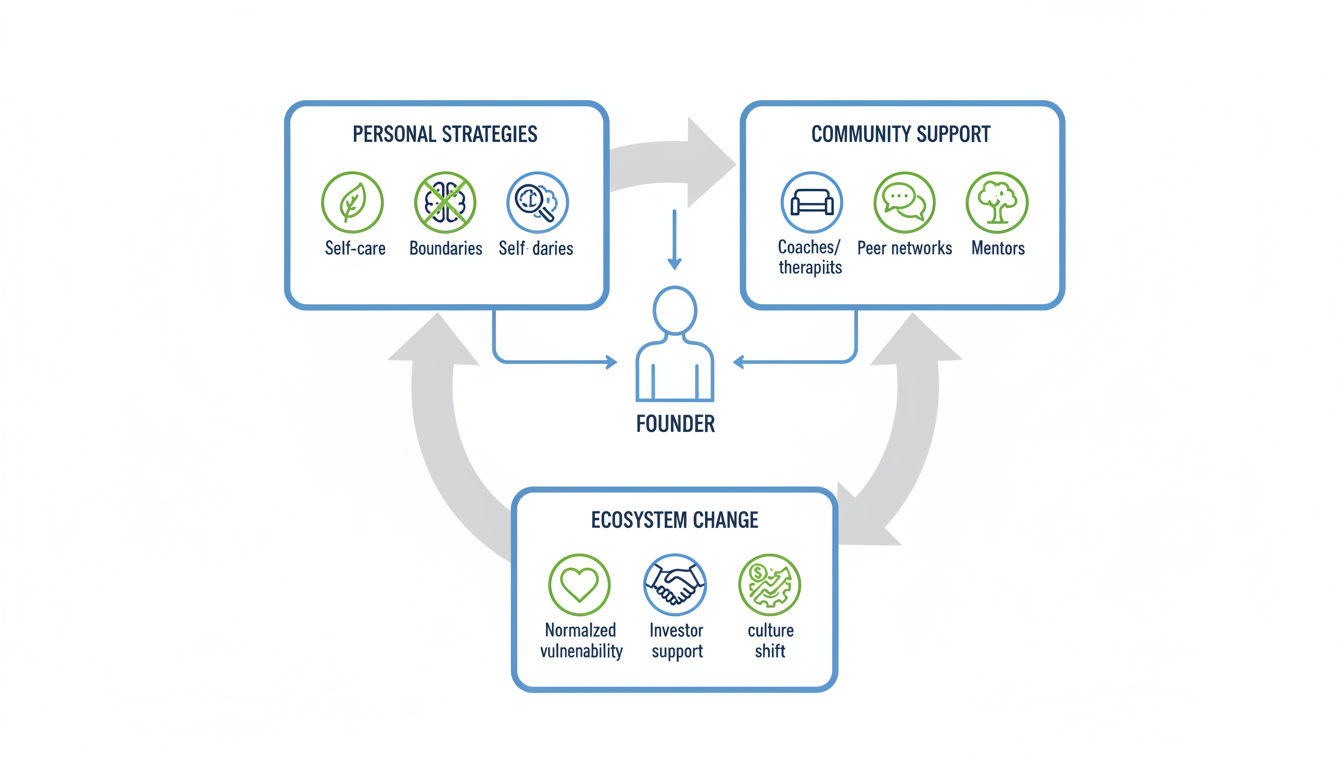
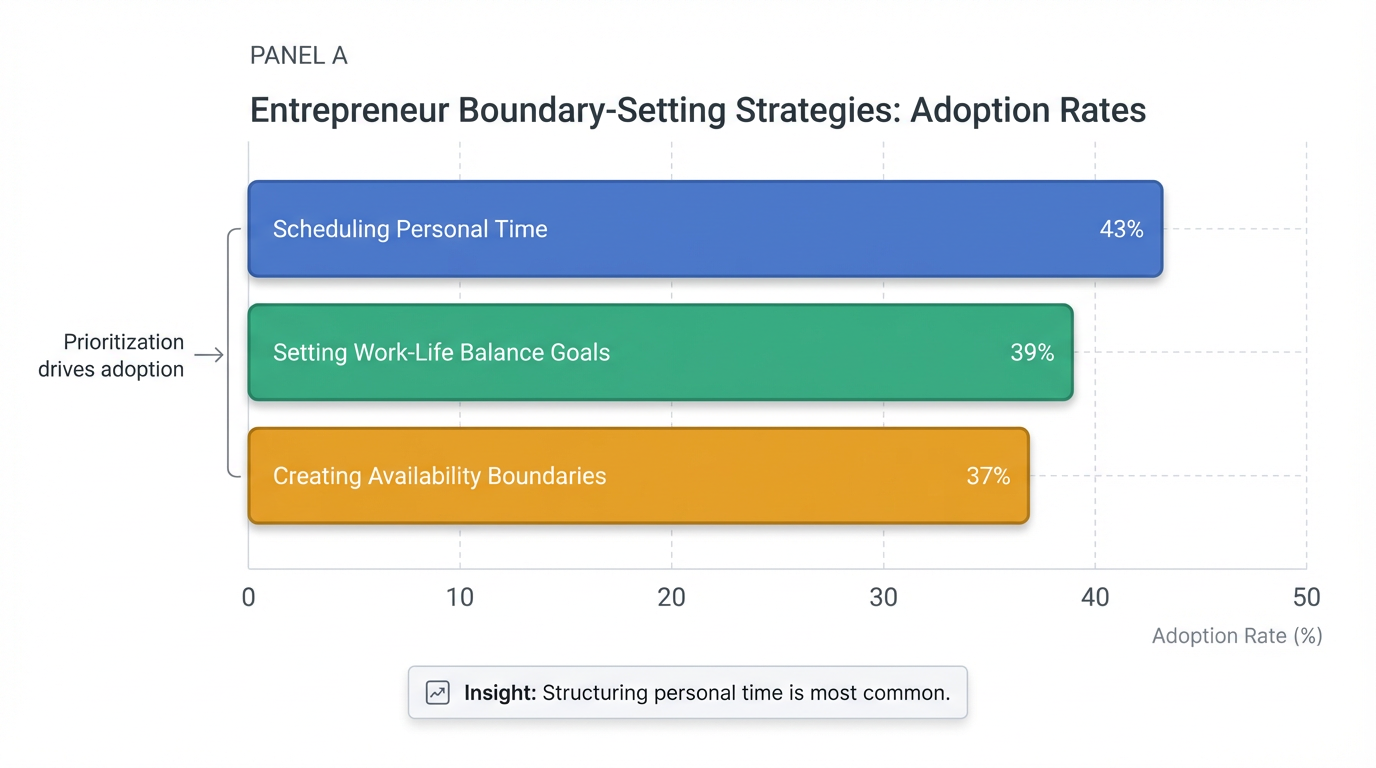
One fundamental strategy involves prioritizing self-care and establishing clear personal-professional boundaries. The ingrained belief that "showing weakness" is detrimental, as noted by figures like Sam Altman, pushes founders to hide their struggles and maintain an image of unwavering strength 3. This often manifests in neglected self-care, with many founders sleeping less since starting their business, and a significant portion suffering from insomnia 1. Implementing boundaries, such as scheduling personal time, setting work-life balance goals, and defining availability, is crucial to counteract this trend 1. Such practices have been shown to significantly reduce burnout, turning rest from a luxury into a competitive advantage essential for long-term endurance 7.
Cultivating robust support networks is another critical element for combating the inherent isolation of entrepreneurship. Jeremy Tidmore aptly describes the founder's journey as "a lonely place," where the burden of responsibility often prevents open vulnerability 9. Indeed, a striking 81% of founders admit to hiding their stress, fears, and challenges from others, further exacerbating feelings of isolation 10. Engaging with peer networks and seeking mentorship provides a vital outlet for shared understanding and reduces this sense of being alone 11. Strong community support, including mentors, can boost a founder's resilience and stress management capabilities by 50%, highlighting the power of connection 7. While professional coaching and therapy are highly effective in managing stress, accessibility remains a barrier for many due to cost and time constraints 1.
Finally, strategic delegation, particularly leveraging automation and AI, offers a powerful means to reduce the founder's mental load. Entrepreneurs often grapple with chronic uncertainty, high pressure, and thousands of micro-decisions weekly, leading to decision fatigue and cognitive depletion 3. Instead of shouldering every task and decision, founders can implement strategic systems that function without constant personal input 13. For indie hackers and AI entrepreneurs, this presents a unique opportunity to automate routine, repetitive, or data-intensive tasks using artificial intelligence tools. By offloading operational overhead, founders can free up mental bandwidth for strategic thinking, creative problem-solving, and personal well-being, effectively preventing the burnout that arises from relentless micro-management.
These strategies collectively underscore a proactive approach to entrepreneurship that redefines success not just by revenue or growth, but by the founder's sustained well-being. Moving beyond the outdated "hustle-at-all-costs" mentality means consciously building a business model that nurtures, rather than depletes, its most vital asset: the founder. Implementing these pillars of self-care, community, and smart delegation forms the bedrock for a fulfilling and prosperous entrepreneurial journey, as we will explore through a compelling real-world example.
Real Example: Learning from Founders Who Navigated the Storm
Alex, the visionary behind a rapidly scaling AI-driven analytics platform, initially embodied the "hustle culture" ideal, relentlessly pushing boundaries and working over 50 hours a week, a common experience for 67% of founders 15. His startup had successfully raised a seed round, and the team was growing, yet Alex found himself increasingly adrift. The pressure to scale, secure the next funding round, and manage a burgeoning team created chronic uncertainty and high-stakes decision fatigue 3. He started experiencing the familiar creep of burnout, a condition that affects 34.4% of entrepreneurs 2 and 53% of founders within a year 13.
The mental toll manifested in classic ways: perpetual anxiety, disrupted sleep patterns—a reality for 59% of founders who sleep less since starting their business 1—and a profound sense of isolation. Like 81% of founders, Alex felt compelled to hide his stress and fears from his team, investors, and even family, believing he needed to project unwavering strength 10. This facade, as Sam Altman once noted, forces founders to "never show weakness" 3. He recalled Jeremy Tidmore's poignant description of the founder's journey as "a lonely place," where one must often "fake it till you make it" 9. The personal financial strain became acute, as he, like 38% of founders, wasn't paying himself enough to cover personal expenses, leading to worries that distracted him from the business itself 16.
The turning point came when Alex almost missed his child’s school play due to an emergency investor call, mirroring Kyle Kirwan's realization about his unsustainable work-life balance 6. He understood that his mental health was not just a personal struggle but a direct threat to his business, a concern shared by 46% of business owners 1. He recognized the urgent need for a change.
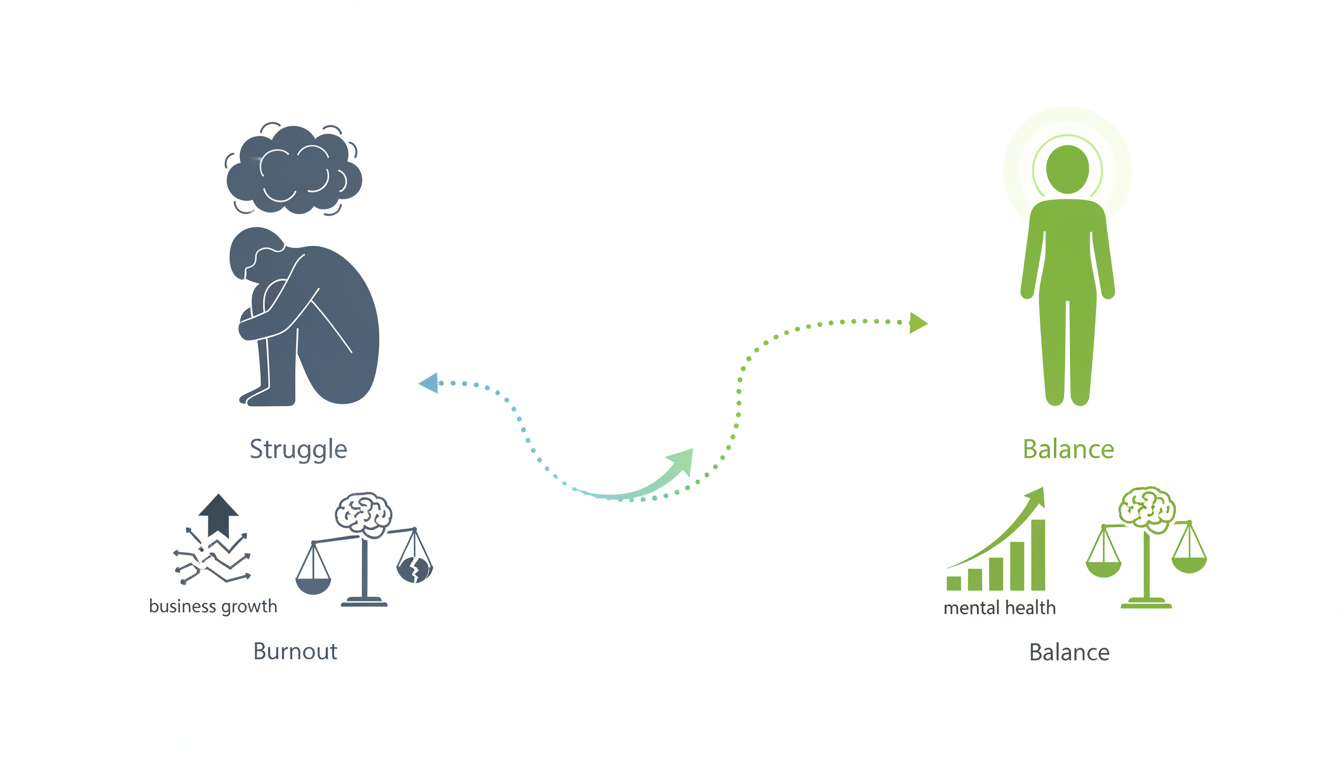
Alex began by setting strict boundaries, a strategy crucial for defining work-life separation 12. He scheduled dedicated personal time and set firm availability boundaries with his team 1. He actively sought out peer networks, joining a founder mastermind group, which allowed for vulnerable conversations and shared understanding—a vital antidote to loneliness 11. Despite initial reservations about cost and time, Alex committed to working with a therapist, learning emotional regulation techniques and identifying the root causes of his stress 11. He also integrated self-care as a non-negotiable part of his routine, prioritizing exercise and mindfulness, joining 73% of entrepreneurs who use exercise as a coping mechanism 1.
The shift was transformative. By prioritizing his well-being, Alex experienced reduced burnout and clearer decision-making. His ability to lead improved, no longer clouded by brain fog or emotional reactivity 17. His team noted his renewed presence and focus. The business continued to grow, but this time, it was built on a foundation of sustainable leadership and personal health. Alex's journey highlights that strategic well-being is not a distraction from success but an essential component of it, proving that redefining rest can indeed be a competitive advantage 8.
Build It Yourself: Leveraging AI to Liberate Your Mind
The relentless demands of solo entrepreneurship often lead to the very burnout we aim to avoid, even when building something truly impactful. However, a new generation of AI tools is emerging as a powerful antidote, transforming the solo journey from a solitary grind into a supported expedition. These digital partners act as virtual team members, automating the tedious, reducing cognitive load, and crucially, preserving mental well-being for founders navigating the complex path from idea to production. They offer a tangible path to sustainable success, helping to build businesses without sacrificing sanity.
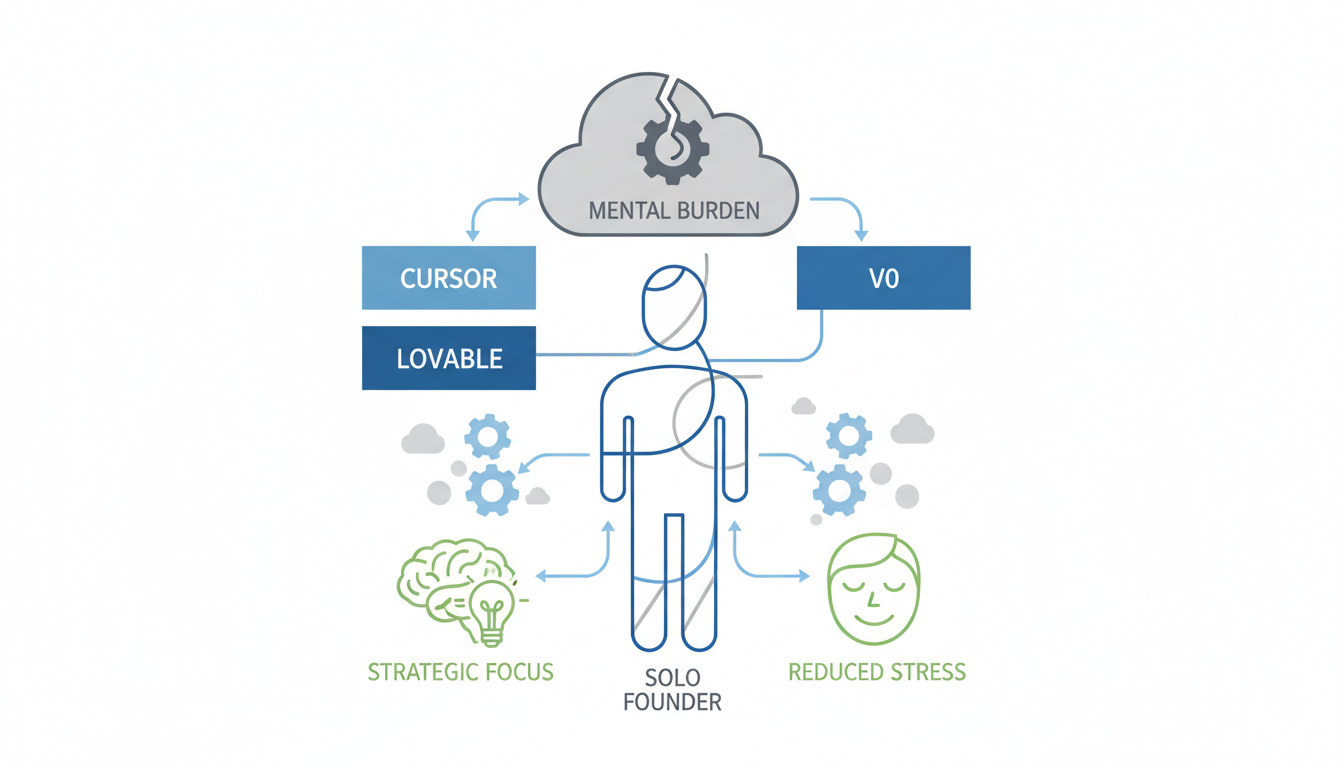
Consider Cursor, the AI-powered code editor, which dramatically alleviates the mental burden associated with coding itself. It allows founders to offload significant cognitive overhead, freeing them to concentrate on strategic thinking rather than getting bogged down in implementation details, thus preventing the dreaded "brain fry" from extensive coding sessions 18. Cursor transforms an often-chaotic development process into a structured, reliable workflow by assisting in generating Product Requirement Documents (PRDs) and task lists, effectively allowing solo founders to systematically build features without needing a dedicated product manager or engineer 19. This intelligent assistant acts as a coding tutor, reviewer, and debugger, simplifying tasks like identifying, explaining, and fixing bugs or performance issues, which is invaluable for less experienced developers or those maintaining legacy codebases 20.
Beyond reducing mental strain, Cursor excels at automating countless tedious coding tasks. It can generate entire code blocks, complete lines with impressive speed, and refactor code based on natural language prompts, handling repetitive or low-level adjustments 20. Founders can leverage it to automatically generate unit tests across various frameworks or integrate it with GitHub for reviewing pull requests and automating commit messages . Moreover, it extends to non-coding automation, allowing product managers to automate PRD creation, documentation updates, Jira ticket creation, and even respond to comments, all without writing a single line of code 21. By serving as an "AI copilot," Cursor significantly reduces the sheer volume of coding work, allowing solo founders to conserve energy and focus on higher-level problems, effectively enabling them to build entire companies with minimal engineering teams and preventing burnout .
Then there's Lovable, an AI platform designed for full-stack app generation, making complex web development accessible even to non-technical individuals. It drastically reduces mental load by enabling solo founders to move from an abstract idea to a working prototype in days, not weeks, accelerating MVP creation up to 20 times faster than traditional methods . This rapid prototyping capability dramatically lowers the initial investment of time and mental energy required for early validation. Lovable automates the typically burdensome tasks of setting up both frontend (React + Tailwind + Vite) and backend (Supabase for database, authentication, storage, and API), providing full-stack capabilities without requiring specialized expertise .
Lovable also tackles the tedious chore of customer feedback management, transforming "feedback chaos into intelligent action" through automated sentiment analysis, language detection, and the generation of actionable follow-up steps 22. This level of automation means founders can focus on product growth and customer value rather than getting bogged down in technical implementation details, significantly preventing burnout from the prolonged, intense coding sprints that often accompany solo ventures . For instance, a founder could use Lovable to instantly generate an internal dashboard for tracking key metrics or integrate its feedback widgets to automatically analyze user sentiment, receiving alerts for negative trends via Slack .
Finally, v0 by Vercel emerges as a generative UI platform, empowering founders to create high-fidelity user interfaces and full-stack web applications from simple natural language descriptions or visual inputs. It significantly reduces mental load by eliminating design handoffs, allowing founders to instantly visualize UI concepts and iterate rapidly with working code within minutes . This instant feedback loop accelerates prototyping, enabling product teams and founders to validate ideas quickly with real user feedback, saving countless hours and reducing the mental strain of abstract planning .
v0 automates the creation of clean, functional React components styled with Tailwind CSS and Shadcn UI, whether from a text prompt like "a pricing table with three tiers" or by transforming screenshots or Figma files into code . While primarily focused on the frontend, it can also scaffold backend integrations, generate API logic, and provide architectural recommendations, further streamlining development . By automating significant portions of UI development and supporting full-stack scaffolding, v0 dramatically reduces the time and effort solo founders spend on technical implementation, thereby preventing burnout and allowing them to focus on core product strategy, user acquisition, and market fit . This ability to quickly validate and iterate with less effort minimizes wasted hours on unproven ideas, fostering a more resilient and less emotionally draining entrepreneurial journey.
Next Steps: Your Blueprint for a Fulfilling Future
The journey of entrepreneurship, while immensely rewarding, demands an intentional approach to mental well-being. It is no longer enough to chase success at all costs; sustainable growth for your business inextricably links with the sustained health of its founder. Your mental health is not a sidebar but a strategic asset, directly impacting decision-making, creativity, and leadership effectiveness11. Over 46% of business owners acknowledge their mental health affects their enterprise, and a significant 69% report stress negatively impacts their work performance1. Therefore, redefining entrepreneurial success means balancing financial ambition with genuine personal well-being, transforming rest into a competitive advantage rather than a luxury7.
To secure both your personal and professional future, implementing practical strategies for self-care is paramount. Start by setting clear boundaries, which are crucial for delineating work from personal life12. This might involve scheduling dedicated personal time (43% of founders do this), setting concrete work-life balance goals (39%), or establishing clear availability limits (37%) outside of working hours1. Studies consistently show that well-defined boundaries significantly reduce burnout, allowing founders to recharge and return to their ventures with renewed vigor7. Prioritizing self-care isn't optional; it's about making conscious choices like ensuring regular sleep, engaging in physical exercise—a coping mechanism for 73% of entrepreneurs—and practicing mindfulness to maintain mental resilience1.
Beyond individual efforts, no entrepreneur is an island, and leveraging community and professional support systems is a critical next step. While only 23% of founders currently seek psychological or coaching support, often citing cost (73%) and lack of time (52%) as barriers, these resources are invaluable for stress management and burnout prevention1. Engage actively in peer networks, like those offered by Foundarity or Mercury's Founder Community, where shared experiences can combat feelings of isolation and provide profound understanding11. Additionally, seek out mentors who have navigated similar challenges, as strong community support can boost resilience and stress management by 50%12.
Finally, it's time to advocate for and participate in a broader ecosystem-level change. Founders who openly discuss their challenges normalize vulnerability, fostering environments where others feel safe to do the same, ultimately reshaping what strong leadership truly embodies3. We need to integrate mental health support, such as therapy, directly into accelerator programs and startup resources, making it as standard as business coaching3. Reducing financial barriers through subsidized programs and encouraging investors to support founder well-being, as some VCs are now doing, will ensure access to vital care16. This collective culture shift from an "endure at all costs" mentality to one that actively "nurtures and sustains" founders is not just good for individuals; it's good for the entire startup landscape12.
It’s time to move beyond the narrative that glorifies endless grind and recognize that a thriving business is built upon a thriving founder. Take these steps to build not just a successful company, but a fulfilling life alongside it. Your future, and the future of your venture, depends on it.