The Rise of Automated Solutions in Local Economies
Introduction: The Silent Revolution Reshaping Main Street
In an economic landscape often dominated by digital giants and global supply chains, local businesses are constantly battling competitive pressures, rising operational costs, and the urgent need for innovation to simply stay afloat. Yet, a silent revolution powered by automated solutions is now reshaping Main Street, offering a critical lifeline and unprecedented opportunities for growth. This isn't just about large corporations implementing complex enterprise systems; it's about accessible, practical tools that are becoming vital for survival and expansion for businesses of all sizes, including the smallest local ventures 1.
The era of costly, specialized automation is giving way to a new paradigm, characterized by indie-hacker-style solutions that are affordable, user-friendly, and often integrate seamlessly into existing workflows. These tools empower entrepreneurs to optimize operations, enhance customer engagement, and scale their impact without needing extensive technical expertise or massive capital outlays. Many small and medium-sized businesses (SMBs) are already leveraging these advancements to reduce costs, increase efficiency, and significantly boost revenue, demonstrating the tangible benefits for local economies 2.
Indeed, the gap in AI adoption between small and large businesses is rapidly shrinking, a stark contrast to previous technology cycles where the lag was often decades 2. This democratization of technology means that what was once aspirational for a local bakery or a solo consultant is now achievable and increasingly necessary. This article aims to empower local business owners and entrepreneurs by demystifying automation, showcasing real-world successes, and providing actionable strategies to integrate these powerful tools into their own operations, fostering resilience and propelling local economic growth.
Core Strategy: Lean Automation for Local Business Advantage
For indie hackers and local entrepreneurs, the true power of automation lies in its ability to amplify effort, not just replace it. This isn't about becoming a tech giant overnight, but about strategically deploying automated solutions to unlock efficiency, drive customer engagement, and foster innovation within constrained resources. Small businesses, generally defined as those with fewer than 500 employees, are increasingly leaning into these technologies to gain an edge, demonstrating that a lean, automated approach can deliver significant returns 1.
The current landscape shows a dramatic acceleration in adoption; for instance, a recent survey found that 92% of small business respondents (25-499 employees) have integrated AI, a monumental leap from only 20% in 2023 3. This rapid embrace signals a critical shift, as small businesses are now only about a year behind large enterprises in AI adoption, a stark contrast to the decades-long lag seen in previous technology cycles 2. Such momentum creates a fertile ground for local businesses to leverage these tools effectively.
Automating Mundane Operations for Efficiency
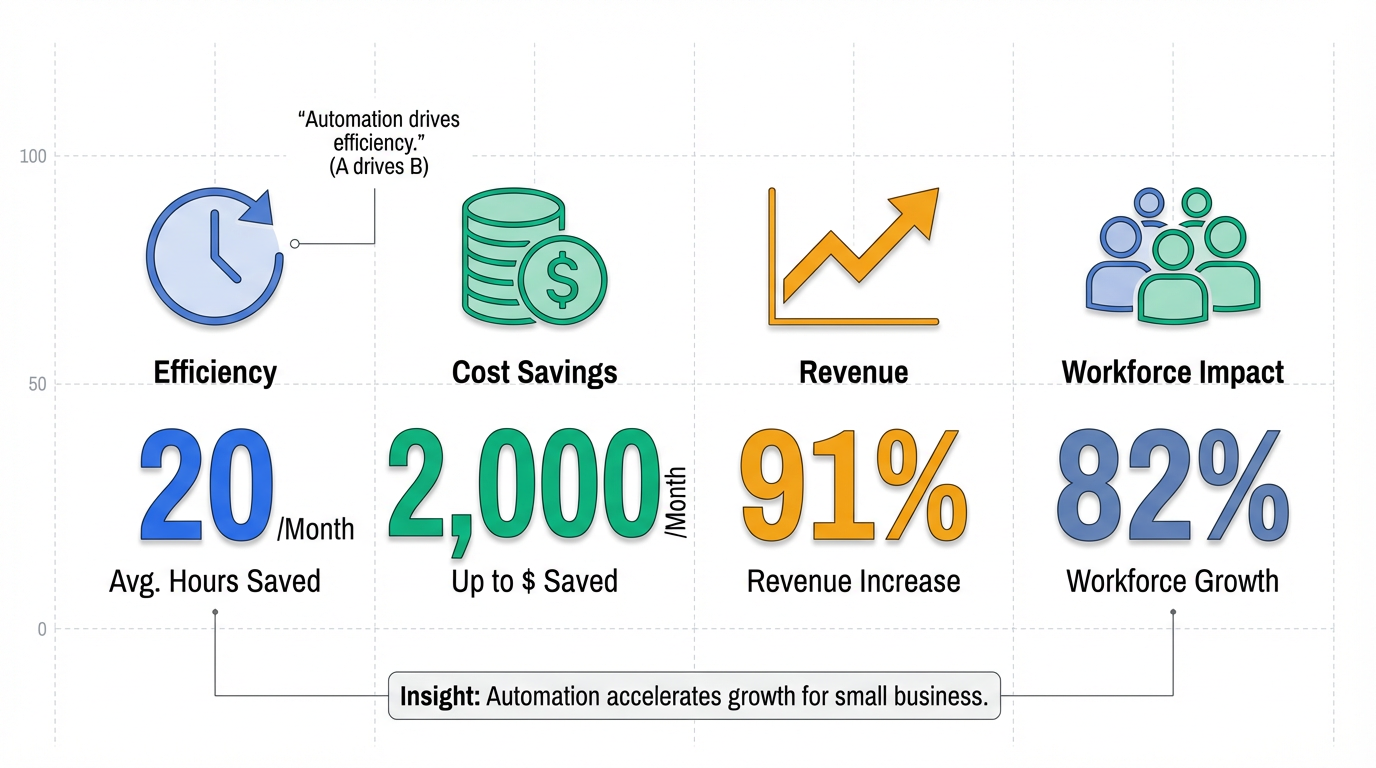
One of the most immediate and impactful applications of automated solutions for local businesses is in streamlining repetitive, time-consuming tasks. By offloading these operational burdens, entrepreneurs can free up valuable hours for strategic growth and innovation. Small businesses using AI report saving an average of 5.6 hours per week for their workers, directly boosting productivity 4. This efficiency translates into significant financial gains, with 66% of AI users saving between $500 and $2,000 monthly 2.
Consider tasks like data entry, invoicing, payroll processing, and inventory management; these are prime candidates for automation 5. For example, an accounting firm automated invoice processing and payment tracking, dramatically reducing administrative hours and improving accuracy, which allowed them to scale without new hires 7. Similarly, a small manufacturing company improved accuracy and optimized production by automating inventory and supply chain management, using AI to track stock levels, generate purchase orders, and forecast demand 7. Such targeted automation can yield up to 75% savings on operational costs by eliminating routine work, leading to a potential 20% increase in profitability for SMEs 8.
AI-Powered Customer Engagement & Growth
Beyond internal efficiency, automated solutions are revolutionizing how local businesses connect with their customers, driving substantial revenue growth and enhancing satisfaction. Marketing and customer engagement are particularly common areas for automation among small businesses 9. Tools such as automated email campaigns, social media management, and content management are widely used, with 58% automating emails and 49% using it for social media 10. AI-powered chatbots and virtual sales agents provide 24/7 customer service, offering personalized recommendations and efficiently qualifying leads, ensuring no opportunity is missed 5.
These enhancements directly translate to the bottom line; 91% of AI-using SMBs report revenue increases, and companies leveraging automation see 50% higher sales growth compared to their non-automated counterparts 2. A local bakery, for instance, experienced a 30% revenue surge within six months thanks to automated inventory management 8. Another powerful example is a retailer who recovered over $4,500 in revenue and achieved a 28% increase in conversions by using abandoned cart automation 12. By integrating automated customer engagement, local businesses can foster stronger relationships and unlock significant sales potential.
Strategic Workforce Augmentation and Innovation
Far from displacing workers, automated solutions are increasingly augmenting human capabilities and creating new opportunities, fostering innovation and economic growth in local communities. While concerns about job displacement often arise, the reality is that 82% of small businesses using AI actually increased their workforce over the past year 2. Automation allows existing employees to shift away from repetitive, low-value tasks towards more strategic, creative, and higher-value activities 6.
This strategic augmentation directly addresses common challenges like labor shortages, enabling businesses to maintain output and revenue without needing to constantly hire more staff for routine roles 14. The freed-up capital and human effort can then be reinvested into growth initiatives, product development, and expanding into new markets, fostering a cycle of continuous innovation 6. By empowering their teams and improving their competitive standing, local businesses become more resilient and contribute significantly to local economic dynamism.
Real Example: The Indie Hacker Who Automated His Way to Monthly Retainers
The most compelling stories often emerge from unexpected places, demonstrating how ingenuity can overcome adversity. Consider the journey of a 16-year-old indie hacker in Argentina who, facing a challenging economic landscape and lack of job prospects, decided to create his own opportunities. This young entrepreneur didn't wait for a traditional job; instead, he taught himself Python with a singular goal: to automate inefficiencies he observed in local businesses, turning mundane tasks into scalable solutions.
His initial breakthrough came when he identified a common pain point: many small businesses were spending significant time and money on repetitive, manual processes. He developed a simple yet powerful Python script designed to automate one such expensive operation. The script likely focused on tasks that often plague small enterprises, such as data entry, inventory management, or basic customer communication – areas where automation consistently delivers substantial benefits like reduced operational costs and increased productivity 8.
The results were immediate and impactful. The first local business to adopt his solution paid him an initial $500, a significant sum for a teenager. This wasn't just a one-off payment; the value provided was so evident that the business quickly opted for a monthly retainer, securing a consistent income stream for the young hacker. This success story perfectly encapsulates how automation, even from a single individual, can dramatically increase efficiency and generate revenue for local businesses, leading to tangible financial gains and improved operational flows 2.
This case is a microcosm of the larger trend sweeping local economies: leveraging accessible technology to solve real-world problems. It highlights how agile, custom-built automation can circumvent the traditional lag in technology adoption often seen in smaller firms, enabling them to leapfrog competitors and significantly shrink the gap with larger enterprises 2. By focusing on immediate, quantifiable improvements like those seen in this example—from administrative burden reduction to enhanced client reporting—indie hackers and local entrepreneurs are not just building businesses; they're actively contributing to the resilience and growth of their communities. The initial investment in tools might seem daunting, but the median cost of many AI tools is surprisingly low, often quickly outweighed by the value generated 1.
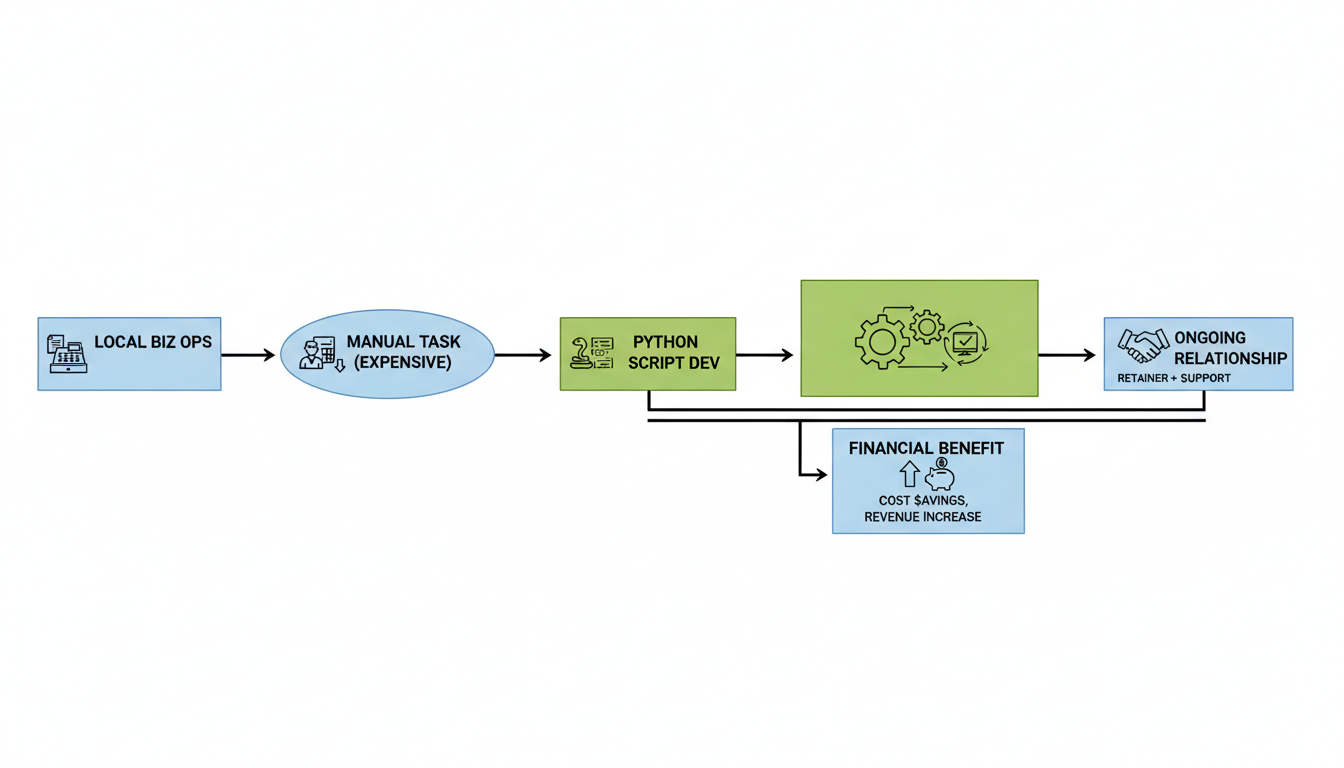
This youthful initiative also underscores a critical point: automation isn't merely about cost-cutting; it's a catalyst for new business models and job creation. While the young programmer created a service for a local business, he also, in essence, created a new "job" for himself, demonstrating how individuals can pivot to high-value roles in an automated economy 14. This kind of entrepreneurial spirit, focused on efficiency through automation, is becoming a driving force for local economic dynamism, ensuring small businesses remain competitive and contribute robustly to their local ecosystems 5.
Build It Yourself: Your AI Toolkit for Local Economic Impact
Local businesses are discovering that the path to increased efficiency and customer satisfaction often begins with identifying core automation opportunities. This involves pinpointing repetitive, time-consuming tasks or areas where human error is frequent, whether it's managing customer inquiries, scheduling appointments, or handling inventory. With 96% of small business owners planning to adopt emerging technologies, including AI, the momentum for digital transformation is undeniable 2. These opportunities aren't just about cutting costs; they're about freeing up valuable time to focus on strategic growth and enhanced customer experience.
For non-technical business owners, a rich ecosystem of user-friendly AI and automation platforms already exists, making implementation surprisingly accessible. Tools like Mailchimp for automating email campaigns, Shopify for streamlined e-commerce operations, or Calendly for scheduling appointments are invaluable 17. They integrate AI features that handle everything from customer inquiries via chatbots to managing social media presence, often reducing administrative overhead significantly 5. Such platforms can save businesses over 20 hours monthly and often lead to $500-$2,000 in monthly cost savings for AI users 2.
Indie hackers and AI-savvy developers can dive deeper, leveraging advanced AI development tools like Cursor, Lovable, and v0 to craft highly customized automation solutions. These tools empower creators to build bespoke applications that address unique business challenges, moving beyond off-the-shelf options. This collaborative approach can bridge the technical skill gap often cited as a primary barrier for small businesses, allowing specialized expertise to meet specific local needs 2. The trend of "Shadow AI," where employees independently adopt and integrate AI tools, already accounts for 60% of cases, highlighting the potential for developer-driven solutions 1.
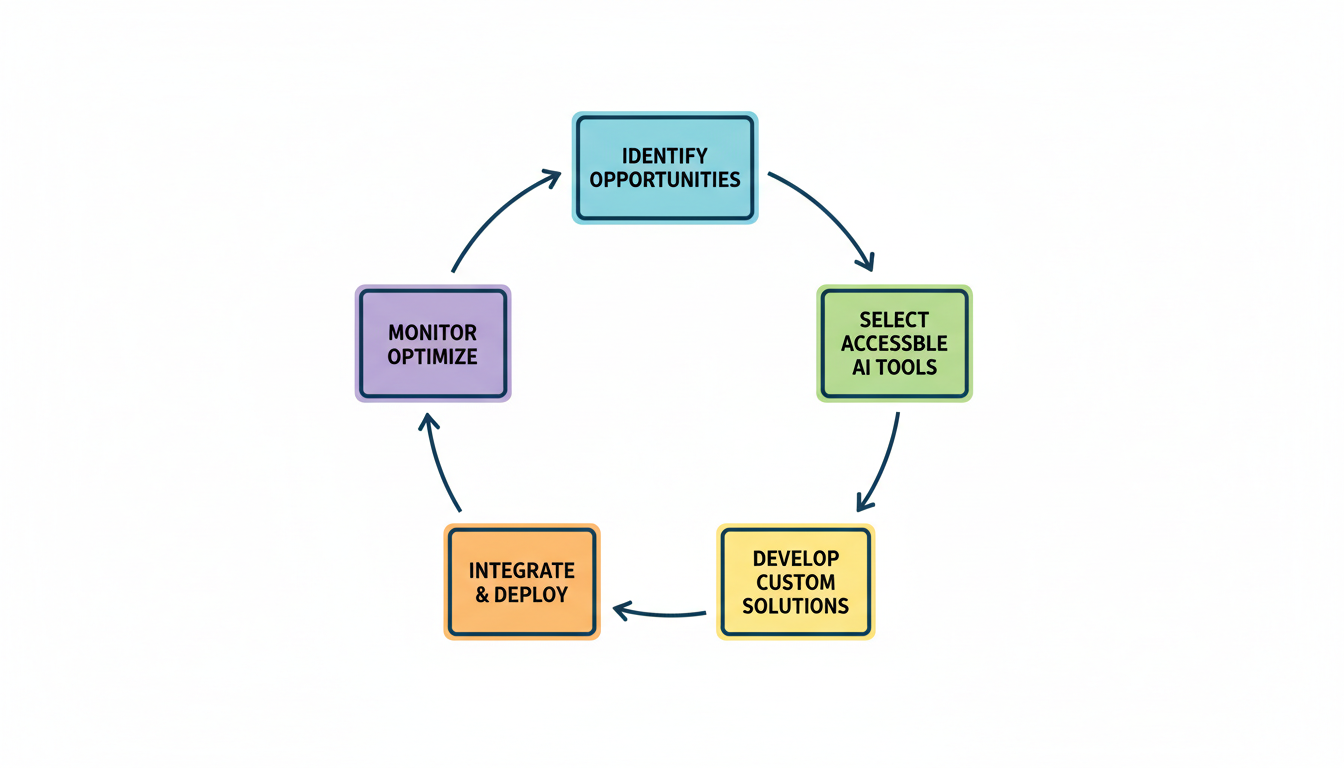
Fostering collaboration between local businesses and these AI-savvy developers is key to unlocking tailored automation. Businesses can articulate their pain points, while developers can translate these into effective AI solutions. A clear, step-by-step approach involves first auditing existing processes to identify tasks ripe for automation, like data entry or invoicing 5. Next, choose between readily available platforms or custom-built solutions, considering factors like budget and data readiness 2.
Finally, implement and test the chosen solutions, ensuring seamless integration and providing necessary training for staff to overcome potential implementation complexities 20. This iterative process allows local businesses to not only streamline operations but also to reinvest saved time and resources into growth, fostering local economic dynamism 6. With the right toolkit and a proactive mindset, local businesses can effectively harness AI to drive tangible economic impact.
Next Steps: Paving Your Path to Automated Prosperity
Having explored the practical applications of AI and automation in the previous section, the path forward for local businesses is clear: intelligent automation is no longer a luxury but a strategic imperative. The rapid surge in AI adoption, with 52% of U.S. SMBs already utilizing some form of AI by early 2024, underscores this shift 1. Small businesses are increasingly bridging the technology gap with larger enterprises, indicating a prime opportunity for sustained growth and innovation within local economies 2. The benefits are tangible, from significant monthly savings to increased revenue and enhanced workforce satisfaction, proving automation's profound impact on the bottom line and operational efficiency 2.
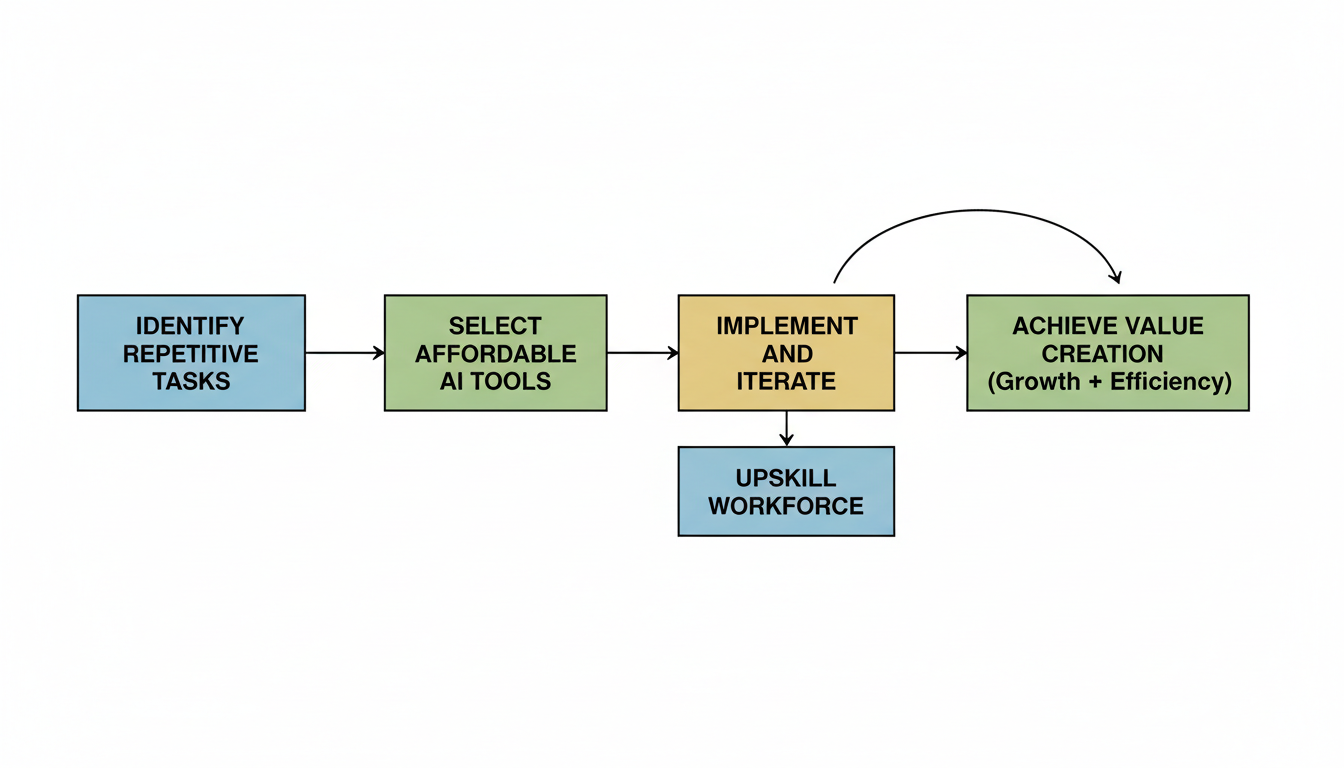
For those ready to harness this transformative power, here are actionable steps to guide your journey:
First, start small and identify repetitive tasks. Instead of aiming for a complete overhaul, pinpoint areas ripe for automation, such as customer email campaigns, social media management, or inventory tracking 10. Many businesses find immediate value in automating mundane administrative functions like invoice processing or appointment scheduling, freeing up valuable human capital for more strategic endeavors 7. This incremental approach builds confidence and allows for iterative learning without overwhelming your existing operations.
Second, invest in continuous learning and skill development. A significant barrier to adoption remains the skills gap, impacting nearly half of business leaders 2. Providing opportunities for your team to learn about new AI tools and automation strategies is crucial. Many modern AI solutions are designed for user-friendliness, making it easier for employees to integrate them into daily workflows and elevate their roles, contributing to higher job satisfaction 1.
Third, prioritize value creation over mere cost savings. While automation undoubtedly reduces operational costs, its true power lies in driving revenue growth, enhancing customer experiences, and fostering innovation 2. Focusing on how automation can help you offer better services, reach new customers, or develop new products will yield far greater long-term returns than simply cutting expenses. For instance, enhanced customer service through AI chatbots can significantly boost satisfaction and response times 8.
Finally, cultivate a culture of adaptability and experimentation. The landscape of AI and automation is constantly evolving. Encourage your team to experiment with new tools and approaches, viewing failures as learning opportunities. This agile mindset ensures your business remains competitive and responsive to new technologies, positioning you to continuously leverage automation for sustained success 14.
Looking ahead, smart automation promises a new era of prosperity for local economies. It empowers small businesses to be more competitive and resilient, fostering an environment where innovation thrives 5. As businesses reinvest savings into growth and human capital shifts to higher-value tasks, automation will not only stimulate local job creation but also retain wealth within communities, building a more vibrant and dynamic local economic fabric for years to come 2.