Navigating Family Business Dynamics: Fair Deals and Emotional Tax
Introduction: The Unseen Cost of Family Ties in Business
Family businesses are the backbone of global economies, yet their inherent structure often presents unique and formidable hurdles, particularly when it comes to succession planning and intergenerational shifts 1. Unlike corporate entities, family enterprises inextricably weave personal relationships, familial expectations, and significant financial stakes into their operational fabric. This intricate entanglement often creates what is known as an "emotional tax," a pervasive and subtle cost that can profoundly influence decision-making, business continuity, and ultimately, economic outcomes. Addressing this complex interplay of personal and professional is crucial for Navigating Family Business Dynamics successfully, ensuring both "fair deals" and sustained growth.
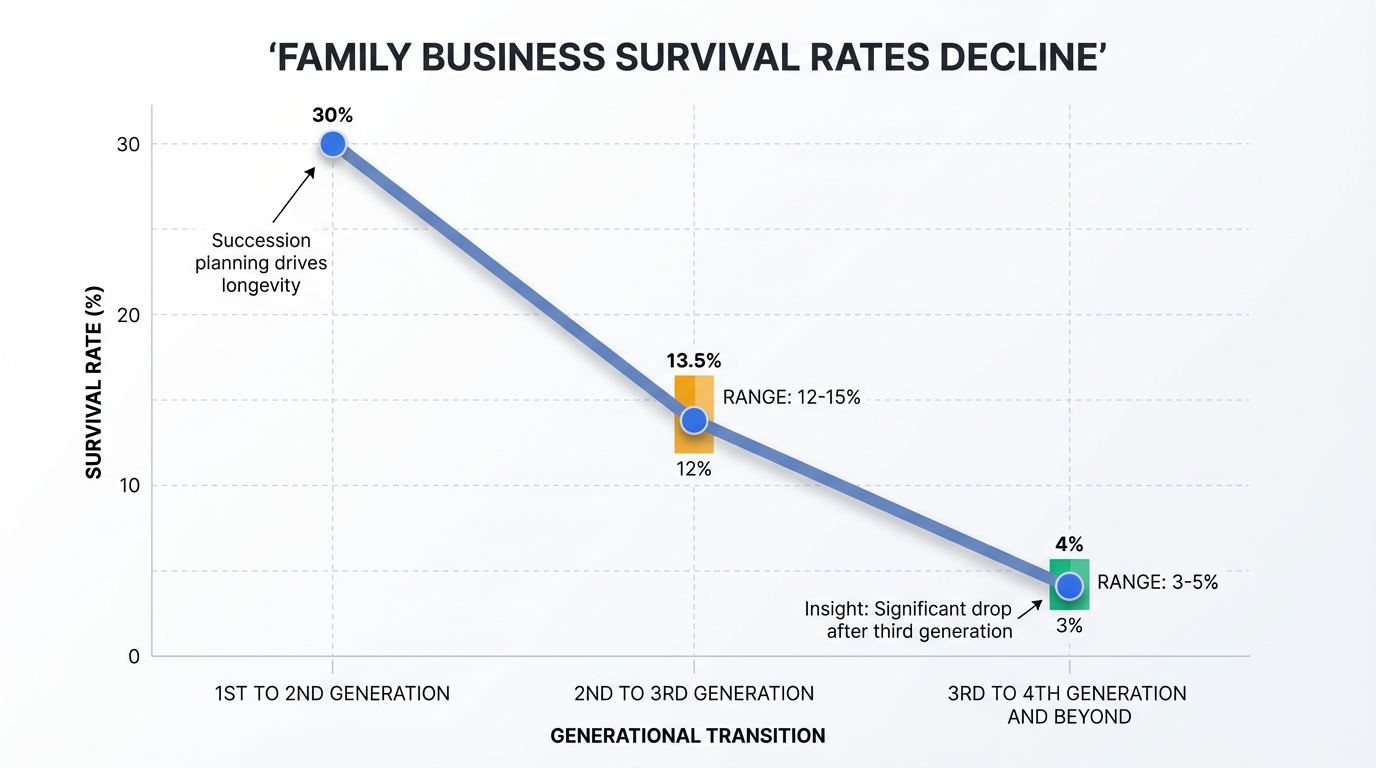
The challenges are starkly evident in recent statistics. A sobering 70% of family businesses fail to transition successfully to the second generation, with numbers plummeting further for subsequent generations 1. A significant factor contributing to this fragility is the widespread absence of formal succession plans; nearly two-thirds of family businesses lack a documented or communicated strategy, leaving their future vulnerable 2. This lack of foresight often breeds uncertainty, with a May 2024 Deloitte survey revealing that only a quarter of current leaders and even fewer next-generation members are confident in a smooth transition after a key family member's departure 3.
Conflict, frequently fueled by these blurred boundaries, is a destructive force within these transitions. "Family dynamics" are cited by 46% of owners as the primary challenge to effective planning 4, transforming crucial decisions into unexpectedly emotionally charged battles 5. The "emotional tax" isn't merely theoretical; it manifests in tangible financial costs. Delays, often driven by emotional attachments, can depress business valuations by 30% or more, while missed opportunities for strategic financial planning can result in millions in additional taxes 6. Conversely, businesses with clear succession plans tend to report significantly higher annual profits, underscoring the direct economic benefit of proactively managing these complex dynamics 7.
Core Strategy: Crafting Fair Deals and Transparent Negotiations
Family businesses, while economic powerhouses, face a unique gauntlet during succession, often entangled by the "emotional tax" of personal and financial stakes. Overcoming the documented high failure rates and conflicts demands not just good intentions, but a robust framework for fair deals and transparent negotiations. This proactive stance is the bedrock of successful intergenerational transitions, moving from an emotionally charged process to a structured, objective approach. It's about preserving both family harmony and business value for the long run.
The intrinsic nature of family businesses introduces complexities that diverge sharply from standard corporate valuations. Emotional attachments often lead to sentimental pricing, distorting true market value and igniting disputes among family members 8. Furthermore, non-market rate compensation for family employees and related-party transactions, such as rental agreements, necessitate careful normalization to reflect the business's actual operating results 11. These intricacies underline why a generic valuation approach simply won't suffice for family enterprises.
Beyond compensation, family businesses frequently hold non-operating assets or carry liabilities to family members that require specific accounting, often by assuming their removal or resolution prior to a sale 11. The reliance on "personal goodwill" tied to key family members also introduces significant risk, demanding an assessment of its transferability to ensure an accurate valuation 11. Given these layers, an objective, third-party assessment becomes paramount for minimizing disputes and ensuring equitable outcomes for all stakeholders 8.
Navigating these unique characteristics necessitates employing established valuation methodologies, albeit with critical adaptations to suit the family business context. These methods provide a structured approach to quantifying value, shifting discussions beyond emotional subjectivity to objective financial reality. Understanding their application is key to negotiating a truly fair deal.
| Methodology | Core Principles and Family Business Adaptations/Considerations |
|---|---|
| Income Approach | Projects future cash flows (DCF) or capitalizes stable earnings (Capitalization of Earnings). Adaptations include adjusting historical financials to reflect future expectations, normalizing non-market family compensation, and related-party transactions to reflect true operating results 13. |
| Asset-Based Approach | Calculates net asset value by subtracting liabilities from assets. Adaptations include properly identifying and adjusting non-operating assets and related-party liabilities; most suitable for holding companies with easily valued assets 11. |
| Market Approach | Compares business value to multiples (e.g., P/E, P/B) derived from comparable public or private transactions. Adaptations include challenges in finding truly comparable private company data and significant consideration of marketability (DLOM) and control (DLOC) factors 13. |
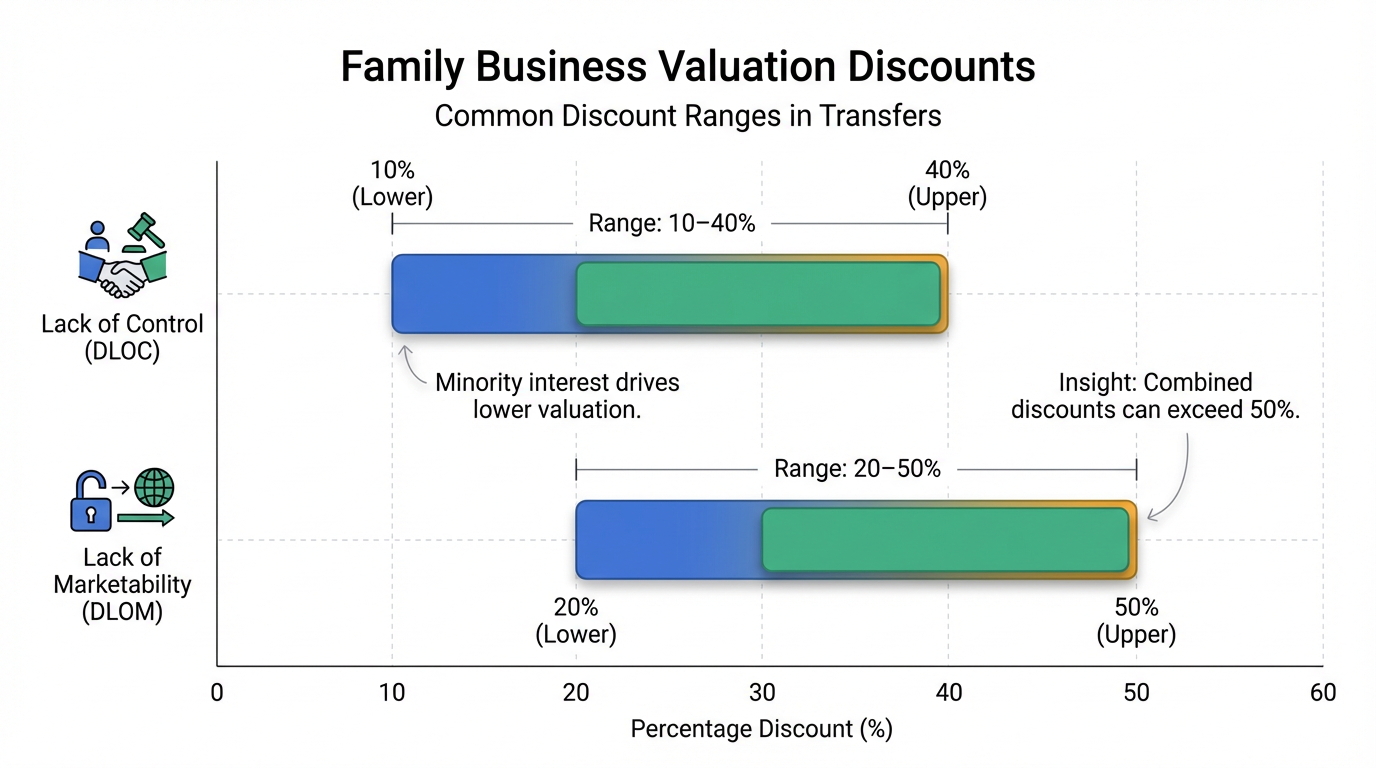
Within these methodologies, specific adaptations like Discounts for Lack of Control (DLOC) and Discounts for Lack of Marketability (DLOM) are frequently applied to accurately reflect ownership interests 9. These discounts, typically ranging from 10-40% for DLOC and 20-50% for DLOM, acknowledge the limited influence and illiquidity of minority, private company shares 18. However, their application, especially for controlling interests, is a contested area with significant IRS scrutiny, underscoring the need for robust documentation 19.
This brings us to the irreplaceable role of independent appraisals. An unbiased assessment is crucial for preventing disputes, particularly when varied contributions like "sweat equity" exist among heirs 8. Beyond fostering fairness, independent valuations ensure IRS compliance, reducing tax liabilities and preventing potential penalties of up to 40% for misstatements 8. This external perspective adds crucial credibility, not just within the family, but also for external stakeholders such as financial institutions 22.
To complement objective valuations, formal negotiation frameworks are essential for preserving family harmony and reaching consensus. Establishing clear communication channels and agreeing on how to determine a price before discussing the price itself can drastically minimize conflict and distrust 9. Engaging neutral third-party advisors, such as mediators or family business consultants, further insulates parties from emotional aspects, fostering discussions that proceed as if with unrelated strangers 10.
The path to a successful intergenerational transition begins years before the actual handover. Experts recommend starting the planning process 3-5 years, or ideally 12-36 months, in advance to align family goals, mitigate tax burdens, and prepare the business for change 8. This extensive lead time allows for the assembly of a professional advisory team, including financial advisors, valuation experts, and legal counsel, ensuring all critical aspects are addressed comprehensively 13.
Crucially, families must openly discuss and define 'fairness,' understanding it might mean equitable distribution based on contributions rather than merely equal shares among heirs 8. Regular family meetings with clear communication channels are vital for discussing business matters and transition plans effectively 21. When conflicts arise, implementing formal resolution methods like facilitated meetings with neutral third parties ensures issues are addressed constructively, adhering to principles of transparency and mutual commitment 10.
Real Example: A Succession Story - The Luse Holdings Case
The journey of Luse Holdings provides a compelling look at the intricate balance between financial strategy and deeply embedded emotional dynamics within a family business. In 2015, Steve Luse, the fourth-generation CEO, found his company at a critical crossroads after losing a significant bid to a non-union competitor for the first time 26. This pivotal moment necessitated a serious re-evaluation of the company's direction in a rapidly evolving industry landscape, forcing Steve to consider strategic shifts that extended far beyond quarterly profits 26.
Steve Luse grappled with several momentous transition options for the long-standing family enterprise. He considered integrating non-union services while continuing current operations, selling a portion of the business to spread risk among family members, or even divesting the entire company to fund other family endeavors 26. Another path, aggressive maximization of growth, also remained on the table 26. Each choice carried significant financial implications, but more importantly, each bore a heavy emotional weight, impacting the family's identity and its enduring legacy as an industry leader and community pillar 26.
The emotional tapestry of Luse Holdings was woven from the expectations of immediate and extended family, dedicated employees, and the broader community 26. A particularly poignant challenge was the absence of an obvious fifth-generation successor, even though several family members, including Steve's MBA-educated daughter Ashley, had gained experience through internships 26. This situation encapsulates the profound tension between ensuring the business's financial viability and preserving the emotional bonds, purpose, and identity that generations had cultivated . The family's sense of history and commitment to its values played a crucial role in shaping the strategic dialogue.
Ultimately, the Luse Holdings case underscored that successful business transitions require more than just sound financial models. Strategic recommendations to an advisory board had to integrate the hard financial realities of market competition and operational efficiency with the softer, yet immensely powerful, considerations of family heritage and deep emotional ties 26. This detailed scenario exemplifies how family values, personal aspirations, and the enduring legacy of a business profoundly influence seemingly objective financial decisions, demanding a holistic and empathetic approach to succession planning.
Build It Yourself: Leveraging AI for Objectivity in Family Business
Navigating the intertwined financial and emotional currents of a family business often feels like walking a tightrope. Objectivity, particularly in matters of valuation, negotiation, and communication, is frequently compromised by personal history and relationships. However, in today's tech landscape, family business owners and successors are no longer at the mercy of purely subjective judgments. The tools are here to build a fairer, more data-driven approach, even if you’re a solo operator within the family enterprise.
Applying AI can usher in unprecedented fairness, starting with business valuations. Instead of haggling over an arbitrary number, imagine feeding years of financial statements, market data, comparable sales, and industry trends into a sophisticated AI model. This isn't just about a spreadsheet; it’s about custom-built or off-the-shelf AI agents that can analyze these complex data sets, identify patterns, project future growth, and provide an unbiased, data-backed valuation range. This moves the conversation from "what I feel it's worth" to "what the data objectively suggests it's worth."
The quagmire of legal agreements and family charters also benefits immensely from AI, specifically in contract analysis to minimize disputes. Disputes often stem from ambiguities or forgotten clauses. AI-powered contract analysis tools can meticulously review complex legal documents, highlighting potential risks, inconsistencies, or areas that require clarification before signatures are even dry. For example, a custom script built with an AI code assistant could parse through decades-old agreements, identifying outdated provisions or clauses that could disproportionately benefit one party over another, ensuring transparency and reducing future conflict.
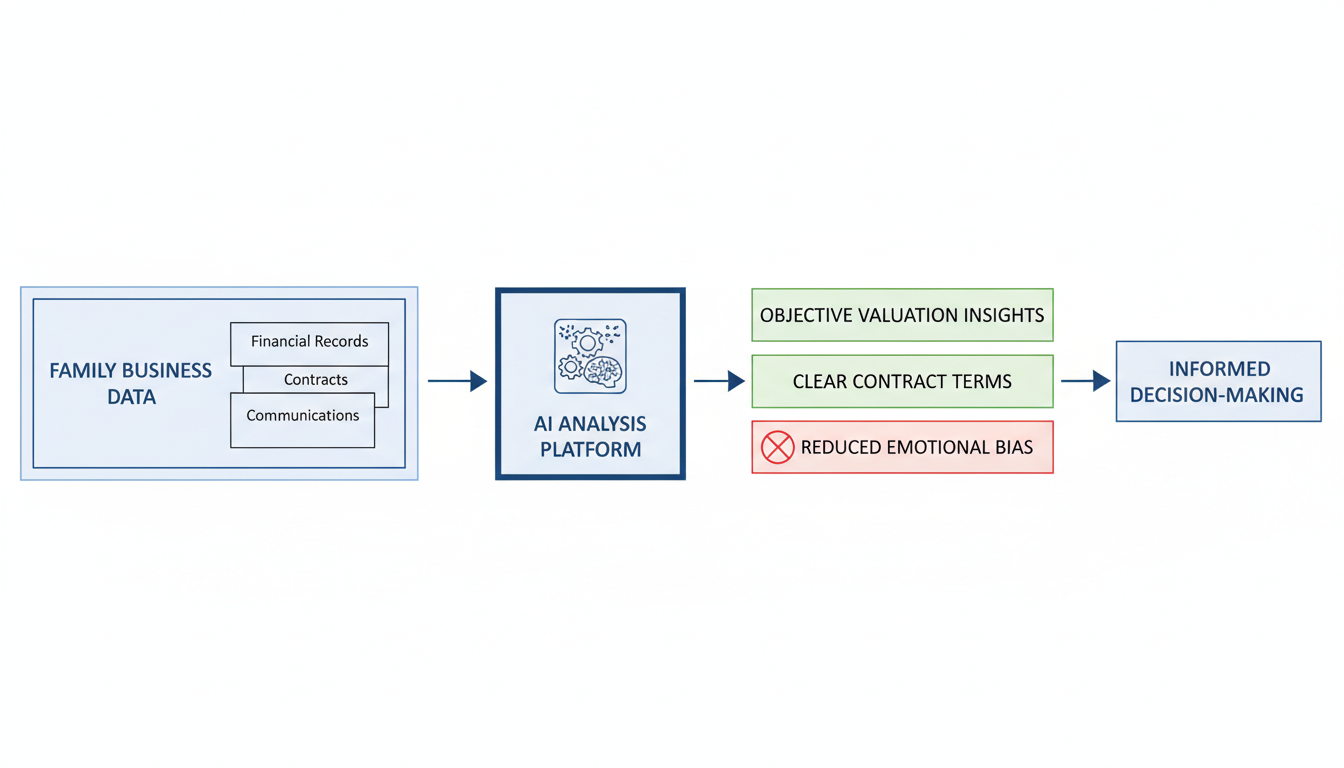
Perhaps one of the most insidious "emotional taxes" in family businesses is miscommunication. AI offers a revolutionary solution through objective communication analysis. Imagine an AI tool, perhaps a fine-tuned large language model, that can analyze written communications – emails, internal memos, even recorded meeting transcripts. This AI can identify sentiment, flag potentially aggressive or passive-aggressive language, and even highlight areas where misunderstanding is likely. It acts as a neutral third-party interpreter, helping family members understand not just what is said, but also how it might be perceived, thereby mitigating emotional biases with AI tools. Such tools provide actionable insights, encouraging clearer, less emotionally charged interactions. The aim isn't to replace human judgment, but to augment it with data-driven insights, creating a robust, fair, and sustainable future for the family business.
Next Steps: Building a Legacy, Not a Liability
While cutting-edge AI tools can streamline operations and forecast market trends, the heart of any family business lies not in its algorithms, but in its relationships. Navigating the intricate dynamics of generational transition and ownership transfer demands a human touch, requiring thoughtful planning to achieve fair deals and mitigate the costly "emotional tax" that can erode wealth and harmony. This final section provides a clear roadmap for family owners and successors, focusing on actionable steps to build a lasting legacy rather than an avoidable liability.
The most crucial step in securing a prosperous future for your family business is to begin planning early, ideally 3-5 years, or at minimum 12-36 months, before a significant transition 8. This foresight allows ample time to align family goals, mitigate potential tax liabilities, and comprehensively prepare the business for its next chapter 8. Delaying these discussions often exacerbates emotional challenges and restricts options, turning what could be a smooth handover into a contentious struggle 6.
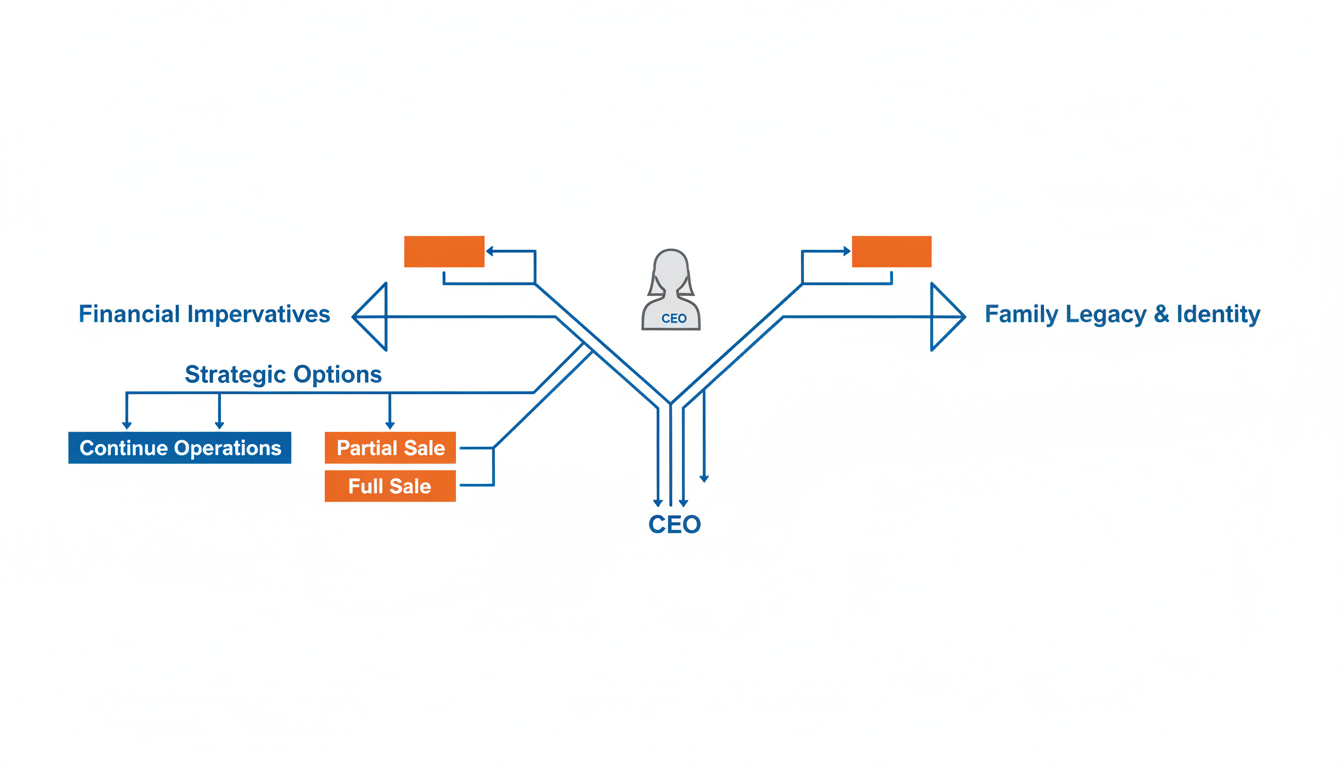
At the core of successful transitions are open, structured communication channels. Regular family meetings dedicated to business matters and succession plans can proactively address concerns and build consensus 21. Simultaneously, establishing robust governance structures, such as a formal board of directors—ideally including independent non-family members—provides objective oversight and clear decision-making protocols 21. These formal frameworks, much like a "family constitution," can prevent confusion and potential conflict by clearly defining roles, responsibilities, and decision-making processes. The "emotional tax" often arises from the blurring lines between family and business. It is vital to separate these, not by ignoring emotion, but by channeling it constructively. Consider this illustration of the complex interplay at hand:
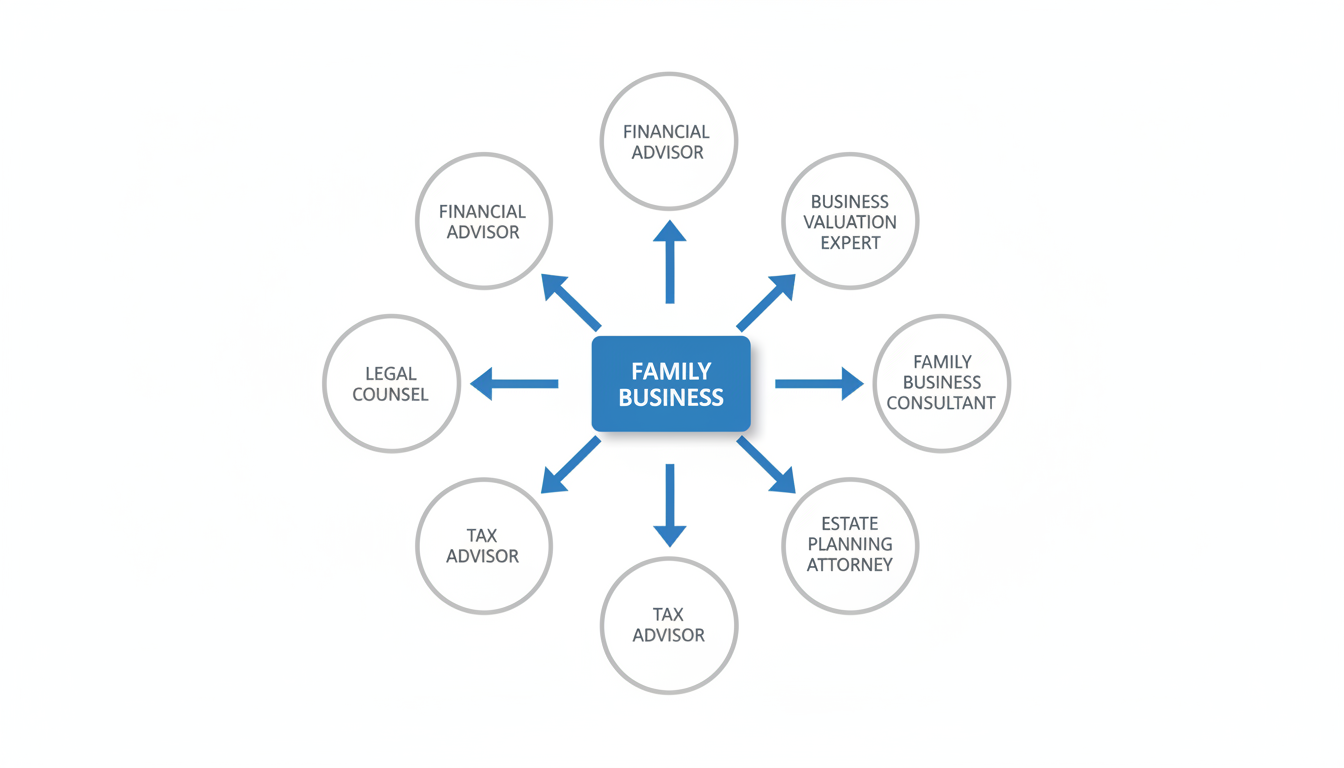
This visual reminds us that decisions must balance personal aspirations with the business's best interests.
No family should navigate these complex waters alone. Assembling a professional advisory team is not an expense, but an investment 13. This team should include a financial advisor, a business valuation expert, a family business consultant, an estate planning attorney, and a tax advisor, all working in concert to provide unbiased guidance and specialized expertise 13. Should disagreements arise, formal conflict resolution methods, such as facilitated family meetings with neutral third-party mediators, are invaluable for preserving harmony and ensuring resolutions are fair and mutually acceptable 10.
Ultimately, building a lasting legacy for your family business requires a proactive, structured approach that balances emotional intelligence with financial acumen.
- Start Early: Begin succession planning years in advance to maximize options and minimize stress 8.
- Communicate Openly: Foster an environment of transparent dialogue and clear expectations 21.
- Formalize Governance: Implement structures like buy-sell agreements and family constitutions to provide clarity and stability 8.
- Seek Expert Guidance: Leverage a professional advisory team for objective valuation, legal, and financial counsel 13.
- Define Fairness: Work towards equitable outcomes that consider individual contributions and family values, not just equal distribution 8.
By embracing these principles, family businesses can successfully navigate the delicate dance between personal ties and financial interests, ensuring a robust future for generations to come while minimizing the costly emotional tax.