
On this page
Agentic coding tools are AI agents that plan, write, and verify code toward a goal you describe, and choosing among them comes down to how much autonomy each one takes and how its work is reviewed. Handing real coding work to such an agent sounds efficient until the first unreviewed change lands in a shared repository. The options below differ mainly in permissions, codebase context, and verification loops. This article compares seven of them and what each one handles best.
Compare 7 agentic coding tools by control, not hype
This roundup of agentic coding tools for autonomous coding compares what each tool may touch, how it proves its work, and where a human stays in the loop. Read the control column first, because it predicts how much review effort each option creates. The table below groups all seven by interface, control, and best-fit work.
| Tool | Interface and context | Control and verification | Best for |
|---|---|---|---|
| Atoms | Browser product builder | Preview and review before publish | Web product prototypes |
| Codex | Delegated task handling | Proposals reviewed before merge | Bounded delegated tasks |
| Claude Code | Terminal-centered agent | Supervised, approval-based steps | Multi-step repository work |
| Cursor | AI-assisted code editor | Reviewable agent diffs | In-editor agent coding |
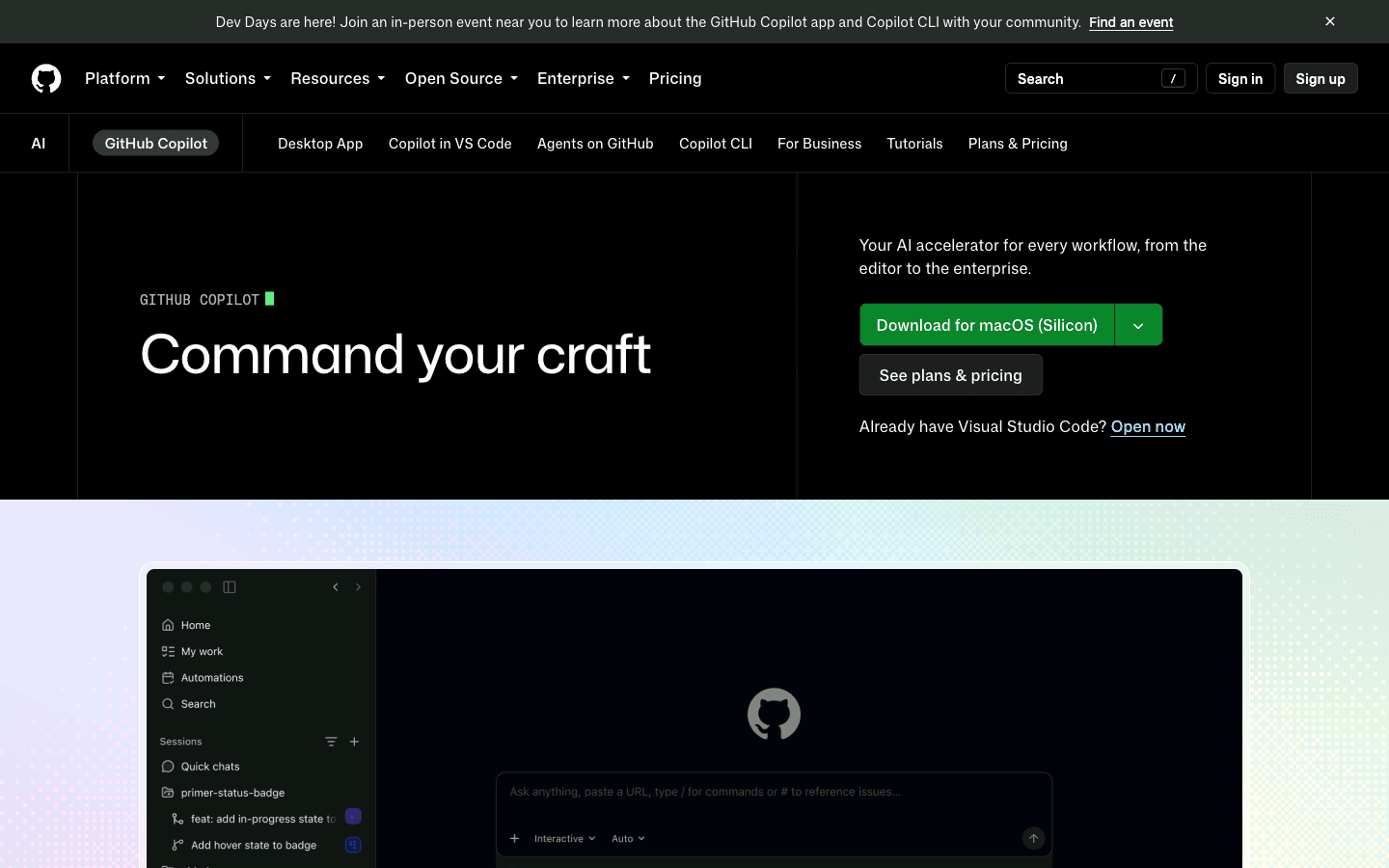
| GitHub Copilot | Editors plus GitHub | Pull request review | Teams on GitHub |
| Windsurf | Agentic coding tool | Human review loop | Goal-level delegation |
| OpenCode | Open terminal agent | Inspectable, scriptable runs | Open tooling setups |
7 agentic coding tools worth a closer look
This roundup of agentic coding tools for next level coding uses one template for every entry: a short overview, main features, and the teams or scenarios it suits. Product pages change fast, so the descriptions focus on documented workflows rather than version numbers or prices, which you should confirm with each vendor before adopting.
Atoms
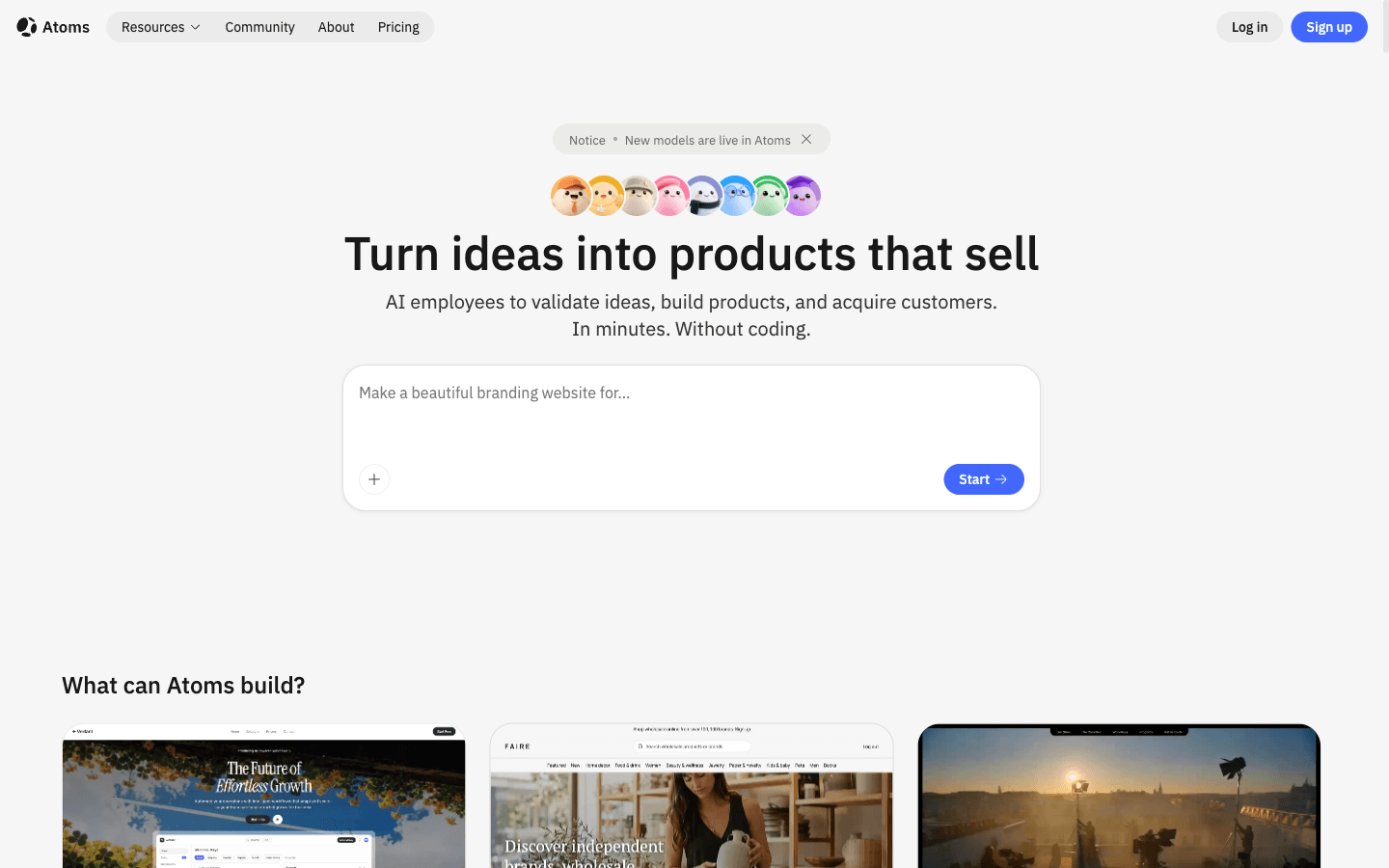
Atoms is an AI product-building platform that turns natural-language requirements into editable websites and web applications. It is not a repository coding agent: instead of taking issues in a git workflow, it owns the path from a product brief to a working web experience you can preview, refine through conversation, and prepare for launch. That makes it a different kind of agentic tool, aimed at the product layer rather than the commit layer. As with every tool here, its output needs human review before it ships: production settings, integrations, payments, accessibility, security, and performance all stay with your team.
Main features:
- Natural-language product briefs: Describe the audience, pages, and interactions in plain language, and Atoms coordinates AI agents to build a working product for your review.
- Editable previews and iteration: Review a live preview and request specific changes conversationally, so the result stays inspectable instead of arriving as an unreviewable code drop.
- Generated media in place: Create images and videos and place them directly into the site, keeping asset creation inside the same product workflow.
- Launch preparation with review: Backend and deployment support is available, while payments, accessibility, security, integrations, and performance remain with your team before publishing.
Suitable for:
- Founders and marketers who need a web product prototype before engineering starts
- Teams validating landing pages, internal tools, or campaign experiences
- Builders who want an editable product rather than raw code output
- Groups comparing product concepts before committing repository work
Codex
Codex is OpenAI's entry in this category, positioned for delegated work rather than line-level completion. You hand it a bounded task, such as a bug fix or a small feature, and it works through the same plan-edit-verify loop as every tool here before presenting an outcome for review. It suits teams that prefer judging finished proposals over supervising each intermediate step.
Main features:
- Task-level delegation: Assign a bounded goal and review the finished outcome as a unit, instead of steering every edit the agent makes.
- Plan, act, verify loop: It plans the change, applies edits, runs checks, and iterates on failures before presenting the result, so you review evidence rather than promises.
- Reviewable proposals: Work comes back as proposals you accept or reject, keeping unreviewed changes out of your codebase until you decide.
- Interactive or hands-off styles: Use it alongside your own editing for interactive work, or hand off bounded tasks and review them later.
Suitable for:
- Developers delegating well-scoped fixes and small features
- Teams that review work as proposals rather than live edits
- Maintainers clearing queues of bounded issues
- Teams mixing interactive sessions with delegated tasks
Claude Code
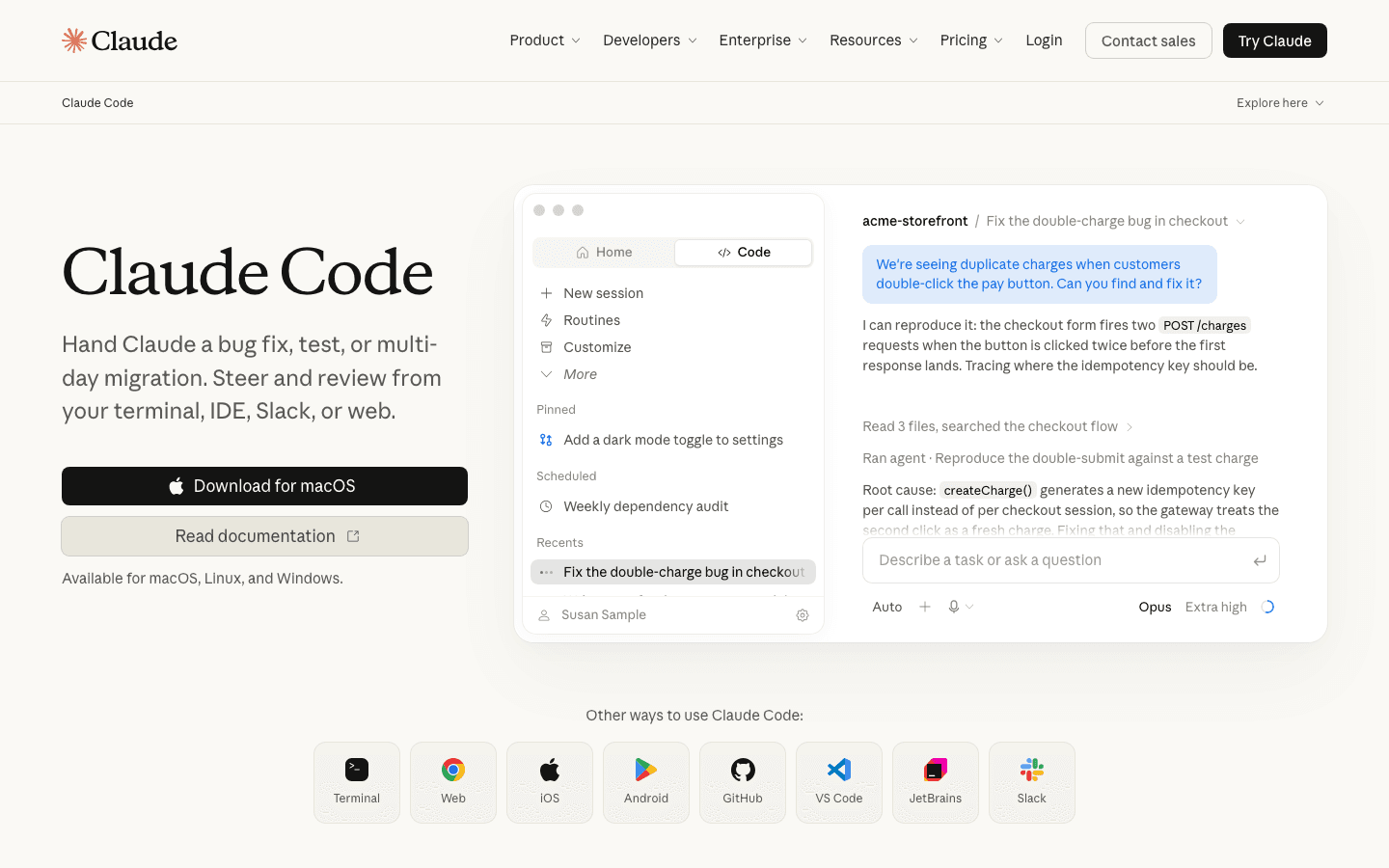
Claude Code is Anthropic's entry in the category, positioned for developers who work in the terminal. You give it a goal in natural language, and it works through the plan-edit-test loop on your codebase while you steer and supervise. It fits multi-step work where you want the agent inside your existing git and scripting habits rather than a separate interface.
Main features:
- Terminal-centered workflow: The agent runs where your scripts and git history live, which keeps it easy to combine with existing command-line habits.
- Goal-directed multi-step work: Give it an outcome, and it plans the steps, edits across files, and checks its own results as it goes.
- Supervised actions: You stay in the approval loop for consequential steps, deciding how much the agent may do before pausing for your review.
- Iterative debugging: It investigates errors, proposes fixes, and verifies them by rerunning the relevant checks instead of reporting unverified success.
Suitable for:
- Engineers handling multi-file changes on established codebases
- Teams that want to supervise agent actions closely
- Developers who prefer terminal and git-centric workflows
- Projects that mix interactive steering with longer delegated runs
Cursor
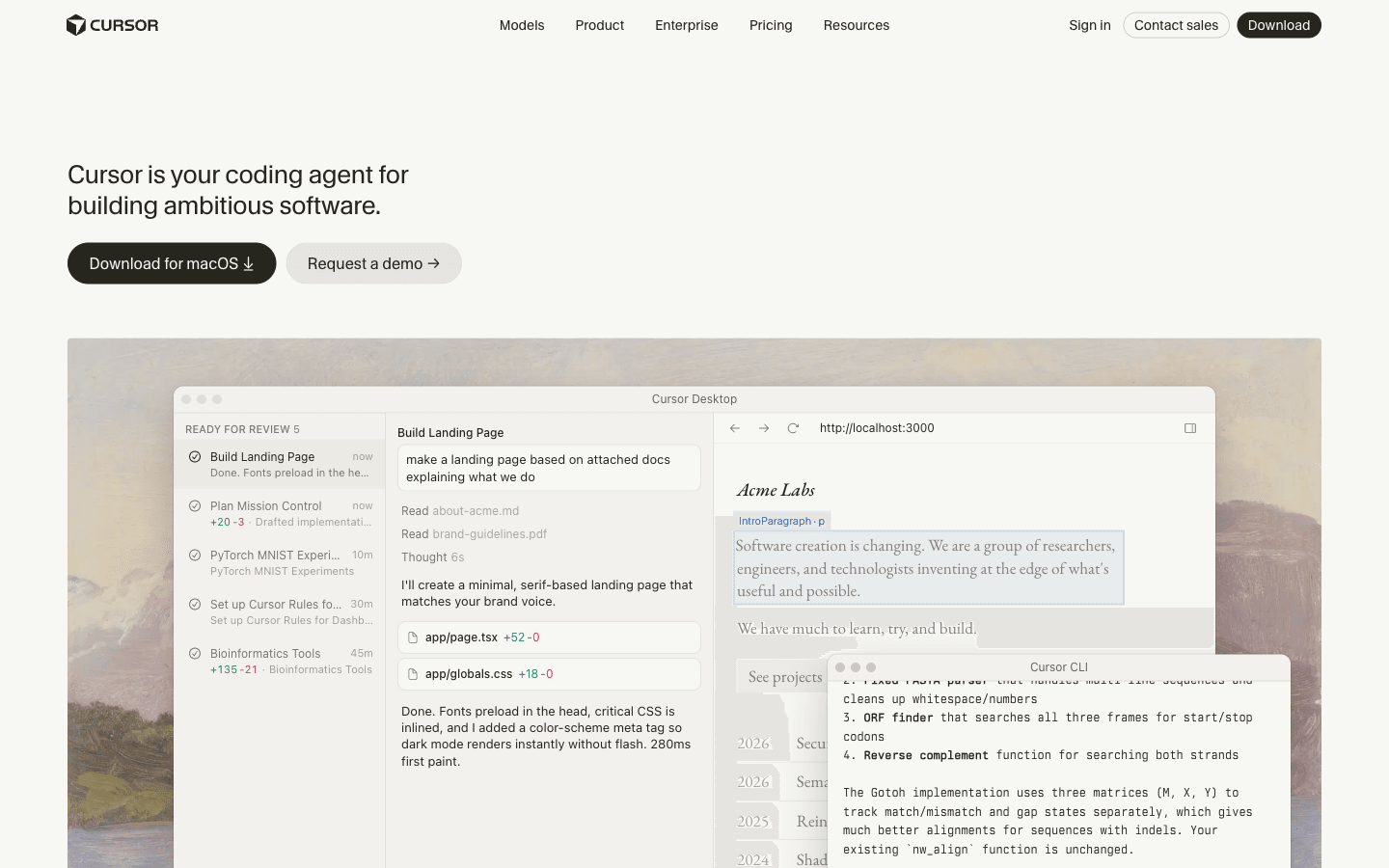
Cursor is a code editor built around AI assistance, positioned for developers who want the agent inside their daily editing loop. You describe a change in the same window where you edit, and the agent works through the multi-step loop while you watch, adjust, and approve. It suits interactive work rather than a separate queue of delegated tasks.
Main features:
- Agent work in the editor: Describe a change and the agent plans and edits across files, keeping you in the loop with visible, reviewable diffs.
- Whole-project awareness: The agent considers the wider project when making changes, which helps keep related files consistent with each other.
- Planning before changes: For complex tasks it can produce a structured plan first, so you review the intended approach before the agent edits anything.
- Inline and agent workflows: Completion, chat, and agent tasks share one surface, so you can escalate from a quick fix to a delegated change.
Suitable for:
- Developers who want agentic coding inside a full editor
- Teams making frequent interactive, multi-file changes
- Engineers who review diffs as the agent works
- Organizations standardizing on one AI-first development environment
GitHub Copilot
GitHub Copilot is the entry for teams standardized on GitHub. It spans inline completion and agent-style task handling, so the same tool covers quick suggestions at the cursor and delegated multi-step work. For teams already living in GitHub, the draw is that delegation and review stay inside the pull-request workflow they already use.
Main features:
- Completion to delegation: One tool covers line-level suggestions and task-level agent work, so a team can adopt agentic workflows gradually.
- Review in the usual place: Delegated work returns through the pull-request review process the team already runs, keeping human approval where it normally sits.
- Editor integration: Agent features live inside the editors developers already use, rather than requiring a separate environment.
- Team-oriented rollout: Familiar workflows and shared tooling make it easier to standardize agentic coding across an organization.
Suitable for:
- Teams standardized on GitHub repositories and pull requests
- Organizations that want delegation inside existing review processes
- Developers who want completion and agent modes in one tool
- Maintainers delegating bounded issues for later review
Windsurf
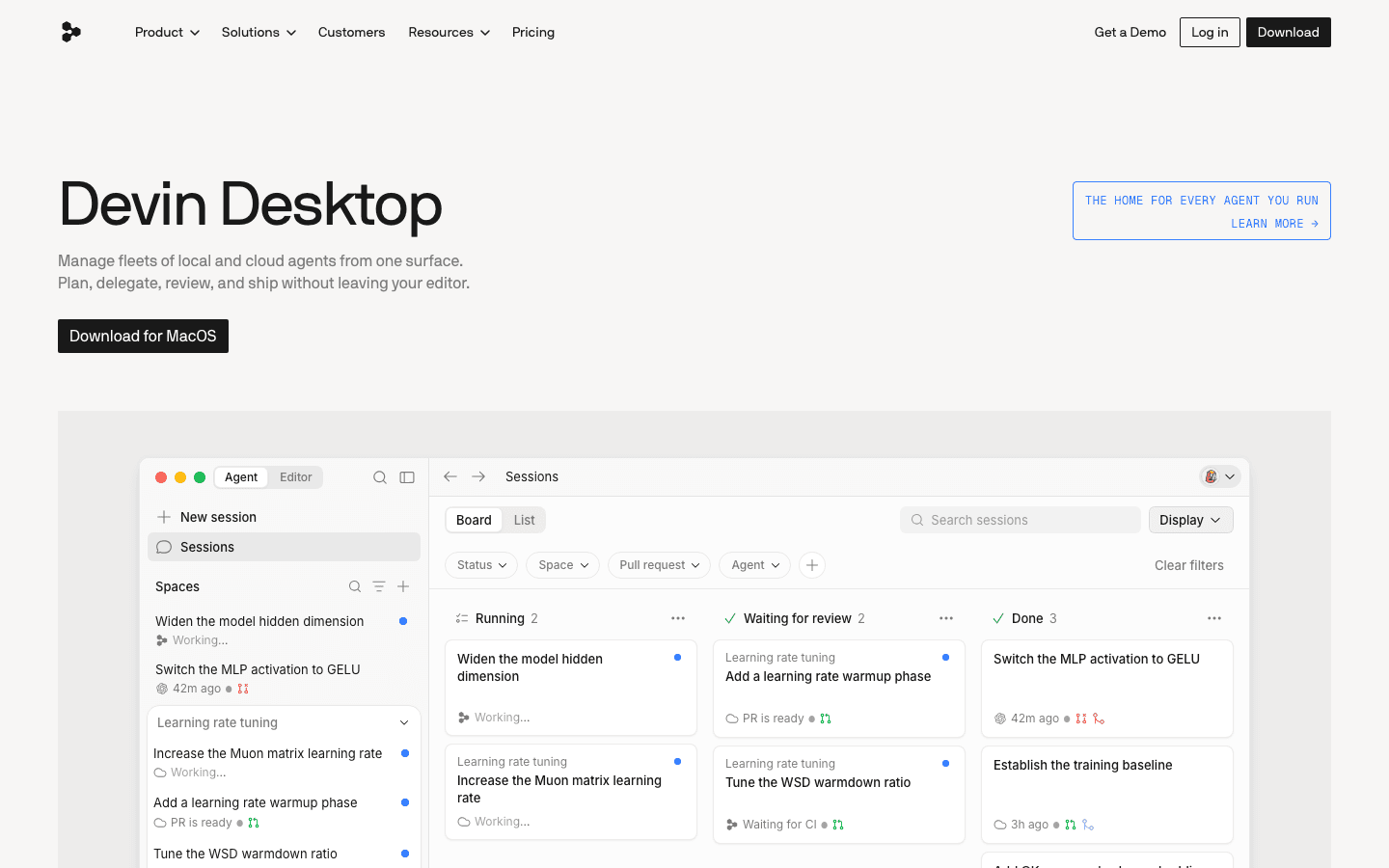
Windsurf closes out the list as another agentic coding tool in the sense defined above: it accepts a goal in natural language, plans the work, changes code, runs commands and tests, and iterates on the results. The practical question with it, as with every entry here, is how much it does before pausing and how its output is reviewed.
Main features:
- Goal-based planning: It decomposes a described goal into steps instead of completing a single line you already started, which is what makes it agentic rather than an assistant.
- Real code changes: It edits files across a project rather than emitting suggestions into one document.
- Command and test execution: It runs commands and tests and reads what comes back, so its claims of success are checkable.
- Feedback-driven iteration: When a check fails, it uses that output to correct itself, bounded by the limits you set.
Suitable for:
- Teams comparing agentic tools on autonomy and control
- Developers who want goal-level delegation
- Groups that review agent output before merging
- Organizations standardizing review-first AI workflows
OpenCode
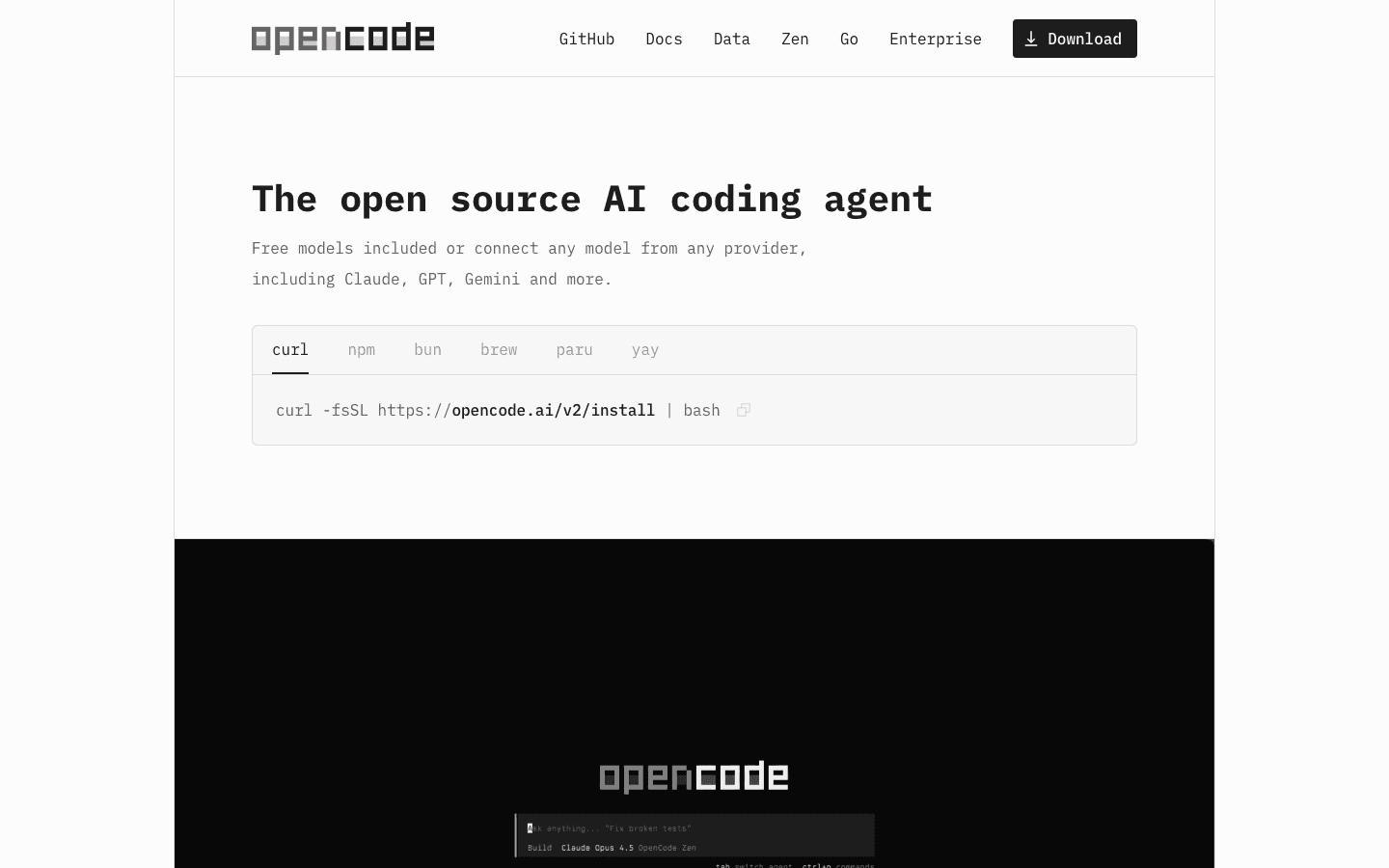
OpenCode is the open, community-developed entry in this list, built for developers who want to inspect and script their coding agent rather than adopt a closed product. You give it tasks in natural language, and it works through the plan-edit-test loop in the terminal while you supervise. Its openness is the distinguishing factor: teams can audit what the agent does and wire it into their own workflows.
Main features:
- Open, inspectable harness: The agent's code is public, so teams can audit its behavior instead of trusting a closed black box.
- Terminal-native workflow: It runs where your code, tests, and git history already live, fitting existing command-line habits.
- Scriptable runs: The agent can be wired into your own scripts and automation, covering both interactive sessions and scheduled tasks.
- Vendor independence: An open tool layer helps you avoid locking the team's coding workflow to a single vendor's roadmap.
Suitable for:
- Developers who want an inspectable coding agent
- Teams with constraints on tooling or vendors
- Engineers who script agents into custom workflows
- Groups that prefer open, community-driven tools
What tasks do agentic coding tools perform well?
Across all seven entries, the reliable wins come from bounded work with a clear acceptance check. Agents do best when you can state what done looks like, such as a failing test that should pass or a module that should migrate cleanly, and worst when the goal is vague.
- Bounded implementation: Small features, fixes, and chores with a spec or failing test attached let the agent plan, edit, and verify against a target you defined.
- Test generation and repair: Writing unit and integration tests, running suites, and iterating on failures is mechanical enough for agents and tedious enough to delegate.
- Refactors and migrations: Renaming APIs, updating patterns, and moving modules across files suits agents because the success check is objective: the suite still passes.
- Investigation and documentation: Tracing a bug through a codebase, summarizing unfamiliar modules, and drafting docs are low-risk tasks with directly useful output.
High-risk work needs tighter control. Changes to dependencies, lockfiles, CI pipelines, and infrastructure deserve extra scrutiny, because an agent that can run commands can also run the wrong ones. Broad, open-ended goals drift, and a clear acceptance criterion is the single biggest lever on output quality. Treat the pull request as a checkpoint, not a formality.
How Atoms helps teams prototype a product before repository work
Atoms plays a different role from every other entry here: it covers the stage before repository work begins. A founder or team describes the audience, pages, and interactions in plain language, and coordinated agents produce a working website or web application that can be previewed, edited, and reviewed in one place. The output is evidence for product decisions, such as what to build and how it should behave, rather than commits in a repo. Generated work still needs human review of integrations, payments, accessibility, and security before launch.
- Multi-agent product workflow: Specialized agents coordinate across planning, building, research, and growth stages, so a brief moves toward a usable product without assembling separate tools. For a team comparing product directions, that compresses the cost of testing each one.
- Steering by outcome: Change requests happen in natural language, and every iteration remains editable and inspectable. This is the prototyping counterpart to reviewing a coding agent's diff: you direct the result instead of editing files.
- Rich experiences beyond standard pages: The same workflow supports 3D scenes and game-like prototypes, and it can provide application infrastructure such as persistent data and authentication when a product needs more than a frontend. Production settings, integrations, and security still require human review before launch.
- Growth after launch: Dedicated SEO and advertising agents can support search strategy, optimization, and campaign planning from the same platform, so a validated prototype has a path to traffic without switching tools.
These cases show the same trade-off this article keeps returning to: an agent produces a complete software artifact on its own, and a human reviews it before it goes live.
Terminal 3D Game Engine A retro, terminal-style 3D dungeon exploration demo that renders classic ray-cast scenes in ASCII characters in real time, generated from a natural-language brief.
tuftcraft A Minecraft-style 3D game demo delivered as a static HTML experience, showing the game-creation side of the platform.
Pet Wearable Camera Store A complete e-commerce web application for a pet camera brand, generated from a plain-language brief and refined in preview.
Conclusion
Agentic coding tools have shifted AI from completing lines to completing tasks, and the review burden shifts with them. The right choice depends on your interface, the permissions you can safely grant, and the verification loop you trust. Shortlist two entries, hand both the same bounded issue, and compare the diffs that come back. To prototype the product experience before repository work begins, build your first page in Atoms.
A little more clarity
Frequently asked questions
01Q1: What makes a coding tool agentic?
Questions about agentic coding tools and how do they work usually reduce to one loop. An agentic tool plans toward a goal instead of completing a line, acts with real tools such as file editing and shell commands, and reads the results of its own actions to correct itself. Missing any of those three properties makes it an assistant, not an agent.
02Q2: Can agentic coding tools run tests?
Most can. Running test suites, reading failures, and iterating until the suite passes is a core part of the agent loop and the main source of verifiable evidence these tools produce. Check where tests execute, whether a local shell or an isolated environment, and how results are reported before you trust a green checkmark.
03Q3: Do agentic coding tools replace code review?
No. An agent whose tests pass can still ship the wrong design or a subtle security issue, so the pull request remains a checkpoint rather than a formality. Changes to dependencies, CI configuration, and infrastructure deserve the strictest review, because agent-authored edits there carry the largest blast radius.
04Q4: How should teams control agent permissions?
Start with the smallest autonomy that can still verify its work. Run agents in a sandbox or isolated environment, scope which paths and commands they may touch, and keep destructive actions and merges behind human approval. Raise autonomy only where the tool has earned trust on your codebase with measurable, reviewed results.
Share this article
 Posts
Posts 