On this page
Today, we’re announcing that Atoms has completed its Series A and Series A+ financing rounds, raising a total of $31 million.
-
Series A was led by Ant Group
-
Series A+ was led by Cathay Innovation
-
Participating investors include MindWorks Capital, Jinqiu Capital, and Baidu Ventures
We will use this funding to do three things we can be held accountable for: push multi-agent R&D forward, scale the product responsibly, and expand globally.
This announcement is not about celebrating a number. It’s about stating, clearly, what we are building and why.
What we’re building: software that completes the business loop
Most “AI coding” tools optimize a narrow slice of work: generate a component, refactor a function, scaffold a project. That helps developers move faster. It does not solve the harder problem most founders face: turning a written idea into a product that ships, works, and continues to run.
Atoms is designed as an AI team that can execute across the full lifecycle:
-
research and framing
-
product specification and scoping
-
system design
-
implementation and testing
-
deployment
-
iteration after launch
The point is not to produce artifacts that look finished in a preview window. The point is to produce something that can survive contact with real users: a product people can understand, use, and pay for, and then refine as requirements change.
Why multi-agent systems
A single model can be impressive in isolation. Real product execution is not a single task. It’s a sequence of linked decisions with different failure modes.
Research fails when it’s shallow or untraceable. Planning fails when it’s vague or over-scoped. Engineering fails when integration breaks. Growth fails when it’s generic and unmeasured.
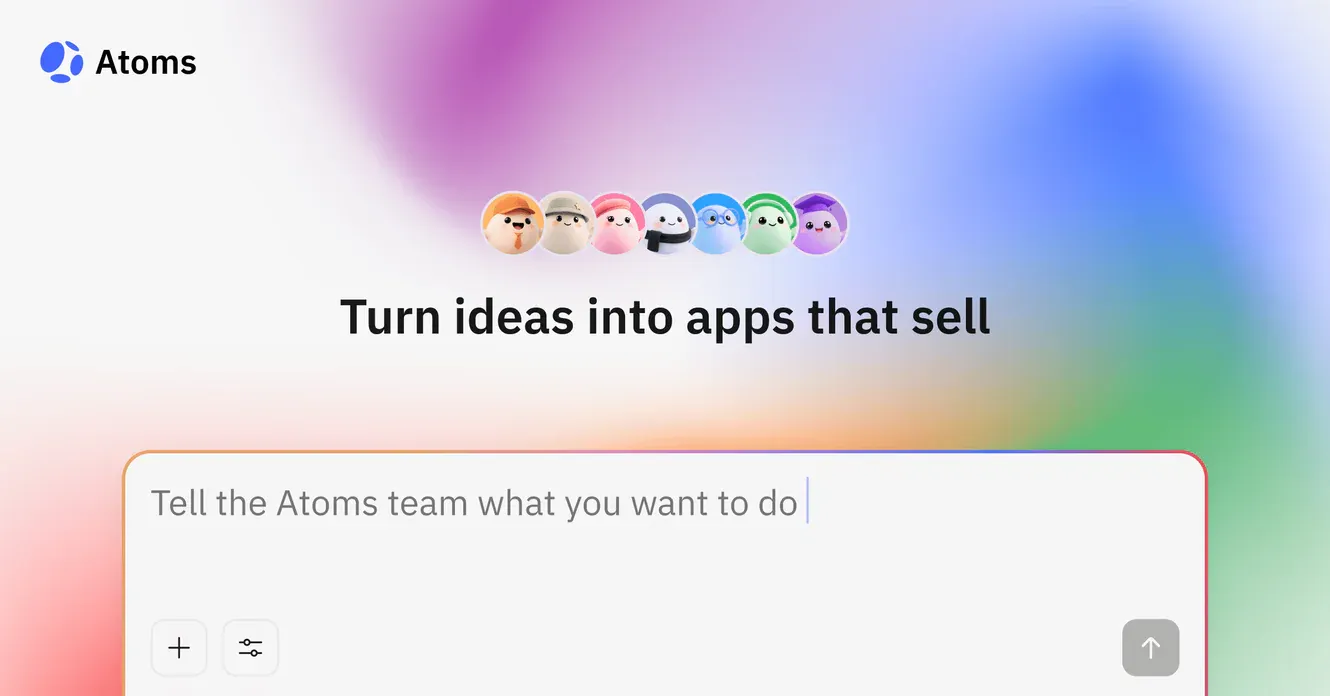
Multi-agent systems give us a structure to address this: specialization, cross-checking, and coordination. But the biggest challenge is not “can agents do it once?” The challenge is: can they operate reliably over long periods in real business environments?
Chenglin Wu, Founder and CEO of Atoms, put it plainly:
“Open-source projects and academic research allowed us to validate that multi-agent systems can handle complex tasks. The real challenge is making these systems operate reliably over long periods in real commercial environments. With atoms.dev, we’re turning entrepreneurship itself into an engineering problem—something that can be systematized and scaled—so that even a single individual can effectively command a complete, operational startup team.”
That is the bar we’re setting for ourselves.
What the funding will be used for
We are allocating this round toward outcomes that compound over time, not short-lived demos.
1. Multi-agent R&D that improves long-horizon execution
“Long-horizon” is where systems break: drifting requirements, partial failures, inconsistent decisions, brittle architecture, and unclear ownership of the next step.
We’re investing in better orchestration, better evaluation, and better recovery paths—so a project doesn’t collapse when it hits the messy middle.
2. Scaling commercialization without lowering standards
Scaling a product is not just adding users. It’s supporting variance: different industries, different levels of technical comfort, different expectations of what “done” means.
We’re expanding templates, improving onboarding, strengthening guardrails, and building workflows that produce repeatable outcomes.
3. Global expansion
Atoms is built for builders everywhere. Expanding globally means improving language coverage, distribution, and support across regions—while keeping the product experience consistent and dependable.
The product foundation behind Atoms
If you want to understand Atoms through features, three components explain most of the system.
First, the research layer. Atoms includes a deep research workflow so founders can start with evidence, not vibes. If you want the full breakdown, read our post on the deep research agent.
Second, the parallel exploration layer. When a decision matters, one output is rarely enough. Race Mode runs the same request across multiple models in parallel so you can compare and choose the result you want to keep.
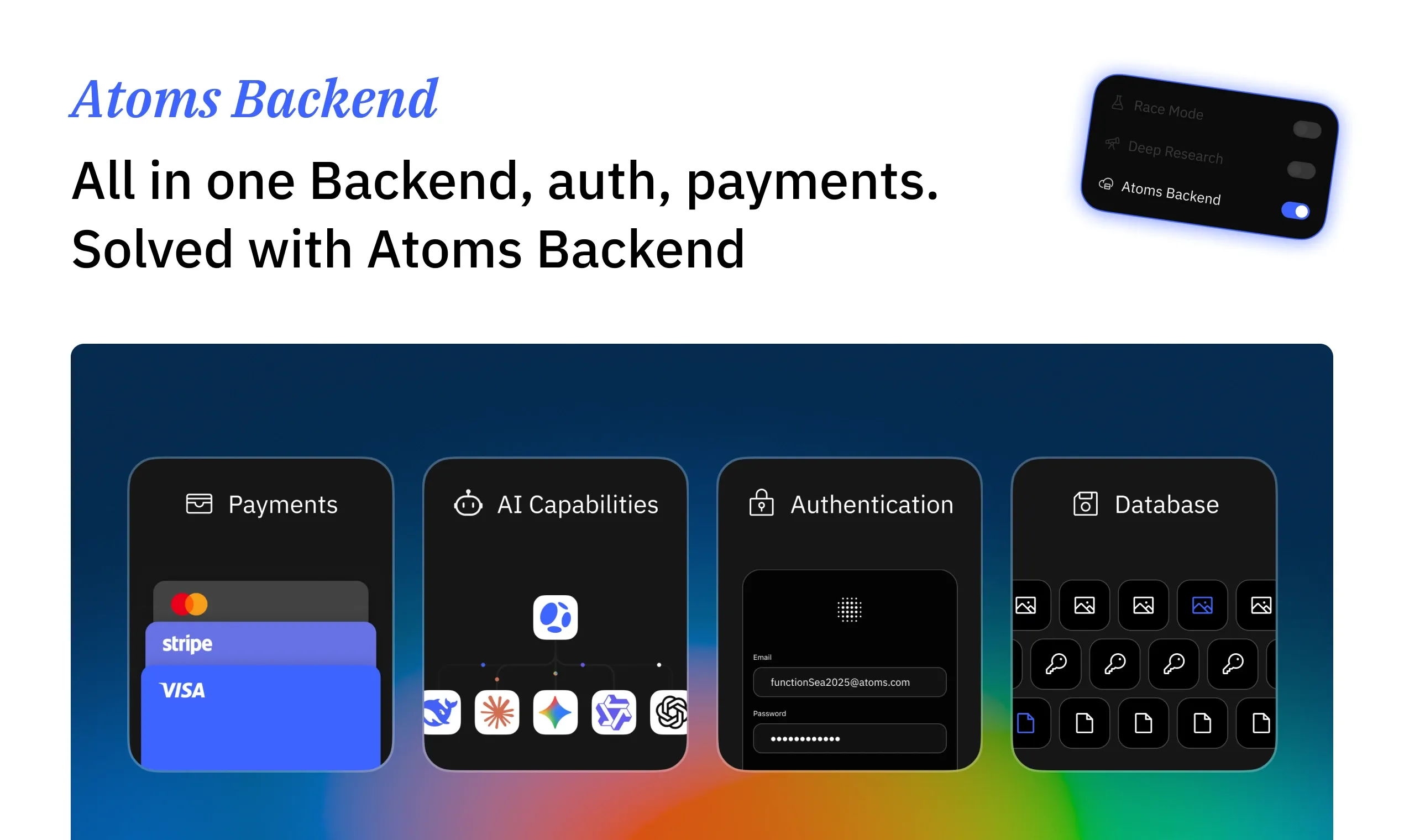
Third, the production layer. A real product needs more than a UI. It needs authentication, data storage, integrations, and deployment that can support iteration. That’s what the Atoms backend is designed to provide.
These are not side features. They exist because “an app that compiles” and “a business that runs” are not the same thing.
Credibility: open source adoption and published research
We did not start this journey from a blank page.
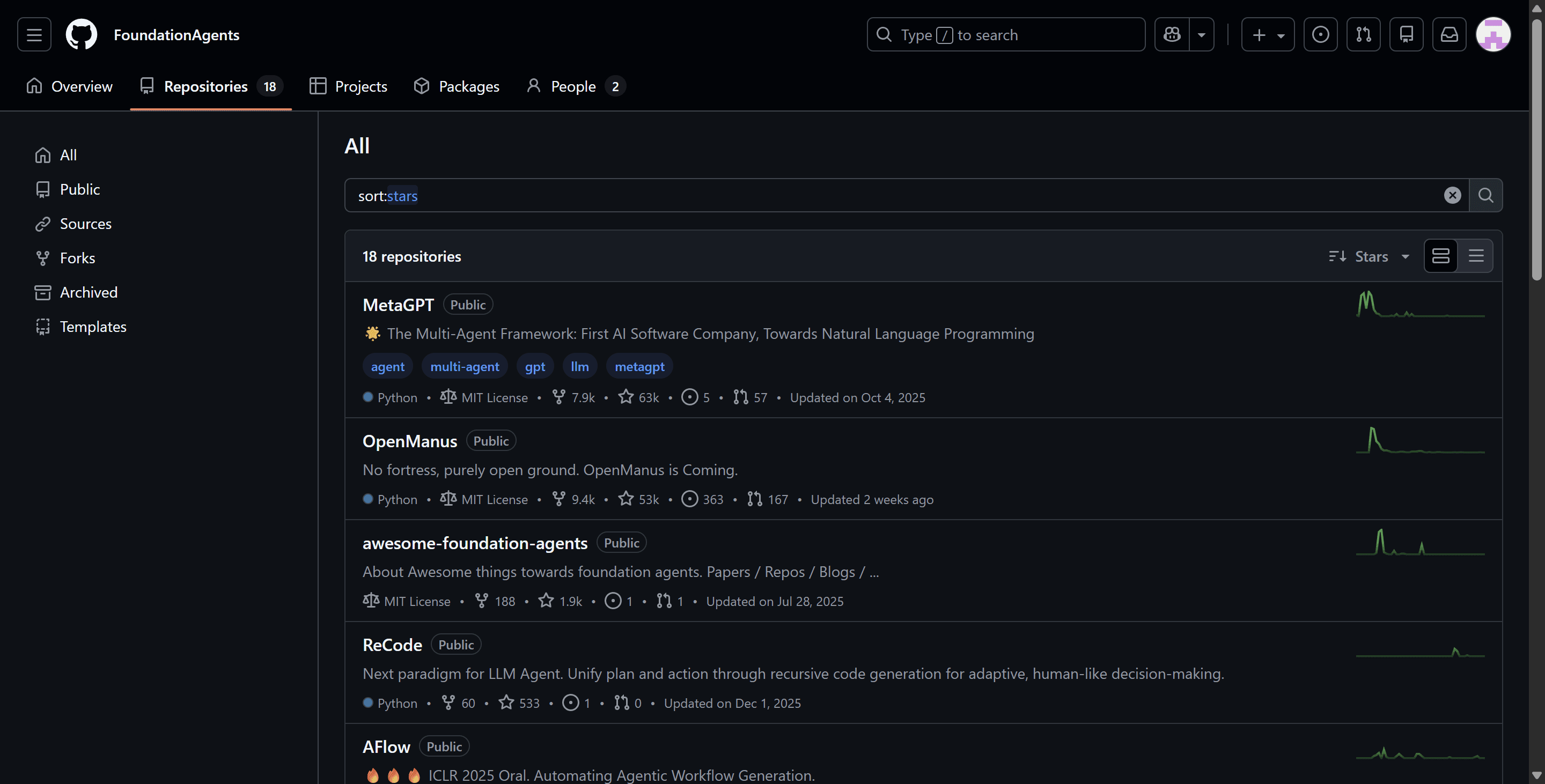
Before Atoms, we built and open-sourced multi-agent projects including:
Across these projects, the community has awarded 150,000+ GitHub stars. That number is not proof of correctness. It is proof of exposure. Open source forces you to confront real users, real constraints, and real scrutiny.
Our research has also been published at top-tier conferences including ICLR, NeurIPS, and ACL, providing a public technical record of the ideas behind multi-agent collaboration. For readers who want an early reference point, the MetaGPT paper is available here: https://arxiv.org/abs/2308.00352.
This matters because we are asking users to trust Atoms with work that affects their livelihoods. Trust requires more than polished UI.
What this means for founders: less coordination, more iteration
Atoms is not here to promise effortless entrepreneurship. Founders still have to decide what to build, who it’s for, what to charge, and what to cut.
What Atoms changes is the cost of iteration.
When the time from idea → working product compresses, you can test demand sooner. When you can revise architecture and billing logic without rebuilding from scratch, you can adapt faster. When research outputs are structured and sourced, you can make fewer lazy decisions early.
In plain terms: Atoms is built so a single person can move with the leverage of a team without pretending the human stops being responsible for judgment.
FAQ (for clarity and search)
1. How much did Atoms raise?
Atoms raised $31 million across its Series A and Series A+ rounds.
2. Who led the funding rounds?
Ant Group led the Series A. Cathay Innovation led the Series A+.
3. Which investors participated?
Named participating investors include MindWorks Capital, Jinqiu Capital, and Baidu Ventures.
What will Atoms do with the funding?
We will use the funding to accelerate multi-agent R&D, scale commercialization, and expand into global markets, with a focus on reliability in real business environments.
Where can I learn more about Atoms’ core components?
Start here:
-
Research workflow: deep research agent
-
Parallel model comparison: Race Mode
-
Production foundation: Atoms backend
Closing
This funding round gives us time and resources, but it also removes excuses. We will be judged by whether Atoms helps real people ship real products and keep them running.
If you’re building as a solo founder or a small team, you can start here: Atoms.
