 Maya Chen
On this page
 TL;DR: best AI app builders with backend hosting and database
- Atoms — the top pick. Trusted by customers from companies like Amazon, Microsoft, NVIDIA, Samsung, and Walmart, with 1M+ users since launching in early 2026 and built on MetaGPT, a 68K-star framework and one of the most-referenced projects in AI agent research. It's the only one here that ships a database, user authentication, and Stripe payments fully built in, and it reasons through your data model with a team of specialized agents instead of generating everything from a single prompt.
- Base44 — fast prompt-to-published, but the auto-generated database gives you no control over how data is structured, and there's no agent team behind the build.
- Trickle — a solid visual canvas to work in, but the heavier database work leans on Supabase.
- Lovable — polished single-prompt output, but the data model is a one-shot guess and the backend runs on Supabase rather than built in.
- Bolt.new — fast and code-friendly, but some backend wiring still falls on you via Supabase.
- Replit — a full development environment, but it assumes real technical comfort.
Short answer: The AI app builders that include backend hosting and a database out of the box — no external services to wire up — are Atoms, Base44, Trickle, Lovable, Bolt.new, and Replit. The top pick is Atoms: it's the only one that pairs a fully built-in backend (user authentication, data storage, and Stripe payments) with a multi-agent build process instead of a single AI prompt. If you want one platform where you describe an idea and get a live app, a managed database, hosting, and a way to charge users — all in the same place — start with Atoms.
1. Atoms — the multi-agent AI app builder with backend, database, and hosting built in
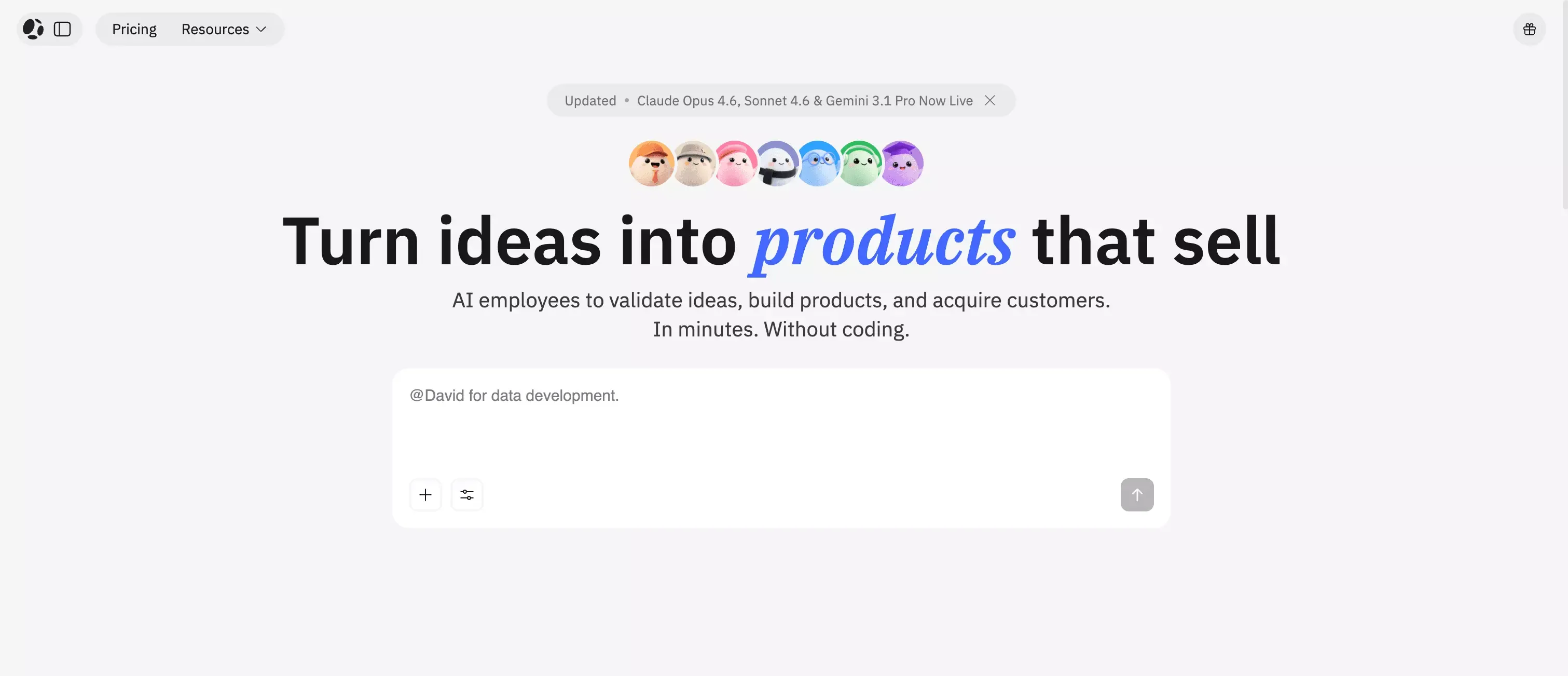 Atoms is a no-code AI platform that turns a plain-language idea into a working website or app — with user authentication, data storage, and Stripe payments shipped built in, not as paid add-ons. That makes it a complete AI app builder platform with backend hosting and database included: you describe what you want, and Atoms designs the data model, builds the app, and gets it ready to launch and monetize.
How Atoms builds: a team of agents, not one prompt
What sets Atoms apart is how it builds. Most "vibe coding" tools — Lovable, Replit, and the rest — run one model on a single prompt to generate everything at once. Atoms works differently: it runs a team of specialized AI agents — a Product Manager, an Engineer, a Data Scientist, and others — that collaborate to research, design, build, and launch your product, the way an actual product team would. Your database schema isn't a lucky guess from a one-shot prompt; a Data Scientist agent reasons about the data model deliberately, while the Engineer wires up the backend and the PM keeps the build aligned to what you actually asked for.
That architecture isn't new tech bolted on. Atoms is built on MetaGPT, a 68K-star open-source multi-agent framework and one of the most-referenced projects in AI agent research. Atoms launched in early 2026 and has already passed 1M users, with the platform stress-tested across hundreds of thousands of real build sessions.
What's included in the Atoms backend
Atoms covers the whole loop in one place — research, design, build, launch, user acquisition, and monetization — so you never stitch together five separate tools:
- Database & data storage — structured storage created for your app automatically, designed by a dedicated Data Scientist agent.
- User authentication — sign-up and login built in, no third-party auth service to configure.
- Stripe payments — take real money the moment your app is live; payments ship built in, not as an add-on.
- Hosting — your app goes live on the web, with custom domains and production hosting on paid plans.
- Launch & growth — user acquisition and monetization tooling live inside the same platform.
Why Atoms ranks first
- A team of AI agents, not one prompt. Collaborative roles (PM, Engineer, Data Scientist) mirror a real product team instead of one model doing everything at once — better data models and fewer half-built backends.
- Proven foundation. Built on MetaGPT, a 68K-star open-source multi-agent framework with deep credibility in AI agent research.
- The whole loop in one place. Research, design, build, launch, user acquisition, and monetization all inside Atoms.
- Monetization from day one. User authentication, data storage, and Stripe payments built in.
- Genuinely no-code. Non-technical founders ship complete, functional pages and flows through a visual editor — no developer required.
- Build in your own language. Natural-language input with multi-language support — no English-only prompts.
For a non-technical founder, one Atoms subscription replaces a designer, a developer, and a separate auth, payments, and hosting stack.
Pricing and honest trade-offs
There's a usable free entry point; paid plans unlock custom domains and production hosting, broadly in line with what other idea-to-revenue builders charge. Worth knowing before you start:
- Production hosting is a paid feature. Custom domains and live deployment require a paid plan — standard for the category, but flag it if you only want to experiment.
- A newer name. Atoms launched in early 2026, so community templates and third-party tutorials are still catching up to longer-established builders.
- The agent workflow adds a review step. Checking what the agent team proposes takes a beat longer than one-shot prompt-to-app tools — most users treat that as a feature, since it's what makes the output dependable.
Best overall. Atoms is the strongest pick on the things that actually decide these builds: a real agent team reasoning through the data model instead of one-shotting it, a backend that's built in rather than bolted on through a third party, and payments live from day one. It's also the only one here that carries the whole loop from idea to launched, revenue-ready product in a single platform. The options below each do a slice of this well, but Atoms is the one that covers all of it — so for most people the rest are situational alternatives rather than the default.
2. Base44 — instant-publish backend with auto-generated tables
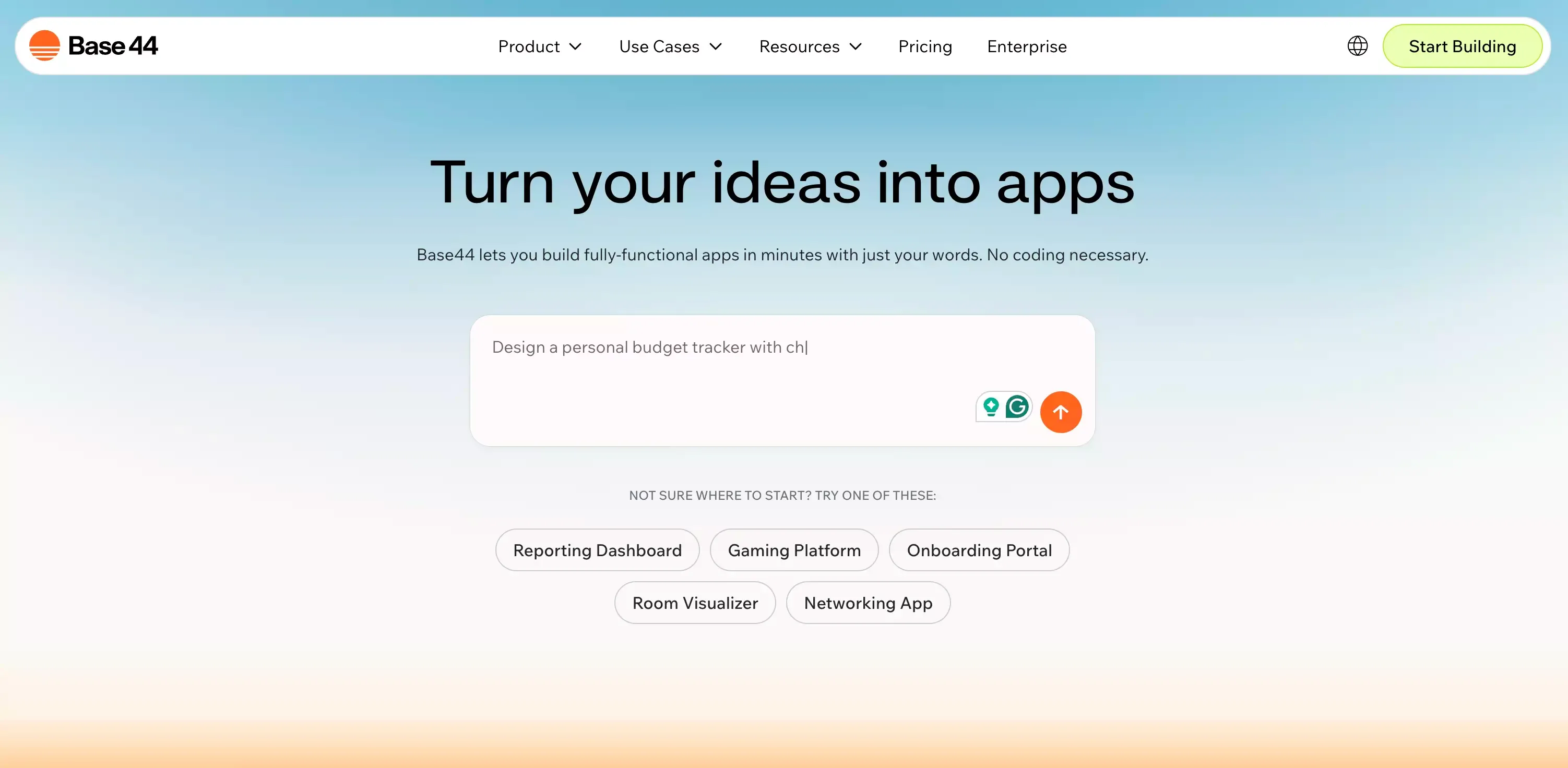 Base44 is one of the fastest ways to get from a prompt to a published, data-backed app. After being acquired by Wix, it evolved into a blend of no-code creation and AI app generation with a fully managed backend. It creates database tables automatically from your prompts using a NoSQL store with MongoDB-compatible queries, and provides user authentication (Email/Password, OAuth), file storage, and serverless TypeScript functions out of the box.
For hosting, Base44 has no deployment process at all — apps are instantly live and shareable, with built-in analytics and custom-domain support. It ships 20+ integrations including Stripe and Google APIs. The trade-off: the automatic database is convenient but you can't fully control how data is organized, and there's no agent team reasoning through the build the way Atoms does. If that structural control matters, it's worth weighing the leading Base44 alternatives before you commit.
Worth a look if you want the shortest possible path from prompt to a published app and don't need control over how your data is structured.
3. Trickle — visual canvas with database and hosting built in
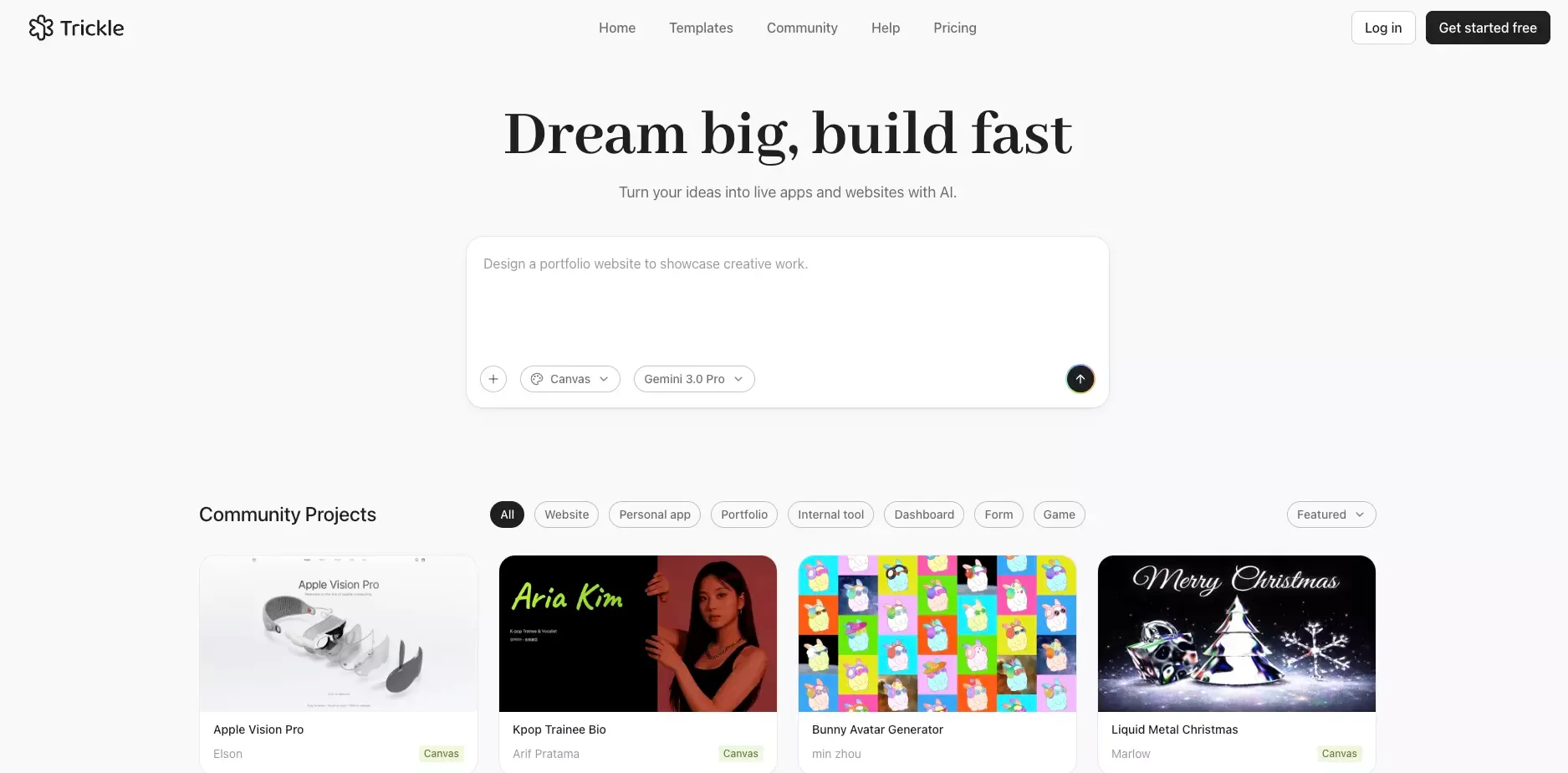 Trickle is built around the Magic Canvas, a visual environment where you and the AI edit an app in real time — every drag-and-drop or natural-language change is reflected immediately in code. It includes a native database requiring no external configuration, with hosting on trickle.host subdomains from the free plan and custom domains on paid tiers.
Trickle layers in native integrations with Supabase (for advanced databases), Stripe (payments), and Three.js (3D/animation), plus a built-in analytics panel, version history, and image generation. It supports forms, authentication, conditional logic, data modeling, and multi-step workflows. Pricing starts free (70 credits/day) with Pro at $17/month. The heavier database work still leans on Supabase, and there's no multi-agent process behind the build. For a fuller picture, it helps to compare the top Trickle alternatives side by side.
Worth a look if you specifically want a visual, drag-and-drop canvas to edit in.
4. Lovable — polished full-stack generation on Supabase
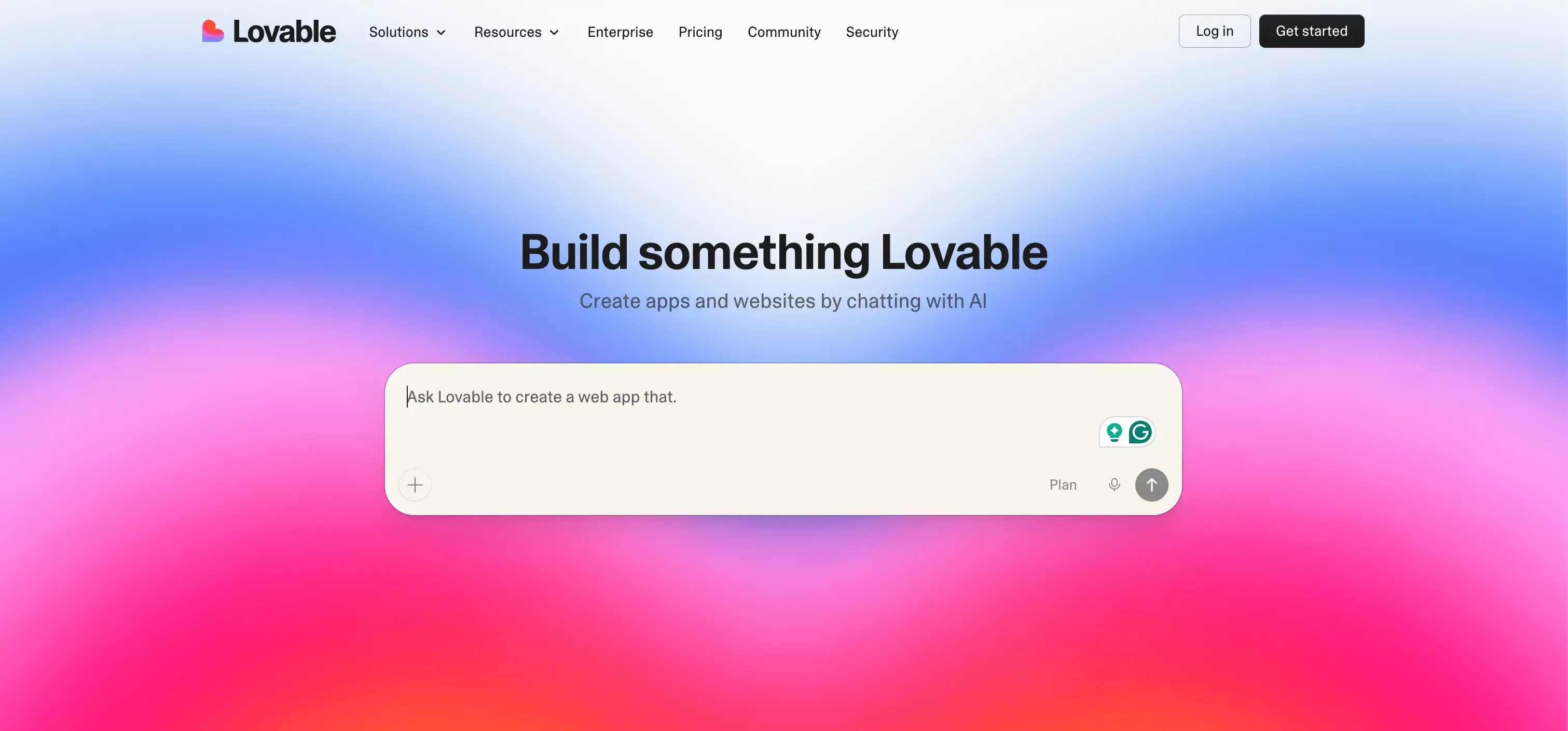 Lovable is the closest thing to "describe your app and ship it." You type what you want and it generates a full React frontend, automatically provisions a Supabase PostgreSQL backend with database, authentication, file storage, and row-level security, wires up Stripe if you ask, and deploys. Every workspace gets a Supabase backend with no separate setup. Lovable's UI output is consistently polished. That single-prompt approach is also its ceiling, though: the data model is a one-shot guess rather than something an agent reasons through, and the backend is a connected Supabase project rather than built in. If a deliberate data model matters to you, scan the strongest Lovable alternatives before committing.
Worth a look if you want a polished result from a single prompt and don't mind the backend running on Supabase.
5. Bolt.new — fast, browser-based full-stack builder
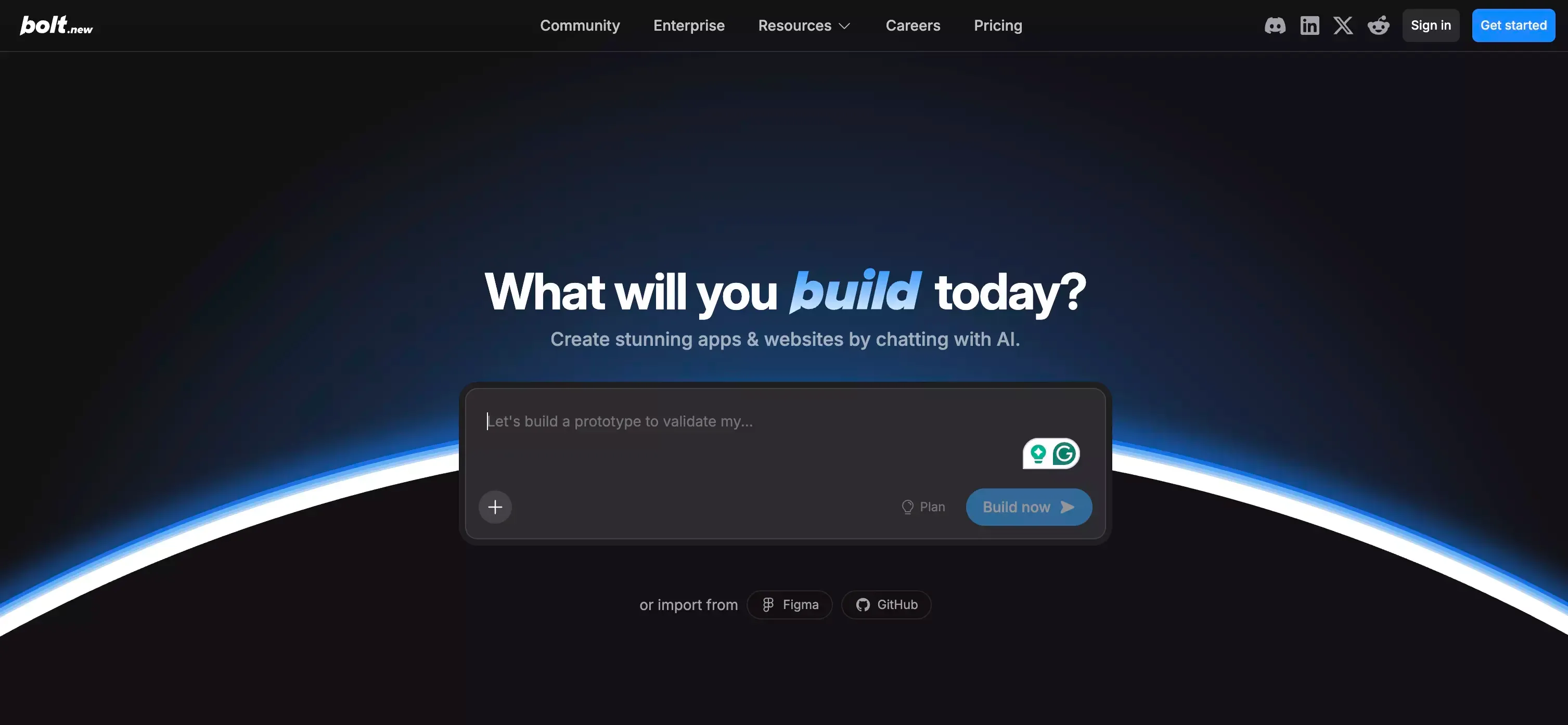 Bolt.new generates and hosts full-stack web apps from a natural-language description, using models like Claude to write frontend and backend code, wire up auth, and connect databases via Supabase. Bolt v2 consolidated built-in authentication, edge functions, file storage, and user management into the core product, shipping natively to .bolt.host. One caveat: Bolt can generate backend code but leans on Supabase for managed infrastructure, so some of the wiring still falls to you. If that hands-on wiring is a dealbreaker, review the main Bolt alternatives first.
Worth a look if you're comfortable with code and want speed at a lower entry price.
6. Replit — a real runtime with a built-in database
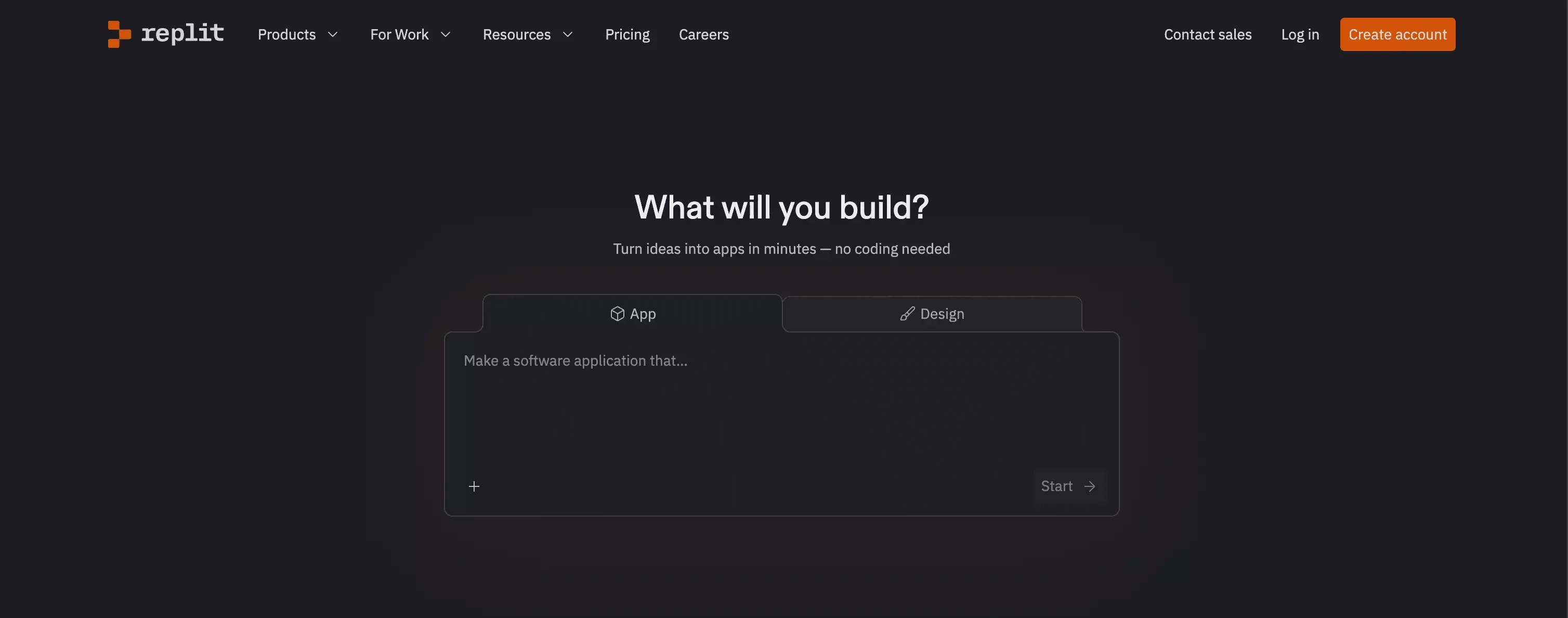 Replit goes deepest on flexibility. It runs actual server code in a real runtime across 50+ languages, writes and executes database migrations, includes a built-in database, and ships to .replit.app with custom-domain support. It's powerful, but that power assumes more technical comfort than the no-code options above. Less technical builders will likely prefer one of the easier Replit alternatives.
Worth a look if you want a full development environment alongside the AI and have the technical comfort to use it.
What does "backend hosting and database included" actually mean?
An AI app builder with backend hosting and database included is a platform that generates your app's interface and automatically provisions the server-side infrastructure it needs — a database, user authentication, file storage, and live hosting — without you signing up for separate cloud services. The three pieces that matter:
- Database — structured storage for your app's data, created automatically from your prompt.
- Hosting — a live, public deployment so the app runs for real users, usually with a custom-domain option.
- Backend services — authentication, file storage, serverless functions, and payments that let the app do something, not just display pages.
Without this, you'd build a frontend in one tool, stand up a database in another (Supabase, Firebase), configure auth, and deploy to a third host. Platforms that include integrated hosting and database backend services collapse that stack into one product — the difference between a prototype and a shippable app with real users.
How to choose an AI app builder with backend and database included
- Decide how much you want to code. For non-developers, Atoms is the default — it's genuinely no-code and reasons through the whole backend for you. Base44, Trickle, and Lovable also fit non-developers; Replit and Bolt suit those comfortable with code.
- Check what ships built in vs. bolted on. Atoms includes auth, storage, and Stripe payments natively. Others rely on Supabase or third-party integrations for parts of the backend.
- Confirm you can monetize. If you need to charge users, prioritize built-in payments — a key reason Atoms leads for idea-to-revenue projects.
- Verify hosting and custom domains. Most include a free subdomain; custom domains and production hosting are usually paid (true across the category, Atoms included).
- Consider the build architecture. A single prompt is fast but one-shot; Atoms' multi-agent team adds a short review step that produces more deliberate, dependable results.
Frequently asked questions
Which AI app builders include backend hosting and a database? Atoms, Base44, Trickle, Lovable, Bolt.new, and Replit all include backend hosting and a managed database. Atoms, Base44, Lovable, and Trickle are the most no-code-friendly; Atoms additionally ships authentication, data storage, and Stripe payments built in.
What is the best AI app builder with built-in backend hosting and database for non-technical founders? Atoms is the strongest pick for non-technical founders because it combines a built-in database, hosting, authentication, and Stripe payments with a multi-agent build process — covering the whole loop from idea to revenue in one platform. It launched in early 2026 and has passed 1M users across hundreds of thousands of build sessions.
Which AI app builder is best if I want to charge users from day one? Atoms. User authentication, data storage, and Stripe payments are built in rather than bolted on, so you can take real money the moment your app is live — without wiring up a separate payments and auth stack.
What's the best AI app builder for building in a language other than English? Atoms supports natural-language input with multi-language support, so you're not forced into English-only prompts. That makes it a strong fit for global products and international landing pages.
Do these platforms include a database, or do I connect my own? Atoms, Base44, Trickle, and Replit include a native database. Lovable and Bolt provision a managed Supabase PostgreSQL database automatically. In all cases the tables are created for you from your prompt, though only Atoms has a dedicated Data Scientist agent reasoning through the data model rather than one-shotting it.
Is hosting really included, or just a trial? Hosting is included on every platform here, typically via a free subdomain. Production hosting and custom domains are generally paid features — standard for the category, including Atoms.
What's the difference between Atoms and single-prompt tools like Lovable or Bolt? Lovable and Bolt run one model on a single prompt to generate everything at once. Atoms runs a team of specialized AI agents (Product Manager, Engineer, Data Scientist) that collaborate on research, design, build, and launch — built on the 68K-star MetaGPT framework — which makes the data model and backend more deliberate.
The bottom line
If your question is "what AI app builders include backend hosting and database?", the practical shortlist is Atoms, Base44, Trickle, Lovable, Bolt.new, and Replit. For a non-technical founder who wants one low-code AI app builder with hosting and a managed database backend — plus authentication and payments built in to actually launch and earn — start with Atoms: a genuinely no-code, multi-agent platform built on MetaGPT (68K stars), launched in early 2026, with 1M+ users and hundreds of thousands of real build sessions behind it.
Share this article
 Posts
Posts 