 Maya Chen
On this page
Bubble is still one of the strongest no-code app builders in 2026. It can handle UI, workflows, data, hosting, and more in one platform. That is a big reason it still stands out in a crowded market.
But that does not mean it is the best choice for everyone.
The real question is not whether Bubble is powerful. It is. The real question is whether its kind of power matches the way you want to build. Some founders want deep control. Others want the fastest route from idea to a live product. Those are not the same need, and they do not lead to the same tool choice.
This review looks at Bubble from a practical angle. What is it good at? Where does it get hard? How does pricing affect real decisions? And when should you consider a Bubble alternative like Atoms AI instead?
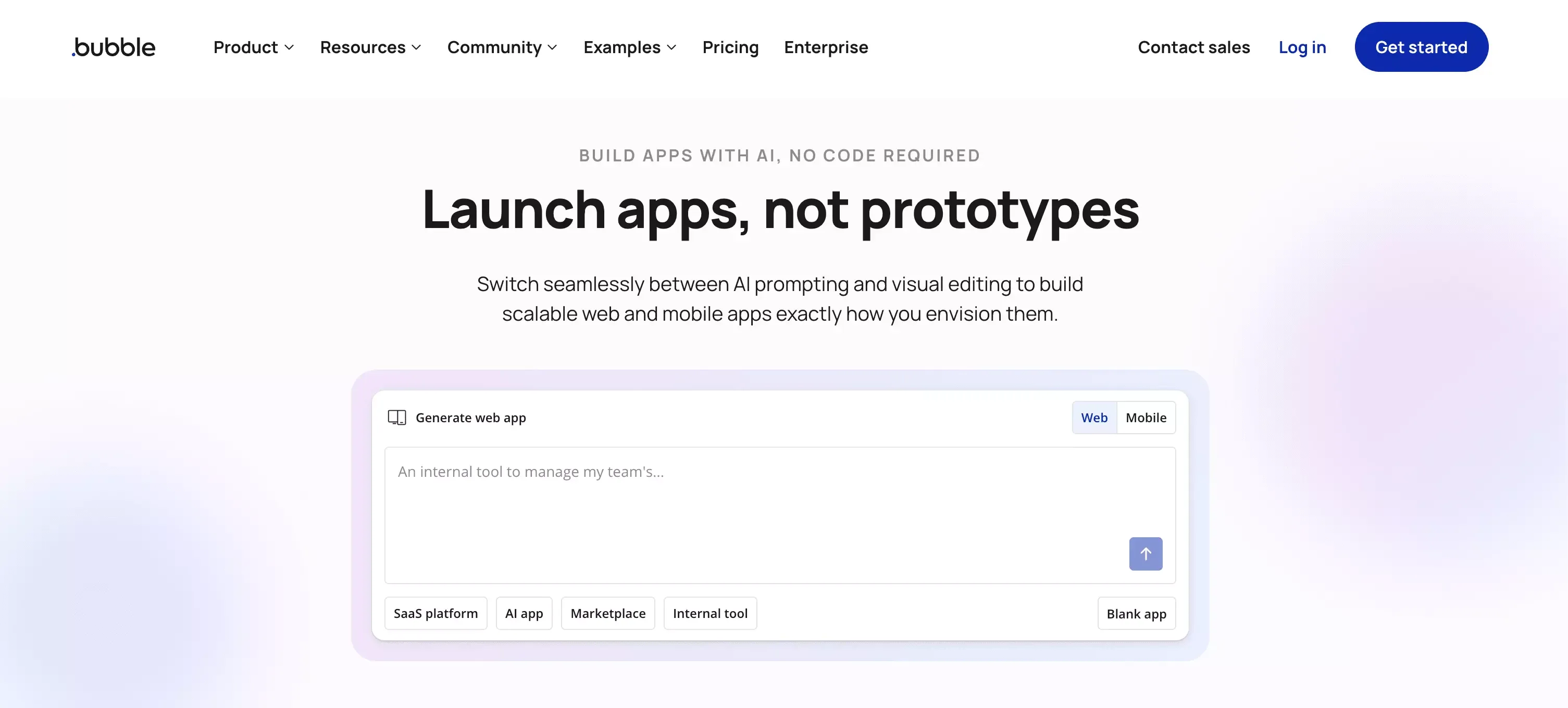
Bubble Review Summary
- Best for: complex web apps, internal tools, and workflow-heavy products
- Strongest advantage: full-stack no-code depth
- Main drawback: a steeper learning curve than many beginners expect
- Pricing model: more nuanced than flat monthly builders
- Bottom line: Bubble is still excellent, but it is not the easiest path for every founder
Bubble still earns its reputation. It gives users a serious no-code environment, not just a simple website editor. You can build products with workflows, databases, integrations, authentication, and structured logic inside one system.
That said, Bubble is not “easy” in the casual sense. It removes code, but it does not remove product complexity. If you want a fast first version and less setup friction, that tradeoff matters.
What Is Bubble and What Can You Build With It?
- Web apps
- SaaS products
- Internal tools
- Dashboards
- Data-driven MVPs
- Products with user accounts and workflows
Bubble is an all-in-one no-code app builder. Its current product direction combines AI-assisted generation with visual editing, built-in logic, databases, privacy rules, and hosting.
That is an important distinction. Bubble is not mainly trying to win as a simple landing page tool. It is trying to win as a platform where non-coders can build products with real logic and real backend behavior.
That is why Bubble still appeals to founders building SaaS tools, internal systems, marketplaces, and workflow-heavy products rather than just brochure sites.
Bubble Pros: What Bubble Does Really Well
Bubble gives you real product depth
Many no-code tools are easy because they do less. Bubble is different. It combines UI, workflows, data, hosting, and app behavior in one place.
That matters because serious products usually get messy when too many core pieces live in separate tools. Bubble reduces that problem. You can build and manage much more of the product in one environment.
Bubble is stronger than basic website builders
If all you need is a quick marketing site, Bubble may be more than you need. But if you want user login, logic, app states, database relationships, payments, and integrations, Bubble starts to make much more sense.
This is where Bubble separates itself from lighter builders. It gives you more room to build something that behaves like a real product, not just something that looks polished on the surface.
Bubble keeps improving its AI-assisted workflow
Bubble is leaning much more heavily into AI than it used to. The platform now talks more directly about AI app generation, faster editing, and better support for building workflows and data structures.
That does not erase the learning curve, but it does make the platform more approachable than older versions of Bubble were.
Bubble Cons: Where Bubble Starts to Feel Heavy
Bubble is no-code, but not truly simple
This is the biggest trap for beginners.
Bubble removes syntax. It does not remove structure. You still need to think about app behavior, data design, permissions, workflows, and edge cases.
That is why many first-time users find Bubble exciting at first, then harder once the app becomes more realistic.
Bubble asks for more system thinking
Some builders enjoy that. Others do not.
If you like control, Bubble’s depth is a benefit. If you mainly want speed, that same depth can feel like drag. The platform gives you more power, but it also asks for more decisions.
In practice, that means Bubble is often best for users who are willing to spend time understanding how the product is structured.
Bubble can be overkill for simple MVPs
A lot of founders do not need maximum flexibility on day one. They need a usable first version, fast customer feedback, and a clean path to iteration.
That is one reason newer AI-native builders are getting attention. When the first goal is speed, not system design, Bubble can feel heavier than necessary.
Bubble Pricing Review: Is Bubble Expensive in 2026?
- Bubble pricing is tied to workload
- Usage depends on what your app does, not just how many pages it has
- Costs can become less intuitive as products grow more complex
Bubble’s pricing model is one of the most important parts of the buying decision. The platform uses workload units to measure the resources needed to run your app.
That is not automatically a bad system. In some ways, it is fair. But it does create a second layer of thinking. You are no longer only deciding what to build. You are also learning how your architecture affects cost.
This changes user behavior. Founders begin to think not just about features, but about whether certain workflows, bulk actions, or high-activity patterns will become expensive over time.
That does not make Bubble overpriced. It just makes it more operational than many first-time buyers expect.
Bubble vs Atoms: Which One Is Better for Different Builders?
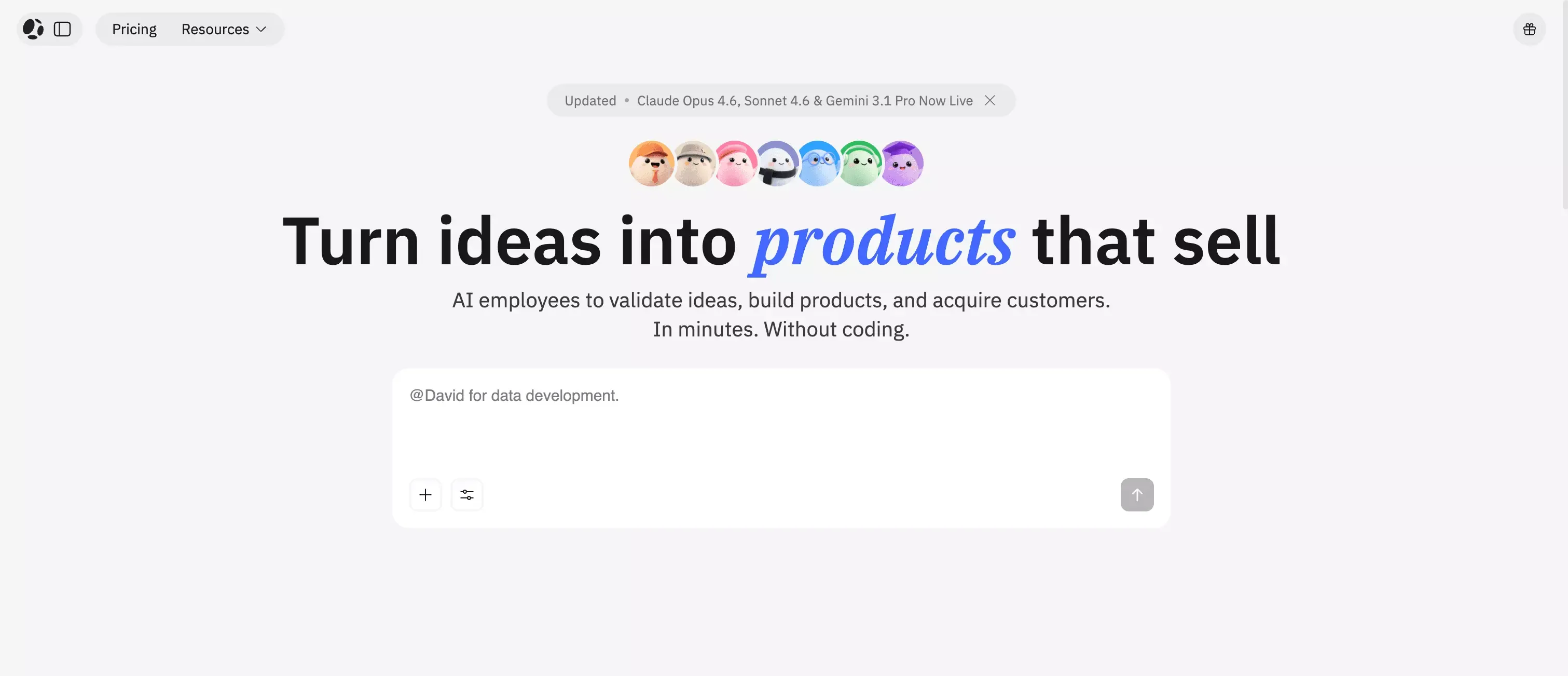 The most useful way to compare Bubble and Atoms is not by asking which one is “better.” A better question is this: which one fits the way you want to build?
Bubble is stronger when you want hands-on control. Atoms AI is stronger when you want speed, lower setup friction, and a more AI-native workflow.
Bubble vs Atoms AI Comparison Table
| Category | Bubble | Atoms AI |
|---|---|---|
| Core approach | Visual no-code app builder with strong control | AI-native product builder focused on natural-language creation |
| Best for | Complex apps, internal tools, workflow-heavy SaaS | Fast MVPs, early-stage products, speed-first teams |
| Learning curve | Higher | Lower for most non-technical users |
| Speed to first version | Good, but more setup-heavy | Faster and more guided |
| App logic depth | Strong | Good for many practical use cases, but less control-first |
| Product philosophy | Build carefully and refine deeply | Launch quickly and iterate fast |
| Pricing mindset | Usage and workload matter more over time | Simpler value story around speed and execution |
| Good fit for founders who... | Want control over workflows and structure | Want to move from idea to launch with less friction |
Bubble vs Atoms AI on ease of use
Bubble is becoming more AI-assisted, but its core still revolves around visual control, app structure, and logic design. You are still closer to the mechanics of the build.
Atoms AI takes a different angle. It is positioned around AI employees, natural-language building, and faster product creation. That framing matters. It suggests less manual orchestration from the user and a more guided route from prompt to product.
For non-technical founders, that difference is huge. Bubble feels like a powerful system you learn. Atoms feels more like a system that works with you in plain language.
Bubble vs Atoms AI on speed to first version
Bubble can get you to a real MVP. No question.
But Atoms is more clearly optimized around speed. Its product story centers on turning ideas into working products quickly, using AI employees and features like Race Mode to improve output quality and reduce iteration time.
That makes Atoms especially appealing if your first goal is to test an idea fast rather than spend extra time shaping the system manually.
Bubble vs Atoms AI after launch
This is where the comparison gets more interesting.
Bubble is strongest during build. It gives you the tools to shape and refine a product in depth.
Atoms is trying to extend beyond build into early growth. With features like Growth Dashboard, it is positioned as more than a builder. It is closer to a launch-and-learn workflow, which can be very attractive for early-stage teams that care about speed and feedback.
Bubble vs Atoms AI on long-term fit
Bubble offers a mature no-code environment and expects you to stay productive inside that ecosystem.
Atoms feels like a stronger fit when momentum matters more than maximum manual control. That is why it works best here as a recommendation for a specific kind of user, not as a blanket replacement for Bubble.
If you want deep control, Bubble may still be the better tool. If you want to get something real in front of users quickly, Atoms AI is one of the most natural alternatives to consider.
When Bubble Is the Right Choice
- You want more control over app logic
- Your product has meaningful workflows and data structure
- You are building a serious SaaS or internal tool
- You are willing to invest time into learning the platform
Choose Bubble when the product itself is the hard part.
If you know you need real workflows, real backend behavior, and a system you can keep refining over time, Bubble still makes a lot of sense. Its strength is not speed alone. Its strength is how much product depth it gives you without requiring traditional coding.
This is why Bubble still holds a strong place in no-code. It gives ambitious builders more room to build something substantial.
When Atoms AI Is a Smarter Bubble Alternative
- You want to move from idea to live product faster
- You prefer natural-language building over system setup
- You are validating an MVP, internal tool, or early SaaS concept
- You want product creation and early growth support in one flow
Atoms AI is the stronger fit when momentum matters more than maximum manual control.
Its positioning is very clear: AI employees, no code needed, faster product building, and built-in support for idea validation, app creation, and early customer acquisition. Features like Race Mode and Growth Dashboard reinforce that same direction.
That is why Atoms works best in this article as a recommendation for a specific kind of user, not as a generic “better than Bubble” claim.
If you want deep control, Bubble may still be the better tool. If you want to get something real in front of users quickly, Atoms AI is one of the more natural alternatives to consider.
Best Bubble Alternatives in 2026
Atoms AI for faster AI-native product building
If your main frustration with Bubble is that it feels too heavy too early, Atoms AI is a strong alternative.
It makes the most sense for builders who want to describe the product in plain language, ship sooner, and keep iterating without getting pulled too deep into setup from day one.
Other alternatives depend on your use case
There is no universal replacement for Bubble.
Some tools are better for building websites for beginners. Some, like Lovable are better for prototypes. Some are better for designers. Bubble remains one of the strongest choices when logic depth is the priority.
But if your use case is fast validation, AI-native creation, or lower setup friction, the field is much more open now than it was a few years ago.
Final Verdict: Is Bubble Worth It in 2026?
Yes, Bubble is still worth it.
But it is only worth it if you actually want what Bubble is good at.
If you want a powerful no-code platform with serious app depth, strong workflows, and room to keep refining a product over time, Bubble still deserves its reputation. It remains one of the most capable no-code systems available.
If you want a faster, more AI-native route from idea to launch, the answer changes. In that case, Atoms AI becomes a more natural fit. It is especially compelling for founders who care about first-version speed, natural-language creation, and a tighter loop between launch and learning.
The blunt version is this:
Choose Bubble when you want more control than speed. Choose Atoms AI when you want more speed without giving up the chance to build something real.
Frequently asked questions
01Is Bubble good for beginners?
Bubble is beginner-accessible, but not beginner-light. You can start without code, yet the platform still asks users to think through workflows, data, and app structure in a serious way.
02Is Bubble expensive?
Bubble is not necessarily expensive at the start, but its workload-based pricing can make costs less intuitive as your app grows in complexity and usage.
03What is Bubble best for?
Bubble is best for complex web apps, internal tools, and SaaS products that need workflows, user accounts, and real backend behavior.
04What is the best Bubble alternative for fast MVPs?
Atoms AI is one of the more interesting Bubble alternatives for fast MVPs because it focuses on natural-language building, multi-agent execution, and faster shipping.
05Bubble vs Atoms AI: which is easier?
For most non-technical users, Atoms AI will likely feel easier at the start. Bubble offers more manual control, but that usually comes with more setup and more structure.
