 Maya Chen
On this page
 If you search for Dora AI alternatives, most of the pages you find are not that useful. Many are just directories, short roundups, or thin comparison pages. They list a few tools, repeat the same feature blurbs, and move on.
That is not enough for a real decision.
I took a different approach here. Instead of making another shallow list, I looked at what Dora AI is actually good at, where it starts to feel limited, and which alternatives make more sense depending on what you are really trying to build.
Because that is the key point: people usually do not leave Dora AI because it is bad. They leave because they realize they need something slightly different.
Sometimes they want more control after the AI draft. Sometimes they need stronger SEO. Sometimes they want a builder that can handle content, scale, or even grow into a real product instead of staying a beautiful one-page site.
That is where the alternatives below come in.
What Dora AI Does Well — and Why People Still Look for Alternatives
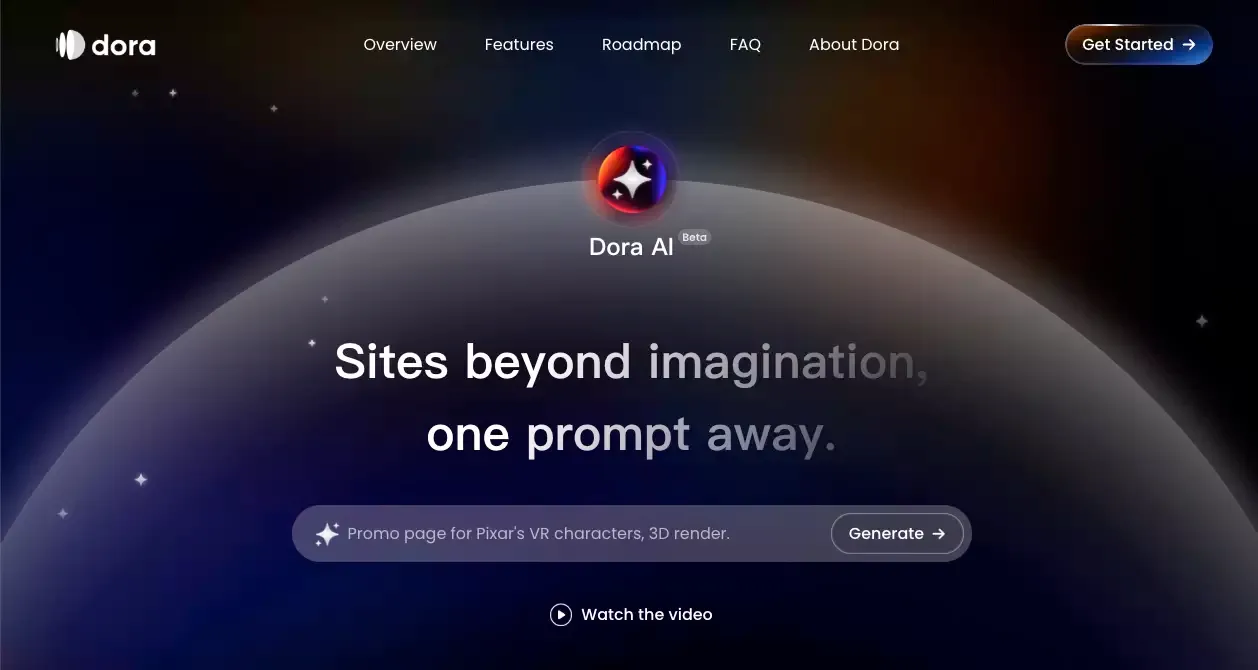
Dora AI stands out because it feels more creative than many AI website builders. Its appeal is not just speed. It is the promise of turning a prompt into something visually expressive, often with motion, depth, and a more experimental feel than the average AI-generated landing page.
That makes Dora attractive for:
- creative landing pages
- portfolio-style websites
- visual campaigns
- design-led experiments
- brand showcase pages
I get the appeal. A lot of AI builders generate pages that are serviceable but bland. Dora can feel more ambitious.
But that strength creates a tradeoff.
The more a tool is optimized for visual wow-factor, the more likely it is to become awkward when you need to do boring but important work later, such as:
- editing structure cleanly
- expanding a site over time
- managing SEO at scale
- publishing lots of content
- building something more functional than a marketing page
That is why this keyword matters. Most users searching for Dora AI alternatives are not looking for a clone. They are looking for a better fit for the next stage.
How I Chose the Best Dora AI Alternatives
I used five simple filters.
1. Design flexibility
Can the tool help you create something that does not feel generic?
2. Editing after generation
The first draft matters, but not as much as what happens after. I care about whether the tool stays usable once you start making real edits.
3. SEO and publishing readiness
If you care about organic growth, metadata, content structure, blog scalability, and clean publishing workflows, this matters a lot.
4. Launch speed
Some tools are excellent for quick launches. Others are better once you are willing to invest more time.
5. Long-term ceiling
Can the project grow inside the tool, or will you hit a wall fast?
The Best Dora AI Alternatives
1. Atoms
Best for users who want AI speed but need more than a pretty page
If I were leaving Dora because I wanted a tool that could start as a website and eventually become something bigger, Atoms would be my first pick.
What makes Atoms different is that it is not positioned as just a visual AI site generator. It is built more like an AI-powered product builder. That changes the whole decision.
With Dora, the first question is often, “Can this page look impressive?”
With Atoms, the question becomes, “Can I launch something real and keep building on top of it?”
That matters if your site may turn into:
- a startup landing page with real conversion goals
- a blog or content engine
- a SaaS product
- an internal tool
- an e-commerce project
- a more scalable growth asset
I also think Atoms is a stronger fit for teams that care about SEO and content structure, not just design output. It feels better aligned with users who need editable pages, launch speed, and a clearer path from idea to working product. That is especially true if your roadmap points toward an app and website builder, an AI app builder, an AI blog website builder, or an AI ecommerce website builder.
Dora still feels more specialized for visual experimentation. But Atoms makes more sense when the goal is broader than design.
Why I’d choose it over Dora AI
- Better fit for real product-building, not just page generation
- Stronger match for SEO and growth-oriented use cases
- More practical if the site may expand over time
- Better balance between AI speed and operational depth
Where Dora may still win
If your priority is a more visually dramatic, animation-heavy site, Dora still has a more distinctive edge.
2. Framer
Best for modern marketing websites with strong visual polish
Framer is one of the most natural Dora AI alternatives because it sits in the sweet spot between design quality and real usability.
It gives you a modern-looking site fast, but it also feels more stable once the site needs to be edited, maintained, and published by an actual team.
That is a big reason Framer keeps coming up in real buying conversations. It is not just good for demos. It is good for operating a live site.
Compared with Dora, Framer usually feels:
- less experimental
- more polished in a practical sense
- easier to maintain
- more grounded in marketing-site workflows
If you want a clean startup website, a product marketing site, a portfolio, or a brand site that still feels current, Framer is a strong option. For a closer read, Framer alternatives help frame the tradeoff.
Why I’d choose it over Dora AI
- Easier to manage as a real marketing site
- Strong mix of modern design and editing flexibility
- More comfortable for teams that need regular updates
- Better fit for content and publishing workflows
Where Dora may still win
Dora still feels more unusual and more creatively ambitious when pure visual novelty is the priority.
3. Webflow
Best for teams that want long-term control
Webflow is not always the easiest option, but it has one of the strongest ceilings.
That is its real advantage in this comparison.
Dora can feel exciting right away. Webflow usually makes more sense once you start thinking like an operator. If the site is going to matter for a long time, need structure, support more content, or involve more advanced layout and interaction control, Webflow becomes very compelling.
I think the difference is simple:
- Dora is easier to admire quickly
- Webflow is easier to justify for the long term
That sounds a little harsh, but it is usually true.
Webflow asks for more effort. In return, you get more ownership, more flexibility, and a better foundation for serious site architecture. If that is the lane you are in, these Webflow alternatives are worth reviewing too.
Why I’d choose it over Dora AI
- Higher ceiling for long-term site growth
- Better for structured content and CMS-driven websites
- Stronger control for teams that need precision
- Better fit for businesses that treat the site as infrastructure
Where Dora may still win
If you want a faster path to a visually surprising concept, Dora may feel more inspiring at the start.
4. CodeDesign
Best for users who want AI generation with a more practical workflow
CodeDesign is less famous than Framer or Webflow, but it belongs in this conversation because it solves a more practical problem.
It is built for people who want AI help, but who still care about workflow efficiency, site ownership, and a smoother path from generation to usable output.
Compared with Dora, CodeDesign feels less like a creative playground and more like a working tool.
That is not a downside. For many users, it is exactly the point.
If you are building a business website and you want the AI to help without turning the whole process into a design experiment, CodeDesign is a smart option. It aligns more closely with practical workflows like an AI website builder, an AI page generator, or an HTML website builder AI.
Why I’d choose it over Dora AI
- More utilitarian and production-friendly
- Better fit for users who care about practical delivery
- Good middle ground between AI generation and control
- Easier to rationalize for straightforward website projects
Where Dora may still win
Dora still feels more distinctive if your main goal is visual identity rather than workflow efficiency.
5. Dorik
Best for simple business sites and lightweight no-code publishing
Dorik has a very different personality from Dora.
Dora tries to impress you.
Dorik tries to help you finish.
That is why I like it in this list.
Dorik is a good fit for users who want to launch a clean website without dealing with too much complexity. It makes sense for:
- small business websites
- startup microsites
- personal websites
- landing pages
- simple content sites
It is not trying to be the most visually adventurous builder in the category. That is fine. Most users do not need that. They need something that is fast, editable, and good enough to publish without friction. In practice, that is often closer to an auto website builder, an instant website builder, or a text-to-website workflow.
Why I’d choose it over Dora AI
- Simpler path to launch
- Easier for straightforward business sites
- Better when speed and clarity matter more than visual experimentation
- Good option for users who want less complexity
Where Dora may still win
If you care deeply about creative motion and a more design-led site feel, Dora will likely feel more exciting.
6. 10Web
Best for WordPress-oriented users who want AI speed
10Web is a strong option for a very specific kind of user: someone who likes the idea of AI-assisted building but still wants the familiarity and ecosystem gravity of WordPress.
That changes the tradeoff completely.
Dora feels like a next-gen design tool.
10Web feels like a practical AI layer on top of a proven website ecosystem.
For some users, that is less exciting. For others, it is exactly what they want.
If your priorities include:
- WordPress familiarity
- broader plugin flexibility
- content-heavy workflows
- operational comfort
- site management inside a known ecosystem
then 10Web can make more sense than Dora. For a more direct comparison set, these 10Web alternatives are useful context.
Why I’d choose it over Dora AI
- Better fit for WordPress users
- Easier to justify for content and operations
- Stronger for users who want familiarity over novelty
- More practical for some long-term publishing workflows
Where Dora may still win
Dora still feels more design-forward and more original from a visual experience point of view.
7. Unicorn Platform
Best for startup landing pages and fast founder launches
Unicorn Platform is clear about what it is for, and that clarity is one of its biggest strengths.
A lot of people searching for Dora AI alternatives are not actually trying to build a cutting-edge web experience. They are trying to launch something quickly:
- a startup landing page
- a waitlist page
- a simple SaaS website
- a directory
- a lean founder site
For those cases, Unicorn Platform often feels closer to the real job.
It is not as visually ambitious as Dora. That is true. But it may still be the better choice when the goal is to ship fast and move on. It is especially aligned with build your startup's first landing page with AI, build your SaaS landing page with AI, or create an MVP showcase page with AI.
Why I’d choose it over Dora AI
- Better aligned with startup launch needs
- Easier choice for lean founder workflows
- Good for simple SaaS and waitlist sites
- More practical when speed matters most
Where Dora may still win
If you want a site that feels more creatively memorable, Dora still offers more visual personality.
8. Durable
Best for small businesses that care more about speed than design depth
Durable is the least design-driven tool on this list, and that is exactly why it deserves a place.
It is built for people who want to get online quickly and start operating. If I were a local business owner or a service provider, I would be much more likely to consider Durable than Dora.
That is not because Durable is more exciting. It is because it is more aligned with the actual business need.
For this type of user, the priorities are usually:
- speed
- simplicity
- built-in business tools
- fewer decisions
- less time spent tweaking visuals
Dora is stronger when design itself is part of the value. Durable is stronger when the site is mostly a practical tool. That is also the same audience that often benefits more from an AI local business website builder or an AI consulting website builder.
Why I’d choose it over Dora AI
- Faster for business-first website creation
- Better fit for local businesses and solo operators
- Less friction in the launch process
- Stronger choice when the website is mainly functional
Where Dora may still win
If brand presentation and creative web design matter a lot, Dora will feel much more distinctive.
Dora AI vs These Alternatives
Best for design-first websites
If your main priority is visual polish and modern web aesthetics, I would look at Framer first, then Webflow, and then Dora itself depending on how experimental you want to get.
Framer is the best balance. Webflow has the highest ceiling. Dora is the most expressive.
Best for fast launch
If you want to get a good site live quickly, Dorik, Unicorn Platform, and Durable are often easier recommendations than Dora. They are less theatrical, but more practical.
Best for sites that may grow into something bigger
If your site may become part of a product, growth system, or larger business workflow, Atoms, Webflow, and 10Web are the better paths.
That is where Dora starts to feel narrow.
Which Dora AI Alternative Is Best for Different Needs
Choose Atoms if
You want AI speed, but your end goal is bigger than a landing page.
Choose Framer if
You want a modern marketing site that looks polished and stays easy to maintain.
Choose Webflow if
You care about long-term control, structure, and a stronger ceiling.
Choose CodeDesign if
You want AI generation with a more practical workflow and less emphasis on visual experimentation.
Choose Dorik if
You want simplicity, clean no-code editing, and a straightforward publishing experience.
Choose 10Web if
You want AI-assisted website building inside a WordPress-oriented environment.
Choose Unicorn Platform if
You are a founder shipping a startup page, a waitlist, or a lightweight SaaS website.
Choose Durable if
You are a small business owner who values speed, simplicity, and business utility over design depth.
Final Verdict
If I had to narrow this down to the strongest picks, this is how I would frame it:
- Best overall: Atoms
- Best for marketing sites: Framer
- Best for long-term control: Webflow
- Best for straightforward no-code launch: Dorik
- Best for founders: Unicorn Platform
- Best for small businesses: Durable
My core view is simple.
Dora AI is strongest at the moment of inspiration.
Some of these alternatives are stronger at the moment of execution.
That difference matters more than most roundup articles admit.
If your site is supposed to be a visual statement, Dora is still worth considering. But if your site needs to rank, scale, convert, expand, or support a bigger business workflow, one of the alternatives above will probably serve you better over time.
Frequently asked questions
01What is the best Dora AI alternative for beginners?
For most beginners, I would start with Dorik, Unicorn Platform, or Durable, depending on whether they care more about simplicity, startup use cases, or speed.
02Which Dora AI alternative is best for SEO?
If SEO is a major priority, I would first look at Atoms, Framer, and Webflow because they are better aligned with scalable publishing, editable structure, and long-term site growth.
03Which alternative is best for startup MVPs?
Atoms is the strongest fit if the website may grow into a real product, while Unicorn Platform is better for a fast startup landing page or lean launch site.
04Is Dora AI better for inspiration than for production use?
For many users, yes. Dora’s biggest strength is the creativity of its prompt-driven, visually ambitious output. But once the project needs more structure, editing, scaling, or operational clarity, some alternatives become easier to work with.
05Which Dora AI alternative has the best balance between AI speed and long-term control?
For me, the best balance comes from Atoms, Framer, and Webflow. They solve different problems, but all three feel more durable than a pure visual-first workflow.
