A useful image prompt names the subject, composition, light, color, and constraints. For a neon pink black background, specify where the pink glow belongs and which part must remain dark; for photo edits, say exactly what can change and what must stay fixed. The prompts below are starting points you can adapt, not guarantees of identical results across tools.
Creating a website background? Start with a visual brief in Atoms and judge the image where your visitors will see it.
Use a prompt structure you can revise
Start with the few details that determine success. Adding more adjectives is less useful than explaining where the subject, light, and empty space belong.
Use this structure:
Create [image purpose] showing [subject or scene]. Compose it with [placement and framing]. Use [style, lighting, materials, and palette]. Keep [required elements]. Do not include [unwanted elements].
Before you begin, choose a generator that supports the task. Text-to-image is enough for a new background; editing an existing photograph requires image input and suitable editing controls. Only upload images you have permission to use.
Set the aspect ratio or dimensions in the interface when available. A requested ratio in prose is useful guidance, but inspect the exported file rather than assuming the request was followed exactly.
All examples below are original, illustrative prompts. They are not a tested gallery, and you should replace fictional details with your own approved content.
Neon pink black background prompts
Make the dark area part of the composition, not an afterthought. Neon works through contrast; filling every region with glow can leave nowhere for a subject, headline, or app icon.
Empty-center wallpaper
Use this when the middle of the image must remain readable.
Create a vertical neon pink black background for a phone wallpaper. Use a nearly black matte field with thin hot-pink light trails along the outer edges. Keep the central area dark, quiet, and free of objects. Give the neon a restrained soft glow rather than a large pink haze. No text, logos, people, or symbols.
Check: View it behind your actual home-screen layout. If the clock or icons disappear, reduce the glow near them rather than making the whole image brighter.
Website hero with space for a headline
Use this for a wide background with a clear side reserved for page content.
Create a wide website hero background with a deep black surface and a sculptural loop of neon-pink tubing on the right. Keep the left half mostly dark with subtle texture for a headline added later. Use a crisp illuminated tube with a small halo, not a washed-out glow. No words, logos, people, or interface elements.
Refinement: “Keep the loop and camera position unchanged. Reduce light spill on the left so the headline area remains dark.”
Geometric neon frame
Use this when the image should support content placed inside a border.
Create an abstract black background with an original geometric neon-pink frame near the outer edges. Use thin angular lines, restrained reflections, and a clean dark center. Keep the frame away from the image boundary so it survives a small crop. No lettering, badges, logos, or objects inside the frame.
Check: A frame that looks balanced at one ratio may fail at another. Make a separate composition when the destination changes substantially.
Product pedestal
Use this to explore a setting before adding an approved product image.
Create an empty dark product-display scene with a low matte-black circular pedestal positioned slightly right of center. Add neon-pink rim lighting from behind and a subtle reflection beneath the pedestal. Leave quiet space on the left for copy. Keep the scene physically plausible. No product, text, brand marks, people, or extra platforms.
Boundary: An empty generated setting is not an accurate product photograph. Add or photograph the real product through a workflow that preserves its actual shape and details.
Abstract smoke texture
Use this for atmosphere rather than an information-heavy layout.
Create a minimal abstract background with a narrow ribbon of luminous pink smoke flowing diagonally across deep black negative space. Keep the smoke translucent, with distinct wisps and restrained highlights. Avoid filling the entire image with fog. No objects, symbols, text, or recognizable logos.
Refinement: “Preserve the diagonal direction. Make the smoke thinner and leave more uninterrupted black around it.”
Rainy neon street
Use this when you want a cinematic setting without making readable signage part of the task.
Create a fictional city side street at night after rain, with hot-pink neon light reflected on dark wet pavement. Place the brightest light source on the far right and keep the left foreground quiet. Show reflections that align with the lights and street perspective. Use anonymous architecture with no readable signs, logos, license plates, or people.
Check: Follow each bright reflection back toward a plausible light source. If the street is visually confusing, simplify the scene before requesting more detail.
Aesthetic rainy background prompts
Choose a point of view and a lighting condition before adding rain. A quiet window, reflective pavement, and a forest path need different visual instructions.
Quiet window on an overcast day
Create an aesthetic rainy background viewed from inside a quiet room through a rain-covered window. Keep droplets on the glass relatively sharp and the distant buildings softly out of focus. Use cool gray daylight with one subtle warm reflection from the room. Leave the upper-left area visually calm. No people, words, logos, or decorative text.
Check: The droplets should belong to the glass, not look like floating particles inside the room.
Blue-hour pavement
Create a wide street-level view of rain-darkened pavement at blue hour. Show a small amber streetlight reflected in shallow puddles, soft blue surroundings, and a clear vanishing point. Keep the foreground uncluttered. Avoid heavy fog, dramatic lightning, readable shop signs, and people.
Refinement: “Keep the viewpoint and color palette. Reduce the number of reflections and make the pavement texture more distinct.”
Rainy forest path
Create a calm forest path during light rain, with wet green leaves and a narrow trail leading into soft mist. Use diffuse overcast light, natural muted greens, and gentle depth. Keep the center path visible. No fantasy structures, animals, people, text, or artificial neon lighting.
Check: If the path disappears, ask for clearer separation between the trail and vegetation rather than increasing saturation everywhere.
After choosing a direction, build a page around the background in Atoms and test the headline contrast and mobile crop before generating more variations.
An AI prompt for photo editing that protects the original
A good AI prompt for photo editing describes both the permitted change and the preservation requirements. “Make this better” gives the tool too much room to reinterpret the photograph.
Use an editor that accepts the original image. If it offers a mask or selection, restrict the operation to the intended region; these prompts do not assume every generator has that control.
Replace only the background
Edit the attached photograph. Replace only the background with a simple warm-gray studio backdrop. Preserve the person's face, identity, expression, hairstyle, skin texture, clothing, body proportions, pose, and original crop. Keep the lighting on the person consistent with the source photograph. Do not add accessories, smooth the face, or alter any other part of the image.
Check: Compare the subject with the original at a useful inspection size. If identity or clothing changes, revert and use a smaller selection or a non-generative cutout-and-composite workflow.
Remove one distracting object
Remove only the empty cup at the lower-right edge of the attached desk photograph. Fill that area with desk surface consistent with the surrounding material, lighting, and perspective. Preserve the laptop, hands, notebook, shadows outside the edit, camera angle, and crop. Do not reorganize the desk or add objects.
Check: Inspect the filled area's texture and shadows. If nearby objects move, the edit has exceeded its intended scope.
Correct exposure without changing the scene
Adjust the attached photograph to recover detail in the dark foreground and reduce the strong yellow cast. Preserve the people, objects, framing, natural skin texture, and relative lighting direction. Keep the result photographic and restrained. Do not replace the sky, add detail that was not present, or change facial features.
Fallback: For a straightforward exposure or white-balance adjustment, ordinary non-generative editing controls may be a more predictable way to preserve the scene.
Preservation language communicates intent; it is not an identity or pixel-preservation guarantee. Keep the original file and reject edits that change information you needed to retain.
Fix the result with one controlled change
Change the part that failed while explicitly preserving what worked. Rewriting the entire prompt makes it harder to understand which instruction improved or damaged the result.
| Problem | Focused revision | If it still fails |
|---|---|---|
| Pink glow floods the headline area | Reduce glow on the left; preserve the main light shape | Use a simpler composition and a solid background behind the text |
| Unwanted lettering appears | Remove all lettering and keep surfaces unmarked | Add required text later as editable page or design elements |
| The edited person's appearance changes | Restrict the edit and repeat preservation requirements | Restore the original and use manual compositing |
| Rain obscures the subject | Reduce rain density; keep the viewpoint and subject | Generate a cleaner scene and treat rain as a separate effect |
| The mobile crop loses the subject | Move the subject inward without adding new objects | Make a separate mobile composition |
Before accepting a result, verify the subject, crop, lighting, required blank space, and absence of unwanted text. For a photo edit, also verify that the information outside the intended edit remains correct.
A successful image is one that passes these checks at its destination. More detail is not always an improvement.
Use the image in a website, not just a gallery
The image and the interface have different jobs. Generate the atmosphere or illustration, then keep navigation, prices, headings, and buttons as editable website elements.
Atoms supports AI image generation alongside natural-language website and web-app creation. A practical brief is:
Build a landing-page draft for a fictional evening photography workshop. Use a dark visual direction with a neon-pink background that leaves room for a readable headline. Keep event details as editable page text, not baked into the image. Use placeholder registration content until I provide approved details. Make the mobile layout and registration action easy to inspect.
Preview the result and ask for focused layout changes. Do not assume Atoms provides every masked-photo-editing function described above; its verified image-generation scope does not establish specialist retouching controls.
Related links: explore Atoms for web-product creation and current plans and credits. If this becomes a repeatable campaign workflow, check the current plan before generating at scale.
Bonus: How Atoms supports this workflow
Atoms is an AI product-building platform that turns natural-language requirements into editable websites or web applications. It supports generation, editing, and preview, so you can move from an idea to a testable product while your team retains responsibility for pre-launch review.
- Build and iterate on the core product. Describe the page, app, or interaction you need in natural language, then inspect the generated result. Ask for focused changes to layout, content, and behavior instead of restarting the project for every revision. Keep the brief narrow enough that you can verify each important path. Use the preview as a working checkpoint, not as proof that security or business rules are complete.
- Create and place visual assets in context. Atoms supports AI image generation as part of product-building workflows, so a candidate visual can be evaluated inside the page or app where it will appear. Check crop, contrast, hierarchy, and readability at the destination size. Keep critical interface copy editable rather than relying on generated lettering. Use a specialist editor when you need precise retouching or print controls.
- Coordinate a larger build without losing ownership. Atoms provides coordinated specialist agents for product-building tasks and supports code export or GitHub synchronization for handoff. Define what the first version includes, what remains out of scope, and which checks must pass before launch. Review integrations, permissions, data handling, and deployment independently. Generated work still requires an accountable human owner.
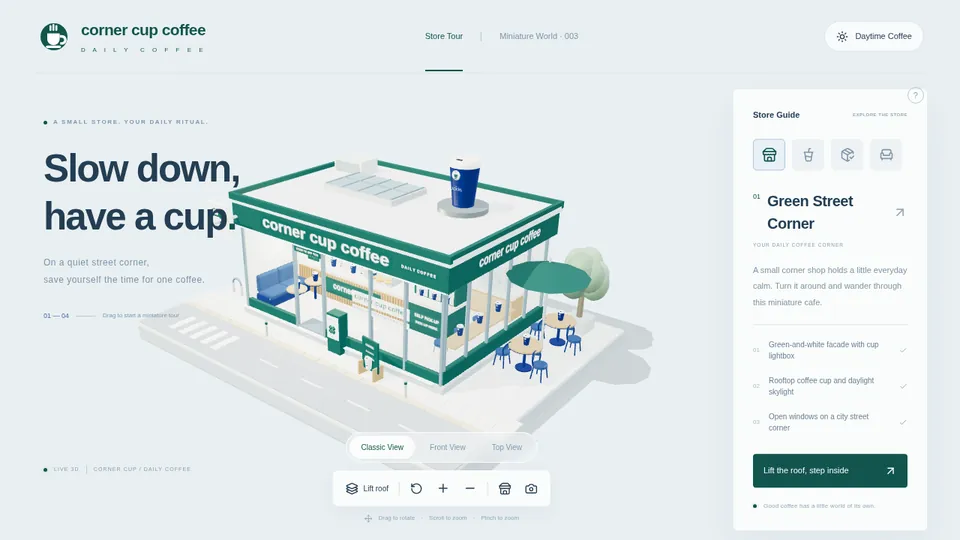
Case: A Visual Product Concept
This showcase entry is included as a concise capability example. It is not a benchmark, customer-result claim, or substitute for reviewing the project yourself.
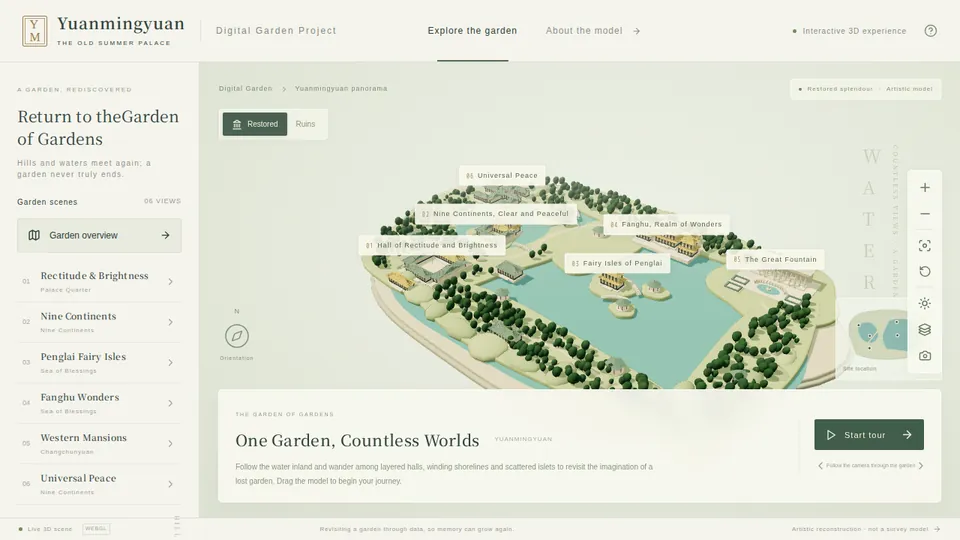
Case: A 3D Landscape Experience
This showcase entry is included as a concise capability example. It is not a benchmark, customer-result claim, or substitute for reviewing the project yourself.
FAQs
Q1: Do I need a negative prompt field?
No. Start by saying what the image should and should not contain in ordinary language. If your chosen model provides a separate negative-prompt field, follow its documentation rather than assuming another tool's syntax will transfer.
Q2: Can I request an exact hex color?
You can use a hex value as a reference, but verify the actual result. Lighting, texture, glow, and compression can change the visible color. Apply exact brand colors to editable design or website elements when precise matching matters.
Q3: Why does the person change during editing?
Generative edits may reinterpret more than the intended region. Preserve the original, narrow the selected area where supported, and name the features that must remain unchanged. Use non-generative editing when identity preservation is essential.
Q4: Can I use these prompts in Atoms?
The new-image prompts fit Atoms' verified image-generation capability and can provide direction for a web project. For the photo-editing prompts, first check whether your current workflow supports the required input and localized edit; do not assume all image tools do.
Ready to turn a background into a usable page? Start a focused visual-and-website project in Atoms with one prompt and one clear acceptance checklist.
